A calisthenics chest workout that works fits in two sessions a week, built around dips and push-ups. You need dip bars, or the parallel bars of a park, and a low bench or box. A short test gives you your level, each level has its own session, and one rule tells you when to move up.
What you need, and your starting test
- Dip bars. A dip station at home or the parallel bars at a park. If you’re buying, the dip bars guide compares stable models.
- A low bench, box or step, knee height at most, to raise your feet.
- Parallettes, optional. They let your chest sink below your hands for a longer range.
Test yourself on a fresh day, after five minutes of easy warm-up. Do two sets, with 3 minutes of rest between them.
- Push-ups. Count your max strict push-ups in one set. Stop as soon as your hips drop or your chest no longer gets close to the floor.
- Dips. Count your max of full dips: arms straight at the top, upper arms parallel to the floor at the bottom.
| Level | Push-ups in one set | Full dips | Where you start |
|---|---|---|---|
| Beginner | Under 10 | 0 to 4 | Beginner session |
| Intermediate | 10 to 29 | 5 to 14 | Intermediate session |
| Advanced | 30 or more | 15 or more | Advanced session |
When your two numbers land on different levels, the lower one decides. With 25 push-ups and 1 dip, you start with the beginner session.
The calisthenics chest workout, level by level
Train your chest twice a week, with at least 48 hours between sessions, Monday and Thursday for example. Each session counts 2 or 3 exercises. Anything marked warm-up or optional stays out of your weekly total.
Beginner session: 6 hard sets
| Exercise | Sets × reps | Rest |
|---|---|---|
| Warm-up: support hold on the bars, arms straight | 2 × 20 to 30 s | 60 s |
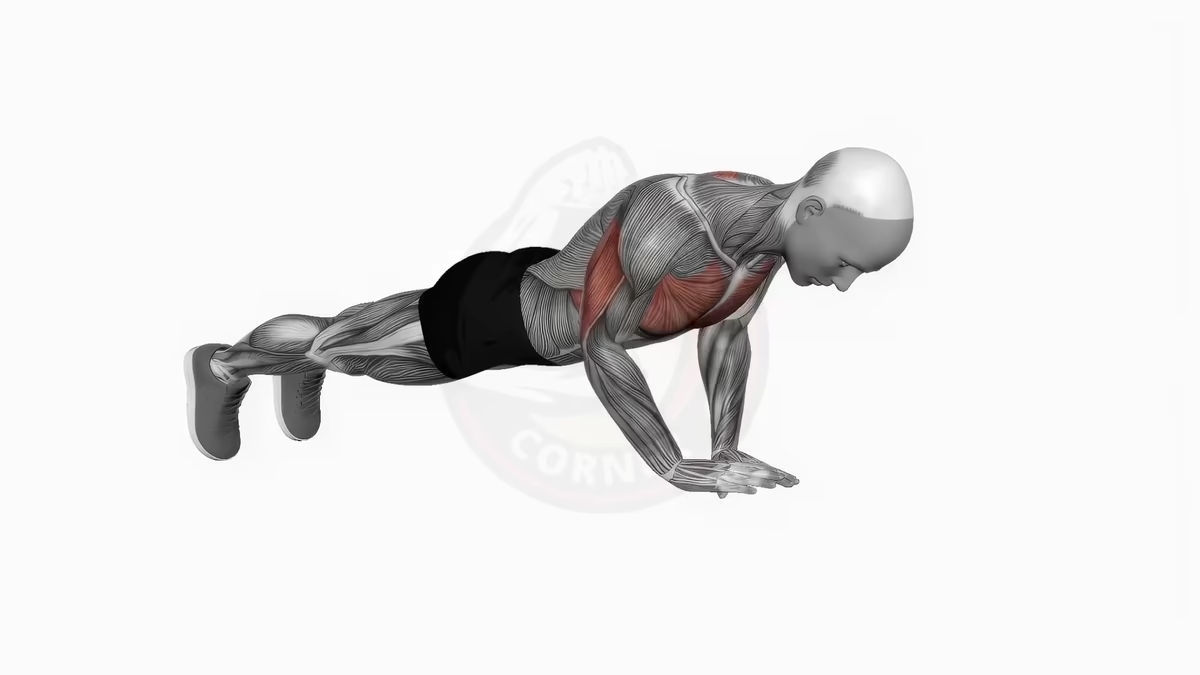
| Push-ups, the hardest version you can do for 8 clean reps (incline, knees, floor) | 3 × 8 to 12 | 60 to 90 s |
| Negative dips, 4 to 5 seconds on the way down | 3 × 3 to 5 | 90 s |
For a negative dip, step or jump to the top position, then lower yourself slowly. Put your feet down at the bottom and climb back up: no pushing for now. If the floor version of the push-up is already easy for 12 reps, raise your feet on the box instead.
Intermediate session: 8 hard sets
| Exercise | Sets × reps | Rest |
|---|---|---|
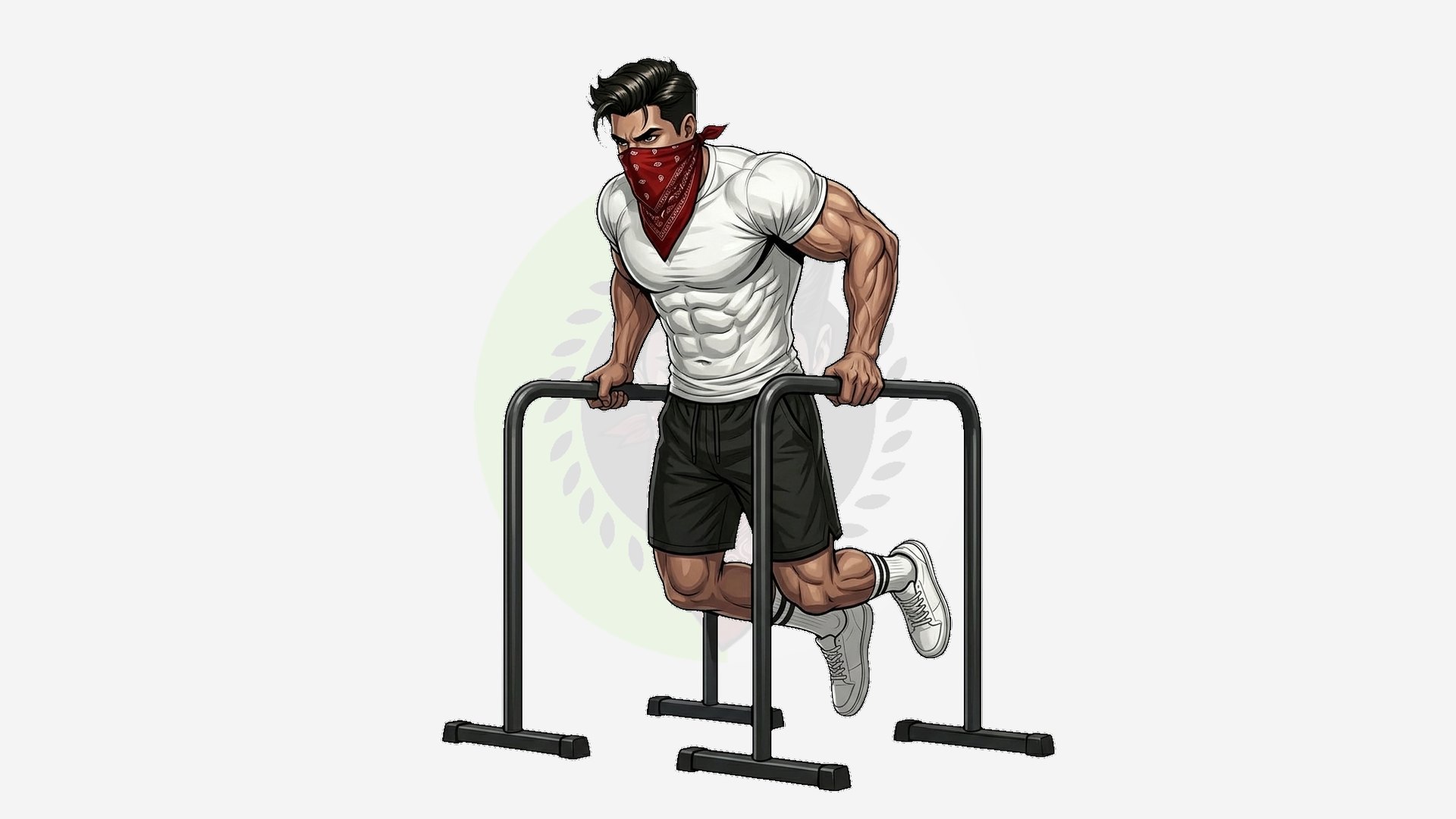
| Dips, torso leaning forward | 3 × 5 to 10 | 2 min |
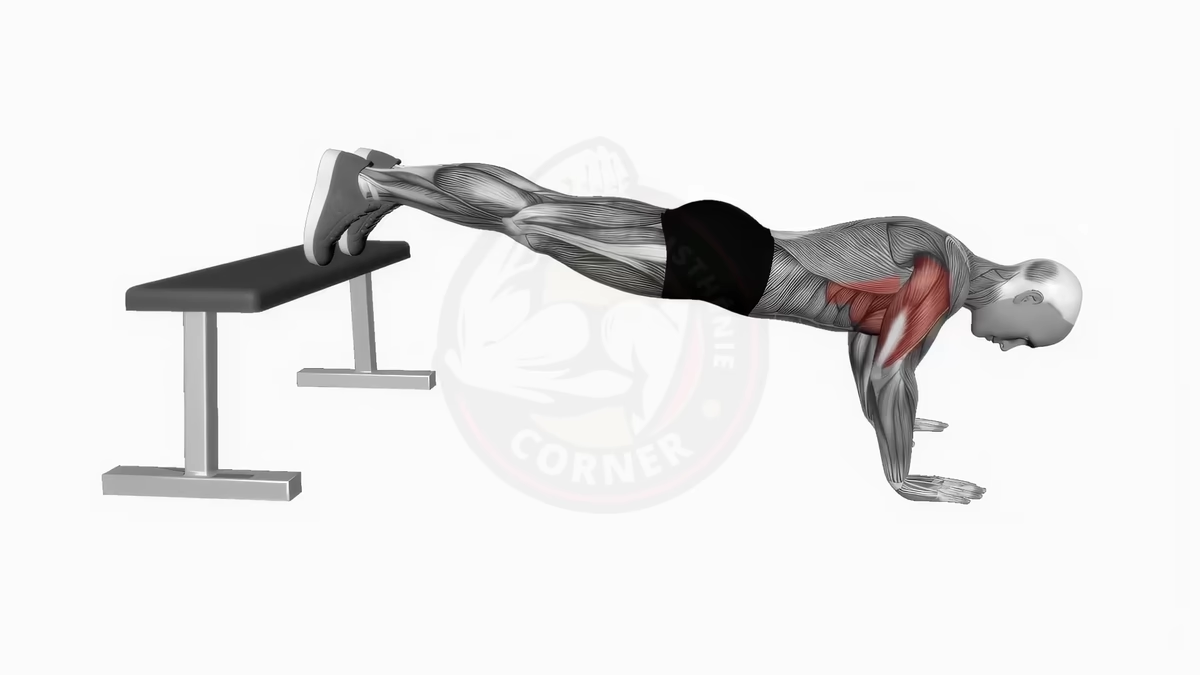
| Decline push-ups, feet on the box | 3 × 8 to 12 | 90 s |
| Deficit push-ups on parallettes or between two benches, chest below your hands | 2 × 8 to 15 | 90 s |
| Optional, for the triceps: diamond push-ups | 2 × 8 to 12 | 90 s |
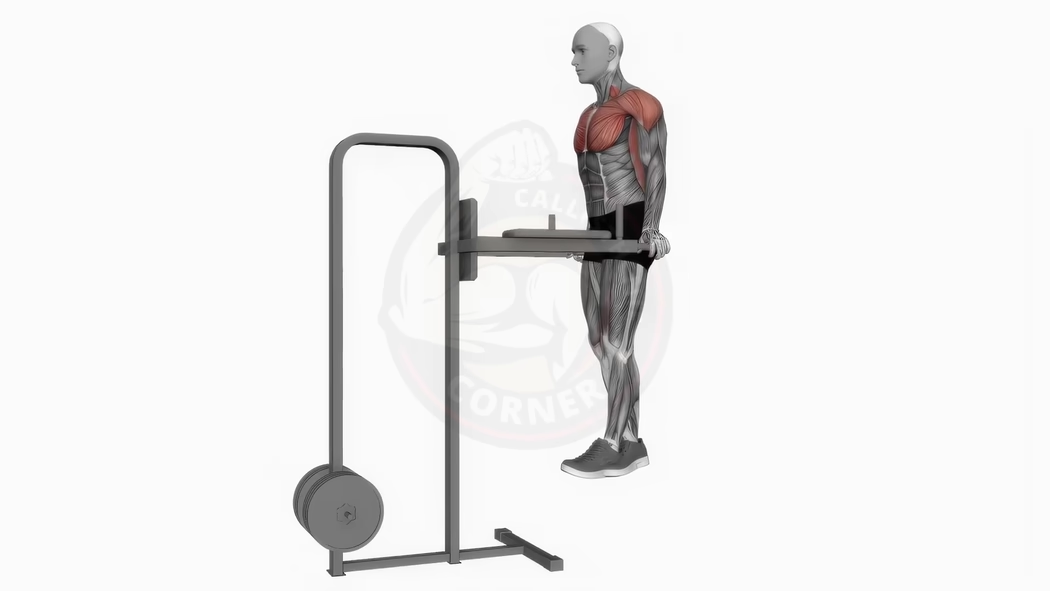
Dips open the session because they’re the hardest move on the list. Lean your torso forward a little: upright dips shift the work toward the triceps.
Advanced session: 10 hard sets
| Exercise | Sets × reps | Rest |
|---|---|---|
| Weighted dips, or straight-bar dips without weight | 4 × 5 to 8 | 2 to 3 min |
| Archer push-ups | 3 × 5 to 8 per side | 90 s |
| Decline push-ups on parallettes | 3 × 8 to 12 | 90 s |
| Optional finisher: explosive push-ups | 2 × 6 to 10 | 2 min |
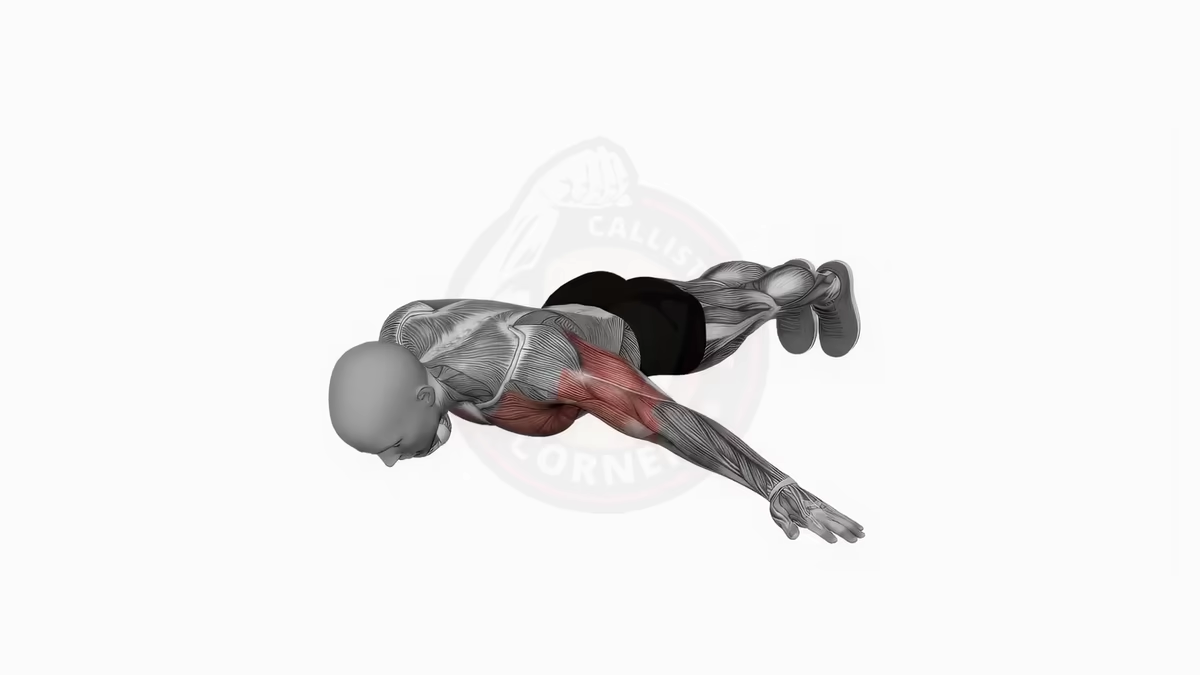
On the archer push-up, the straight arm only guides you: most of your weight goes on the bent side. On explosive push-ups, push hard enough for your hands to leave the floor and land with soft elbows. Stop the set when the height drops.
How many sets per week for chest?
Count hard sets per week, not exercises. A hard set ends 1 to 3 reps before your form breaks. Muscle growth rises with weekly sets, step by step rather than at one magic number.1 With the same total, one session or two build about the same muscle.2 Splitting it keeps each set fresher, so your last set of dips still counts.
| Level | Sessions a week | Hard chest sets a week |
|---|---|---|
| Beginner | 2 | 12 |
| Intermediate | 2 | 16 |
| Advanced | 2 | 20 |
These totals are the site’s benchmarks, not thresholds from a study. With the warm-up, they take about 20 minutes for the beginner session and up to 45 for the advanced one.
Are 4 exercises enough for chest day?
Yes, and 2 or 3 already do the job when they cover three angles: dips, flat push-ups (floor or parallettes) and push-ups with your feet raised. A fifth exercise only adds sets, and your total is set by the table above.
Upper, middle and lower chest: what actually changes
Upper chest: feet raised. On an incline bench press, the upper chest works hardest around 30°, and the front of the shoulder takes over past 45°.3 That study used a barbell, not push-ups, so read it as a direction. A low box gives your decline push-ups the useful angle. Feet on a wall or a high box turn them into a shoulder exercise.
Lower chest: dips, torso forward. In the bar dip, the chest and the triceps are the main movers.4
Middle chest: flat push-ups and parallettes. The deeper your chest goes between your hands, the longer the range.
These are differences in which part works hardest. None of them promises that one area will grow faster than the rest.
Can you build a chest with calisthenics?
Yes, as long as your sets keep getting harder. When push-ups were loaded with a band to match a 6-rep bench press, strength gains came out similar.5 In young men with a year of lifting behind them, push-ups taken to failure built as much muscle as a light bench press.6 How hard the set is matters more than whether you hold a barbell.
Are dips good for chest?
Yes, with your torso leaning forward. They anchor the intermediate and advanced sessions. If your shoulders complain at the bottom, stop a little higher and win the depth back over a few weeks.
When to move to the next level
Push-ups: incline, then knees, floor, feet raised, archer. Raising your feet makes the push-up heavier, while hands up or knees down make it lighter.7
Dips: negatives, then full dips, then weighted dips once your test reaches 15 strict dips. Until then, if 3 × 10 feels easy, slow the way down to 3 seconds.
Retake both tests every 4 weeks. Your two new numbers tell you whether to stay on your session or move to the next one.
Give your back as many hard sets as your chest in the same week. The push pull legs program builds that balance in: its Push day mixes the same dips and push-up variations, and its Pull day matches them.
Under 10 push-ups with no dips yet, the push-up program is the plan built for that stage: 8 weeks to 30 strict reps. Then retake the dip test and start from the session it gives you.

Quick answers
Can I do this workout every day?
No. Keep 48 hours between two chest sessions. On the days in between, train your back or legs, or rest.
What if I don’t have dip bars?
Two sturdy chairs work for dips. The chest exercises with no equipment build full sessions around them and around push-ups.
How long until my chest gets bigger?
Nobody can give you an honest date. What you can measure in 4 weeks is your two test numbers: if they’ve gone up, the sessions are doing their job.
Should I do dips or push-ups first?
Start with the hardest exercise while you’re fresh: dips from the intermediate session on, push-ups in the beginner session.
Sources
-
Schoenfeld BJ, Ogborn D, Krieger JW, 2017. Dose-response relationship between weekly resistance training volume and increases in muscle mass: A systematic review and meta-analysis. J Sports Sci. PubMed ↩
-
Schoenfeld BJ, Grgic J, Krieger J, 2019. How many times per week should a muscle be trained to maximize muscle hypertrophy? A systematic review and meta-analysis of studies examining the effects of resistance training frequency. J Sports Sci. PubMed ↩
-
Rodríguez-Ridao D et al., 2020. Effect of Five Bench Inclinations on the Electromyographic Activity of the Pectoralis Major, Anterior Deltoid, and Triceps Brachii during the Bench Press Exercise. Int J Environ Res Public Health. PubMed ↩
-
McKenzie A et al., 2022. Fatigue Increases Muscle Activations but Does Not Change Maximal Joint Angles during the Bar Dip. Int J Environ Res Public Health. PubMed ↩
-
Calatayud J et al., 2015. Bench press and push-up at comparable levels of muscle activity results in similar strength gains. J Strength Cond Res. PubMed ↩
-
Kikuchi N, Nakazato K, 2017. Low-load bench press and push-up induce similar muscle hypertrophy and strength gain. J Exerc Sci Fit. PubMed ↩
-
Ebben WP et al., 2011. Kinetic analysis of several variations of push-ups. J Strength Cond Res. PubMed ↩