You chain 15, 20 strict dips and you stop progressing? Bodyweight has hit its limit. Weighted dips restart the engine by adding load, like at the barbell, while keeping the king of pushing movements. Here are the prerequisites, the form, the starting load and the numbered progression to go from solid pushing to thick triceps and a dense chest.
Why do weighted dips?
Once you chain dips at bodyweight, you mostly train endurance, not strength. To keep gaining strength and size, you need to put your muscles back under tension. Adding weight is the most direct way to apply progressive overload without changing exercise.
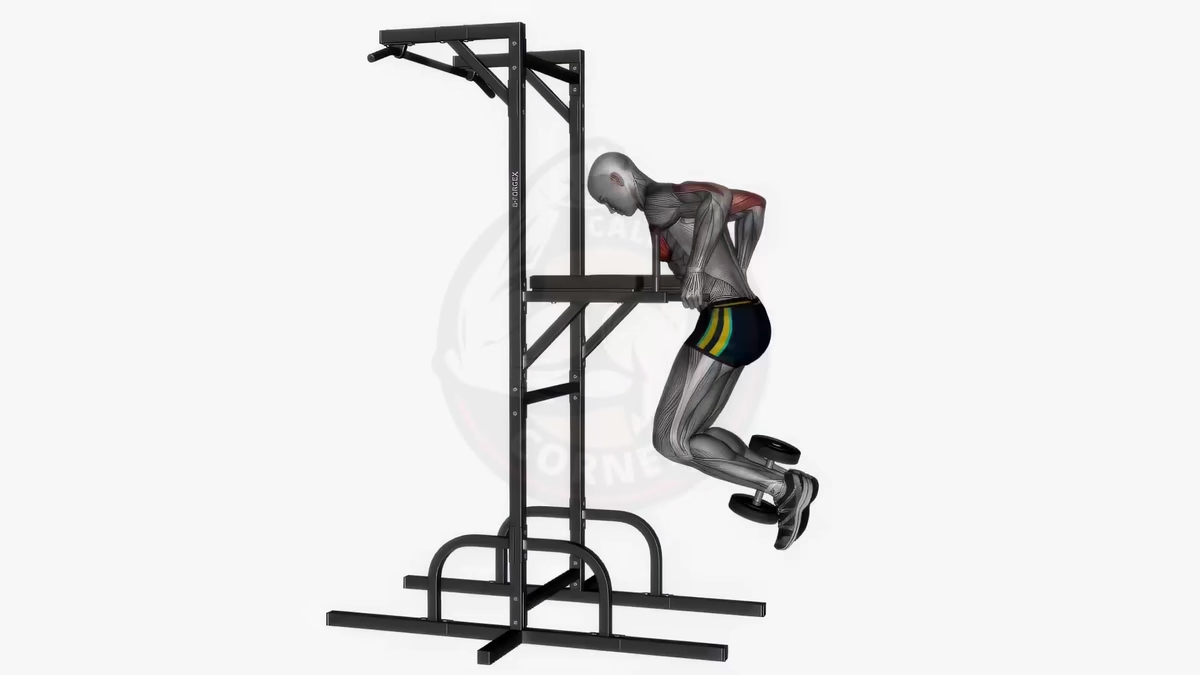
The muscles worked stay those of the strict dip: triceps as the driver with an upright torso, lower chest when you lean forward, front delts in support. With 10 or 20 kg hanging from your waist, each rep recruits far more fibres. That is what builds thick arms and a dense chest.
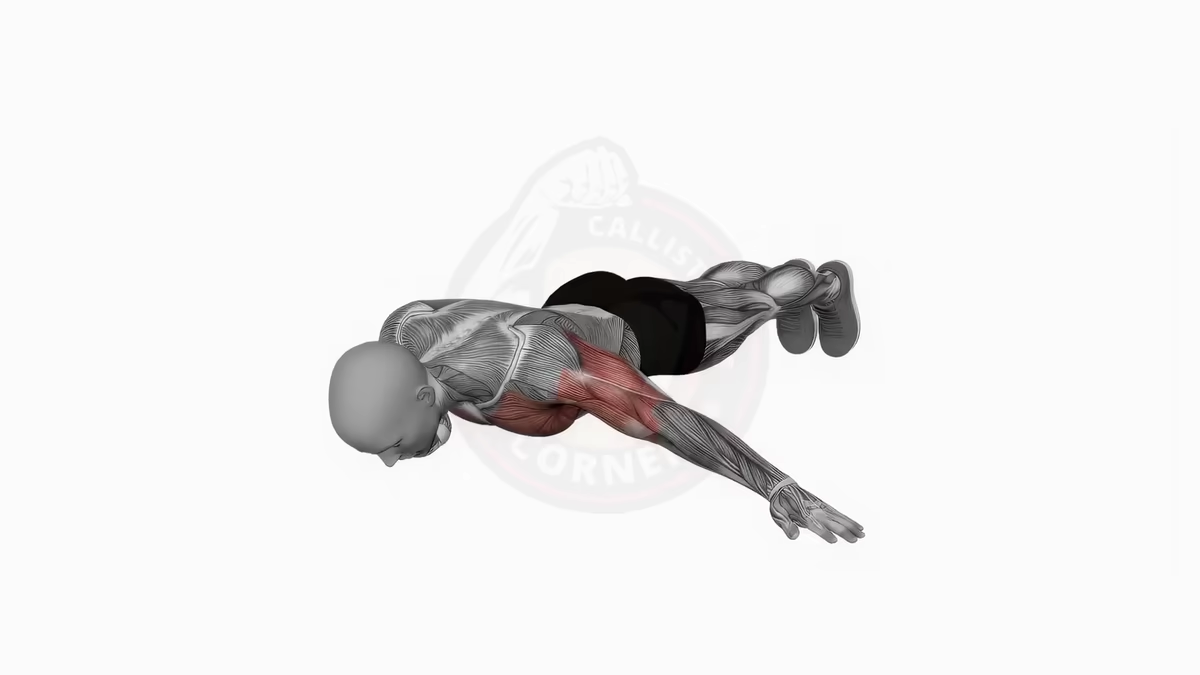
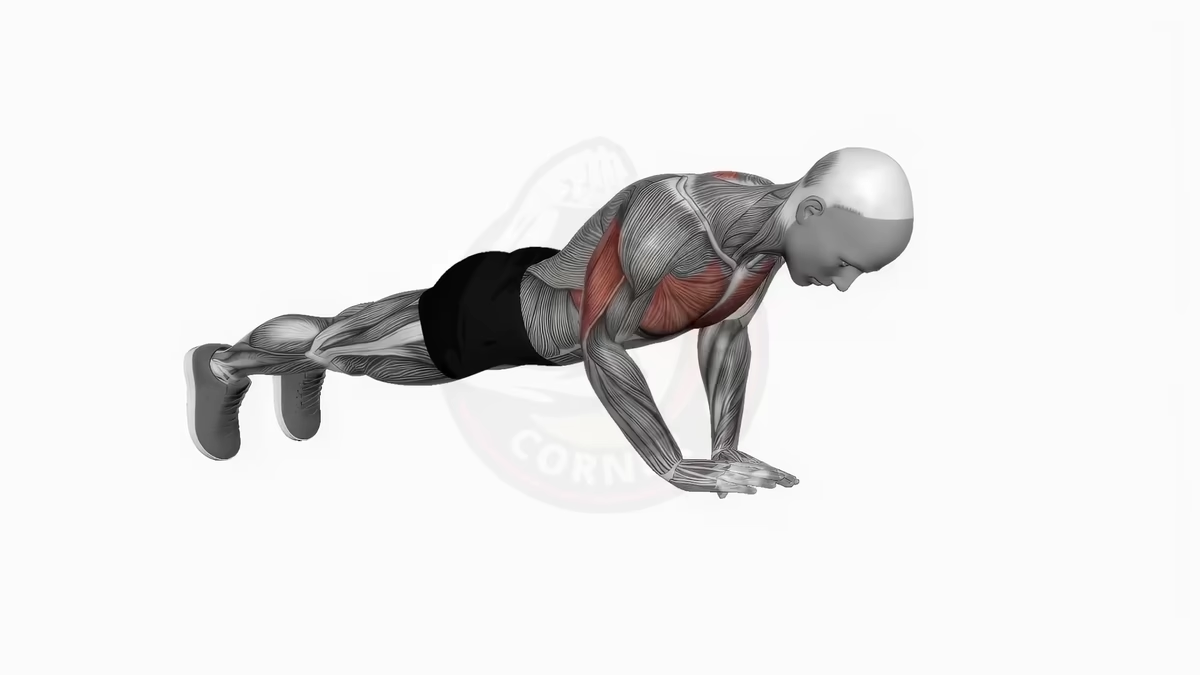
On the pushing side, their direct counterpart is the weighted push-up: the same loading principle applied on the floor. The two together cover all upper-body pushing work. And to avoid an imbalance, their pulling mirror is the weighted pull-up.
Prerequisites before loading up
Do not add weight too early. You must first chain 15 strict dips, full range, arms straight at the top and upper arms parallel to the floor at the bottom. If you are not there, the load will only amplify your technique flaws.
Your shoulders must be healthy. The loaded dip pulls hard on the shoulder joint, especially at the bottom of the movement. If you feel the slightest pain unloaded, fix that before adding weight: the load does not forgive a fragile shoulder.
Finally, your core must hold. The weight hanging from your waist pulls you down and exaggerates every swing. A solid trunk keeps your body stable through the whole set.
How to do weighted dips: step-by-step form
The dip belt is the reference tool: you hang one or more plates between your legs, the load swings freely below you and does not get in the way. For lighter loads or versatile use, the weighted vest spreads the weight across the torso. No equipment? A backpack cinched tight, filled with books or water bottles, works to start.
Load demands a base that does not move. Stable dip bars are essential as soon as the load rises: a base that wobbles under 20 kg is a guaranteed accident.
Start with 2.5 to 5 kg, no more. It sounds trivial, but the load is felt enormously on a dip, especially at the bottom of the range.
Grab the bars with arms straight, then depress your shoulder blades before lowering: this scapular engagement protects your shoulders and locks the starting position. Keep your elbows close to the body.
Lower controlling the load over 2 to 3 seconds, until your upper arms are parallel to the floor (about 90°). Do not dive lower in the name of range: with weight, going too low crushes the shoulder without adding anything for the target muscles.
Push back up hard, without swinging your legs or using momentum. Come back to the top without locking the elbows, a slight bend keeps the tension and protects the tendon. Full range, from parallel to the floor up to the top, is non-negotiable.
What load and how to progress
Load follows a simple rule: heavy weight, few reps. Aim for 4 to 5 sets of 5 to 8 reps. If you clear 8 reps easily at your load, you raise the weight. If you stall below 5, you reduce it.
Progress comes in small steps. Add 1 to 2 kg every 1 to 2 weeks, never in 10 kg jumps. The triceps adapt fast, but the elbows and especially the shoulders need time to keep up.
Here is what it looks like in practice for a 75 kg athlete starting to load up:
- Weeks 1 to 4: 4 to 5 kg, 4 sets of 6.
- Weeks 5 to 8: 8 to 10 kg, 4 sets of 6 to 8.
- Weeks 9 to 12: 12 to 15 kg, 5 sets of 5.
- At 6 months: 20 kg and up become realistic.
One to two weighted dip sessions per week is enough. The rest of the time, you work volume at bodyweight. The first strength gains show up in 4 to 6 weeks, size gains around 8 to 12 weeks.
Mistakes to avoid
Loading too heavy too fast is mistake number one. Going from 5 to 15 kg because one set felt easy wrecks your technique, shortens your range and puts your elbows and shoulders at risk. Start light and progress slowly: loaded strength is built over months, not over one session.
A shrinking range is the most common trap. With weight, the temptation to stop before parallel is strong. But a half weighted dip is worth less than a clean full dip. If you no longer bring the upper arms to horizontal, reduce the load.
A suffering shoulder is the other fault to watch. Going too low under a heavy load compresses the joint. Stay at parallel, keep the shoulder blades down, and stop the set if the shoulder pulls. Tendinitis will cost you weeks.
Swinging is the last reflex to fix. To grind out a rep, people throw their legs or use momentum. The movement loses all its value and the load drifts in the wrong directions. A shorter strict set beats it.
One last point specific to calisthenics: do not sacrifice your push-pull balance. Stacking load on dips and push-ups without also loading your pull-ups creates an imbalance that drags the shoulders forward. Weighted pull-ups are the mandatory counterweight.
Variations
You can steer the work under load. The upright weighted dip concentrates the effort on the triceps, ideal for thick arms. The leaning weighted dip, tilted slightly forward, shifts the load toward the lower chest, but stay careful: more lean and more weight stresses the shoulder further.
Weighted ring dips add instability to the load. Your stabilisers work continuously to keep the rings in line. Save them for when the bars feel easy under load, because the difficulty jumps all at once.
Slow tempo is a way to progress without adding weight. Lower in 3 seconds, pause at the bottom, rise under control. Time under tension climbs and breaks plateaus when the load stalls.
What comes after weighted dips?
When you regularly push 20 kg and up in sets of 5 to 6 clean reps, your pushing strength is solid. That is the moment to turn it into a skill.
The muscle-up is the logical next step. The transition over the bar ends with an explosive dip, which is exactly the strength you just built under load. A powerful weighted dip makes the second half of the muscle-up far easier to clear.
To structure pushing and pulling over time, do not load at random. A framed program spreads the volume and saves you from imbalance: the PPL program dedicates the entire Push day to dips and push-ups, up to the weighted variations.