
The question keeps coming back: can you really build muscle with calisthenics, without a gym, without machines, without dumbbells? The answer is yes. Hypertrophy principles do not change just because you use your bodyweight instead of a loaded bar. What changes is the overload method.
The 3 pillars of calisthenics hypertrophy
Mass gain rests on three mechanisms, whether you train in a gym or with calisthenics:
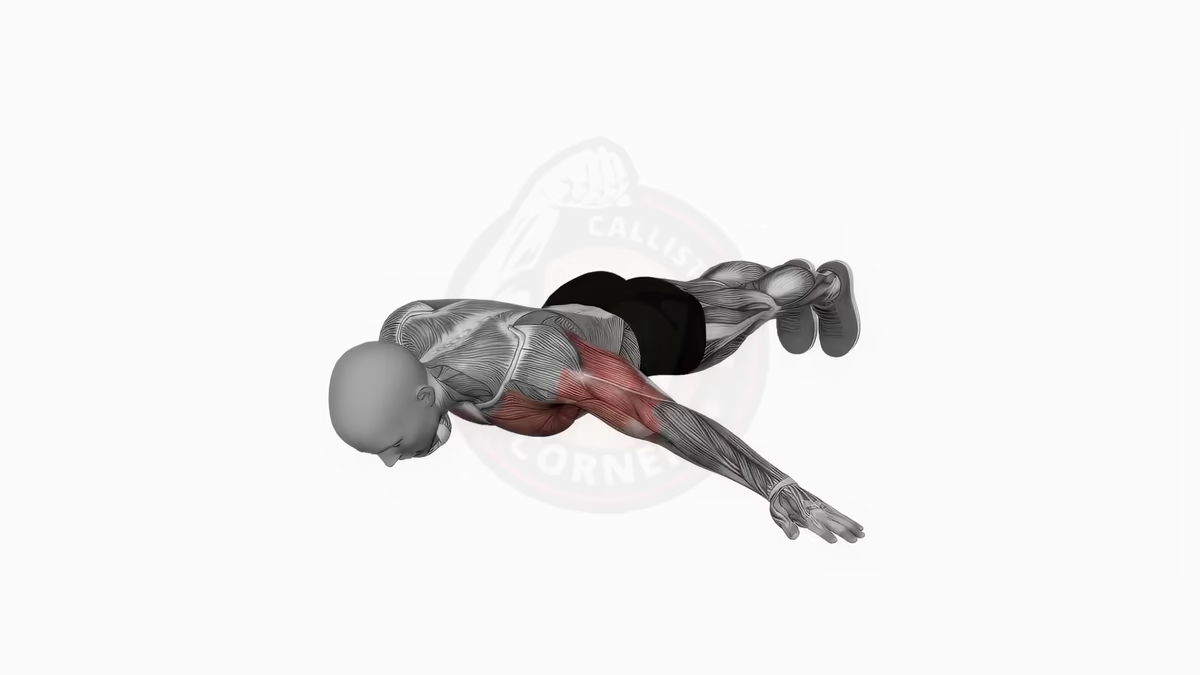
Mechanical tension. The muscle must work against sufficient resistance. In the gym, you add plates. In calisthenics, you progress to harder variations: from standard push-ups to diamond push-ups, then archer push-ups, then one-arm push-ups.
Training volume. The total number of sets per muscle group per week. For hypertrophy, aim for 10 to 20 sets per muscle group per week. A PPL program in 5-6 days lets you hit that volume.
Progressive overload. Each week you must do a little more. In calisthenics, overload takes 5 forms:
- Add reps (8 → 10 → 12)
- Move to a harder variation
- Slow down tempo (3 seconds descent instead of 1)
- Reduce rest times
- Add load (weighted vest, kettlebell)
Key exercises for mass gain
Mass is built on compound exercises that recruit the most muscle fibres.
Upper body - Push
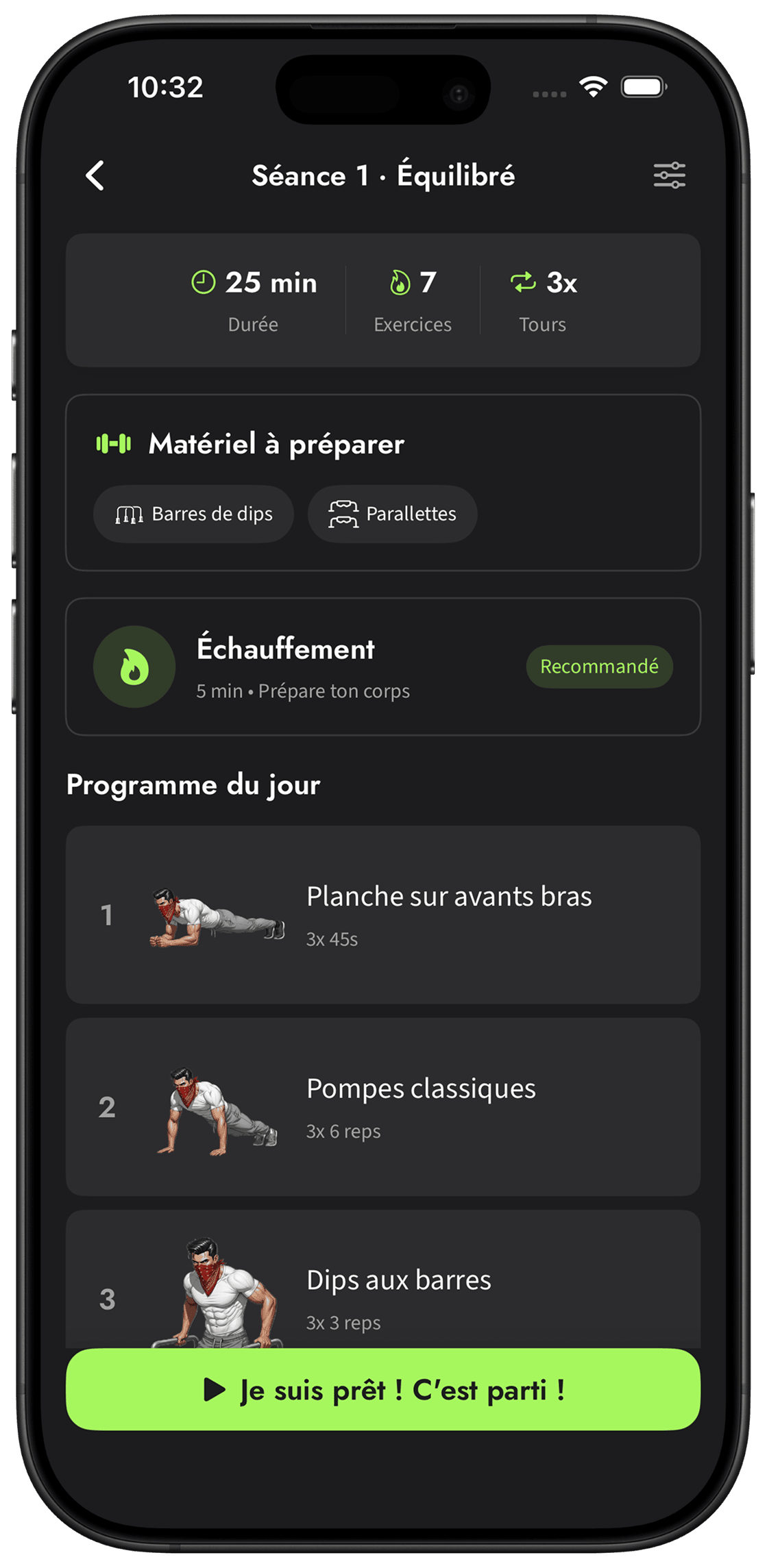
Dips are the squat of the upper body in calisthenics. Chest, triceps, shoulders in a single movement. With a weighted vest, weighted dips become the single most effective exercise for upper-body mass.
Push-ups and their variations cover the rest: standard push-ups for volume, decline push-ups for upper chest, diamond push-ups for triceps, pike push-ups for shoulders.
Upper body - Pull
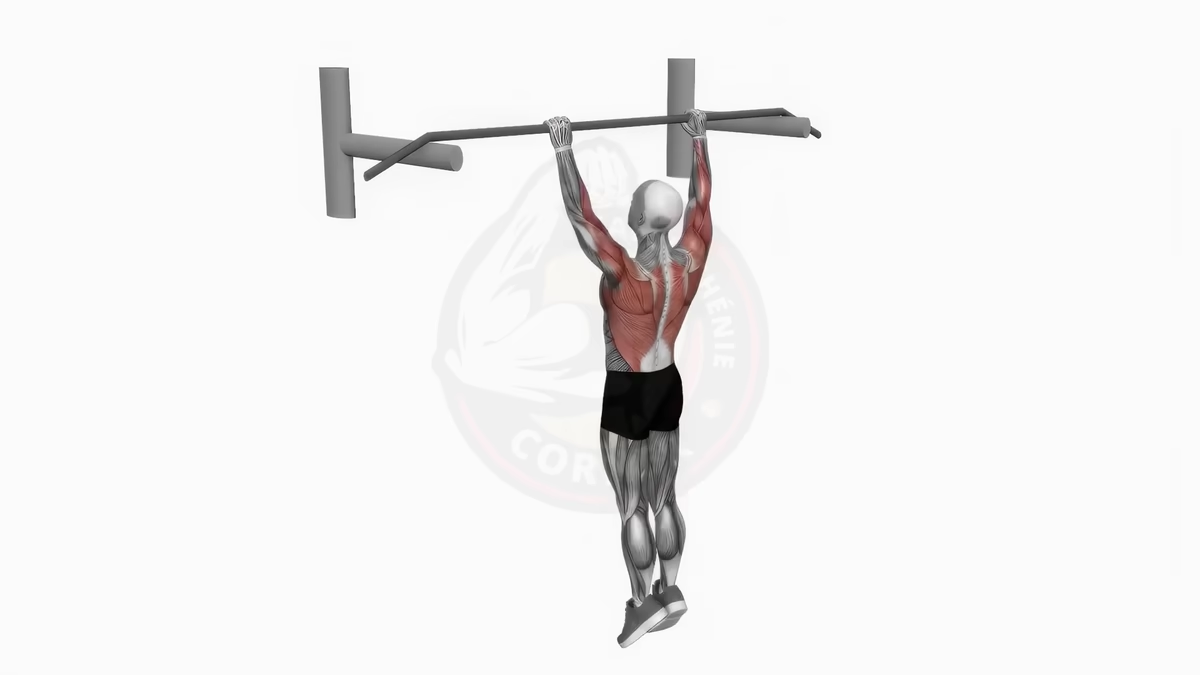
Pronated pull-ups are the base. For back mass, volume rules: 4-5 sets of 8-12 reps, 3 times per week. Complement with Australian pull-ups at slow tempo (3-second descent) to maximise time under tension.
Dead hang builds the grip strength that often limits you on long pull-up sets.
Lower body
Historically the weakness of pure calisthenics. Bodyweight alone is not enough to overload quads and glutes past a certain level. Solutions:
- Pistol squat: unilateral exercise that doubles load per leg
- Bulgarian split squats: unilateral with maximum range
- Sissy squat: bodyweight quad isolation
- Nordic curl: intense eccentric for hamstrings
- Kettlebell: goblet squat and swing add the missing load
Nutrition: the non-negotiable factor
You can train perfectly, but if you eat in a calorie deficit you will not gain mass. Nutrition is 50% of the result.
Calorie surplus. +200 to +300 kcal per day above your maintenance. Not more, or you add fat. To estimate maintenance: bodyweight (kg) × 30 = rough estimate in kcal. Adjust after 2 weeks based on progress.
Protein. 1.6 to 2g per kg of bodyweight per day. At 75 kg, that is 120 to 150g of protein. Sources: chicken, eggs, fish, legumes, cottage cheese, whey.
Distribution. 3 to 5 meals per day, each containing at least 25-30g of protein. Muscle protein synthesis is triggered at every protein feeding, spacing them out optimises total synthesis.
Timing. A meal or protein shake within 2 hours post-training. Not mandatory, but it optimises recovery.
Sample program for mass gain
The most effective format for calisthenics mass is PPL (Push Pull Legs) 5-6 days per week. Each muscle is worked twice a week with high volume.
If you are starting out, run the full body program 3-4 sessions per week for 12 weeks. Move to PPL once you own the fundamentals.
Mass program principles:
- Reps. 8-12 reps per set (the hypertrophy zone)
- Sets. 3-5 sets per exercise
- Rest. 90s to 2 min (enough to recover, not enough to cool down)
- Tempo. 2-second descent, 1-second ascent, no bouncing
- Frequency. Each muscle 2× per week minimum
- Volume. 10-20 sets per muscle group per week
Progression. When you hit 12 reps on all sets, move to the next variation. That is the equivalent of adding weight to the bar.
Load: the mass accelerator
At some point, bodyweight alone stops being enough on certain movements. You do 4×15 dips without breaking a sweat, you stop progressing in strength. That is where load enters.
The weighted vest is the single best investment for mass in calisthenics. 5-10 kg on dips and pull-ups turns endurance sets into strength sets. Weighted push-ups recruit significantly more fibres than bodyweight push-ups.
The kettlebell covers legs: goblet squat, loaded lunges, swing for the posterior chain.
Mistakes that block mass gain
Not eating enough. The #1 mistake. You train 5 times a week, you progress on variations, but you do not gain mass. If the scale has not moved in 3 weeks, add 200 kcal per day.
Staying on the same variations. If you have been doing 4×15 standard push-ups for 2 months, you are not progressing. Overload in calisthenics runs through variations. Move up in difficulty.
Neglecting legs. Legs are the biggest muscle group in the body. Training them releases more anabolic hormones and accelerates overall mass gain. Pistol squats and Nordic curls are not optional.
Training every day. Muscle is built during rest, not during training. 48 hours of recovery minimum between sessions hitting the same muscle group. Sleep 7-8 hours per night.
Ignoring tempo. Doing 10 pull-ups in 10 seconds and 10 pull-ups in 30 seconds do not produce the same effect. Control the descent (2-3s) to maximise time under tension and the muscle micro-tears that trigger hypertrophy.
Frequently Asked Questions
How long does it take to gain mass with calisthenics?
With a structured program and solid nutrition, the first visible results show up in 8-12 weeks. A beginner can gain 4-6 kg of muscle in the first year. After 2 years of practice, progression slows to 1-2 kg per year.
Is calisthenics as effective as weightlifting for mass?
For the upper body, yes. Dips, pull-ups and weighted push-ups recruit as many muscle fibres as the bench press and the row. For the legs, weightlifting has the advantage of heavy loading. The compromise: complement calisthenics with a kettlebell for legs.
Do you need supplements?
No. A calorie surplus and 1.6-2g of protein/kg are enough. Whey protein is a practical supplement (not magic) if you struggle to hit your protein quota from food alone. Creatine (3-5g/day) is the only supplement with solid evidence for strength and mass.
Can you gain mass without a weighted vest?
Yes, for the first 12-18 months. Progression through variations (push-ups → diamond push-ups → archer push-ups) is enough to overload progressively. Beyond that, the weighted vest accelerates gains significantly, especially on dips and pull-ups.
How do I know if I am gaining muscle or fat?
Measure your waist circumference and weight each week, in the morning fasted. If weight goes up and waist stays stable, you are gaining muscle. If waist grows faster than weight, reduce the calorie surplus by 100-200 kcal.
What comes next?
Mass gain is a medium-term goal (6-12 months minimum). Once you have built the muscle base you wanted, you can:
- Keep building mass with the PPL program and more advanced variations
- Move to skills. With the strength you built, you have the base for the muscle-up, front lever and planche
- Cut. Reduce the calorie surplus to reveal the muscle built. Same training, fewer calories