Skills
How to train the Full Planche
The full planche is one of the hardest pushing skills in calisthenics: your whole body held horizontal on straight arms. It takes serious shoulder and core strength plus a patient, staged progression. Whether you are a beginner or already advanced, here is how to build it stage by stage.
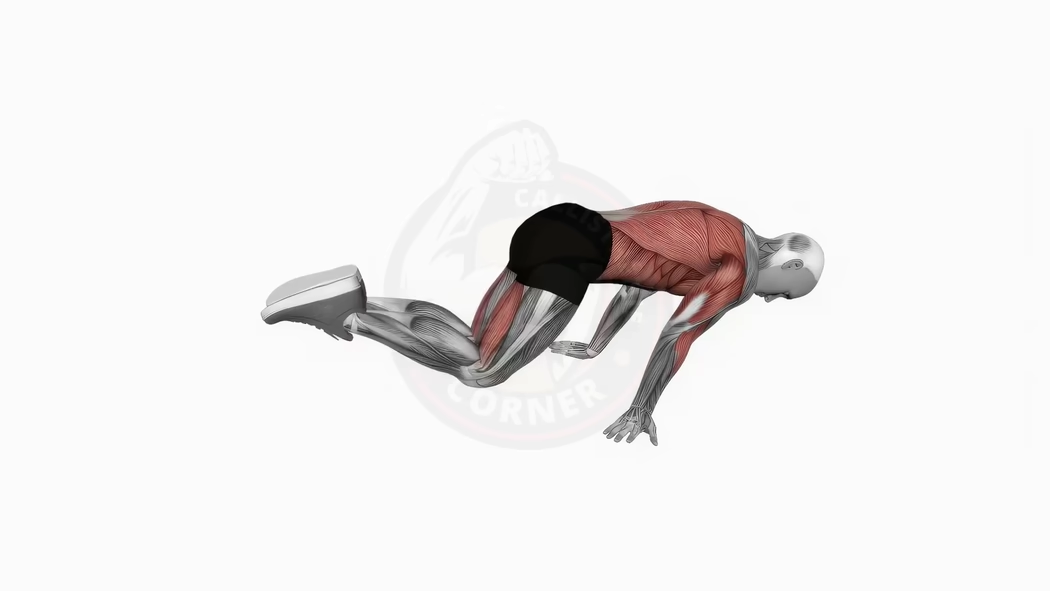
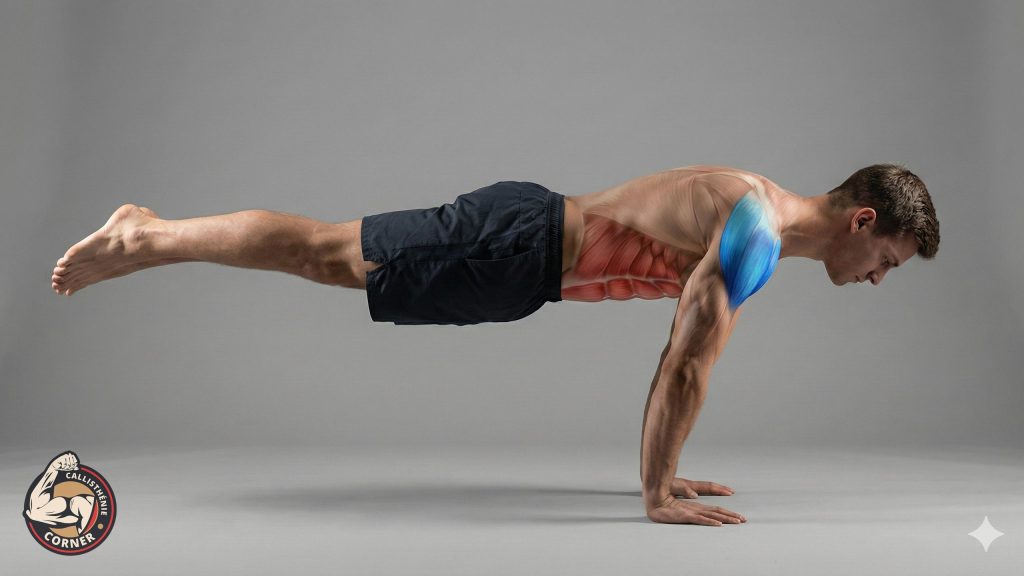
The full planche is a static hold where your whole body stays horizontal and parallel to the ground, balanced only on straight arms, legs together and fully extended. It is built on raw shoulder, triceps and core strength fighting a long body lever, which is exactly why so few people hold it clean.
Benefits of the Full Planche
Overall strength improvement
The full planche intensely targets the upper body muscles, particularly the shoulders, triceps and core. Training these muscles not only improves your calisthenics performance but also carries over to many other physical activities.
Balance and coordination development
Holding the full planche position demands precise coordination and an excellent sense of balance. These skills will benefit you in other exercises and daily activities alike.
Prerequisites for the Full Planche
Before you start working on the full planche, make sure you have a solid base of strength and stability. Here are the essential preparatory exercises:
- Push-ups: Develop the pectorals, triceps and deltoids.
- Dips: Strengthen the triceps, shoulders and lower pectorals.
- L-sit: Strengthens the core and hip flexors.
- Elbow plank: Works the core and improves shoulder stability.
Progressions towards the Full Planche
Tuck Planche
Start with the tuck planche, where your knees are tucked towards your chest. This exercise builds the foundational strength needed for the full planche.
Advanced Tuck Planche
Once you are comfortable with the tuck planche, progress to the advanced tuck planche. Your knees are slightly further from your chest, which increases the difficulty and the lever arm on your shoulders.
Straddle Planche
Next, work on the straddle planche where your legs are spread apart. This reduces the lever, making the exercise more accessible before attempting the full planche.
Full Planche
Finally, move to the full planche by keeping your body completely horizontal and parallel to the ground. This exercise requires maximum strength and flawless technique.
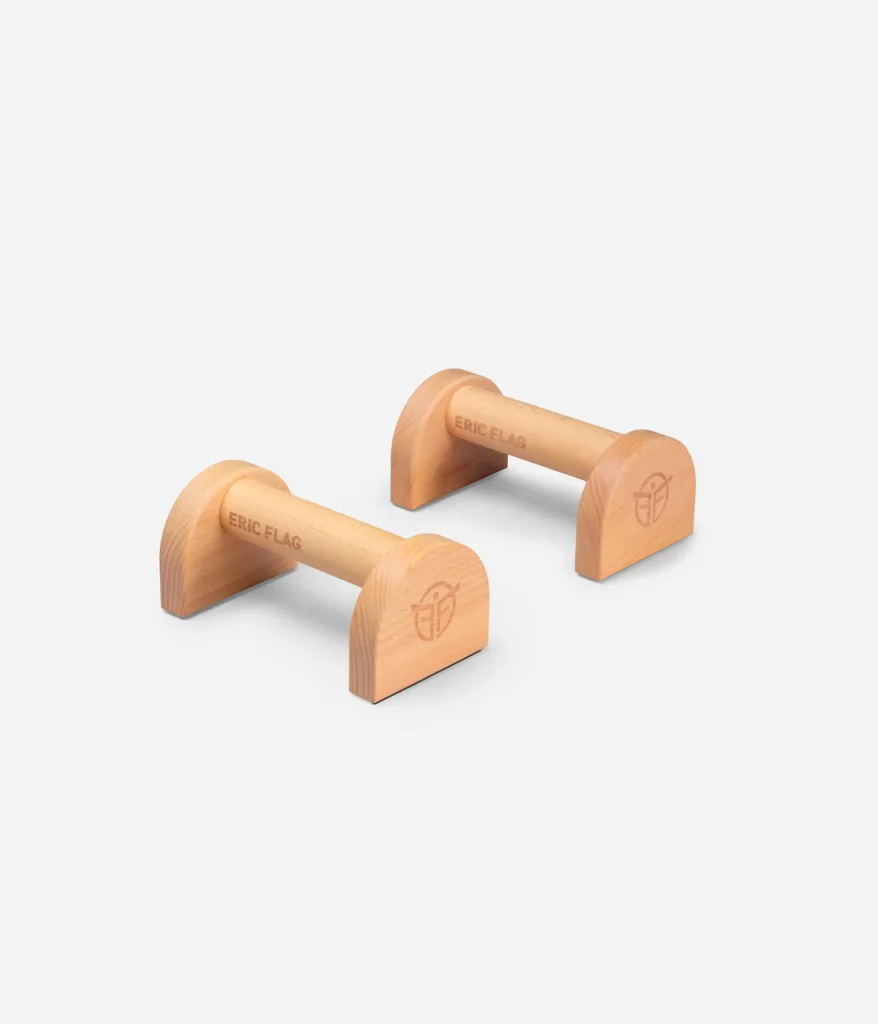
Using parallettes for your planche training
Using parallettes can be an excellent alternative to complement or adapt your training. They allow a better grip, reduce wrist pressure and make it easier to engage the stabiliser muscles. The bars also provide elevation that facilitates working on progressions like tuck planches and advanced planches, helping you develop the strength and balance you need safely.
Weekly training program for the Full Planche
To progress efficiently towards the full planche, here is a weekly training program. Adapt it to your current level.
| Day | Exercise | Sets | Reps / Duration |
|---|---|---|---|
| Monday | Tuck Planche | 5 | 10-15 sec |
| Tuesday | L-sit | 5 | 5-10 sec |
| Wednesday | Rest | - | - |
| Thursday | Advanced Tuck Planche | 5 | 10-15 sec |
| Friday | Dips and Push-ups | 4 | 8-12 |
| Saturday | Straddle Planche | 5 | 5-10 sec |
| Sunday | Rest | - | - |
Progression tip: Gradually increase hold duration as you get stronger. When you can comfortably hold 15 seconds on a given progression, it is time to move to the next one.
Tips and techniques for the Full Planche
Use resistance bands
Resistance bands can help lighten your bodyweight, making the progression towards the full planche easier. They are particularly useful during the early learning phases.
Maintain correct posture
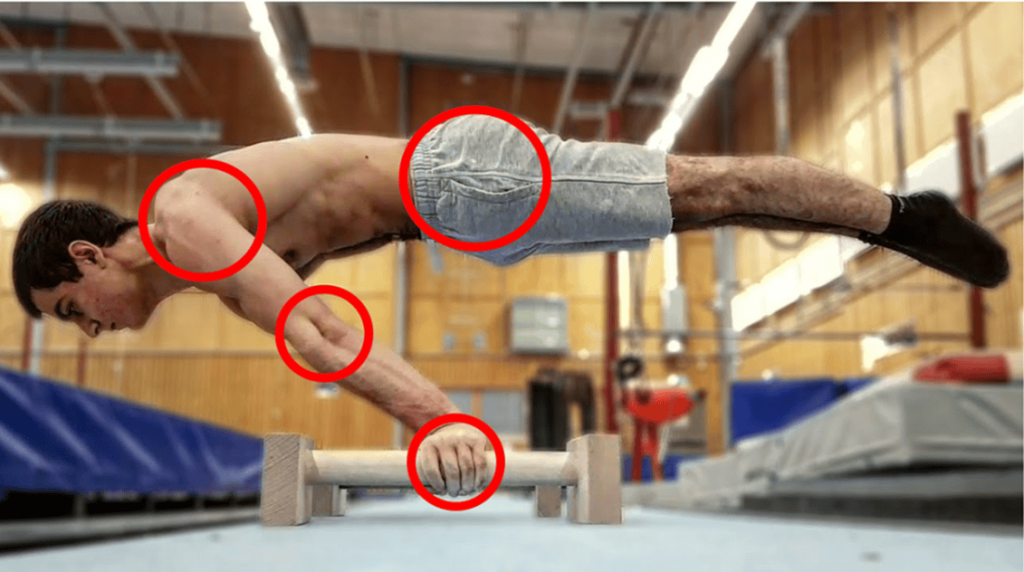
Keep your body aligned and avoid arching your back. Correct posture is crucial to prevent injuries and maximise training effectiveness.
Breathe properly
Controlled breathing improves endurance and stability during the full planche hold. Inhale deeply before getting into position and exhale slowly while maintaining the pose.
Common mistakes to avoid
- Not leaning forward enough. Your shoulders have to travel well past your hands. Without that forward lean the planche is mechanically impossible, no matter how strong you are.
- The banana back. Arching the lower back to fake the line. Squeeze your glutes and tuck the pelvis so hips, spine and legs hold one straight line.
- Bent arms. The planche is a straight-arm hold. Bending turns it into a different exercise and loads your elbows. Lock the elbows and push the floor away (protract the shoulders).
- Rushing the progression. Hold each stage for 10-15 clean seconds before moving up. Skipping ahead stalls you for months and invites wrist and shoulder strain.
The full planche is a long project, measured in months and years, not weeks. Lock in each stage, keep your wrists and shoulders healthy, and the straight-arm line will come.
For the bigger picture, the full calisthenics skills library ranks every skill by level so you can see where the planche sits.