Skills
How to Master the Elbow Lever Step by Step
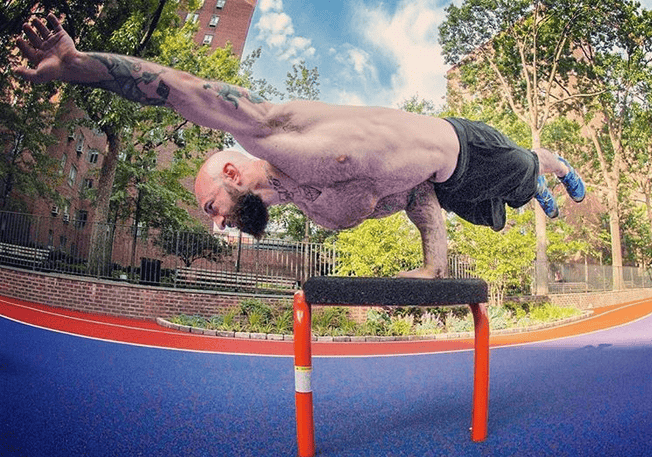
The elbow lever is an iconic calisthenics figure that combines strength, balance and technique. In this impressive position, your body is held parallel to the floor while resting on your elbows. Whether you are a beginner or an intermediate practitioner, this guide covers every step towards mastering it.
Fundamentals of the elbow lever
The elbow lever, also called an elbow planche or lever pose (yogis know a close cousin as the peacock pose, Mayurasana), is a static figure that demands a combination of strength, balance and body control. This position primarily targets the shoulders, abdominals and back, while also testing your stability and proprioception.
Main muscles involved
To perform an effective elbow lever, several muscle groups share the load:
- Anterior deltoid: stabilises and supports the torso
- Triceps brachii: ensures arm stability
- Pectoralis major: contributes to maintaining the position
- Serratus anterior: participates in shoulder stabilisation
- Abdominals and lumbar muscles: brace the body and maintain alignment
- Glutes: help with overall body balance
Few static holds recruit this many groups at once. Held in sets of 10 to 20 seconds, the elbow lever builds isometric strength, shoulder stability and body control rather than raw muscle size.
Benefits of the elbow lever
Beyond the wow factor, the hold delivers transferable gains:
- Bracing and straight-arm strength that carries straight over to the planche and the handstand.
- Core and lower-back control, since holding the body parallel to the floor is a demanding anti-extension exercise.
- Wrist and forearm conditioning that every hand-balancing skill relies on.
- Sharper body awareness from finding and owning the balance point.
- Zero equipment: floor or parallettes, nothing else, so you can train it almost anywhere.
Perfect elbow lever technique
Mastering the technique is paramount for performing a correct and safe elbow lever. Here are the key elements for perfect execution:
Optimal elbow and hand position
The placement of your elbows and hands is critical for success:
Hand position: Place your hands on the floor, spread to shoulder width. Your fingers can point slightly outward for better stability.
Elbow placement: Position your elbows just above your hips, against your abdominals. This placement is what allows you to support your weight effectively.
Once in position, engage your abdominals and glutes to keep your body straight. Your gaze should be directed at the floor, slightly in front of you, to maintain natural spinal alignment.
Preparatory exercises
Before attempting the elbow lever, it is essential to prepare your body with specific exercises:
Hand planks (30-60 seconds)
Strengthen your wrists and shoulders by holding planks on your hands. Focus on pushing the floor away and keeping your body in a straight line. Goal: 3 sets of 30 to 60 seconds.
Leg raises
Work your abdominals and back with controlled leg raise series. Lying on your back, lift your straight legs to 90 degrees and lower them slowly. Goal: 3 sets of 10 to 15 reps.
Frog stand
This position teaches you balance management on your hands and strengthens your shoulders. It is the closest preparatory exercise to the elbow lever. Goal: hold for 15 to 30 seconds.
Superman holds
The superman hold strengthens the lumbar muscles and glutes, essential for keeping your legs horizontal during the elbow lever. Lying face down, lift your arms and legs simultaneously and hold. Goal: 3 sets of 15 to 20 seconds.
Once you have mastered these exercises, you can move on to practising the elbow lever itself.
Overcoming common difficulties
During the learning process, you will likely encounter certain obstacles. Here is how to overcome them:
The elbow slipping problem
Elbow slipping is a frequent difficulty that can compromise your stability. To fix it:
- Improve your placement: Make sure your elbows are firmly anchored against your abdominals, as close as possible to your centre of gravity.
- Strengthen your abdominals: Solid core bracing will help keep your elbows in place. The tighter your midsection, the more stable the shelf.
- Use a non-slip mat: At the beginning, a mat can help prevent slipping while you perfect your technique. Some practitioners also find that training in a long-sleeve shirt reduces skin friction issues.
Elbow lever progression: variations to keep advancing
Once you hold a clean standard elbow lever for 15 seconds, work through these variations in order of difficulty:
One-leg elbow lever
The first step beyond the standard hold. From the full position, lift one leg higher than the other in a scissor, or bend one knee towards your chest. The asymmetry shifts your centre of gravity and forces your shoulders and core to rebalance constantly. Aim for 5 to 10 seconds per side.
Straight bar elbow lever
This variation demands more strength and control, as you must lift into position without the help of your feet. Grip a straight bar at about hip height, position your elbows against your abdomen and lever your body to horizontal. The reduced surface area makes balance significantly harder.
One-arm elbow lever
The ultimate challenge, requiring exceptional strength and balance. Start by training with minimal assistance from the second hand: place only your fingertips on the ground as support, then gradually reduce the help until you can hold on one arm alone.
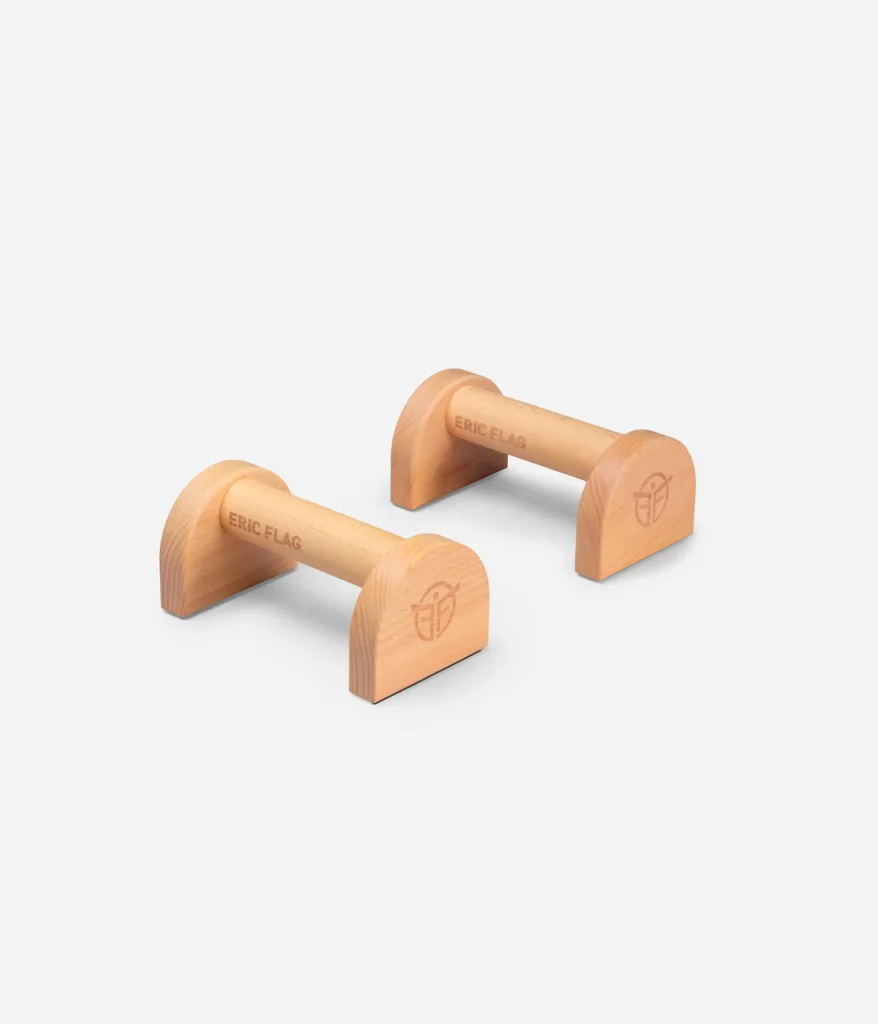
Training the elbow lever on parallettes is another excellent option. The raised grip makes it easier to position your elbows against your core and reduces wrist strain. Parallettes also open up a classic combo: enter from an L-sit, lean forward, slot your elbows under your hips and extend into the lever. This L-sit to elbow lever transition is one of the smoothest ways to link two static holds.
Elbow lever vs other calisthenics skills
The elbow lever stands apart from other calisthenics figures through its unique combination of strength and balance. Here is how it compares to other popular movements:
| Skill | Difficulty | Primary Muscles | Specific Benefits |
|---|---|---|---|
| Elbow Lever | Intermediate | Shoulders, abs, back | Balance, core bracing, isometric strength |
| Back Lever | Advanced | Back, biceps, abs | Upper body strength, control |
| Front Lever | Very advanced | Back, lats, abs | Global strength, body control |
The elbow lever positions itself as an excellent intermediate figure, preparing the body for more advanced challenges like the back lever or the front lever.
Shoulder and wrist mobility
Good range of motion in the shoulders and wrists lets you position your elbows correctly and hold the position more easily. Stiff wrists are the most common reason a first elbow lever attempt fails.
Integrate these stretching exercises into your routine:
- Wrist stretches: Perform rotations and flexion/extension movements to improve joint mobility. On all fours, place your hands flat with fingers pointing towards your knees, then gently rock back and forth.
- Shoulder openers: Use a resistance band or towel to work on shoulder range of motion. Hold the band wide, pass it over your head and behind your back in a smooth arc.
- Back stretches: Cat-cow and gentle twists will help loosen your spine. These also improve your awareness of spinal position, which helps during the lever.
Regular practice of these stretches will improve your comfort and performance in the elbow lever.
Integrating the elbow lever into your training
Training structure
To progress efficiently, integrate the elbow lever in a structured way into your training routine:
- Frequency: Practice the elbow lever 2 to 3 times per week, leaving at least one rest day between each session.
- Volume: Start with 3 to 5 attempts of 5 to 10 seconds, and progressively increase the duration and number of repetitions.
- Progression: Alternate between the preparatory exercises, the classic elbow lever and its variations for a balanced progression.
- Recovery: Include mobility exercises and stretches after your sessions to promote recovery and prevent injuries.
Sample weekly integration
| Day | Focus | Elbow Lever Work |
|---|---|---|
| Monday | Upper body push | 5 x 5-10s holds after warm-up |
| Wednesday | Core and balance | 3 x max hold + preparatory exercises |
| Friday | Skill practice | Variations + hollow holds |
Elbow lever FAQ
Does the elbow lever build muscle?
It builds isometric strength, shoulder stability and body control more than raw size. As a stepping stone toward the tuck planche it clearly supports upper-body development, but pair it with push and pull work if hypertrophy is your main goal.
What muscles does the elbow lever work?
Mainly the anterior deltoids, triceps and pectorals to hold the torso, plus the serratus for shoulder stability and the abs, lower back and glutes to keep the body rigid and parallel to the floor. Few static holds recruit this many groups at once.
Is the elbow lever hard to learn?
It is one of the most accessible straight-body holds. The main hurdle is elbow placement, not raw strength: once your elbows sit firmly just above the hips, most people hold a few seconds within a couple of weeks of practice.
Can you do an elbow lever on a bar or only on the floor?
Both work. The floor is the easiest place to learn it, parallettes spare your wrists and add range, and a straight bar is a harder variation that demands more balance. Start on the floor or parallettes before trying it on a bar.
Make it stick
The elbow lever rewards placement over brute force: nail the elbow position against your hips and 80% of the difficulty disappears. Build up from 5-second holds, then chase cleaner lines (legs together, toes pointed) before chasing longer times.
Once you hold 15 clean seconds, move to the one-leg and straight bar variations above. All the other static figures, ranked by difficulty, are listed in our calisthenics skills collection.