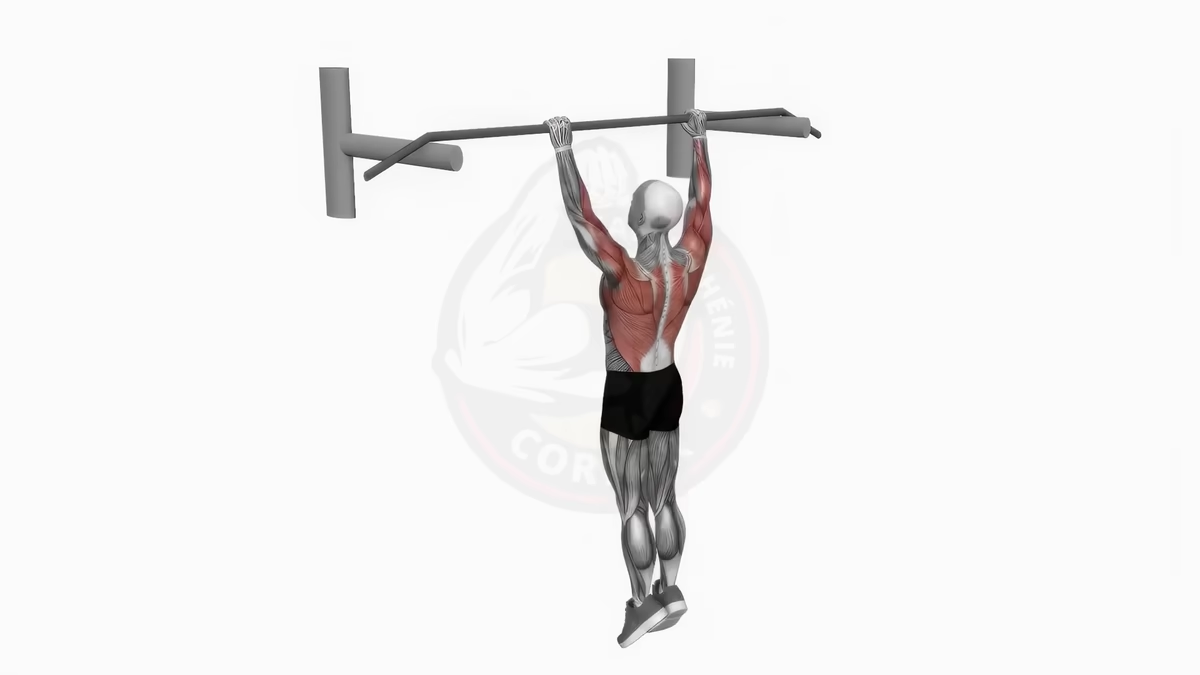
The archer pull-up is a signature street workout move and a serious step up from the standard pull-up. You pull to one side at a time, so each arm carries most of the load while the other assists with a straight elbow. It builds the unilateral strength and control that lead toward the one-arm pull-up.
How to do an archer pull-up
Before you start, you should own at least 10 clean strict pull-ups. Without that base, the archer collapses into a sloppy half-rep.
Execution steps
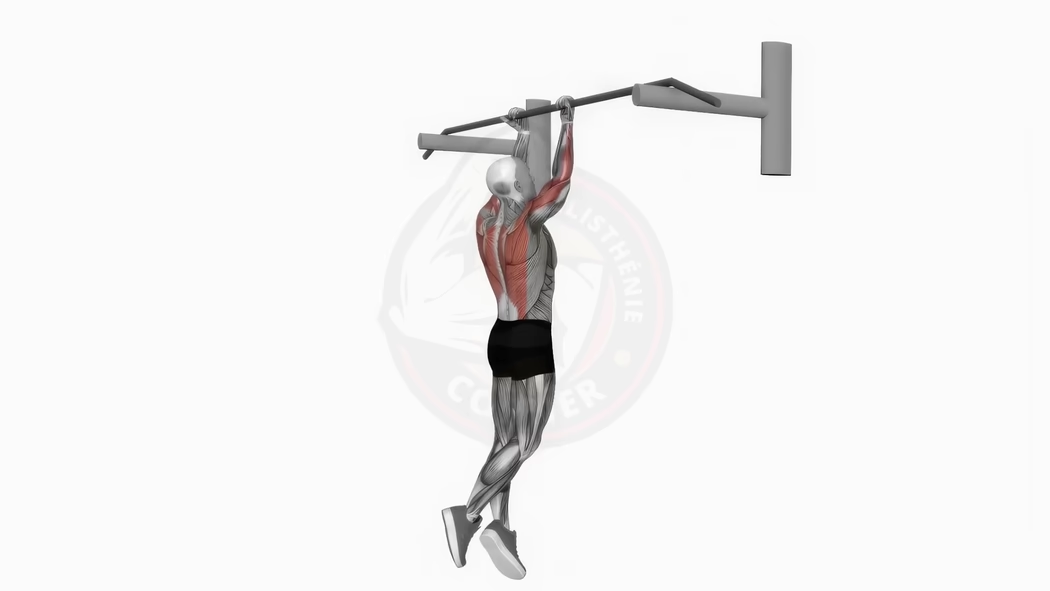
- Starting position. Hang from the bar with a grip wider than shoulder-width, palms facing forward, body tight, legs straight or slightly bent.
- Pull phase. Pull your chin toward the bar while shifting your weight to one side. The pulling-side elbow bends while the other arm stays nearly straight.
- Return phase. Lower yourself under control, then repeat on the other side.
- Breathing. Inhale on the way down, exhale during the pull.
Not there yet? Scale down with band-assisted pull-ups, or keep a toe on the floor on the support side until your strength catches up.
Equipment to use
You can train archers on almost any bar, but a few things help:
- Pull-up bar. A fixed or outdoor bar, high enough to hang fully off the floor.
- Resistance bands to offload part of your weight while you learn the movement path.
- Chalk or gloves so your hands hold on during longer sets. A failing grip ends the set before your back does, so train it on the side.
Muscles worked during archer pull-ups
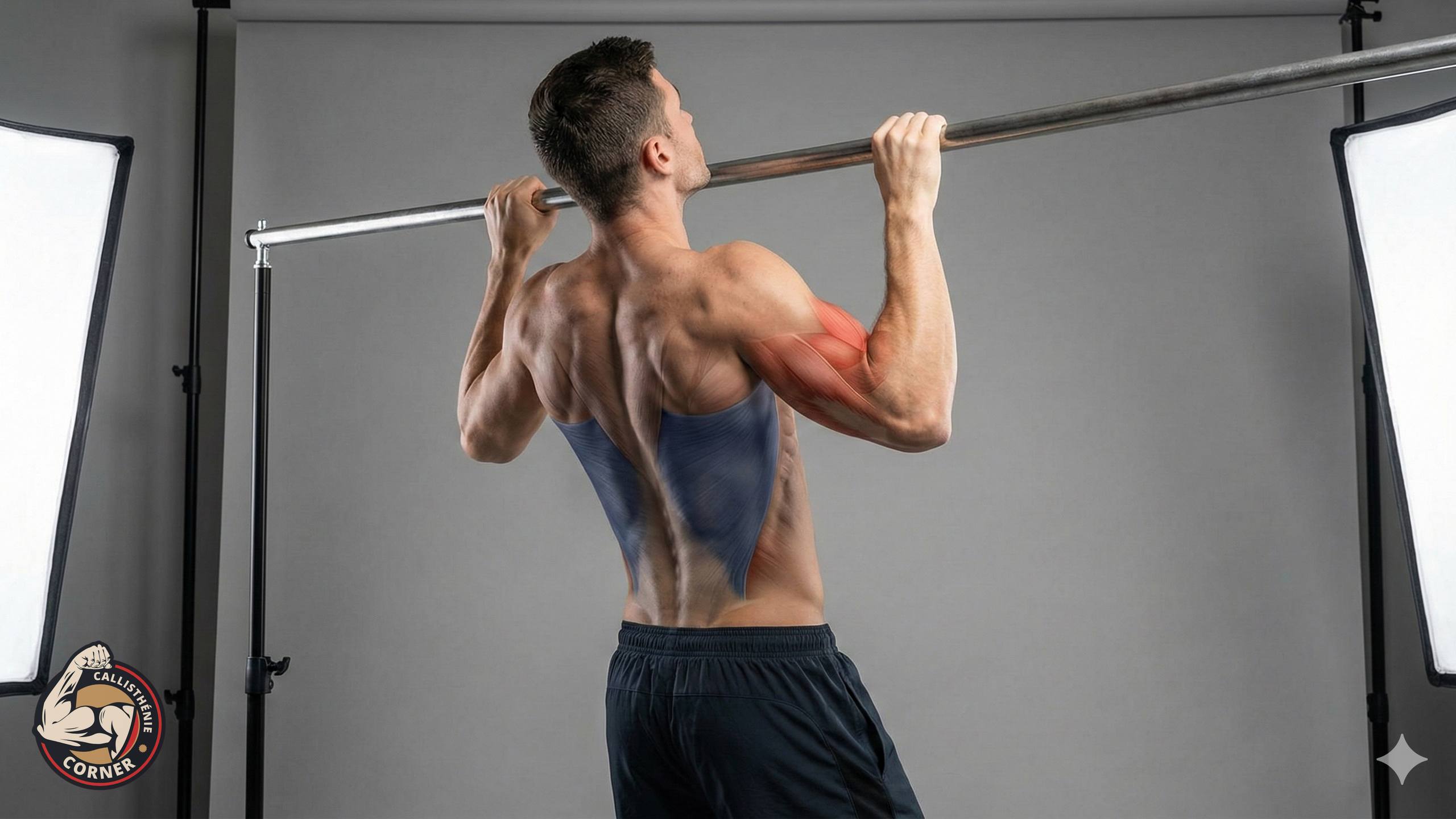
The archer pull-up is a compound pull that loads a wide chain:
- Back (lats, traps, rhomboids). The main drivers of the movement.
- Biceps and forearms. Heavily recruited to control the ascent. Pair archers with dedicated bicep work for balanced arms.
- Rear deltoids. Active in rotation and stabilisation.
- Core. Keeps you from swinging and twisting on the offset pull.
Mistakes to avoid
- Pulling with the arms only. Drive the movement from your back, not your biceps.
- Loose core. A slack torso kills stability and lets you swing.
- Half reps. Partial range caps your progress; clear the bar on every side.
- Uneven grip width. Set a comfortable, repeatable hand spacing and stick to it.
- Lopsided sets. Match left and right for both depth and volume.
Film yourself or have a partner watch your form. On a unilateral move, precision beats rep count.
Where archers lead
Clean archers on both sides give you the unilateral base for the one-arm pull-up and the explosive pulling strength that feeds straight into the muscle-up.
Brand new to bar work? Build the fundamentals with our beginner calisthenics guide first. For the full set of bodyweight arm moves, browse all our arm exercises.