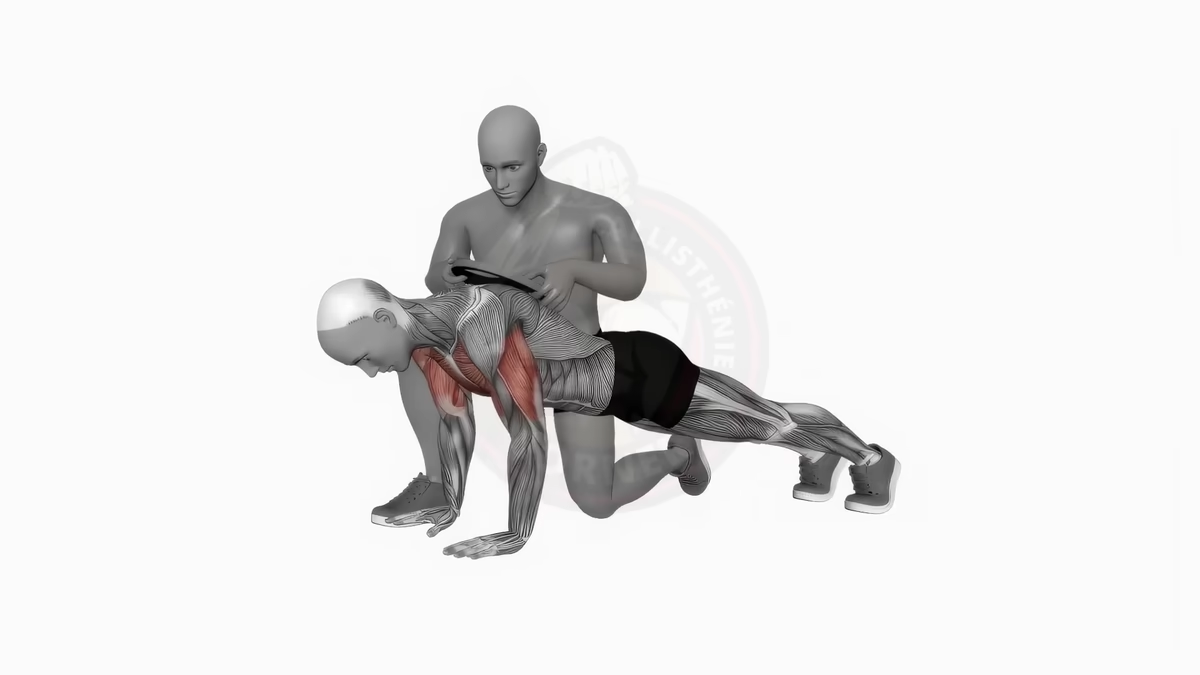
Why do weighted push-ups?
Standard push-ups eventually become too easy. You chain 30, 40 reps with no difficulty, but you stop progressing in strength. You are working muscular endurance, not hypertrophy. Weighted push-ups solve the problem by adding a load that puts your muscles back under tension.
The muscles worked stay the same: pectoralis major, triceps and anterior deltoids. What changes is intensity. With 10 or 20 kg on your back, each rep recruits more muscle fibres.
Adding weight is the most direct way to apply progressive overload without changing exercise. If you want to reinforce your entire chest, they pair nicely with chest exercises without equipment.
Prerequisites before loading up
You must be able to chain 30 standard push-ups with flawless form: full range and body perfectly aligned from head to heels. If you are not there yet, work on your standard push-ups first.
Your core must also hold up. Aim for at least 60 seconds of plank with no shaking. The extra load amplifies every weakness in your posterior chain.
How to do weighted push-ups: step-by-step form
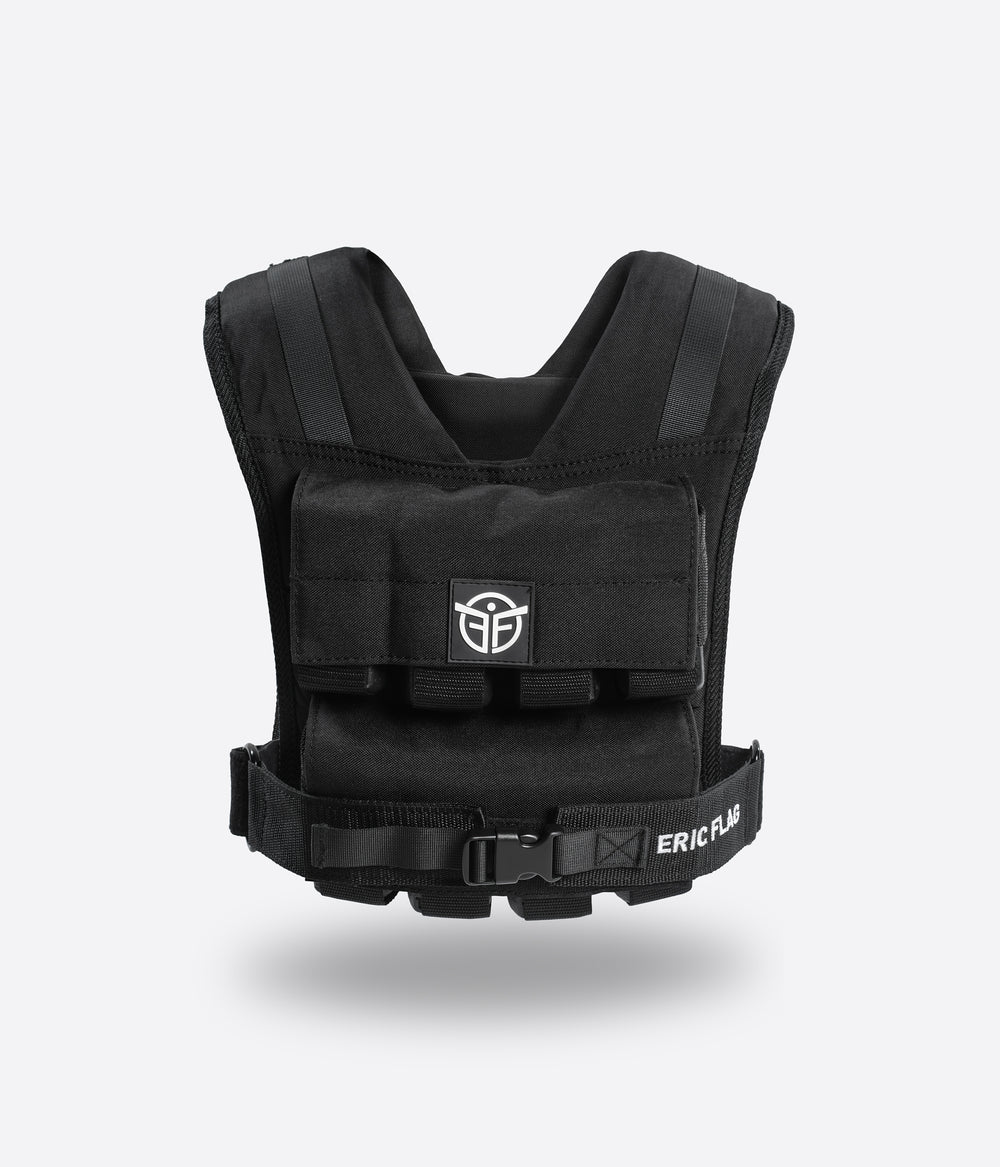
A weighted vest is the best option: the load spreads evenly across your torso and does not shift during the exercise. If you do not have one, a backpack loaded with books or water bottles works to get started.
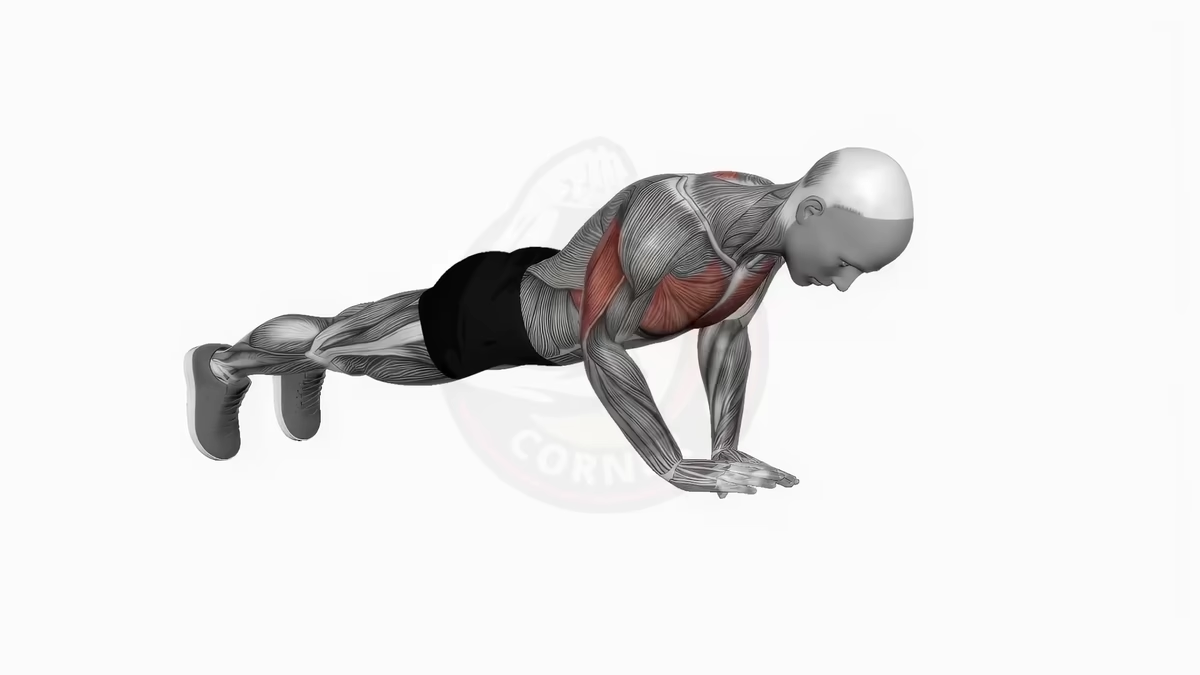
Place your hands on the floor, slightly wider than your shoulders. Fingers spread, palms flat. Widen your feet to hip width to compensate for the extra weight and gain stability.
Brace your abs and glutes before the first rep. Your body forms a straight line from shoulders to ankles. With added weight, the temptation to arch the lower back is strong. Draw your navel toward your spine to lock the position.
Descend controlling the load. Your elbows flare to 45° from the torso. The descent lasts 2 to 3 seconds. Your chest grazes the floor.
Push hard to come back up, exhaling. Lock your arms at the top without releasing the brace. The concentric phase is the most demanding under load: that is where muscle recruitment peaks.
Start with 5 to 10% of your bodyweight. For someone weighing 75 kg, that is 4 to 8 kg. Add 2 to 3 kg once you hit 3 sets of 12 clean reps at your current load.
Mistakes to avoid
Loading too heavy too fast is the classic trap. You just got a 20 kg vest and want to test your limit on day one. An excessive load wrecks your technique and puts dangerous stress on your shoulders and lower back. Progression comes in 2 to 3 kg steps, not 10 kg jumps.
Hips sagging toward the floor signal a load too heavy for your core. Quick test: hold the top position for 10 seconds with the vest on. If your hips move, drop the load or strengthen your core before resuming.
Watch out for partial range. Under load, the temptation to cut the movement short is strong. You lose a big part of the benefit for the chest if your chest does not come low enough. Reduce the load, not the range.
Variations and progressions
Weighted diamond push-ups shift the emphasis onto the triceps. Hands close together under the chest, thumbs and index fingers touching. The added weight makes this exercise brutal. Start with a lighter load than in the standard grip, because the position is already more demanding at baseline.
Weighted decline push-ups, feet elevated on a bench or step, increase the load on the anterior deltoids and upper chest. The incline angle combined with the load makes this a very intense upper-body exercise.
Tempo work is another way to progress without adding weight. Descend in 4 seconds, pause 2 seconds at the bottom, rise in 1 second. Time under tension rises sharply, which drives muscle hypertrophy with a lighter load.
What comes next after weighted push-ups?
When you regularly push 20 to 25 kg on your back in sets of 8 to 12 reps, the next step takes shape.
Weighted dips are the natural complement. They target the same muscles with a different angle and a greater range. Add weight with a dip belt and you get a push-up/dip duo that covers all upper-body pushing work.
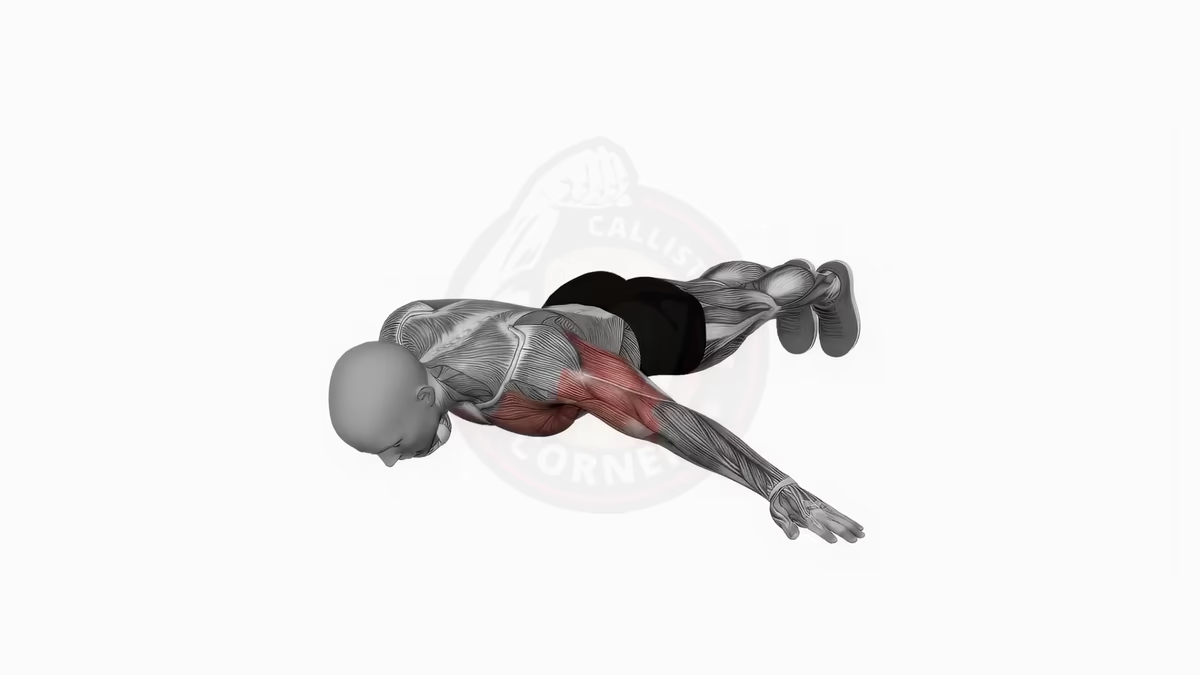
Archer push-ups are the next milestone. They shift most of the load onto a single arm, which preps advanced unilateral work. The pushing strength you built with the vest transfers directly to this transition.