Why train with a weighted vest?
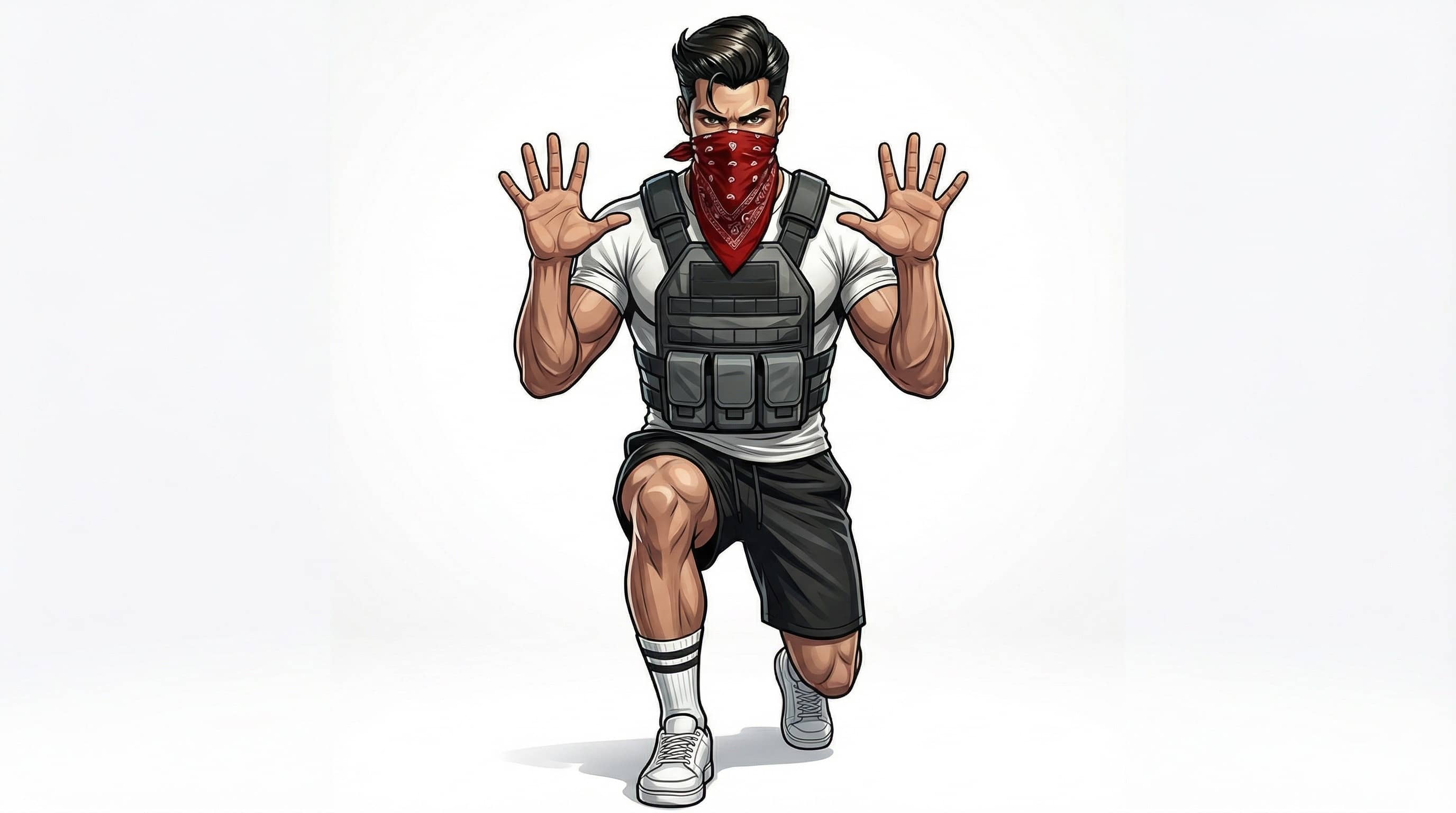
The weighted vest adds constant resistance to every movement you do. Unlike dumbbells or kettlebells, it leaves your hands free and does not alter the mechanics of your exercises. You do exactly the same movements, but heavier.
In calisthenics, this overload is valuable. It keeps you in the strength zone (6 to 10 reps) on exercises you have already mastered at endurance level. Result: more muscle recruitment, more mechanical tension, more progression.
Prerequisites before using a weighted vest
✅ Minimum prerequisites: 15 clean pull-ups, 20 full dips, 30 push-ups with full range, and 60 seconds of plank with no compensation.
✅ Starting load: 5 to 10% of your bodyweight (4 to 8 kg). Increase in 2 kg steps.
10 weighted vest exercises
1. Weighted pull-ups
Target muscles: lats, biceps, traps. Grab the bar with a pronated grip, hands slightly wider than shoulders. Pull until your chin is above the bar by squeezing the shoulder blades. Control the descent over 2 to 3 seconds. This is the most valuable exercise with a weighted vest.
2. Weighted dips
Target muscles: chest, triceps, anterior deltoids. Set up on parallel bars, arms extended. Descend until your elbows form a 90° angle, torso tilted slightly forward. Push up by locking out the arms. Weighted dips are the backbone of pushing work with a vest.
3. Weighted push-ups
Target muscles: chest, triceps, deltoids. The movement is identical to weighted push-ups standards: hands wider than shoulders, elbows at 45°, chest grazing the floor. The vest distributes the load better than a plate on the back. Level: intermediate.
4. Weighted decline push-ups
Target muscles: upper chest, anterior deltoids. Feet elevated on a bench or step, hands on the floor. The incline combined with the vest weight creates massive overload on the upper chest. Decline push-ups are already demanding at bodyweight, so reduce the vest load by 30% compared to your weighted standard push-ups.
5. Weighted squats
Target muscles: quads, glutes, hamstrings. Do a full squat, the vest adds a symmetric load that does not disturb balance. For legs, you can go heavier than for the upper body (10 to 15% of bodyweight).
6. Weighted Bulgarian split squats
Target muscles: quads, glutes, hip stabilisers. Rear foot elevated on a bench, descend until the rear knee grazes the floor. Bulgarian split squats are already an intense unilateral exercise. The vest adds balance and strength challenge without impeding the movement. Level: intermediate to advanced.
7. Weighted step-ups
Target muscles: quads, glutes. Step up onto a bench or high step (40 to 50 cm) by pushing with one leg. Do not push with the rear foot, the front leg does all the work. A simple but brutal exercise with load to build unilateral leg strength. Level: intermediate.
8. Weighted plank
Target muscles: transverse abs, rectus abdominis, obliques. Forearm plank position, body aligned from shoulders to ankles. The vest increases the load on the entire abdominal wall. Aim for 45 to 60-second sets. If you hold for more than a minute, add weight. Level: all levels (with adjusted load).
9. Weighted burpees
Target muscles: full body (chest, quads, shoulders, cardio). The classic burpee takes on a different dimension with a vest. Every jump, every descent to the floor and every push takes more effort. Limit yourself to 5 to 8% of bodyweight to keep a fluid rhythm. Level: advanced.
10. Weighted muscle-ups
Target muscles: lats, chest, triceps. The weighted muscle-up is reserved for athletes who chain 5 clean bodyweight muscle-ups. Start with 5 kg only. The transition phase is the most delicate with added weight: timing must stay impeccable. Level: advanced.
Weighted vest training program
This 6-week program alternates upper and lower body work. Two vest sessions per week are enough to progress without overloading the joints.
Weeks 1 to 3: foundations (5 to 8% of bodyweight)
Session A (upper body):
- Weighted pull-ups: 4×6, 2 min rest
- Weighted dips: 4×6, 2 min rest
- Weighted push-ups: 3×8, 90s rest
- Weighted plank: 3×45s, 60s rest
Session B (lower body + full body):
- Weighted squats: 4×8, 90s rest
- Weighted Bulgarian split squats: 3×8 per leg, 90s rest
- Weighted step-ups: 3×8 per leg, 90s rest
- Weighted burpees: 3×6, 2 min rest
Weeks 4 to 6: load increase (+2 to 3 kg)
Session A (upper body):
- Weighted pull-ups: 4×5, 2 min 30 rest
- Weighted dips: 4×5, 2 min 30 rest
- Weighted decline push-ups: 3×6, 2 min rest
- Weighted plank: 3×60s, 60s rest
Session B (lower body + full body):
- Weighted squats: 4×6, 2 min rest
- Weighted Bulgarian split squats: 3×6 per leg, 2 min rest
- Weighted step-ups: 3×6 per leg, 2 min rest
- Weighted burpees: 4×5, 2 min rest
End-of-program target: if you chain the prescribed reps with clean technique, add 2 kg. If you do not reach the minimum, keep the same weight one more week.
Tips to progress
The most common mistake is loading too fast. Muscles adapt in a few weeks, tendons in a few months. A 2 kg step every 2 to 3 weeks is a safe pace that protects elbows and shoulders long-term.
Movement quality beats load. If your technique degrades with the vest, reduce the weight immediately. A pull-up with swing or a half-range dip is worthless, even with 20 kg on your back. Muscle growth depends on mechanical tension.
Alternate weighted sessions and bodyweight sessions. On non-vest days, work technique, explosiveness and higher volumes (12 to 20 reps). The vest is not meant for every workout. It is an overload tool, not a default mode.
Think about recovery. Sleep enough, eat enough protein and add mobility work for shoulders and wrists. Weighted sessions are more demanding than classic work.
Frequently Asked Questions
How many kilos to put in the vest to start?
Between 4 and 8 kg (5 to 10% of your bodyweight). You must be able to do at least 5 clean reps of every exercise with that load. If not, lighten up.
Does the weighted vest replace dumbbells?
No. The vest is complementary. It excels on bodyweight exercises (pull-ups, dips, push-ups) but cannot replace free-weight work for bicep curls or military press.
Do I need a different vest for upper and lower body?
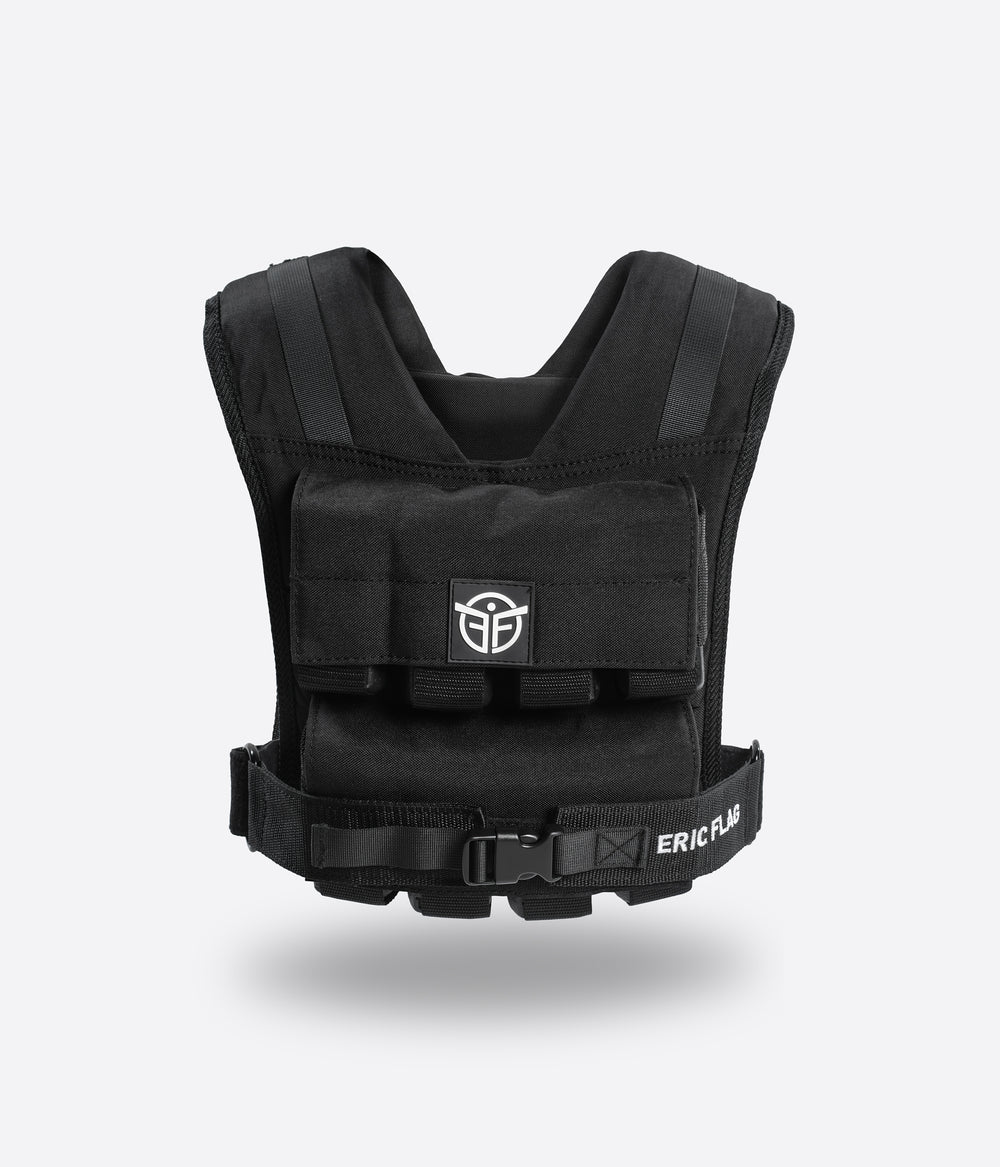
No, but you will use different loads. Legs take more weight than the upper body. An adjustable vest with removable plates lets you go from 5 kg (pull-ups) to 12 kg (squats) in the same session.
Can you use a weighted vest every day?
No. Two to three vest sessions per week are enough. Rest days and bodyweight sessions are essential for tendon recovery and consolidation of gains.
Weighted vest or backpack?
A backpack works for push-ups and squats, but tilts on pull-ups and dips. The vest distributes the weight evenly and stays stable on all movements. The investment is worth it if you plan to train weighted regularly.
If you are ready to invest, check our comparison for the right weighted vest for your level.