Building a home gym for your calisthenics practice is one of the best decisions you can make to develop functional strength and body control. Contrary to popular belief, a home gym does not require a big budget or a huge space to be effective.
Why choose a home gym?
Calisthenics has unique advantages that make it perfectly suited to home training. Calisthenics gear is generally small and multifunctional, which makes it ideal for home setups. It takes little space and can easily be stored and moved, far more practical than a treadmill or a cable machine.
Building your own home gym is not that expensive and you can easily adjust the setup based on your budget and space.
You can start with beginner equipment: a pull-up bar, resistance bands and parallel bars for dips and L-sit work. As you progress, you can gradually enrich your setup based on your goals and your progression. This scalability lets you spread the investment over time while perfectly matching your learning curve.
Home training also offers complete freedom in how you schedule sessions. No need to adapt to gym opening hours or lose time commuting: your home gym is available 24/7, allowing you to split your training across the day if needed. This flexibility is especially valuable in calisthenics, a discipline that benefits from short but frequent sessions to perfect technique and build specific strength.
Assessing and planning your training space
Before buying equipment, a careful analysis of your available space is essential. This step will shape both the equipment you can install and the optimal layout of your future home gym.
Also identify structural constraints: load-bearing walls to anchor a pull-up bar, ceiling strength to hang rings, floor surface suited to potential falls. These technical details will directly influence your equipment choices and their placement.
Functional zoning of your space
Organise your space into distinct functional zones. Plan a pull-up zone with enough room for swinging movements, a floor zone for core and mobility work, and an intermediate zone for rings or parallette work (for more advanced athletes). This layout lets you optimise movement and train safely.
Do not forget to plan storage for removable gear and accessories. A well-organised home gym is a space where every item has its place, making it easy to get your session started quickly.
Again, do not rush and do not buy the full range of equipment at once. In reality you do not even need all of it. This equipment will be a big bonus in your progression but it will not do everything. You are responsible for the bulk of the work.
Beginner-friendly core equipment
Three pieces cover 90% of beginner calisthenics work at home:
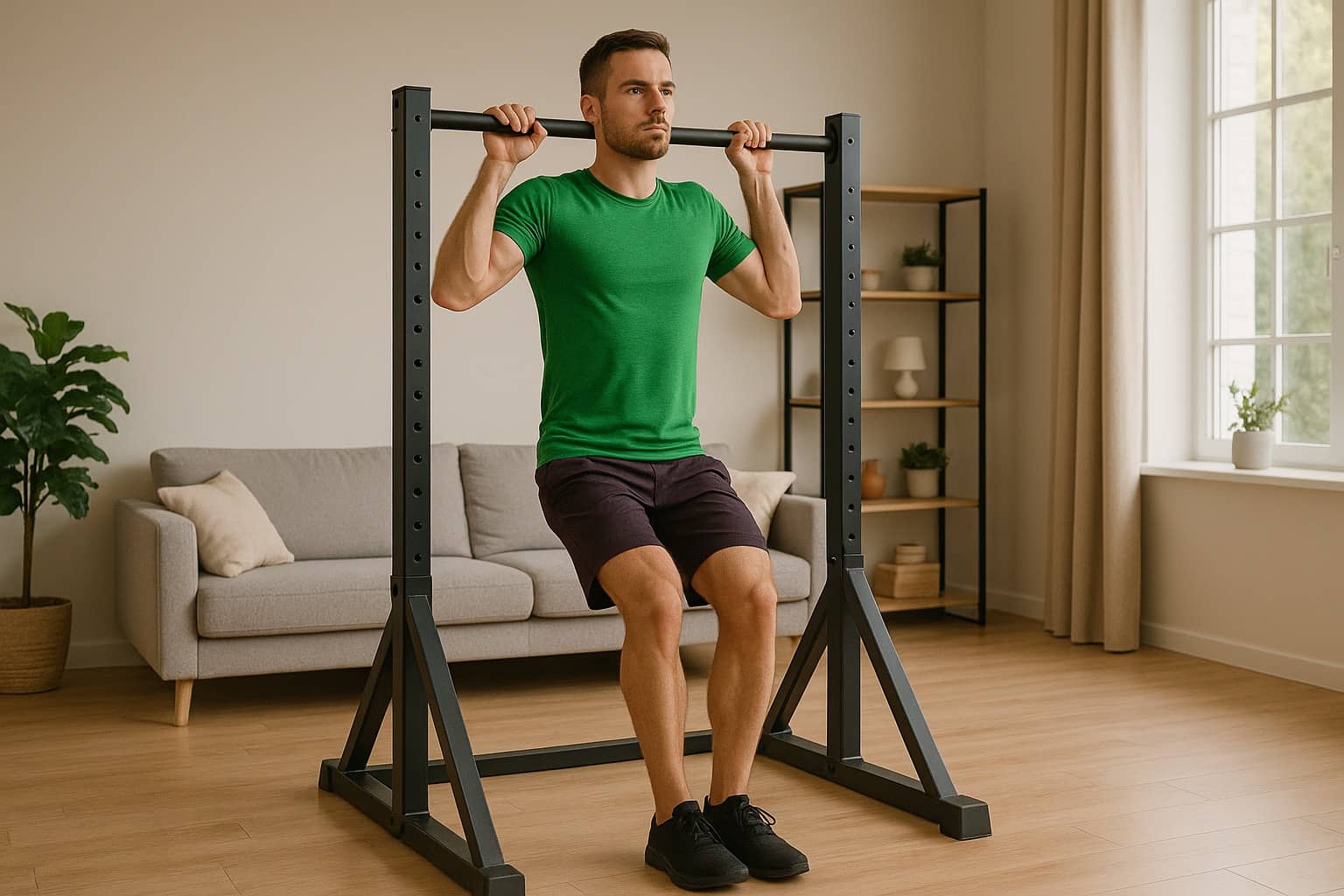
- A pull-up bar (doorway or wall-mounted). See our best pull-up bars overview for options.
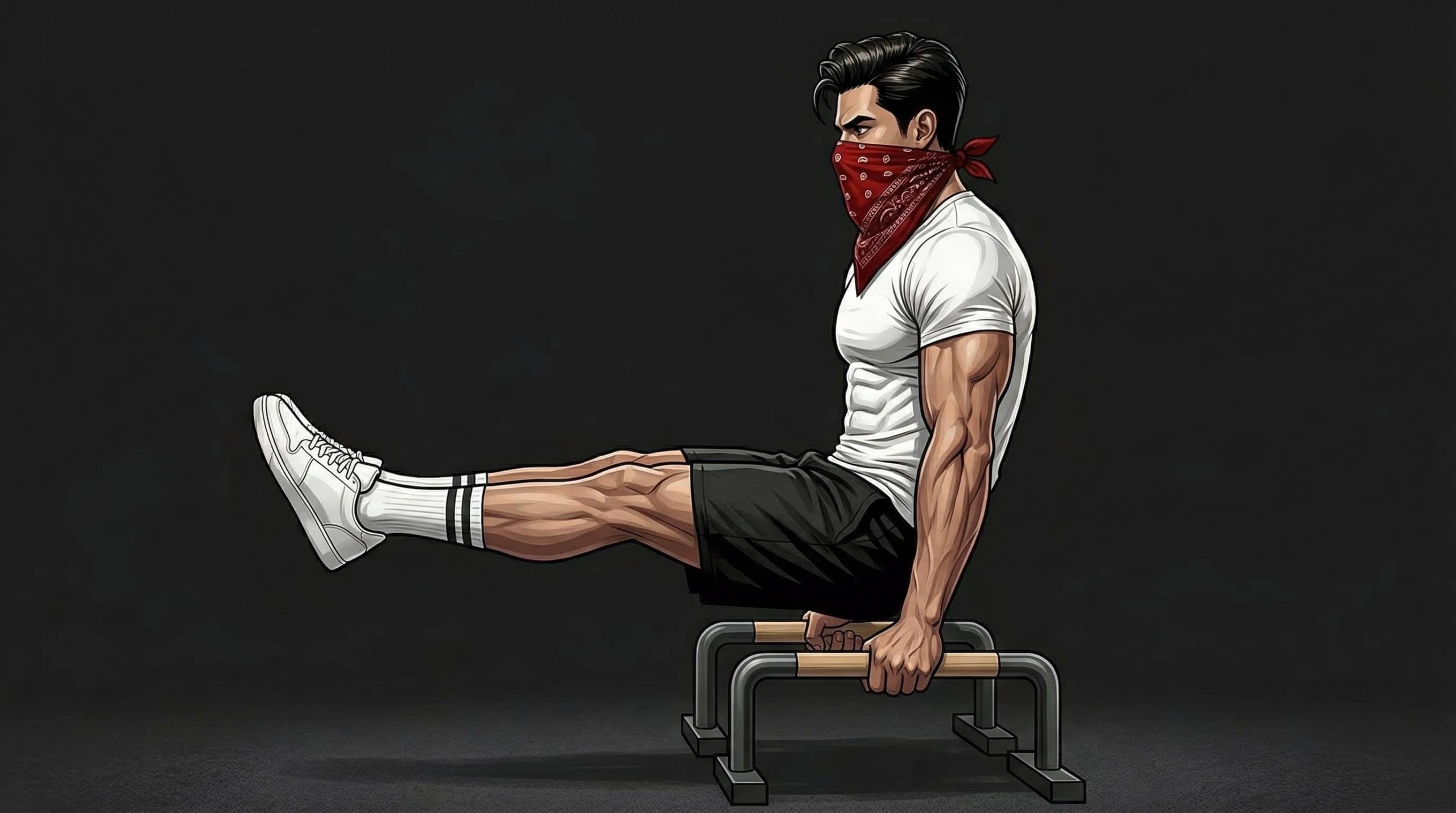
- Parallettes for dips, L-sit work, handstand progressions.
- Resistance bands to assist pull-ups, load push-ups and rehab shoulders.
Once the basics are in place, you can add a weighted vest to scale intensity on push-ups, dips and squats, or an exercise mat for core work and joint protection.
Progressive investment, step by step
The smart approach: start with 2-3 essentials, train consistently for 2 to 3 months, then add equipment aligned with your goals.
- Months 1-3. Pull-up bar + resistance bands. Build your base with standard push-ups, australian pull-ups, squats, glute bridges.
- Months 4-6. Add parallettes. Start dips, L-sit, bent-arm holds.
- Months 6-12. Add a weighted vest or gymnastic rings depending on your goal (strength vs skill work).
This progressive approach aligns gear with your actual level. Buying all the equipment on day one usually means half of it gathers dust.
A home gym that adapts
The best home gym is not the one with the most gear, it is the one that matches your training. A 3 m² corner with a pull-up bar, a pair of parallettes and resistance bands is enough to build serious strength.
As you progress, your needs will evolve. Adding an olympic kettlebell for swings and carries, gymnastic rings for dips and muscle-up work, or a full rack for more serious loading will come naturally when the base is solid.