Your abs work every session, but your obliques often stay in the background. They are the ones that rotate your trunk, lean you to the side and lock your spine when you carry a load. A good oblique exercise needs no equipment: bodyweight is enough to work them hard. This guide gathers the 8 best no-equipment oblique exercises, their real role, and the frequency to build them without fooling yourself about a slim waist.
Obliques: what they actually do
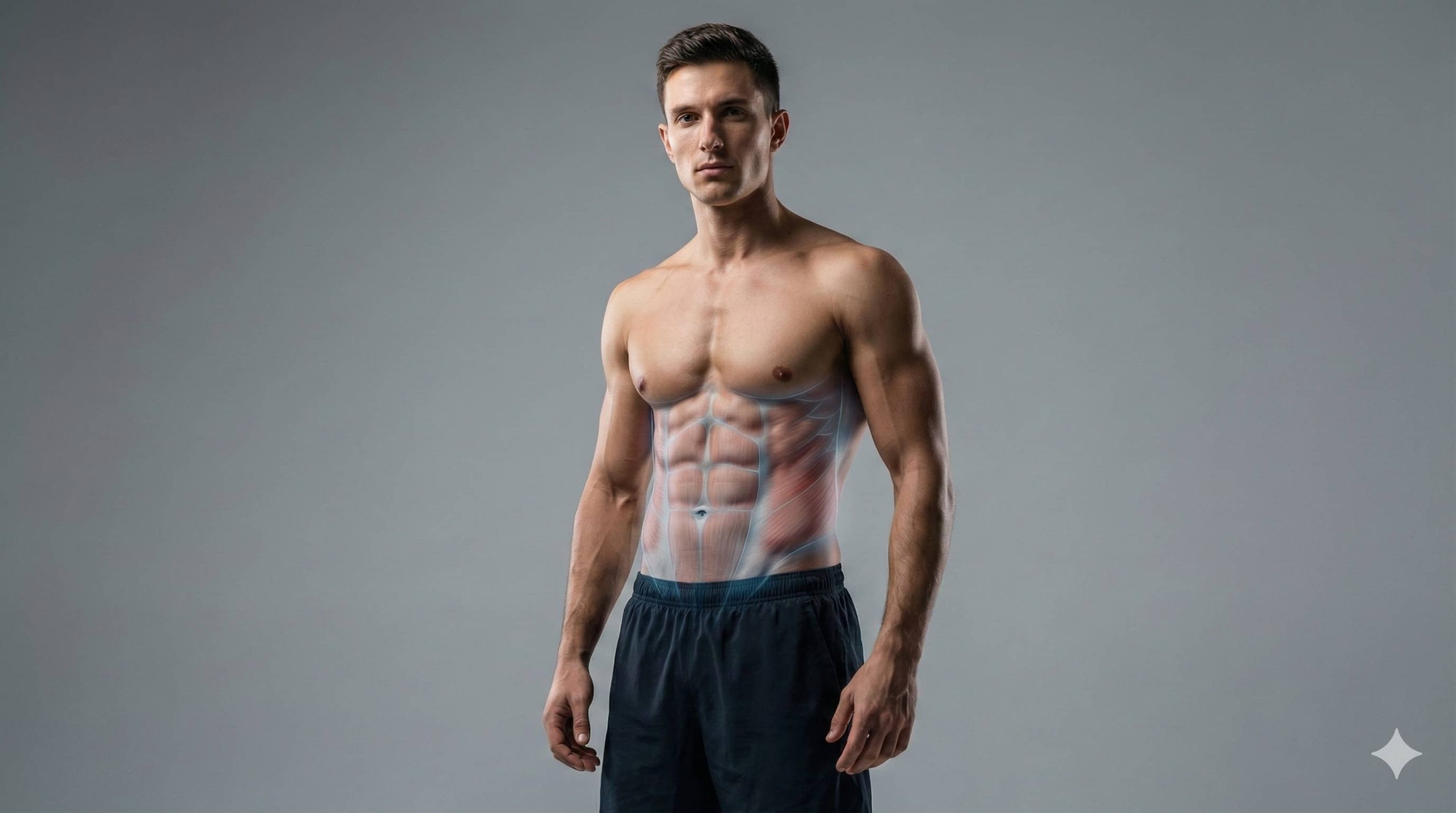
Your obliques sit in two layers. The external oblique is the more superficial one, on the sides of the belly. The internal oblique hides just underneath. Both work together on every lateral movement.
Their most visible job is trunk rotation and lateral flexion: anything that turns or tilts your torso runs through them. But their most valuable role is invisible. In anti-rotation, they stop your trunk from twisting under a load. That is what protects your lower back on most everyday and calisthenics movements.
One myth to kill right away: building the obliques does not slim the waist. People everywhere claim oblique exercises carve out the waist. That is false. Training a muscle strengthens and defines it, it does not melt the fat around it. A slim waist comes from a calorie deficit that lowers your body fat across the whole body. Your trained obliques will show when the fat drops, not before.
The 8 best no-equipment oblique exercises
They all use bodyweight, from simplest to most demanding. Pick two or three exercises per session and rotate them from one time to the next.
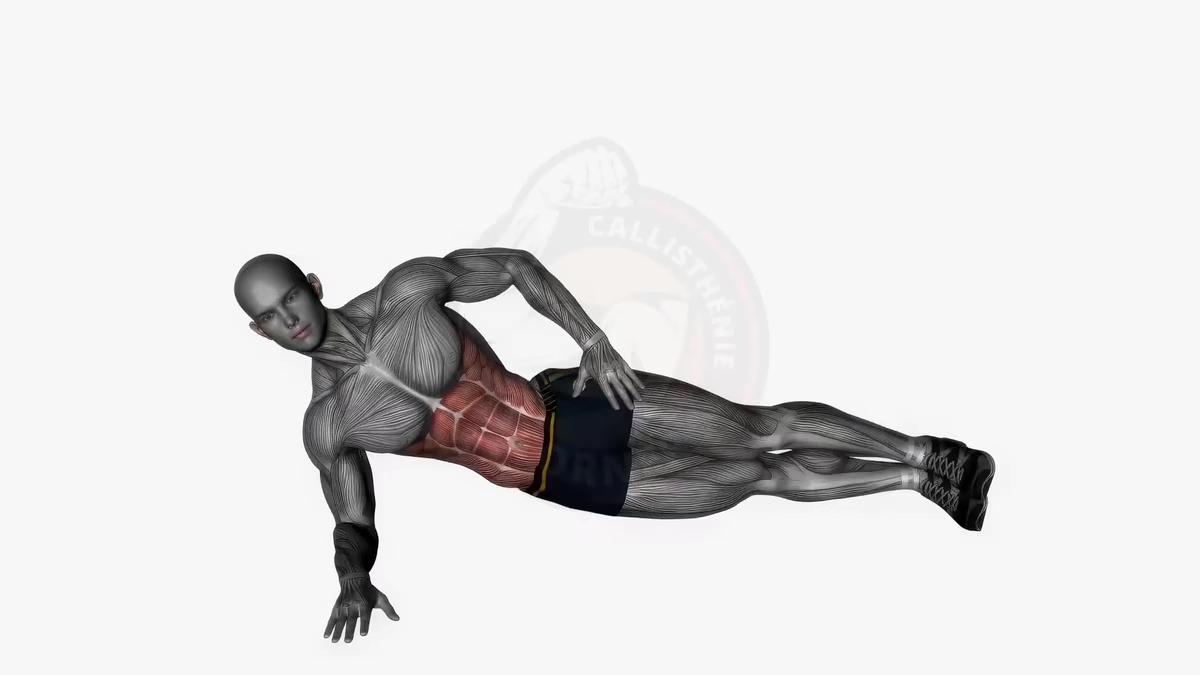
The side plank is the reference oblique exercise. Propped on one forearm, body aligned on its side, you hold the hips high without sagging. The whole side of the trunk works isometrically. Aim for 3 sets of 30 to 45 seconds per side.
The Russian twist targets loaded rotation. Seated, torso leaning back and feet off the floor, you turn the torso one way then the other. Keep the back straight and the movement slow. Count 3 sets of 30 rotations.
The bicycle crunch is still one of the best for activating the obliques according to muscle-activity measurements. Lying down, you bring the elbow toward the opposite knee while pedalling slowly. The slowness does all the work. Start with 3 sets of 20 reps.
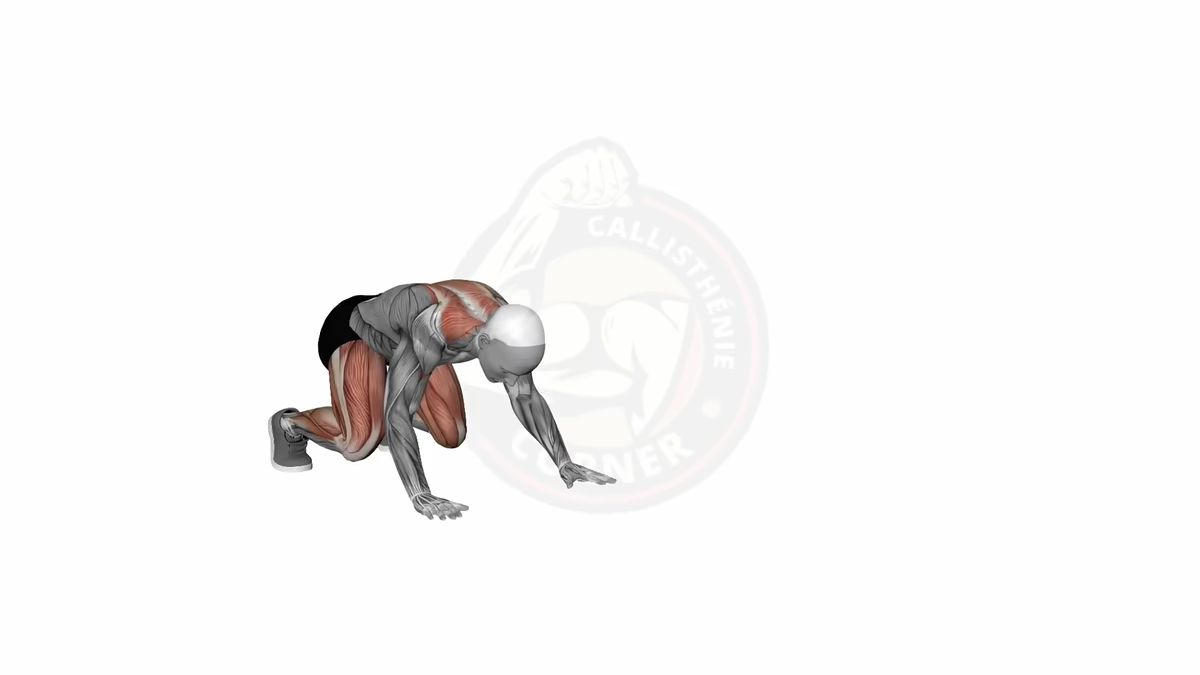
Cross-body mountain climbers add some cardio. In a high plank, you drive the right knee toward the left elbow, then alternate. That crossing goes after the rotation. Hold 3 sets of 30 seconds.
The floor oblique crunch isolates lateral flexion. Lying on your back, hands at the temples, you lift the shoulder toward the hip on the same side without pulling on the neck. The torso turns slightly. Do 3 sets of 15 reps per side.
Heel taps warm the obliques up fast. Lying down, knees bent and shoulders slightly off the floor, you tilt the trunk to the side to touch your heel, then the other. Keep the rhythm controlled. Aim for 3 sets of 20 taps per side.
The side plank with reach-through spices up the standard side plank. From the side-plank position, you pass the free arm under your torso while rounding the shoulders, then you open back up. Rotation under tension recruits the obliques deeply. Count 3 sets of 10 reps per side.
The side plank hip dip finishes the isometric work. In a side plank, you lower the hip slowly toward the floor without setting it down, then lift back up. It is a side plank that moves. Start with 3 sets of 12 reps per side.
How many obliques, how often
The obliques are muscles like any other: they need to recover. Two to three sessions per week is plenty, with at least 48 hours between two rounds. Every day, you stack fatigue without gaining more strength.
In a session, two to three well-executed exercises beat a long, sloppy list. The quality of the contraction matters more than the number of reps. To keep progressing, you change exercise or slow the tempo, you do not add reps forever.
Above all, do not isolate your obliques from the rest. They are only one function of your core, which also covers flexion, anti-extension and anti-rotation. The full picture and how to assemble it all are in the no-equipment abs exercises guide.
The right dose in one sentence: two to three oblique exercises per session, two to three sessions per week, never two days in a row. You progress by changing exercise or slowing the tempo, not by stacking reps.
The traps that hold your obliques back
The rotation comes from the trunk, not the neck. The number-one mistake on obliques: pulling on the head or forcing from the lower back to gain range. The rotation must come from the contraction of the obliques themselves. Keep the neck relaxed and the movement short. A clean half range beats a big range torn from the lower back.
The next trap is mental: believing these exercises will melt your waist. They strengthen it, they do not carve it. Fat leaves with your diet, not with rotations.
Speed is the other false good idea. The obliques respond to tension, not momentum. Three slow, controlled Russian twists beat ten rotations thrown by the arms. Slow down and you will feel the difference immediately.
One last reflex to fix: betting everything on rotation and forgetting the bracing. The obliques support your trunk as much as they rotate it. Without a minimum of bracing work alongside, you build one side of the muscle and neglect the other.
Frequently asked questions
How do you build your obliques with no equipment?
The side plank, the Russian twist and the bicycle crunch are enough. At bodyweight, two to three sessions per week do the job.
Do oblique exercises slim the waist?
No, not directly. They build and define the obliques, but a slim waist comes from fat loss through a calorie deficit. There is no such thing as spot fat reduction.
How often should you train the obliques?
Two to three times a week, with at least 48 hours of recovery between two sessions. Training them every day is counterproductive.
What are the oblique muscles?
Two layers: the external oblique (superficial) and the internal oblique (deep). They handle the rotation and the lateral tilt of the trunk.
To structure your obliques inside a real routine, do not train at random. The abs calisthenics program runs 12 weeks of bodyweight core work with detailed sessions and guided progression, the obliques built into a complete core.