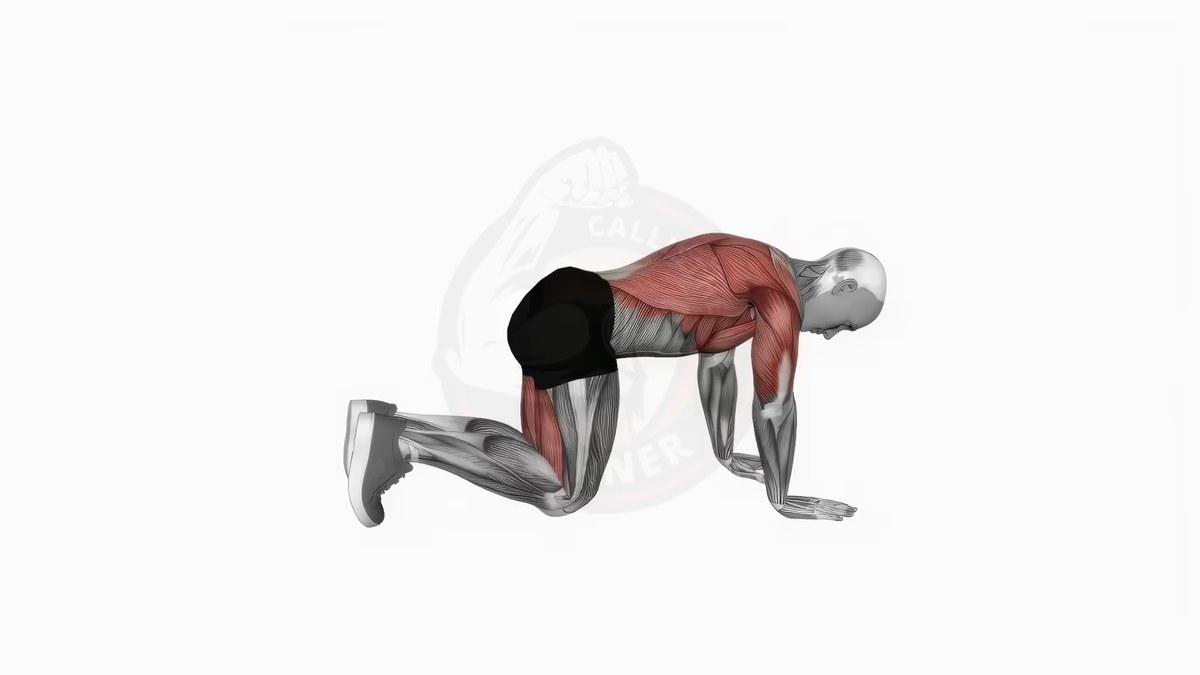
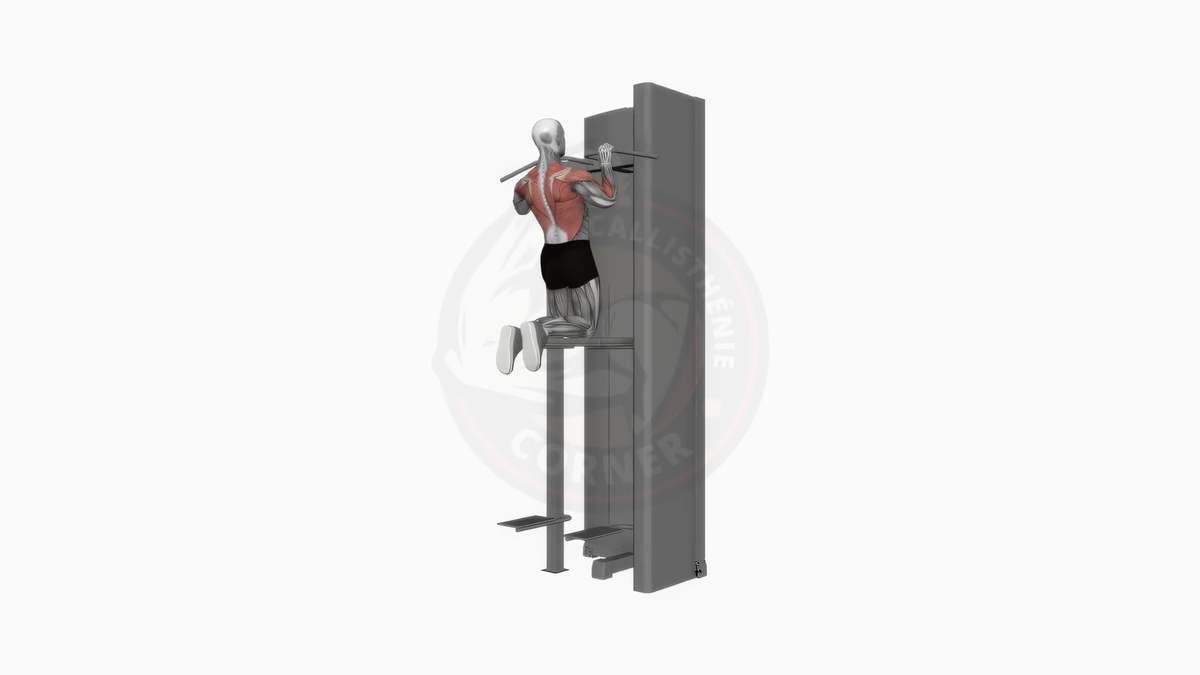
The pull-up is THE foundational exercise for building a wide, powerful back in calisthenics. No other bodyweight movement targets the lats as effectively, and no serious upper-body program can skip it.
Why pull-ups matter
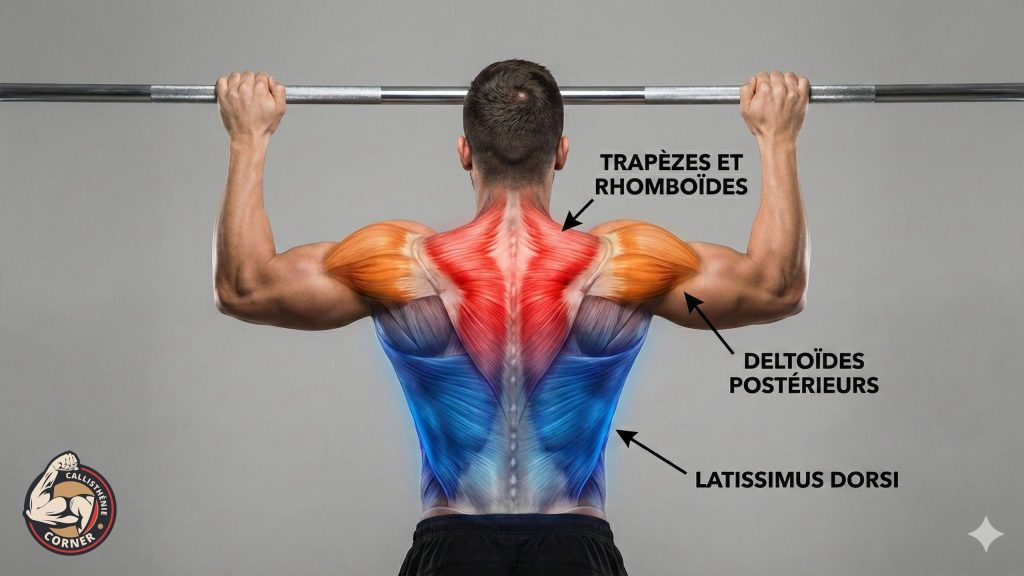
Pull-ups are the single best exercise for developing the V-shape that defines a strong physique. The movement recruits a massive chain of upper-body muscles in one efficient pattern.
Primary muscles:
| Muscle | Role |
|---|---|
| Latissimus dorsi (lats) | Main pulling force, responsible for back width |
| Trapezius (middle and lower) | Scapular retraction and depression |
| Teres major | Assists the lats in shoulder extension |
| Rhomboids | Pull the shoulder blades together |
Secondary muscles:
| Muscle | Role |
|---|---|
| Biceps brachii | Elbow flexion during the pull |
| Brachialis | Deep arm flexor, assists the biceps |
| Forearms | Grip strength and wrist stabilization |
Beyond aesthetics, pull-ups are the foundation for every advanced calisthenics skill on the pulling side. The muscle-up, the front lever, and one-arm pull-up progressions all start here. Pulling strength also transfers directly to climbing, martial arts, rowing, and CrossFit.
Prerequisites before your first pull-up
Don’t jump on the bar and struggle. Build the base first.
10 clean Australian pull-ups (inverted rows): Full range of motion, chest touches the bar, controlled descent. If you can’t hit 10 solid reps, you’re not ready for the bar yet. Use a resistance band looped around a bar or work on lower angles to build strength.
30-second active hang in pronated grip: Hang from the bar with palms facing forward, arms extended, shoulders engaged (not shrugging toward your ears). Hold 30 seconds without shaking. This builds the grip and shoulder stability you need.
20-second controlled scapular pull-up: From a dead hang, depress your shoulder blades (pull them down and back) without bending your elbows. Hold 20 seconds. This is the motor pattern that initiates every pull-up. Skip it and your lats never fully engage.
45-second high plank without hip flexion: Your core must be strong enough to keep your body rigid during the pull. If your hips swing or your legs kick during pull-ups, your core is the bottleneck.
Final readiness test: Jump to the top position (chin above bar) and hold for 10 seconds. If you can hold it without shaking, you have enough strength to begin training pull-ups with negatives.
Step-by-step pull-up technique
Every rep follows the same sequence. Master each phase before worrying about volume.
Starting position
Grip the bar with palms facing forward (pronated grip), hands shoulder-width apart or slightly wider. Arms fully extended but not completely relaxed: maintain light tension in your shoulders and lats. Engage your core and glutes to prevent swinging.
Phase 1: Scapular engagement
Before bending your elbows, pull your shoulder blades down and back. You should feel your back activate. This is a scapular pull-up at the start of every rep. It ensures your lats do the heavy lifting rather than your biceps alone.
Phase 2: The pull
Drive your elbows down and back, as if you’re trying to put them in your back pockets. Pull with your back, not your arms. Continue until your chin clears the bar. Keep your core braced throughout the ascent.
Phase 3: Controlled descent
Lower yourself over a minimum of 3 seconds. This eccentric phase is where a huge portion of strength gains happen. Don’t drop. Maintain scapular engagement until you reach full arm extension at the bottom.
Breathing
Inhale at the bottom in the dead hang position. Exhale during the pull on the way up.
Critical technique points
- Shoulders stay back and down at all times. Never let them round forward.
- No kipping, swinging, or leg drive. Strict reps only.
- Full range of motion on every rep: dead hang at the bottom, chin above bar at the top.
Common mistakes
Rounding the back: When your shoulders roll forward and your upper back rounds, your lats can’t contract effectively. The fix: start every rep with a deliberate scapular pull-up. Think “chest to bar” rather than “chin above bar.”
Kipping or swinging: Using momentum to get over the bar may look impressive, but it robs you of the strength stimulus. Strict pull-ups build real pulling power. If you can’t get another clean rep, end the set.
Uncontrolled descent (dropping down): Letting gravity do all the work on the way down means you’re throwing away half the exercise. The eccentric (lowering) phase is critical for muscle growth and tendon health. Every rep should take at least 3 seconds to descend.
Partial range of motion: Starting from bent elbows at the bottom or stopping before chin clears the bar at the top. Both cut the effective range and leave strength on the table. Full extension at the bottom, full pull at the top.
Neglecting scapular engagement: Going straight into elbow flexion without engaging the shoulder blades first. This shifts the load onto the biceps and away from the lats. Always initiate the pull from the shoulder blades.
Training program: from zero to weighted pull-ups
Weeks 1-4: Building the base
| Exercise | Sets x Reps | Notes |
|---|---|---|
| Australian pull-ups | 4 × 10-12 | Chest touches bar, controlled tempo |
| Negative pull-ups | 3 × 5 | Jump to the top, lower in 5 seconds |
| Active hang | 3 × 20-30s | Pronated grip, shoulders engaged |
Goal by end of week 4: 3 strict pull-ups.
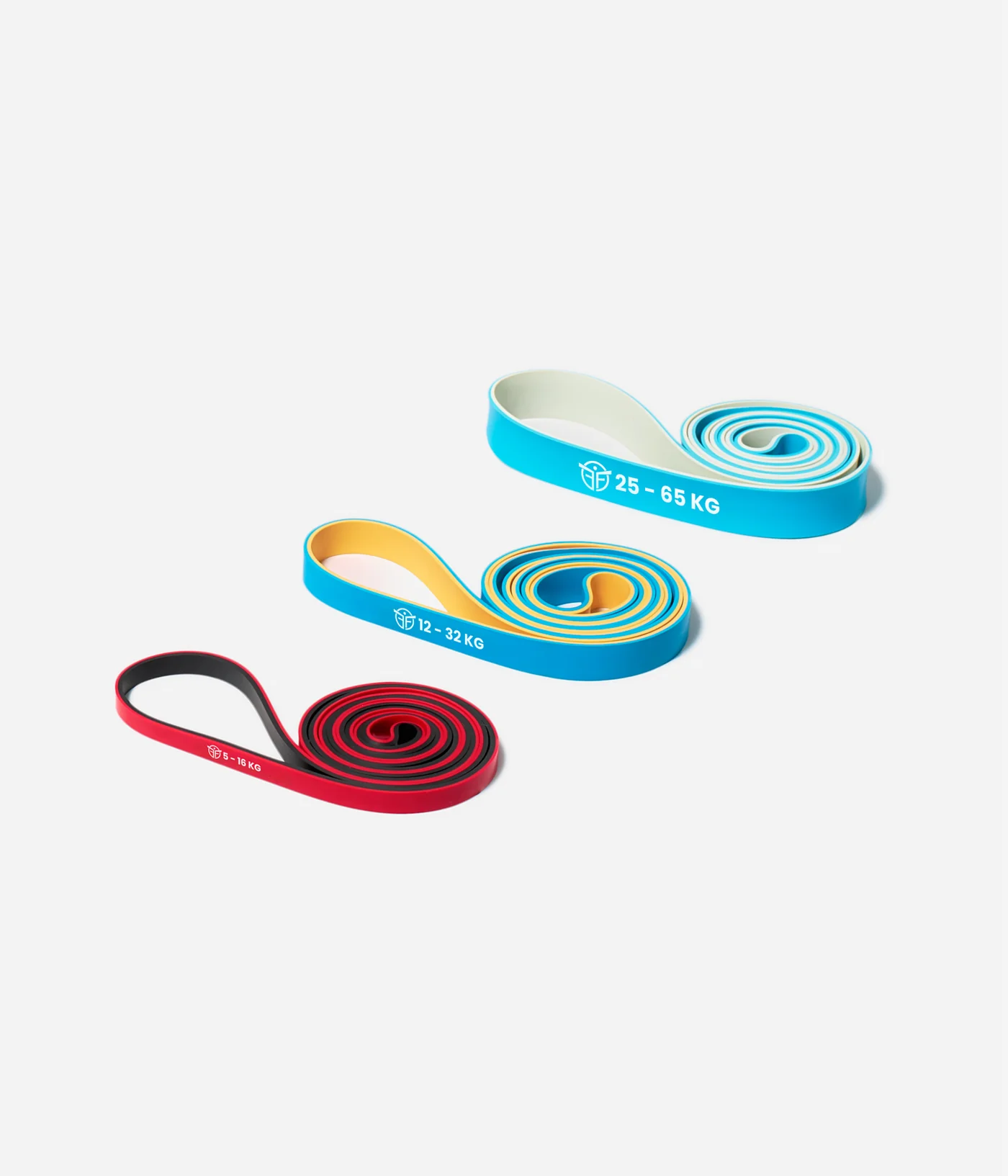
If you struggle with negatives, loop a resistance band around the bar and place your foot in it for assisted pull-ups. Progressively use lighter bands.
Weeks 5-8: Volume building
| Exercise | Sets x Reps | Notes |
|---|---|---|
| Pull-ups | 4-5 × 5-8 | 3 minutes rest between sets |
Goal by end of week 8: 3 sets of 10 strict pull-ups.
Focus on perfect form over rep count. If form breaks down at rep 6, stop at 6. Quality always beats quantity.
Weeks 9-12: Endurance and first weighted reps
| Exercise | Sets x Reps | Notes |
|---|---|---|
| Pull-ups (bodyweight) | 5 × 8-10 | Clean reps, full ROM |
| Pull-ups (weighted) | 2-3 × 5 | Start with 2-3 kg added |
Goal by end of week 12: 5 sets of 12 bodyweight pull-ups before adding weight.
Introduce weighted pull-ups using a dip belt or a backpack with weight plates. Start light. The transition to weighted work is a new stimulus that requires conservative loading.
Weeks 13+: Weighted progression
| Exercise | Sets x Reps | Notes |
|---|---|---|
| Weighted pull-ups | 4-5 × 6-8 | Add 2-3 kg every 3-4 weeks |
The principle is simple: when you can complete all prescribed sets and reps with clean form, add 2-3 kg. Don’t rush the load. Tendons adapt slower than muscles.
Variations
Close grip pull-ups: Hands 10-15 cm apart. Shifts emphasis to the middle trapezius and rhomboids, and increases biceps involvement. Good for building back thickness.
Wide grip pull-ups: Hands well outside shoulder width. Maximizes lat stretch and emphasizes the outer lats for width. Use with caution: the wider the grip, the more stress on the shoulder joint. Only go as wide as your shoulders comfortably allow.
Weighted pull-ups: Add external load after you can do 12 clean bodyweight reps. Start with 5% of your bodyweight and increase gradually. Weighted pull-ups are the fastest path to raw pulling strength.
Tempo pull-ups (3-1-3): 3 seconds up, 1 second pause at the top, 3 seconds down. Dramatically increases time under tension. Excellent for breaking through plateaus.
Frequently Asked Questions
How many pull-ups is good?
For the average adult, 5 to 10 strict pull-ups is solid. Completing 3 sets of 10 with full range of motion and controlled tempo puts you well above average. If you can do 15 or more clean reps, you are ready for weighted pull-ups or advanced variations like archer pull-ups.
Can beginners do pull-ups?
Most beginners cannot do a full pull-up on day one, and that is completely normal. The path starts with Australian pull-ups (inverted rows), dead hangs, scapular pull-ups, and negative pull-ups. Following this progression, most people achieve their first strict pull-up within 4 to 8 weeks of consistent training.
Do pull-ups build muscle?
Absolutely. Pull-ups are one of the most effective exercises for building the lats, traps, rhomboids, and biceps. The combination of heavy relative loading (your full bodyweight) and large range of motion creates a powerful muscle-building stimulus. Adding weight once you can do 12+ clean reps accelerates hypertrophy further.
What comes after pull-ups
Once you own 12+ strict pull-ups, the entire pulling tree opens up.
Archer pull-ups: One arm does most of the work while the other assists with a straight arm. This is the bridge to one-arm pull-up training. Requires solid bilateral strength first.
Muscle-up: The pull-up is the first half of the muscle-up. Without clean, explosive pull-ups, the transition phase is impossible. Train pull-ups to sternum height before attempting the muscle-up.
Front lever: A horizontal hold that demands extreme lat and core strength. Pulling power built through pull-ups translates directly. Start with tuck front lever holds once your pull-ups are solid.
Full-body integration: Pull-ups should be part of a balanced program. Pair them with push-ups or dips for pressing balance, and include core work to build complete functional strength. A body that only pulls will develop imbalances.
The pull-up is not just a back exercise. It’s the cornerstone of upper-body pulling in calisthenics, and every rep you do today pays dividends in the advanced skills of tomorrow.