The bird dog is a core exercise that originated in functional rehabilitation. Initially designed to rehab the back after injury, it has become essential for strengthening the trunk and improving stability.
The bird dog is simple to perform, requires zero equipment and adapts to all levels. Whether you’re a beginner or an experienced athlete, this exercise will guide you toward a stronger back and better stability.
Prerequisites
The bird dog is accessible to beginners. Before you start:
- Mobility: able to hold the quadruped (all fours) position for 30 seconds without pain
- Minimum strength: front plank hold of 20 seconds
- Body awareness: able to identify a neutral spine vs. an arched spine
Not ready? Start with the classic plank for 2 weeks.
Who is the bird dog for?
Beginners: The bird dog is ideal for progressively working deep muscles without injury risk.
People with lower back pain: Integrating the bird dog into your routine allows you to gently strengthen your back and gradually reduce pain.
Athletes seeking performance: The bird dog significantly improves stability, reinforcing your trunk for better performance across all sports.
Muscles worked during the bird dog
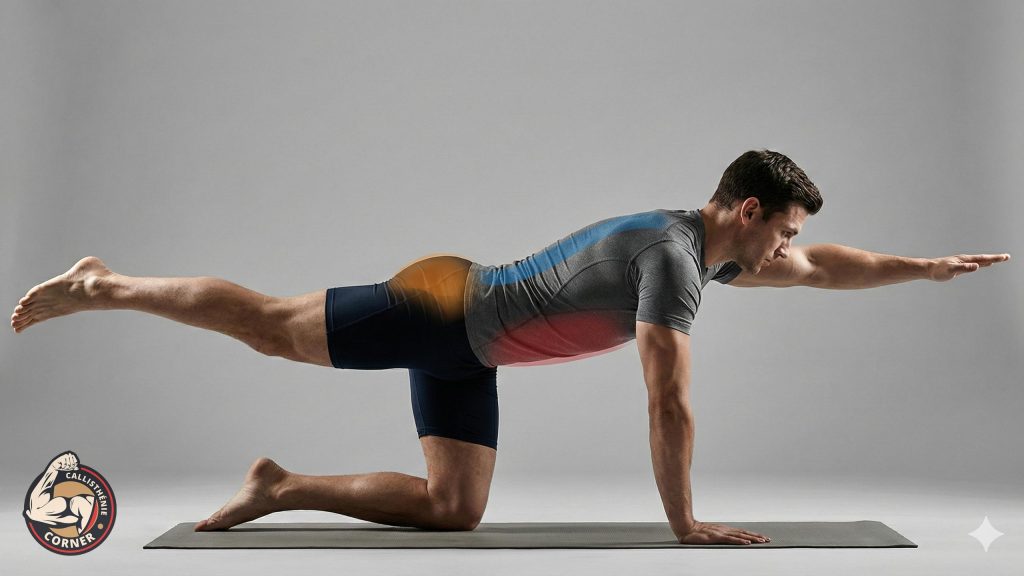
Deep trunk muscles: Transverse abdominis, obliques and multifidus. These muscles are essential for protecting your spine.
Back muscles: Lumbar and spinal erectors. The bird dog specifically strengthens the lower back muscles, helping to reduce tension and lower back pain.
Stabilizers: The glutes and shoulders actively stabilize your body during the exercise, promoting better overall coordination.
Why add the bird dog to your training?
- Posture and balance improvement: effectively strengthens stabilizer muscles to correct postural imbalances
- Lower back pain prevention: actively reduces chronic pain through targeted strengthening
- Global strengthening without joint risk: gently engages your trunk while preserving your joints
How to do a bird dog: step by step
Step 1: Starting position
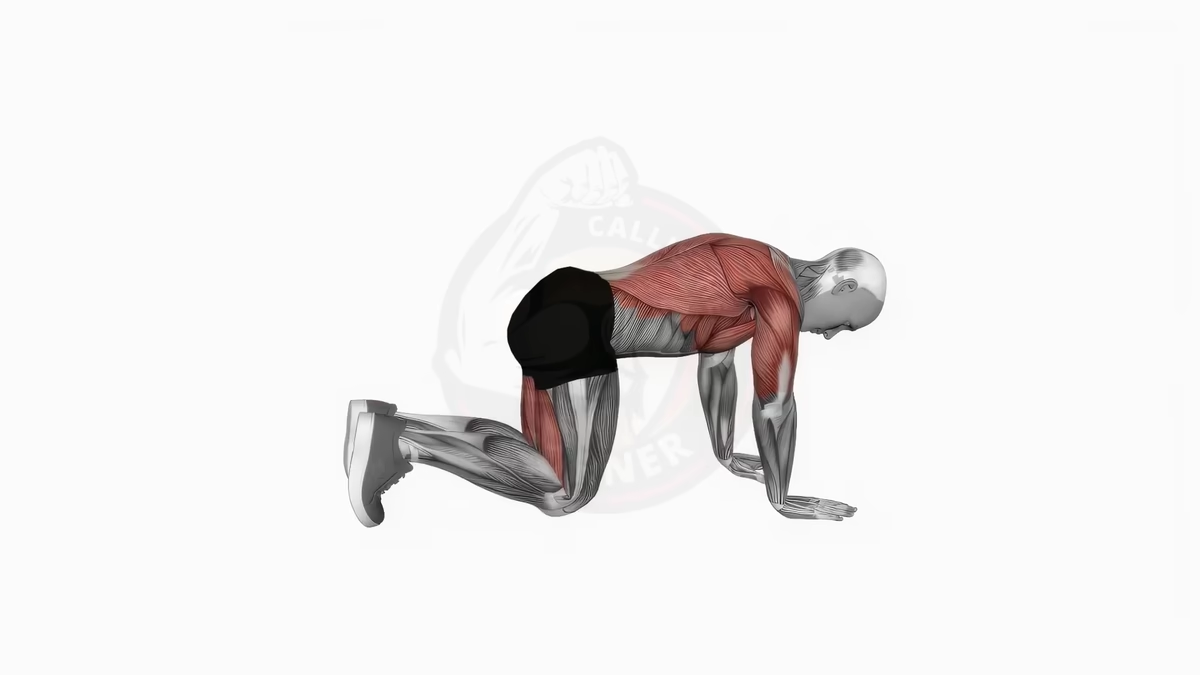
Get on all fours, hands under your shoulders and knees under your hips. Your spine must remain neutral.

Step 2: Opposite arm-leg extension
Slowly extend one arm in front of you while extending the opposite leg behind you, keeping your body in a straight line.
Step 3: Hold, breathe, controlled return
Hold for a few seconds while breathing deeply, then slowly return to the starting position.
Tip: Contract your abs throughout the movement to maximize the benefits.
Common mistakes to avoid
- Arching the back: maintain a neutral spine throughout the exercise
- Lifting limbs too high: prioritize alignment and stability over range of motion
- Forgetting to breathe: breathe deeply and steadily
- Not engaging the core: actively brace your abdominals at all times
- Going too fast: execute the movement slowly and precisely
Variations and progressions
- Beginner: Static bird dog with extended pause (builds stability)
- Intermediate: Dynamic bird dog with elbow-to-knee touch (builds muscular endurance)
- Advanced: Bird dog with resistance band or ankle weights (increases resistance)
- Expert: Bird dog on a stability ball or cushion (intensifies balance work)
Sample routines with the bird dog
As a warm-up (before a strength session):
- Bird dog: 2 sets x 10 seconds per side
- Cat-cow: 10 reps
- Thoracic rotation: 8 per side
As a finisher (after a session):
- Dynamic bird dog: 3 sets x 8 reps per side
- Dead bug: 3 sets x 10 reps
- Side plank: 2 x 20 seconds per side
Dedicated core session:
- Static bird dog: 4 x 15 seconds per side
- Dynamic bird dog: 3 x 10 reps per side
- Banded bird dog: 3 x 12 seconds per side
- Total: 15-20 minutes
What comes after the bird dog?
Once you’ve mastered the bird dog on an unstable surface, progress toward:
- Dead bug: Same principle but on your back, more intense for the abs
- Hollow hold: Complete abdominal work in a supinated position
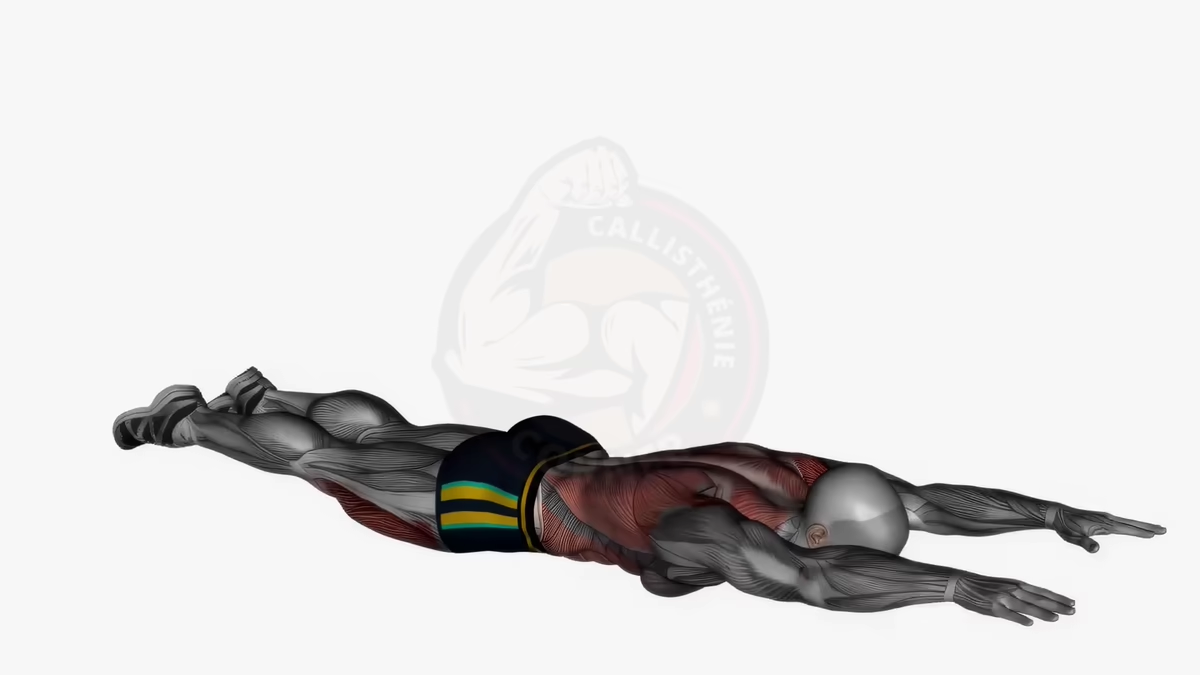
- Superman hold: Full back extension to strengthen spinal erectors
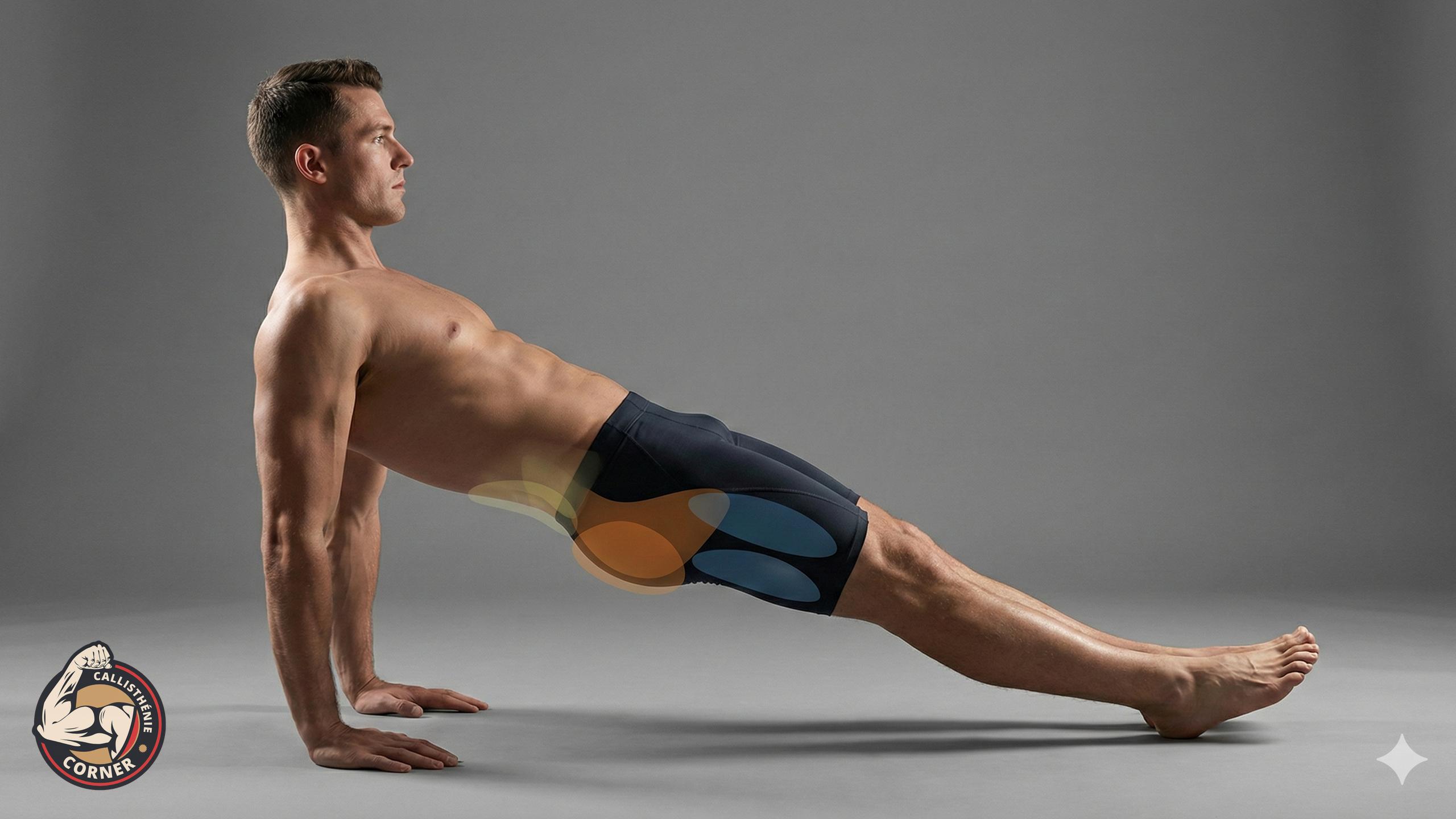
- Reverse plank: A posterior-chain hold that pairs naturally with the bird dog
The bird dog is a fundamental core exercise that prepares your body for more demanding movements. Use it in your warm-ups or as a finisher, and find the full set in our back exercises at home collection, or the complete back exercises category.
Frequently Asked Questions
What does the bird dog exercise work?
The bird dog targets the deep core muscles, including the transverse abdominis, obliques, and multifidus. It also strengthens the lumbar erectors, glutes, and shoulders. Because you are extending opposite limbs while maintaining balance, it trains coordination and anti-rotation stability at the same time.
How many bird dogs should I do per day?
For general core health, 2 to 3 sets of 8 to 10 reps per side is a solid daily dose. If you are using the bird dog as a warm-up before a workout, 2 sets of 10 seconds per side (static hold) is enough to activate the muscles. Avoid pushing to fatigue since the goal is quality movement, not exhaustion.
Is the bird dog good for back pain?
Yes. The bird dog is one of the most recommended exercises by physiotherapists for lower back pain. It strengthens the muscles that support the spine without placing heavy loads on the lumbar region. The controlled, low-impact nature of the movement makes it safe for most people recovering from back issues. If you have an acute injury, consult a professional before starting.
What is the difference between bird dog and dead bug?
Both exercises train anti-extension and core stability, but the starting position changes everything. The bird dog is performed on all fours (face down), emphasizing the back extensors and glutes. The dead bug is performed lying on your back (face up), placing more demand on the anterior core and hip flexors. Using both in your routine covers the core from all angles.