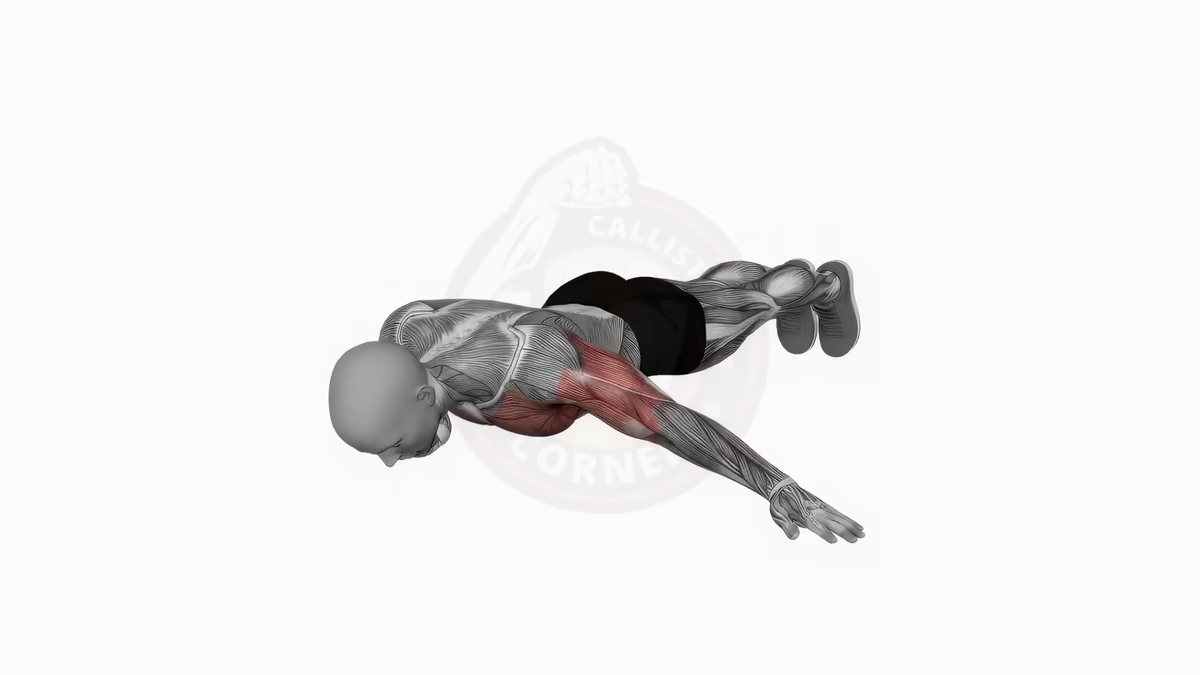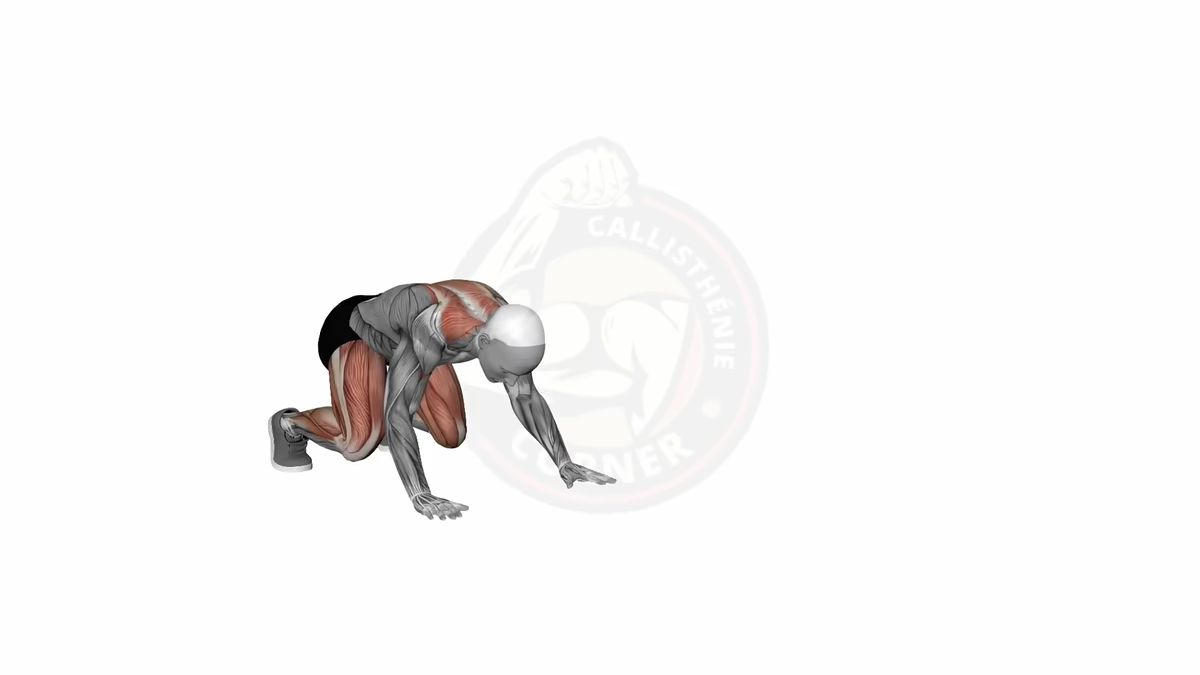
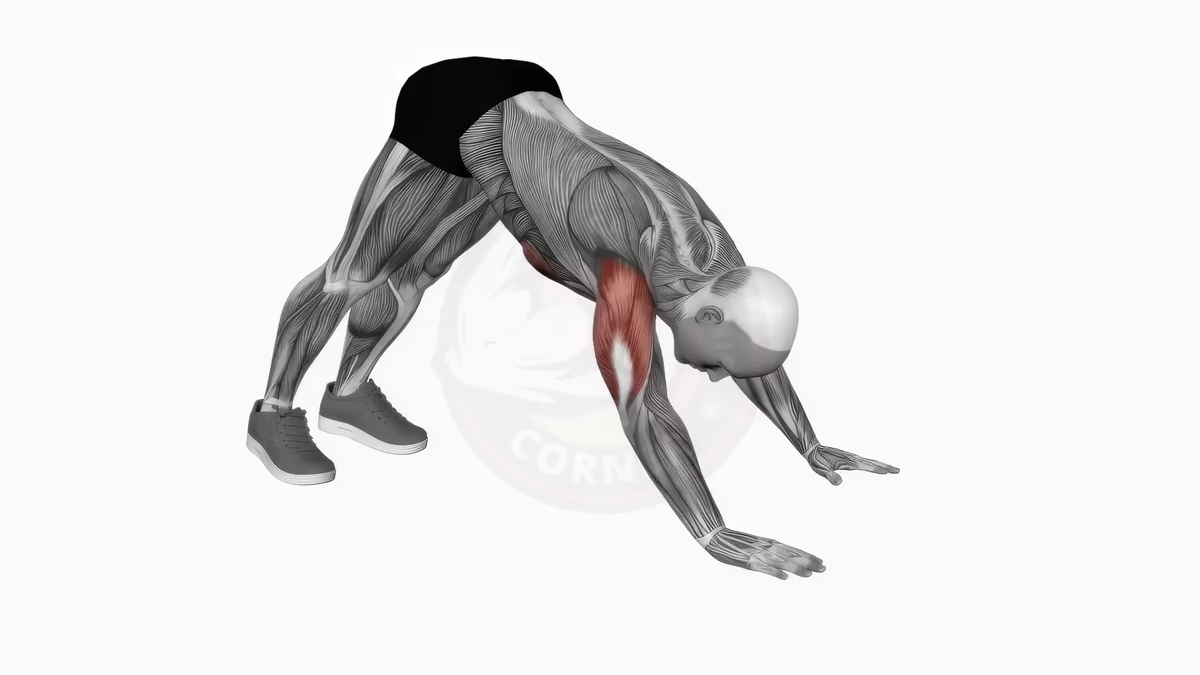
The pike push-up is a push-up variation that primarily targets the shoulders. Unlike classic push-ups where the body stays horizontal, here you form an inverted V with your hips pointing toward the ceiling.
It is one of the best exercises for building your deltoids with bodyweight alone. More importantly, it is an essential stepping stone toward more advanced movements like handstand push-ups. Pike push-ups let you train the vertical pressing pattern without needing to go fully upside down.
In calisthenics, the pike push-up is a transition exercise. It sits between classic push-ups and handstand-based movements. If you want solid shoulders, you cannot skip it.
Muscles worked
Primary muscles:
| Muscle | Role |
|---|---|
| Anterior and lateral deltoids | Do the bulk of the work during the press |
| Triceps | Assist the push and stabilize the elbows |
The deltoids are the main shoulder muscles, divided into three heads: anterior, lateral, and posterior. Pike push-ups primarily target the anterior and lateral heads.
Secondary muscles:
| Muscle | Role |
|---|---|
| Upper trapezius | Engaged due to the inclined position |
| Upper pectorals | Work in synergy with the shoulders |
| Core (abs, lower back) | Maintains pelvic stability throughout the movement |
The closer your feet are to your hands (creating a more vertical position), the harder your shoulders work and the less your chest is involved. This is what separates pike push-ups from decline push-ups.
How to do pike push-ups
Step 1: Starting position
Start in a standard push-up position, hands placed slightly wider than shoulder-width. Walk your feet toward your hands while keeping your legs straight. Your hips rise toward the ceiling until your body forms an inverted V.
Key points:
- Legs straight (or slightly bent if you lack flexibility)
- Arms straight, aligned with your back
- Head relaxed between your arms, gaze directed at your feet
Step 2: The descent
Bend your elbows to lower your head toward the floor, between your hands. Your elbows should flare out slightly (about 45 degrees), not directly to the sides.
Key point: Descend until your head nearly touches the floor or comes within a few centimeters. This is full range of motion.
Step 3: The push
Push hard through your hands to return to the starting position. Exhale during the push. Lock out your arms at the top without releasing core tension.
Key point: Keep your hips high throughout the entire movement. If they drop, you are turning the exercise into a standard push-up.
Common mistakes to avoid
- Back rounding or arching: Your back should stay neutral, aligned with your arms. Engage your abs to stabilize.
- Elbows flaring too wide: This puts your shoulders in a vulnerable position. Keep them at 45 degrees from your body.
- Insufficient range of motion: If you don’t descend far enough, you limit the shoulder work. Always aim for full depth.
- Hips dropping: You lose the angle that targets the shoulders. Think about pushing your hips toward the ceiling at all times.
Variations and progressions
From easiest to hardest:
1. Kneeling pike push-ups
For beginners or those who lack pressing strength. Same position but with knees on the floor. This reduces the load on the shoulders while you learn the movement pattern.
Target: 3 x 10 reps before moving on.
2. Standard pike push-ups (on the floor)
The version described above. Feet and hands on the floor, hips high.
Target: 3 x 10-12 clean reps.
3. Feet-elevated pike push-ups
Place your feet on a support (chair, bench, step). The higher your feet, the more vertical and difficult the exercise becomes. You start approaching the position of a handstand push-up.
Target: 3 x 8-10 reps with feet at hip height.
4. Deficit pike push-ups
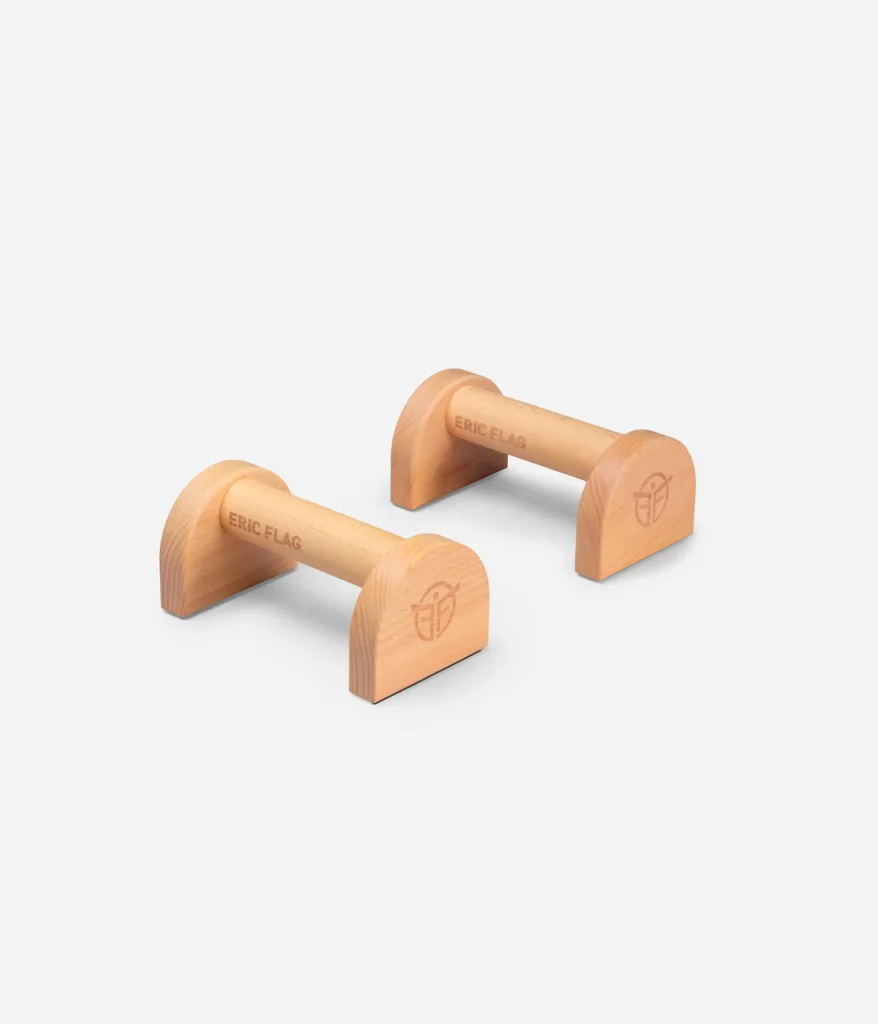
Place your hands on supports (parallettes, dumbbells, thick books) to increase the range of motion. Your head descends lower than your hands, intensifying the shoulder work.
Target: 3 x 6-8 reps.
5. Feet elevated + deficit pike push-ups
The combination of both: feet on a support AND hands on parallettes. This is the last step before moving to wall handstand push-ups.
Target: 3 x 5-8 reps.
What comes next after pike push-ups?
You have mastered these with good depth? You are ready for the next level.
Handstand push-ups against the wall: Kick up into a handstand against a wall and perform vertical presses. Pike push-ups have prepared you for this movement by strengthening your shoulders and getting you used to the vertical pushing pattern.
Handstand (freestanding): Pike push-ups also develop the pressing strength needed to hold a handstand. If you want to learn to balance on your hands, this exercise is one of the best preparatory drills.
For a complete shoulder training plan, see our shoulder exercises at home guide.
Pike push-ups are not just another exercise in your routine. They are the foundation for every strength-based calisthenics skill that demands shoulder power: planche, HSPU, handstand. Master them, and you open the door to far more impressive movements.
Frequently Asked Questions
Are pike push-ups as good as overhead press?
Pike push-ups and the overhead press target similar muscle groups, primarily the deltoids and triceps. The overhead press allows heavier loading, which is better for maximum strength. Pike push-ups offer the advantage of requiring zero equipment and naturally progress toward handstand push-ups, making them the superior choice for calisthenics athletes.
How many pike push-ups should I do?
For strength building, aim for 3 to 4 sets of 6 to 10 reps with strict form. For endurance, work up to 3 sets of 12 to 15 reps. Quality matters more than quantity: if your hips drop or your range of motion shortens, end the set. Only increase reps once you can hit full depth on every rep.
What muscles do pike push-ups work?
The primary muscles are the anterior and lateral deltoids (front and side shoulders) along with the triceps. Secondary muscles include the upper trapezius, upper chest, and the entire core. The more vertical your body position (feet closer to hands), the more the shoulders dominate and the less the chest contributes.
Can pike push-ups replace shoulder press?
Pike push-ups can effectively replace the shoulder press for building shoulder strength and size, especially for beginners and intermediate trainees. They activate the same muscle groups through a similar movement pattern. The main limitation is that you cannot add weight as easily, but the built-in progressions (feet elevated, deficit, elevated + deficit) provide enough challenge for years of training.