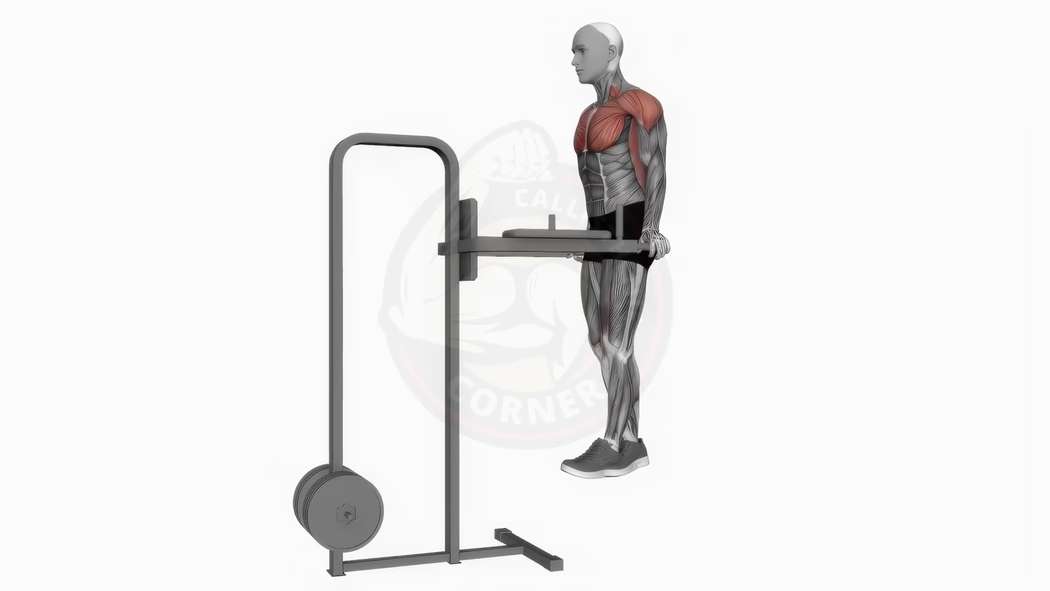
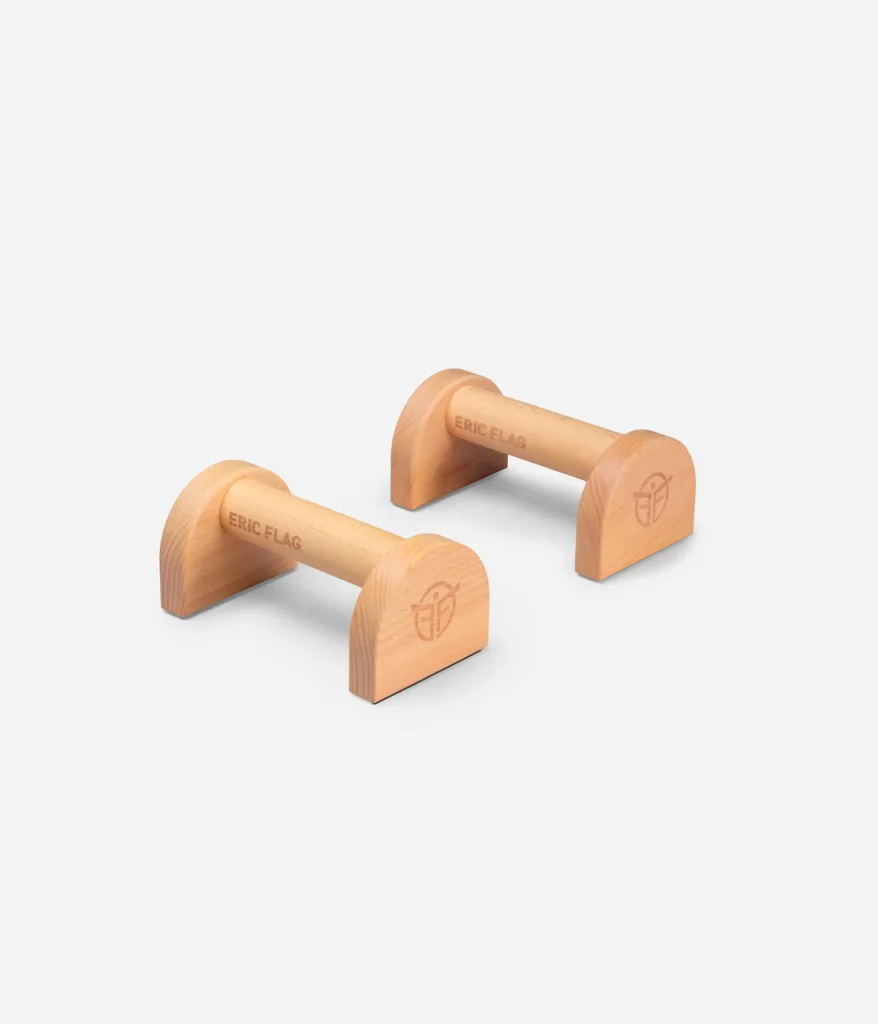
Dips are one of the most effective compound exercises you can do for upper-body pressing strength. They work the chest, triceps, and shoulders simultaneously, and you can do them almost anywhere: parallel bars, the corner of a kitchen counter, two sturdy chairs, or a set of parallettes.
Why dips are so effective
The dip is a multi-joint pressing movement that loads the upper body through a large range of motion. Unlike isolation exercises, dips train the entire pressing chain in a single movement.
Primary muscles:
| Muscle | Role |
|---|---|
| Pectoralis major | Main pressing force, especially the lower fibers |
| Triceps brachii | Elbow extension throughout the push |
| Anterior deltoids | Shoulder flexion and stabilization |
Stabilizer muscles:
| Muscle | Role |
|---|---|
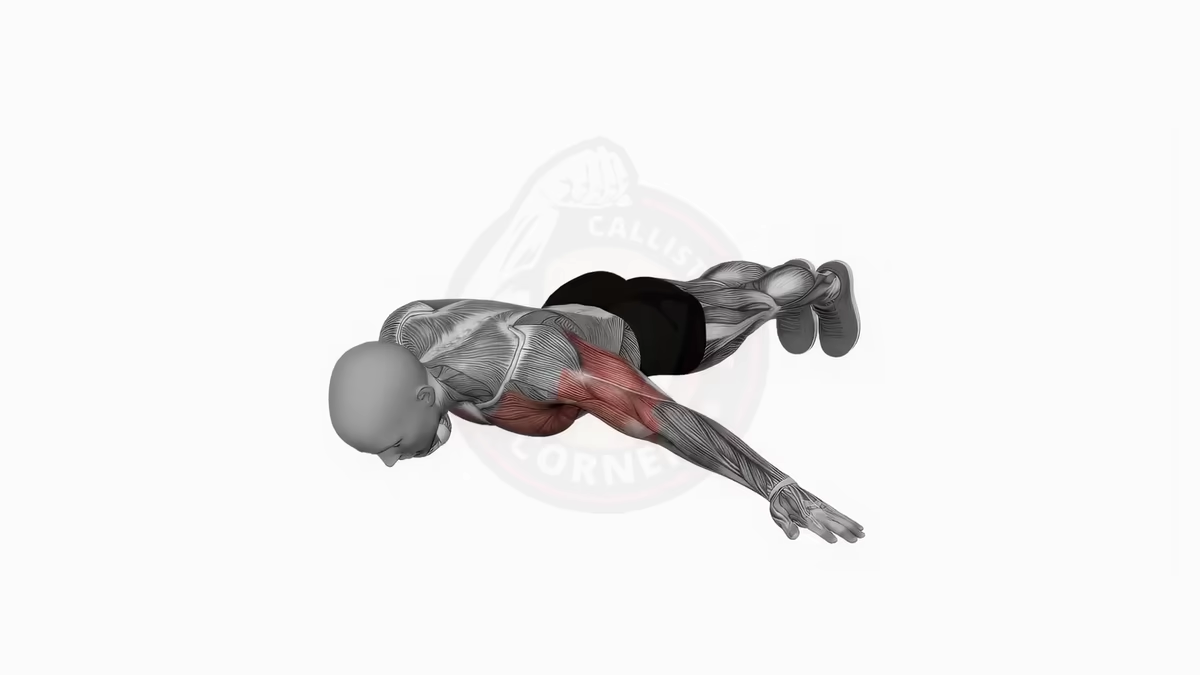
| Trapezius | Shoulder blade control during the dip |
| Rhomboids | Scapular retraction to keep chest open |
| Core (abs, obliques) | Body stabilization, prevents swinging |
What makes dips special is their accessibility. You don’t need a gym. Two sturdy chairs, a park bench, a pair of parallettes, or gymnastics rings are all you need. This makes dips one of the most practical exercises for anyone starting calisthenics.
Dips also form a critical piece of the muscle-up. The second half of a muscle-up is essentially a deep dip on top of the bar. Without solid dip strength, the muscle-up stays out of reach.
Step-by-step technique
Starting position
Grip the parallel bars (or your chosen surface) with hands shoulder-width apart. Arms fully extended, body vertical. Your arms should be perpendicular to the floor. Lock out at the top but don’t hyperextend your elbows: keep a very slight bend.
Engage your core and keep your legs either straight or crossed behind you. No swinging.
Descent phase
Lower yourself slowly by bending your elbows. Descend until your upper arms are parallel to the floor (elbows at roughly 90 degrees). Keep your chest open throughout: don’t let your shoulders roll forward.
The descent should take at least 2-3 seconds. Control is everything.
Torso angle matters: Leaning your torso forward (roughly 15-30 degrees) shifts more emphasis to the chest. Staying more upright targets the triceps. Adjust based on your training goal, but always keep your shoulders back and down.
Pressing phase
Push through the bars to return to the starting position. Drive through your palms and think about squeezing your chest and triceps at the top. Don’t slam into lockout: maintain control and keep a slight elbow bend at the top.
Breathing
Inhale as you descend. Exhale as you push back up.
Critical technique points
- Shoulders stay back and depressed. Never let them shrug toward your ears.
- Elbows track behind you, not flaring out to the sides.
- No bouncing at the bottom. Pause briefly to eliminate momentum.
- Engage deep stabilizers (traps, rhomboids) to keep the movement controlled.
Common mistakes
Flaring elbows out wide: When elbows splay sideways instead of tracking backward, the shoulder joint takes excessive stress. Keep your elbows pointed behind you, close to the body.
Partial range of motion: Stopping well above parallel robs you of the most effective part of the movement. The deep stretch at the bottom is where the chest and shoulders develop the most. Go to at least parallel on every rep.
Losing control at the bottom: Dropping fast and bouncing out of the bottom position puts enormous stress on the shoulder capsule. Lower slowly (2-3 seconds), pause briefly at the bottom, then press back up.
Shoulders rolling forward: When the chest caves and shoulders round, you lose scapular stability and risk impingement. Think “proud chest” throughout the entire movement. Your shoulder blades should stay retracted.
Locking elbows aggressively: Slamming into full lockout at the top stresses the elbow joints. Reach full extension with control, maintaining a barely perceptible bend.
No core engagement: If your body swings or your legs kick during dips, your core isn’t doing its job. Brace your abs and squeeze your glutes to keep a stable body line.
Training program: from bench dips to weighted
Phase 1: Bench dips (weeks 1-3)
If you can’t do full dips yet, start with bench dips. Place your hands on a bench behind you, feet on the floor (bend knees to make it easier, straighten legs to make it harder).
| Exercise | Sets x Reps | Notes |
|---|---|---|
| Bench dips | 4 × 10-12 | Full range, 2s descent |
| Negative dips (parallel bars) | 3 × 4-5 | Jump to top, lower in 5s |
Goal: 5 clean dips on parallel bars.
Phase 2: Bodyweight dips (weeks 4-8)
| Exercise | Sets x Reps | Notes |
|---|---|---|
| Parallel bar dips | 4 × 6-10 | 3 minutes rest between sets |
Goal by end of phase 2: 3 sets of 12 clean dips.
Focus on depth and control. Every rep should reach parallel. If you stall, add one rep per session rather than forcing extra reps with bad form.
Phase 3: Weighted dips (weeks 9+)
Once you can do 12 clean bodyweight dips, start adding load.
| Exercise | Sets x Reps | Notes |
|---|---|---|
| Weighted dips | 4-5 × 6-8 | Start with 5 kg, add 2-3 kg every 3 weeks |
Use a dip belt or a weighted vest. Increase load only when you can complete all prescribed sets with perfect form. Tendons adapt slower than muscles: patience prevents injuries.
Variations
Bench dips: Hands on a bench behind you, feet on the ground. The entry point for complete beginners. Progress by straightening the legs, then elevating the feet on a second bench.
Ring dips: Performing dips on gymnastics rings dramatically increases the stability demand. Your stabilizer muscles (traps, rhomboids, serratus anterior) work overtime to keep the rings steady. Only attempt ring dips after you can do 15+ strict parallel bar dips.
Korean dips: Hands behind you on a bar, facing away. This variation places extreme stretch on the chest and shoulders. Advanced movement, requires significant shoulder flexibility.
Weighted dips: The most straightforward way to keep progressing. Add weight with a dip belt, weighted vest, or a backpack. Start with 5% of your bodyweight and build from there.
Tempo dips (3-1-3): 3 seconds down, 1 second pause at the bottom, 3 seconds up. Maximizes time under tension and builds exceptional control. Excellent for breaking through plateaus.
Frequently Asked Questions
Are dips better than push-ups?
Neither is better; they complement each other. Dips are a vertical pressing movement that emphasizes the lower chest and triceps, while push-ups are a horizontal press that targets the mid-chest more. A complete upper-body program includes both. If you had to pick one, dips offer a greater range of motion and load your bodyweight more heavily.
How many dips should I do?
Beginners should target 3 sets of 5-8 reps with full range of motion and controlled tempo. Intermediate athletes should aim for 3 to 4 sets of 10-12 reps before adding weight. Quality always comes first: 8 deep, controlled dips build more strength than 15 half-reps.
Do dips work chest or triceps more?
It depends on your torso angle. Leaning forward about 15 to 30 degrees shifts more work to the chest, particularly the lower pectorals. Staying more upright targets the triceps. Both muscles are always involved, but you can emphasize one over the other by adjusting your lean.
What comes after dips
Toward the muscle-up: The dip is the pressing phase of the muscle-up. Once you own deep, explosive dips, you have half the muscle-up locked in. Combine strong pull-ups with strong dips and the transition becomes trainable.
Ring dips and ring strength: Ring dips open the door to more advanced ring work: ring muscle-ups, iron cross progressions, and ring handstands. The instability of rings builds joint integrity that bars alone can’t provide.
Full-body pressing balance: Dips should be paired with horizontal pressing (push-ups and their variations) for complete development. A balanced pressing program includes both vertical (dips) and horizontal (push-ups) patterns. For a complete parallettes training plan, check our 10 best parallettes exercises.
Integration into a complete program: Pair dips with pull-ups for a balanced upper body. Press and pull in the same session, or alternate pushing and pulling days. The combination of dips and pull-ups covers every major upper-body muscle group.
Dips are not just a tricep exercise. They’re a fundamental pressing pattern that supports everything from everyday functional strength to the most advanced calisthenics skills.