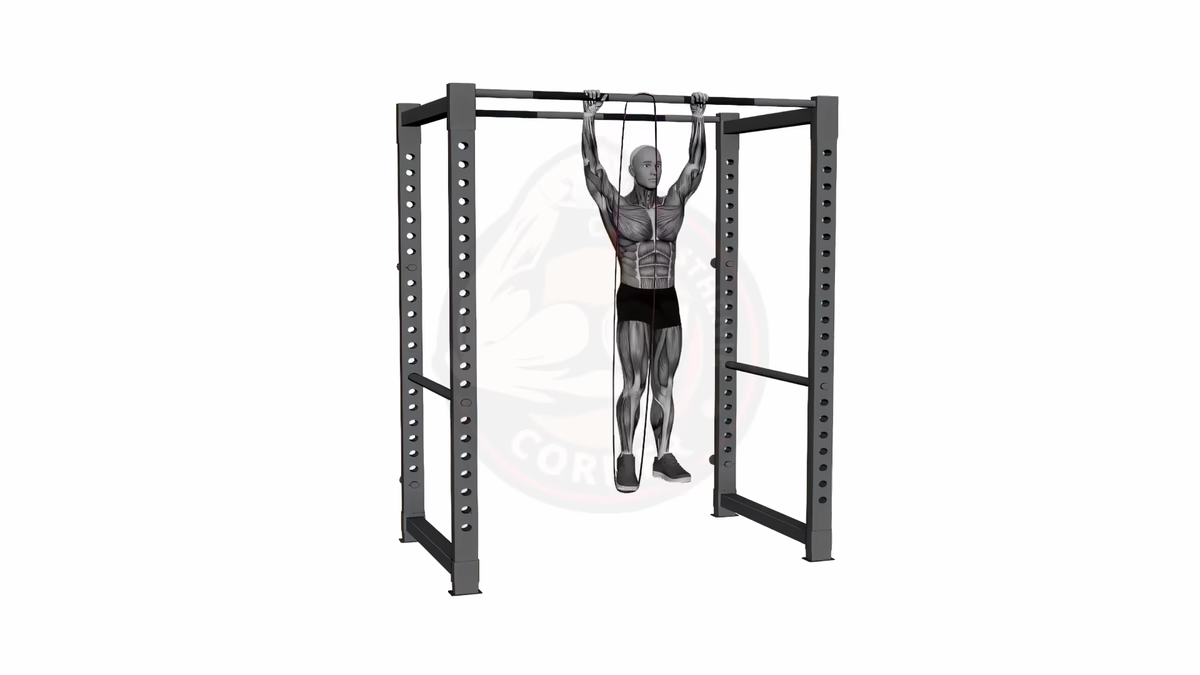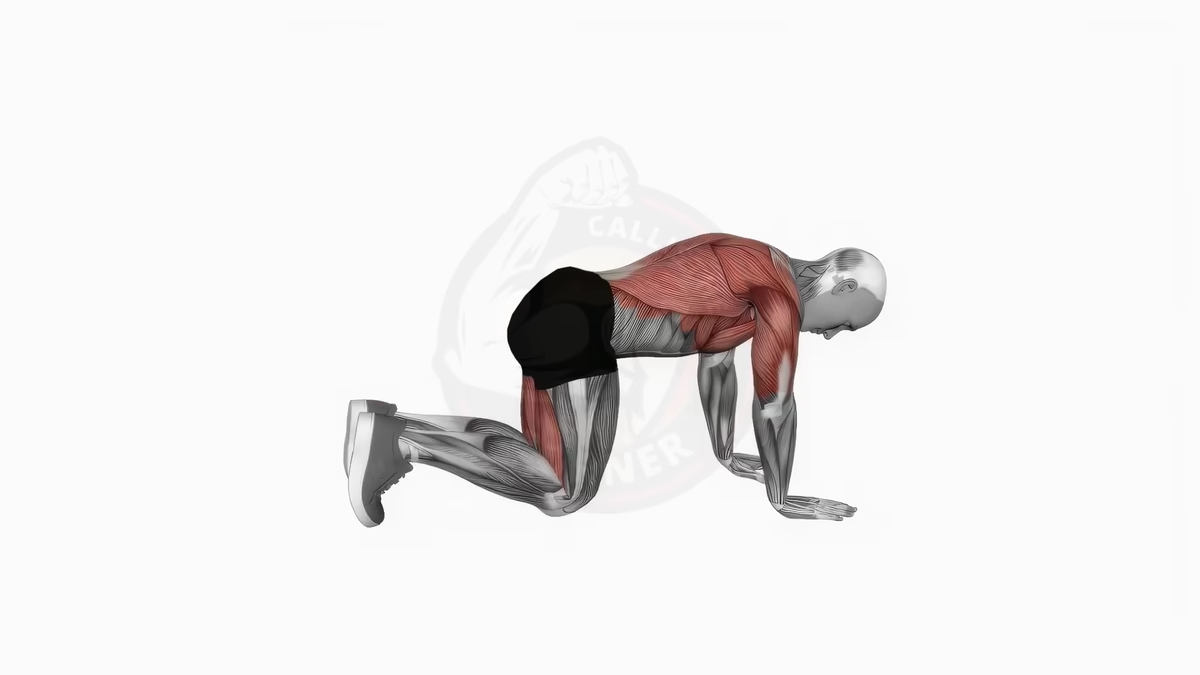

The australian pull-up, also known as the inverted row or body row, is a versatile pulling exercise that primarily targets the back muscles. Accessible to beginners and experienced athletes alike, this exercise offers major benefits for strength building and posture improvement.
In this detailed guide, you will learn how to perform australian pull-ups correctly, understand their benefits, and integrate them effectively into your training program.
Perfect technique for the australian pull-up
To get the most out of this exercise, mastering the correct technique is essential. Here are the key steps.
Setup and grip
Start by positioning yourself under a low fixed bar, typically set at hip height. Lie on your back with arms extended toward the bar. Grip the bar slightly wider than shoulder-width. Your feet should be flat on the ground, legs straight or slightly bent depending on your level.
Your grip choice influences which muscles are targeted:
| Grip type | Primary muscles targeted | Benefit |
|---|---|---|
| Overhand (palms facing down) | Lats, traps, rhomboids | Develops back width |
| Underhand (palms facing up) | Biceps, forearms | Builds arm strength |
| Neutral (palms facing each other) | Balance between back and arms | Reduces wrist stress |
Execution and controlled descent
Once in position, follow these steps:
- Engage your back muscles by squeezing your shoulder blades together
- Pull your body toward the bar by bending your elbows, keeping your body straight and braced
- Bring your chest to the bar or as close as possible
- Hold briefly at the top to maximize the muscular contraction
- Lower yourself slowly and under control to the starting position, arms fully extended
Controlling the descent is critical for optimizing muscle work and preventing injuries. Resist gravity during the negative phase to place greater demand on your muscles.
Muscles worked and benefits
The australian pull-up is a compound exercise that engages several muscle groups, primarily in the upper body.
Primary muscle groups
Australian pull-ups significantly recruit:
- Latissimus dorsi: the main back muscle, responsible for arm extension and adduction
- Trapezius: upper back muscles that stabilize the shoulder blades
- Rhomboids: located between the shoulder blades, involved in scapular retraction
- Biceps: front of the arm, particularly engaged with an underhand grip
- Forearm muscles: strengthened through gripping the bar
The stabilizing muscles of the trunk, including the abs and lower back, are also engaged to maintain body position throughout the exercise.
Benefits for muscle development and posture
Regular practice of australian pull-ups delivers several key advantages:
- Overall upper body strengthening
- Improved posture through back muscle reinforcement
- Development of functional strength applicable to other activities
- Prevention of muscular imbalances between the front and back of the body
- Progressive preparation for full pull-ups
These benefits make australian pull-ups an excellent choice for anyone looking to improve their general fitness and physique.
Adaptations by level
Here is how to adjust the exercise based on your current strength:
| Level | Adaptation | Benefit |
|---|---|---|
| Beginner | Feet on the floor, knees bent | Reduces load, easier to learn |
| Intermediate | Feet on the floor, legs straight | Increases difficulty, greater core engagement |
| Advanced | Feet elevated on a bench | Maximizes load, builds serious strength |
Grip and angle variations
Modify your grip and body angle to vary the muscular stimulus:
- Wide grip: emphasizes back width
- Close grip: targets biceps and back thickness
- More vertical angle: makes the movement easier
- More horizontal angle: increases difficulty
These variations allow you to target different parts of the back and arms, ensuring complete and balanced muscle development.
Training program with australian pull-ups
To achieve optimal results, integrate australian pull-ups into a structured training program.
Recommended frequency and volume
For optimal muscle development, follow these guidelines:
- Frequency: 2-3 sessions per week
- Sets: 3-5 per session
- Reps: 8-12 for hypertrophy, 5-8 for strength
- Rest between sets: 60-90 seconds
Adjust these parameters based on your level and goals. Gradually increase volume and intensity over the weeks to keep progressing.
Combining with other exercises for a powerful back
For complete back development, pair australian pull-ups with complementary exercises:
- Pull-ups (standard or assisted)
- Scapular pull-ups for shoulder stability
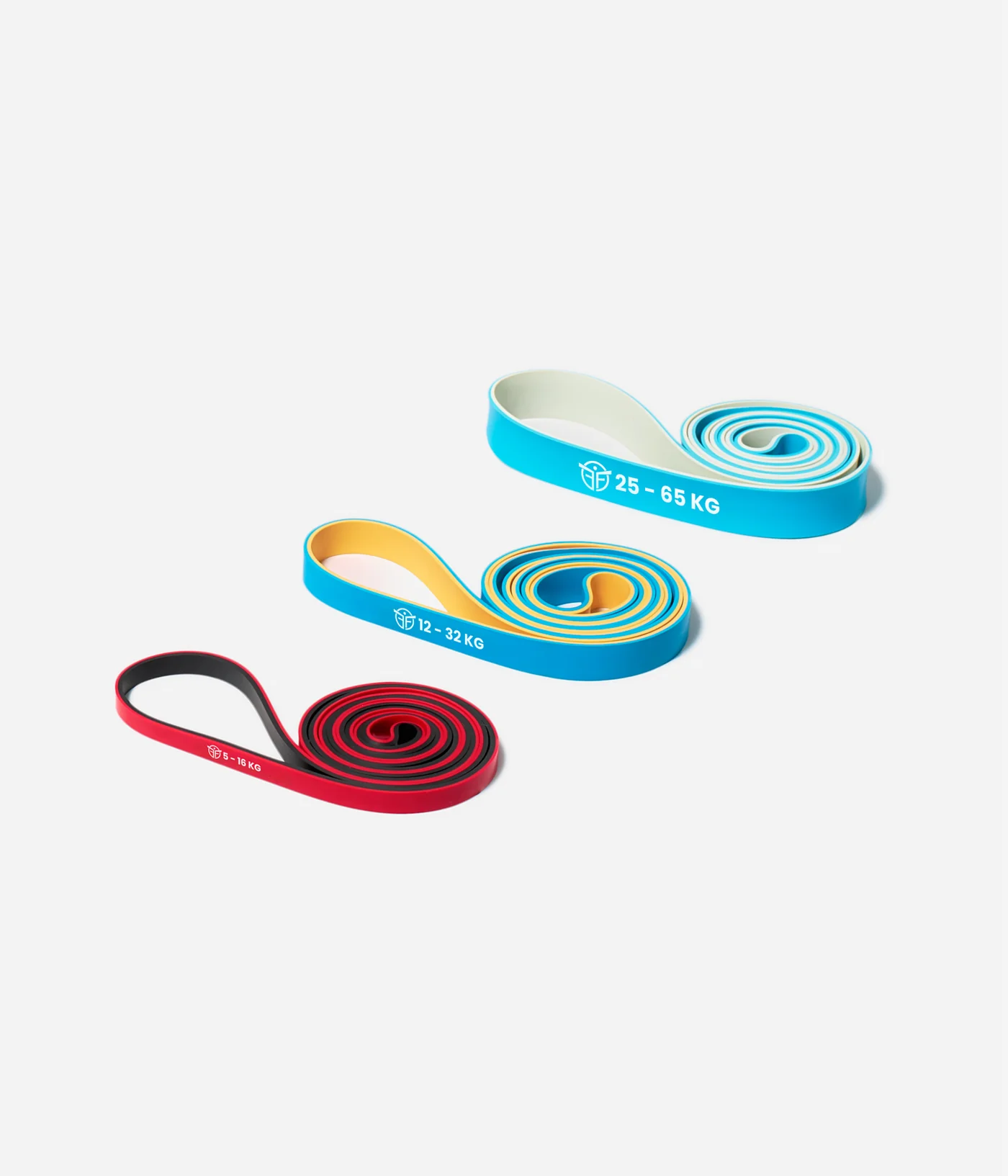
- Training with resistance bands for progressive overload
- Back extensions for lower back strength
- Ring rows for increased instability
This combination ensures thorough stimulation of all back muscles, promoting balanced development and better posture.
Common mistakes and how to fix them
Even though australian pull-ups are relatively safe, certain mistakes can limit your progress or increase injury risk.
| Mistake | Consequence | Fix |
|---|---|---|
| Arching the back | Excessive lower back strain | Brace your abs, keep your body aligned |
| Using momentum | Reduces effectiveness | Control the movement, avoid jerky motions |
| Neglecting the eccentric phase | Loss of muscle stimulation | Lower yourself slowly and under control |
Tips for optimizing technique and results
To maximize the benefits of your australian pull-ups:
- Focus on contracting the back muscles with every rep
- Breathe steadily: exhale as you pull, inhale as you lower
- Regularly vary the angle and grip type
- Gradually increase difficulty by elevating your feet or adding weight
- Incorporate isometric pauses at the top to reinforce the contraction
By applying these tips and staying attentive to your technique, you will get more out of every session and progress faster toward your goals.
Australian pull-ups are an excellent exercise for developing back strength and muscle mass. By following this guide and practicing consistently, you will improve not only your physique but also your posture and functional strength. This versatile movement belongs in every training routine for visible, lasting results.