
Why do scapular push-ups?
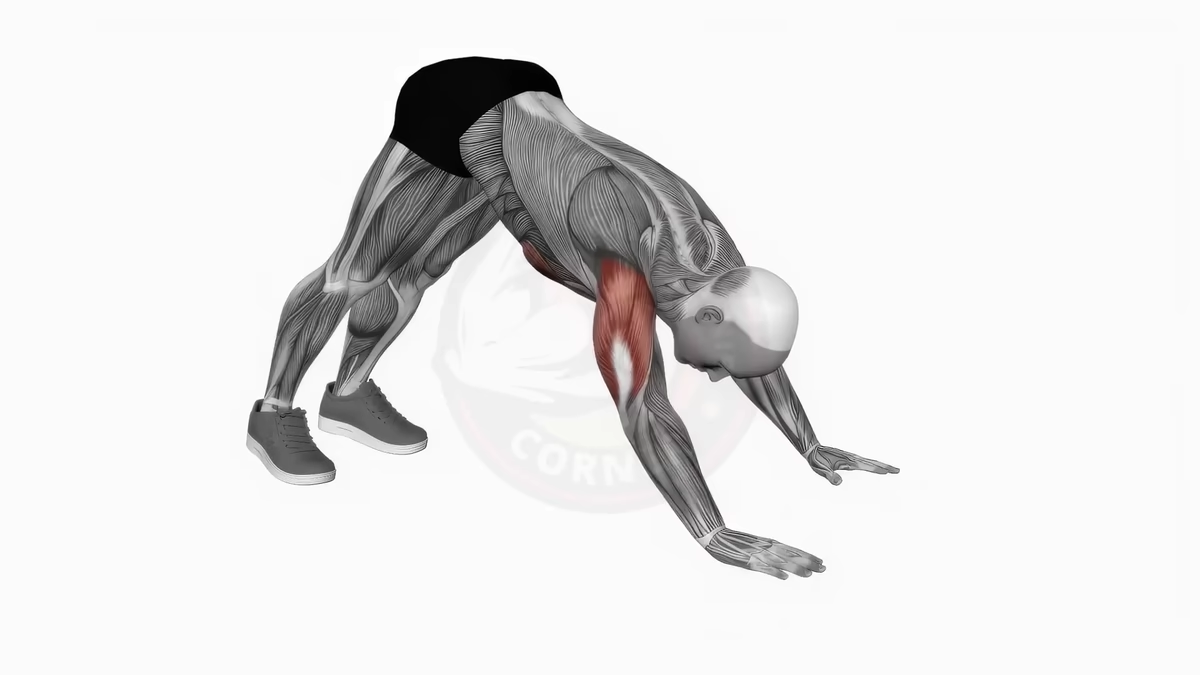
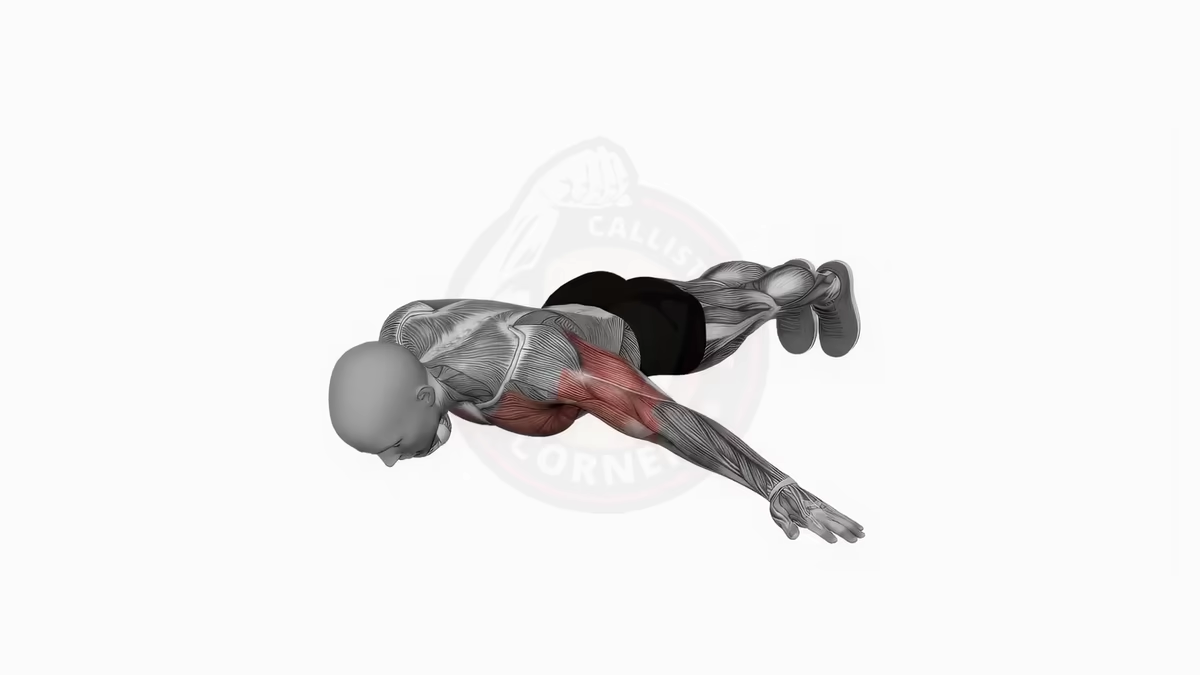
Scapular push-ups are a technical calisthenics exercise that isolates the movement of your shoulder blades. In a high plank position with arms completely straight, you bring your scapulae together and then push them apart. Just a few centimeters of range, but the impact on your strength and stability is massive.
Unlike standard push-ups where you bend your elbows and recruit your chest and triceps, here your arms stay locked in extension the entire time. All the work happens at the level of your scapulae.
This exercise targets your serratus anterior, the muscle that pins your shoulder blades against your ribcage and pushes them forward. It also strengthens your lower trapezius and rhomboids. These muscles control scapular positioning, which is fundamental for every straight-arm skill in calisthenics: the tuck planche, the front lever, and the muscle-up.
Prerequisites
Before starting, make sure you can handle these basics:
- 30 seconds in a high plank position without shaking, body aligned
- 15 clean push-ups with full range of motion
- 60 seconds in a static plank without your hips sagging
Mobility test: Standing with arms extended in front of you, can you spread your scapulae apart (rounded upper back) and then squeeze them together (open chest)? If you cannot feel these two distinct positions, develop your body awareness before tackling the exercise.
Step-by-step technique
Starting position: High plank, hands shoulder-width apart, arms completely straight, elbows locked. Body aligned from heels to head. Eyes focused about one meter in front of your hands.
Retraction (low phase): Without bending your elbows, let your chest drop between your shoulders by squeezing your scapulae together. You lower 3 to 5 cm. Speed: 2 seconds.
Protraction (high phase): Push through your hands to spread your scapulae apart. Your upper back rounds slightly, your shoulders push forward. Push as if you are trying to shove the floor away. Speed: 2 seconds.
What you should feel: The work should register on the sides of your ribcage, just below your armpits. That is your serratus anterior. If you feel your chest or triceps instead, you are bending your elbows.
Breathing: Inhale on the descent, exhale on the push. Tempo: 2-1-2-1 (roughly 6 seconds per rep).
Muscles worked
| Muscle | Role |
|---|---|
| Serratus anterior | Primary mover. Pushes scapulae forward (protraction) and pins them to the ribcage. |
| Lower trapezius | Scapular depression and stabilization during both phases. |
| Rhomboids | Pull scapulae together during the retraction phase. |
| Core (abs, lower back) | Maintains rigid body alignment throughout the exercise. |
Common mistakes to avoid
Bending the elbows: The moment you bend, you recruit your chest and triceps instead of the serratus. Lock your elbows from start to finish. If you cannot keep them straight, switch to the kneeling version.
Moving the hips: Your body stays rigid. Only your scapulae move. If your hips wave up and down, contract your abs and glutes harder.
Insufficient range of motion: Exaggerate the movement at first. During retraction, your chest should visibly drop. During protraction, your upper back should visibly round. If you cannot feel two distinct positions, you are not performing the exercise correctly.
Rushing the tempo: Speed kills this exercise. Each phase should take a full 2 seconds with a 1-second pause at each end. If you cannot maintain the tempo, reduce the number of reps rather than speeding up.
Variants
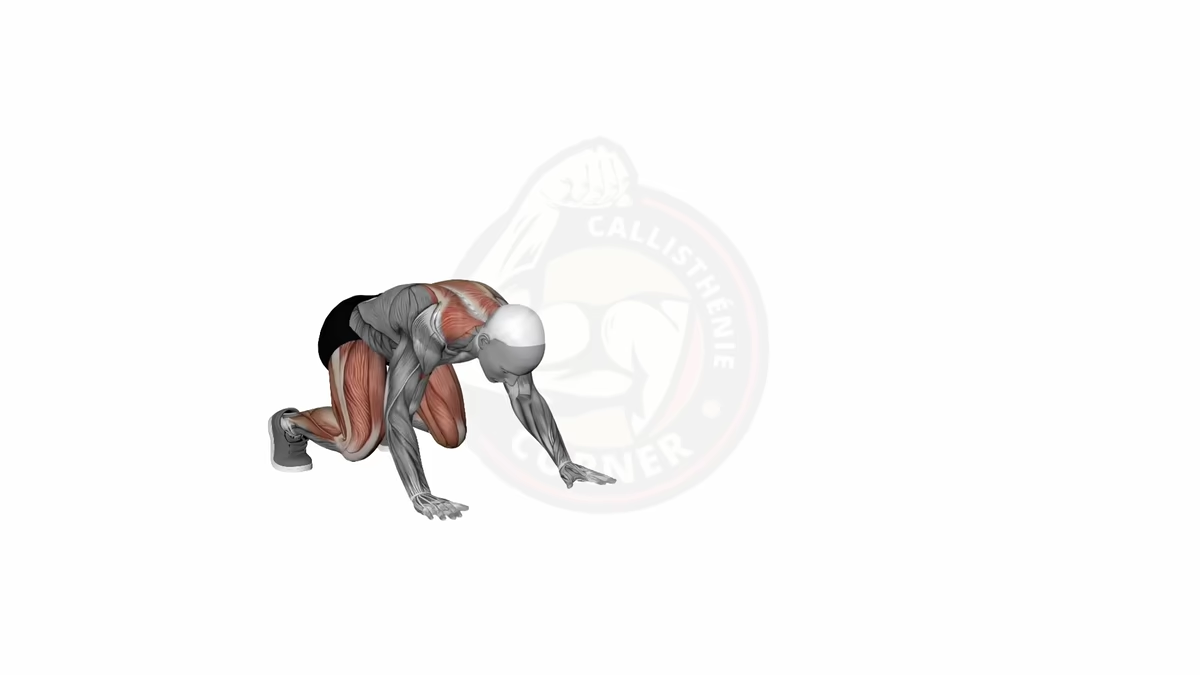
On the knees (easier): Same movement, knees on the floor. Target: 3 x 15 reps before progressing to the full version. This allows you to focus entirely on scapular control without worrying about full-body stability.
Feet elevated (harder): Feet on a bench 30-50 cm high. Intensifies the load on the serratus. Reserved for those who can handle 15+ reps in the standard version.
Scapular push-up plus: At the top of the movement, push even harder to round your back as much as possible. This simulates the planche position and develops the protraction strength you will need for straight-arm skills.
Ultra-slow tempo: 5 seconds down, 2-second pause, 5 seconds up, 2-second pause. Eliminates all momentum and maximizes time under tension. Brutal for 8 reps.
Sample training integration
Use scapular push-ups as activation work before your pushing sessions: 2-3 sets of 10 reps with perfect form. This primes your scapular stabilizers and improves muscle activation on every pressing movement that follows.
| Programming goal | Sets x Reps | Tempo |
|---|---|---|
| Warm-up / activation | 2 x 10 | 2-1-2-1 |
| Strength building | 3 x 12-15 | 2-1-2-1 |
| Advanced time under tension | 3 x 8 | 5-2-5-2 |
What comes next?
Once you can handle 3 x 15 reps with full range of motion, this exercise transitions from a standalone strength builder to a warm-up staple.
For complete scapular girdle development, pair them with scapular pull-ups. Scapular push-ups train protraction; scapular pull-ups train retraction. Together, they build the balanced shoulder blade control that advanced calisthenics demands.
From here, the progression path leads to the tuck planche. The protraction strength you build with scapular push-ups is exactly the foundation that planche training requires: locked arms, scapulae pushed forward, serratus holding everything in place.
For pulling-side skills like the front lever and the muscle-up, the scapular control you develop here transfers directly. Every advanced calisthenics skill starts with shoulder blade mastery, and scapular push-ups are where that mastery begins.