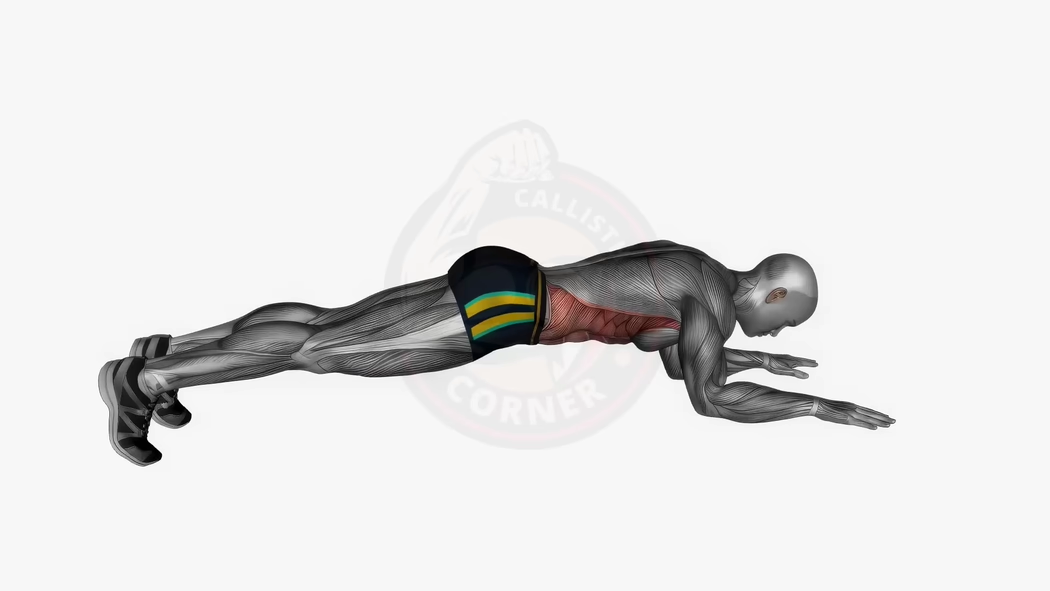
The plank is the most accessible and effective isometric core exercise you can do. No equipment, no gym membership, no experience required. Just your body and a few minutes of focused effort. Whether you’re a complete beginner starting calisthenics or a seasoned athlete, the plank builds the deep core strength that supports every other movement in your training.
Your go-to exercise for a stronger body
The plank is an isometric hold: you maintain a fixed position under tension instead of performing repetitions. This type of contraction forces your muscles to work continuously, building endurance and stability at the same time.
What makes the plank so valuable is its simplicity. You can do it anywhere, it engages your entire core in a single position, and it scales from absolute beginner to advanced athlete through variations and duration.
The forearm plank: the standard
The forearm plank is the most commonly practiced version and the one you should master first.
Setup and execution:
- Get into position: Place your forearms on the floor with elbows directly under your shoulders. Your forearms should create a 90-degree angle with your upper arms.
- Extend your legs: Step your feet back so your body forms a straight line from head to heels. Feet are hip-width apart.
- Engage the key tension points:
- Abs: Draw your belly button toward your spine. Imagine bracing for a punch.
- Glutes: Squeeze them firmly. This protects your lower back and prevents your hips from sagging.
- Quads: Lock your knees by engaging your thighs. Your legs should feel active, not passive.
- Head position: Keep your head neutral, gaze directed at the floor about 30 cm in front of your hands. Do not look up or let your head drop.
- Breathe: Maintain slow, regular breathing throughout the hold. Never hold your breath.
The high plank on hands: the push-up prep
The high plank follows the same alignment principles but with your arms fully extended, hands placed directly under your shoulders.
This version shifts more load to your shoulders and triceps, making it an excellent preparatory position for push-ups. The wrist demand is higher, so if you have wrist sensitivity, start with the forearm version.
Everything else stays the same: straight body line, abs braced, glutes squeezed, head neutral.
Common mistakes and how to fix them
Hips sagging toward the floor: This is the most common error. It puts direct pressure on the lumbar spine and removes tension from the abs. Fix it by actively tilting your pelvis posteriorly (tuck your tailbone slightly toward your chest) and squeezing your glutes harder.
Butt raised too high: The opposite problem. When your hips pike up, you shift the work to your shoulders and reduce core engagement. Think about pushing your body into a perfectly straight line. Ask someone to place a broomstick along your back: it should touch your head, upper back and glutes simultaneously.
Head misaligned: Dropping your head or craning it up breaks the spinal alignment. Imagine holding an apple between your chin and your chest to maintain a neutral neck position.
Shoulders collapsing or shrugging: Keep your shoulder blades pulled down and slightly apart. You should feel your upper back engaged, not compressed. Actively push the floor away from you.
Progressing with the plank: duration and frequency
Starting point: If you can’t hold a plank for 10 seconds with proper form, start there. Add 5 to 10 seconds each week.
Target: Aim for 30 to 60 seconds of perfect form. Holding a plank for 3 minutes with a sagging back is worth far less than 45 seconds with maximum tension. Quality always beats quantity.
Training frequency: 3 to 5 times per week, 3 to 5 sets per session.
| Level | Duration | Sets | Rest |
|---|---|---|---|
| Beginner | 10-20 seconds | 3 | 45-60 seconds |
| Intermediate | 30-45 seconds | 3-4 | 30-45 seconds |
| Advanced | 45-60+ seconds | 4-5 | 30 seconds |
Benefits of regular plank practice
Deep abdominal reinforcement: The plank engages the transverse abdominis, rectus abdominis and obliques simultaneously. Unlike crunches that target only the superficial abs, the plank builds the deep muscular corset that supports your entire trunk.
Posture improvement: By strengthening the muscles responsible for spinal alignment, regular plank practice corrects rounded shoulders and forward head posture. You stand taller and move better.
Back pain prevention: A strong core acts as a natural brace for your spine. Studies consistently show that core stability exercises like the plank reduce the occurrence and intensity of lower back pain.
Balance and proprioception: Holding a static position under tension trains your body’s awareness of its position in space. This transfers directly to better balance in daily life and athletic performance.
Mental toughness: The plank is as much a mental exercise as a physical one. Learning to stay calm and breathe through discomfort builds the discipline that carries over to every other aspect of training.
Plank variations to keep progressing
Side plank: Roll onto one forearm to target the obliques specifically. Keep your body in a straight line from head to feet. This variation also challenges hip stability. Combine it with the standard plank for complete core coverage.
Reverse plank: Sit on the floor, place your hands behind you and lift your hips until your body forms a straight line from shoulders to heels. This targets the posterior chain: lower back, glutes, hamstrings and rear shoulders. An excellent complement to the standard plank.
Dynamic planks: Add movement to increase difficulty:
- Shoulder taps: From a high plank, tap your opposite shoulder while keeping your hips still. Builds anti-rotation strength.
- Plank up-downs: Alternate between forearm and high plank position. Builds endurance and shoulder stability.
Going further: from plank to advanced calisthenics
The plank is not just a standalone exercise. It is the foundation for some of the most impressive calisthenics skills:
- Dragon flag: The core control you develop in the plank is the same strength required to hold your body rigid on a bench with only your shoulders as support.
- Full planche: The planche is essentially a plank held horizontally in the air on your hands. Without mastering the basic plank tension, the full planche remains out of reach.
Every advanced skill in calisthenics demands a core that can hold rigid under load. The plank is where you build that capacity.
Integrating the plank into your routine
As a warm-up: 1 to 2 sets of 15 to 20 seconds to activate the core before your main session.
Beginner core circuit:
- Plank: 3 x 20-30 seconds, rest 30-60 seconds
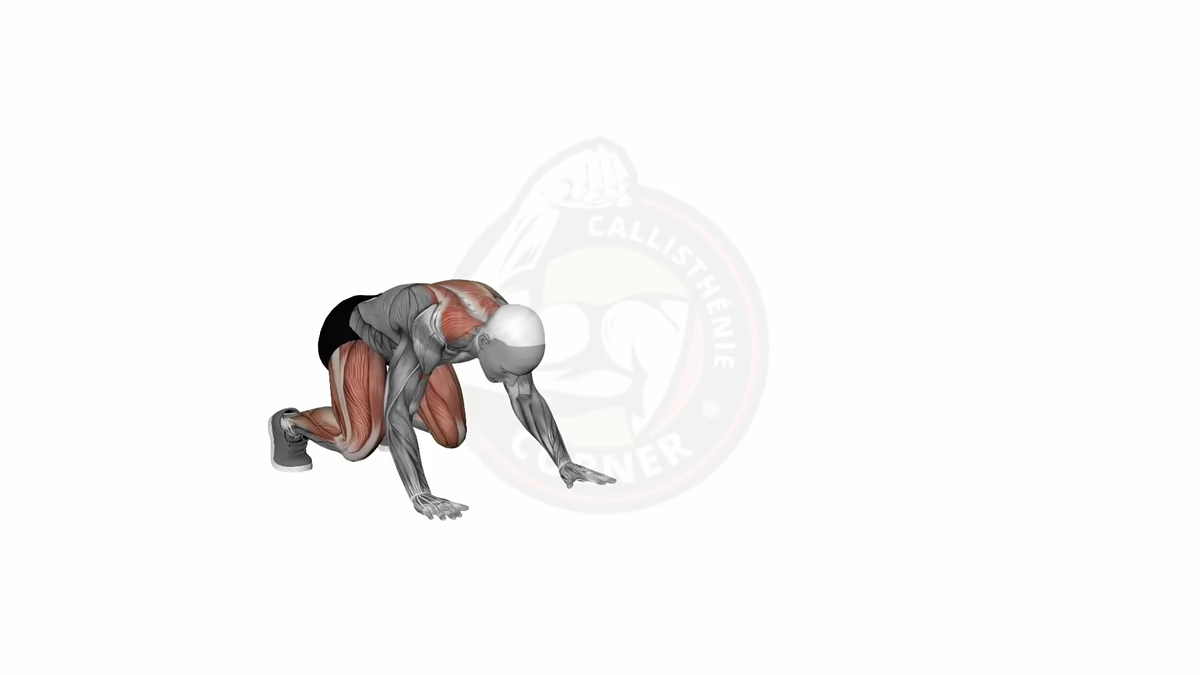
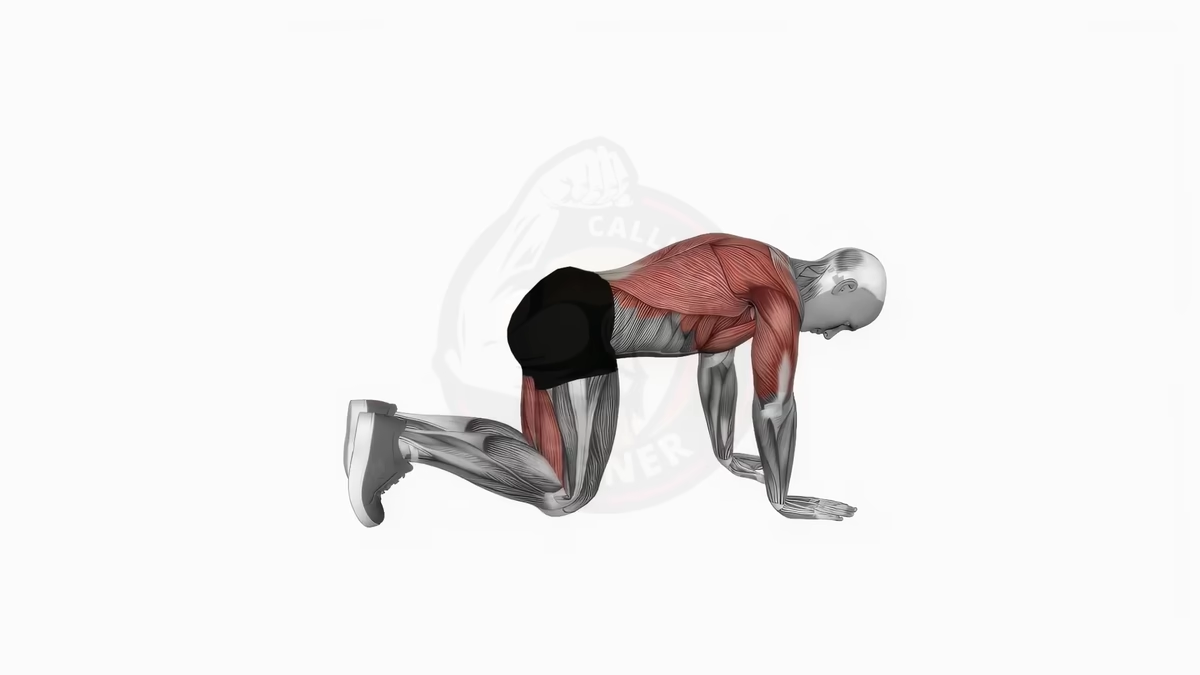
- Bird dog: 3 x 8 reps per side
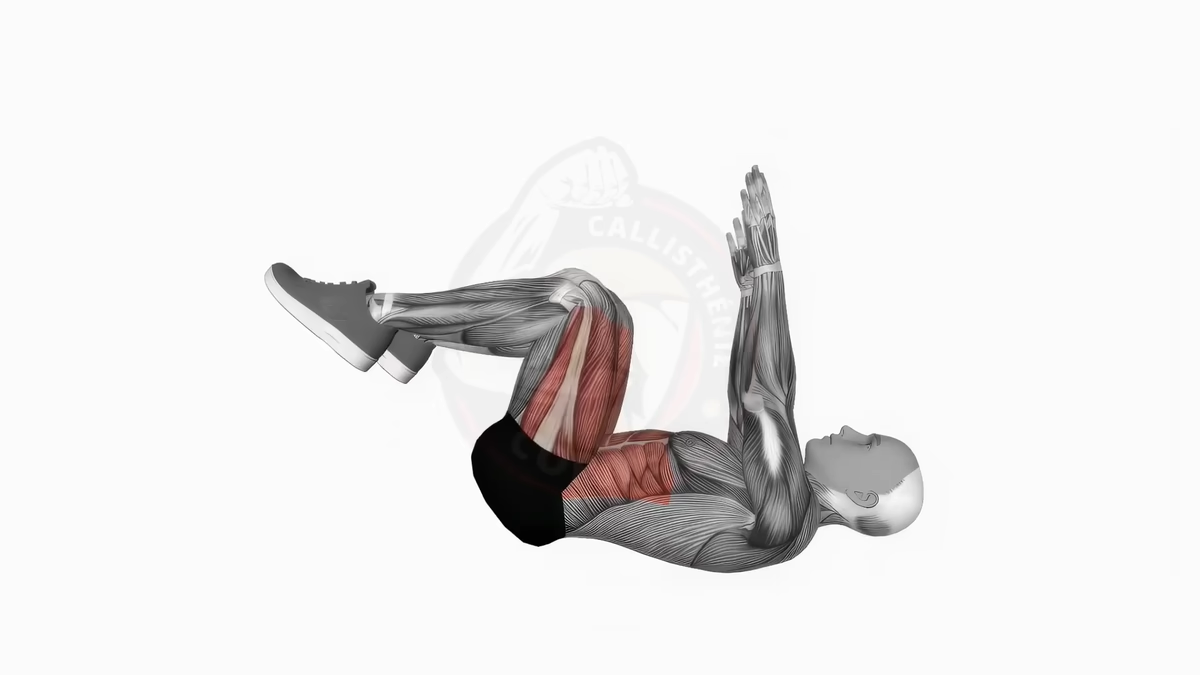
- Hollow hold: 3 x 15 seconds
Intermediate core circuit:
- Plank: 3-4 x 45-60 seconds, rest 45 seconds
- Side plank: 2 x 30 seconds per side
- Push-ups: 3 x 8-12 reps
- Superman hold: 3 x 15 seconds
Combine the plank with squats, push-ups and superman holds for a well-rounded bodyweight session.
Precautions
Always warm up first. A few minutes of light movement, cat-cow stretches or marching in place prepares your muscles and joints for the sustained tension of the plank.
Learn to distinguish sensations. A deep burn in the abs and a trembling feeling are normal signs of muscular fatigue. Sharp pain in the lower back, shoulders or wrists is not. If you feel pain, stop immediately, check your form, and reduce the difficulty.
Build gradually. Jumping from 15-second holds to 2-minute attempts invites injury and frustration. Consistent, incremental progress is the path to a strong, injury-free core.
Frequently Asked Questions
How long should you hold a plank?
Aim for 30 to 60 seconds with perfect form. Holding a plank for 3 minutes with sagging hips is far less effective than 45 seconds of maximum tension with a perfectly straight body line. Once you can hold 60 seconds with full engagement, progress through harder variations rather than chasing longer times.
Are planks better than crunches?
For most people, yes. Planks train the entire core isometrically, including the deep transverse abdominis that crunches miss. They also reinforce proper spinal alignment and build the anti-extension strength needed for advanced movements. Crunches have their place, but the plank builds a more functional, injury-resistant core.
Do planks burn belly fat?
Planks strengthen the muscles underneath, but they do not specifically burn belly fat. Fat loss comes from a caloric deficit through nutrition and overall activity, not from any single exercise. A strong core from planks will make your midsection look tighter and more defined once body fat decreases.
What comes after the plank?
Once you can hold a solid 60-second plank with full tension and you’ve explored the side plank, reverse plank and dynamic variations, you’re ready to progress:
- Hollow hold: Takes the core endurance from the plank and applies it in a supine position, engaging the full anterior chain.
- Dragon flag: The ultimate test of the rigid-body tension you’ve built.
- Full planche: Brings the plank into the air. Years of work, but every second of plank training contributes to the foundation.
The plank is not flashy. It will never trend on social media the way a muscle-up does. But it is the exercise that makes everything else possible. Train it consistently, focus on perfect form, and your entire body will thank you.