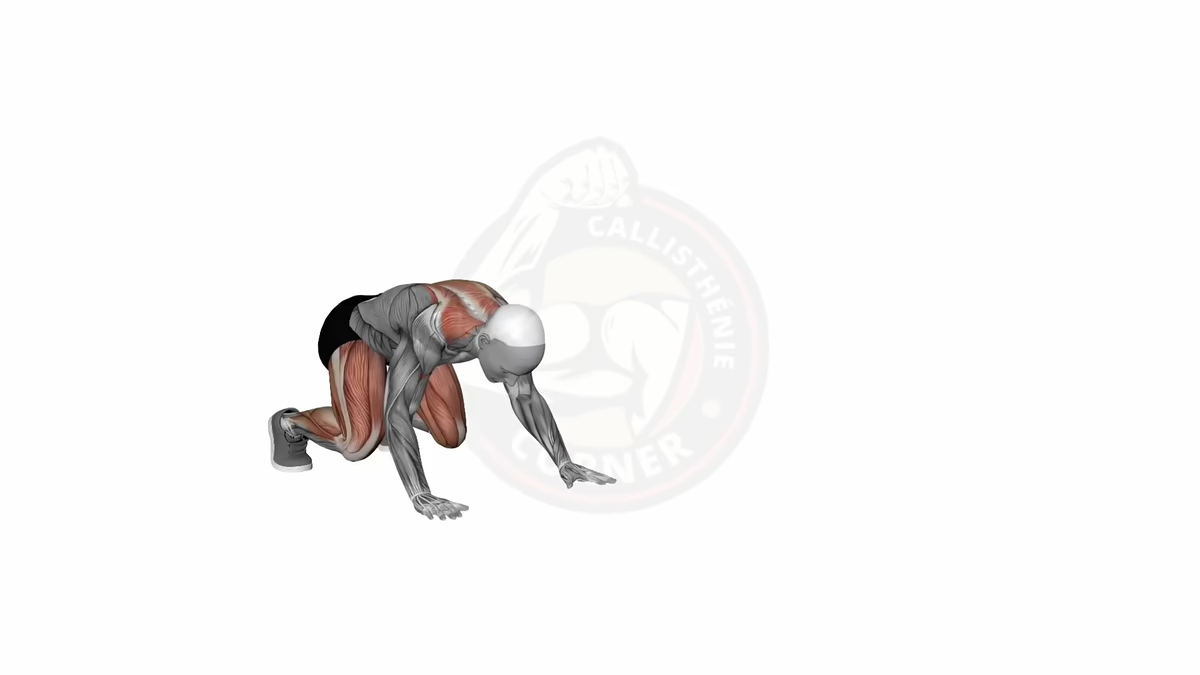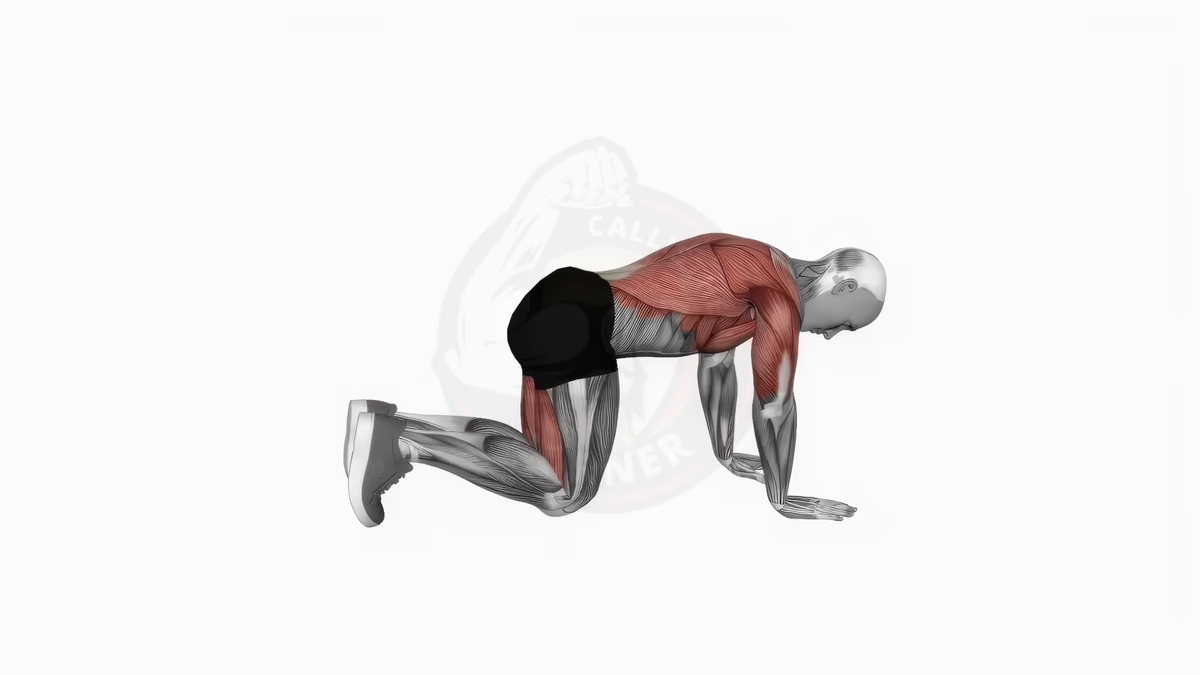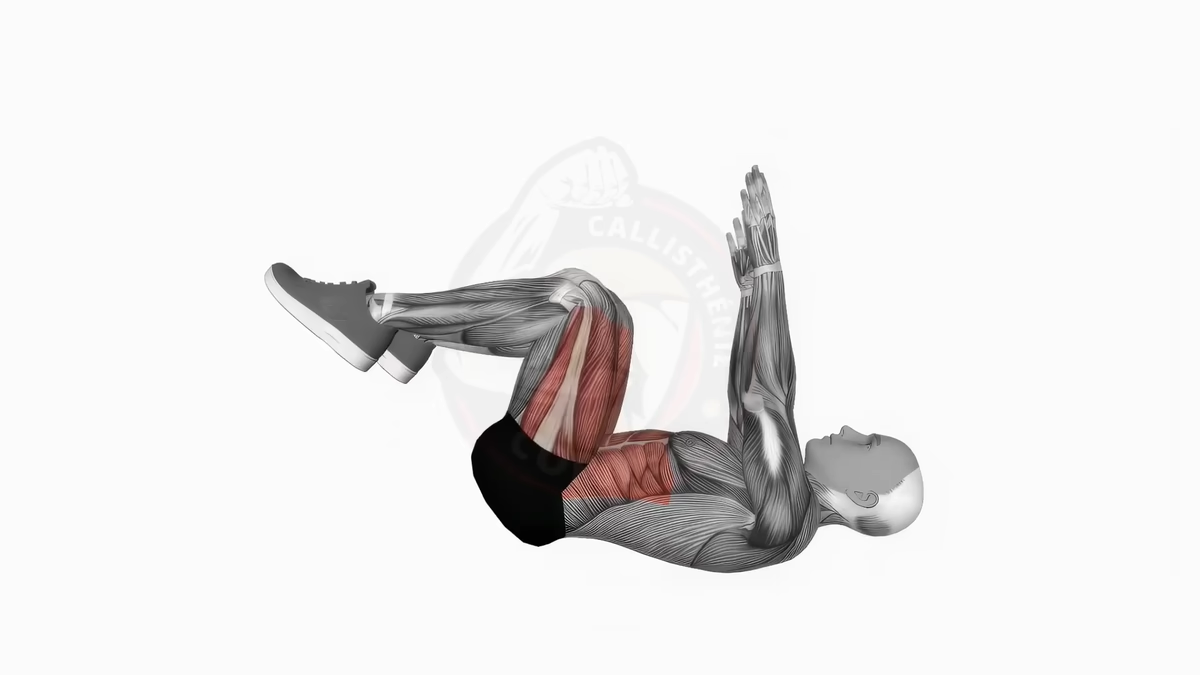
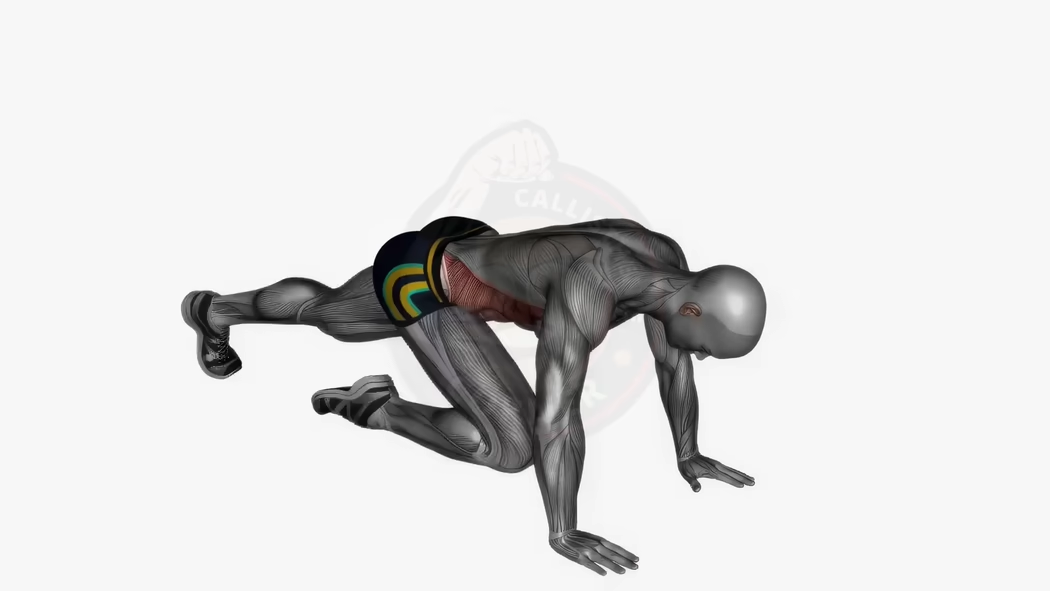
Mountain climbers are one of the rare exercises that genuinely combine strength and cardio in a single movement. You get core stability, hip flexor work, upper body endurance, and an elevated heart rate, all without any equipment. If you want maximum training effect with minimum setup, mountain climbers belong in your routine.
Technique: getting it right from the start
The mountain climber starts in a push-up position. Getting this base right is everything.
Setup: Place your hands directly under your shoulders, fingers spread. Your body forms a straight line from head to heels. Apply a slight posterior pelvic tilt (tuck your tailbone) to engage your lower abs and protect your lower back.
The movement: Drive one knee toward your chest without letting your foot touch the floor. Return it to the starting position and immediately drive the other knee forward. Alternate rapidly but with control. Each knee drive is one rep.
Key cues for proper form:
- Hips stay low. The most common error is letting your hips rise into a pike position. Your body should remain flat like a plank throughout the exercise.
- Core stays braced. Your abs aren’t just along for the ride. They’re actively stabilizing your trunk against the rotational force of your legs moving.
- Look slightly ahead. Not straight down at the floor, not up at the ceiling. A slightly forward gaze keeps your cervical spine in a neutral position.
- Feet stay light. Don’t bounce or stomp. The movement comes from your hips, not from slamming your feet against the floor.
If you feel wrist or shoulder pain: start with mountain climbers on an incline (hands on a bench or step). If that still hurts, build your base with the hollow hold first before returning to mountain climbers.
Muscles targeted
Mountain climbers are a true full-body exercise that combines strength and cardiovascular conditioning.
| Muscle group | Role |
|---|---|
| Rectus abdominis + obliques | Stabilize the trunk against rotation and gravity |
| Hip flexors (iliopsoas) | Drive the knees toward the chest |
| Quadriceps | Push the legs forward during each knee drive |
| Hamstrings | Control the return of each leg to starting position |
| Triceps + anterior deltoids | Stabilize the upper body in push-up position |
The unique value of mountain climbers is this dual nature: your upper body works isometrically (like a plank) while your lower body works dynamically. The result is a movement that builds core endurance, hip mobility, and cardiovascular capacity simultaneously.
7 variations from beginner to advanced
1. Incline mountain climbers
Hands on a bench or step, feet on the floor. This reduces load on the wrists and shoulders while keeping the full movement pattern. Ideal for beginners or as a warm-up variation.
2. Spiderman mountain climbers
Instead of driving your knee straight forward, bring it toward the outside of your elbow. This targets the obliques intensely and adds a hip mobility component. Slow and controlled works best here.
3. Elbow plank mountain climbers
Perform the movement from a forearm plank position instead of straight arms. This increases core demand significantly since you lose the structural support of locked arms. Keep reps lower and focus on stability.
4. Double mountain climbers
Drive both knees toward your chest simultaneously, then jump both feet back. This explosive plyometric version sends your heart rate through the roof. Requires solid core strength and wrist stability.
5. Cross-body mountain climbers
Drive your right knee toward your left elbow and vice versa. The twisting pattern hits the obliques harder than the standard version and builds rotational core strength.
6. Sliding mountain climbers
Place your feet on sliders, towels, or paper plates on a smooth floor. The reduced friction forces your core to work overtime to control the movement. Slow these down for maximum effect.
7. TRX mountain climbers
Feet suspended in TRX straps, hands on the floor. The instability of the straps dramatically increases core demand. This is an advanced variation that requires excellent plank stability first.
Integrating mountain climbers into your program
Mountain climbers are versatile. Where you place them in your workout changes their purpose entirely.
As a dynamic warm-up
Moderate pace, 2-3 sets of 15-20 reps per side. This elevates your heart rate, activates your core, and prepares your hip flexors for the session ahead. Perfect before any calisthenics workout.
In a circuit
Pair mountain climbers with push-ups and air squats for a full-body, no-equipment circuit. Example:
- Push-ups x 10
- Mountain climbers x 20 (10 per side)
- Air squats x 15
- Rest 60 seconds, repeat 4-5 rounds
As a high-intensity finisher
At the end of your workout, hit 3-4 sets of 30-second all-out mountain climbers with 15 seconds rest between sets. This crushes your core and metabolic conditioning in under 5 minutes.
Frequency and variety
Train mountain climbers 3-4 times per week. Rotate between variations to prevent adaptation and hit your muscles from different angles. One session might use standard climbers for speed, the next uses Spiderman climbers for obliques, the third uses sliding climbers for deep core control.
Types of cardio training with mountain climbers
Mountain climbers fit seamlessly into multiple training formats.
HIIT (High-Intensity Interval Training): 20 seconds all-out, 10 seconds rest (Tabata protocol). 8 rounds = 4 minutes of brutal conditioning. Mix mountain climbers with burpees, jump squats, or plank holds for variety.
Cardio-training: Sustained moderate-pace mountain climbers for 60-90 seconds, repeated 5-6 times with short rest. Builds aerobic endurance without the joint impact of running.
Circuit training: Combine mountain climbers with 4-5 other bodyweight exercises. Perform each for 30-45 seconds, minimal rest between exercises, 60-90 seconds between rounds. Complete 3-5 rounds.
Dynamic warm-up: 2-3 sets of slow, controlled mountain climbers before your main workout. Focus on hip range of motion and core activation rather than speed.
If you’re new to calisthenics and want a complete training framework, our start calisthenics guide maps out everything from first workout to advanced programming. Mountain climbers will be a staple from day one.
Frequently Asked Questions
Are mountain climbers cardio or strength?
Both. Mountain climbers are a hybrid exercise that builds core and upper body strength (isometric hold in push-up position) while simultaneously driving up your heart rate through rapid leg movement. At a slow, controlled pace they lean more toward strength and stability. At high speed, they become a serious cardiovascular conditioning tool.
How many mountain climbers should I do?
For warm-ups, 2 to 3 sets of 15 to 20 reps per side at a moderate pace is enough. For conditioning, aim for 3 to 4 sets of 30 seconds at high intensity with 15 seconds rest. Beginners should start with 2 sets of 10 reps per side and build up as form and endurance improve. Always prioritize keeping your hips level over hitting a high rep count.
What muscles do mountain climbers work?
Mountain climbers hit the rectus abdominis, obliques, hip flexors, quadriceps, and hamstrings through the leg-driving motion. The shoulders, triceps, and chest work isometrically to hold the push-up position. This combination makes mountain climbers one of the most efficient full-body exercises you can do with zero equipment.
Are mountain climbers good for abs?
Very. Your core has to work constantly to stabilize your trunk against the rotational force created by alternating leg drives. The anti-rotation demand is similar to a plank, but the dynamic leg movement adds hip flexor work and increases overall abdominal activation. For visible results, combine mountain climbers with other core exercises and a nutrition plan that supports fat loss.