Why the manna is one of the hardest calisthenics skills
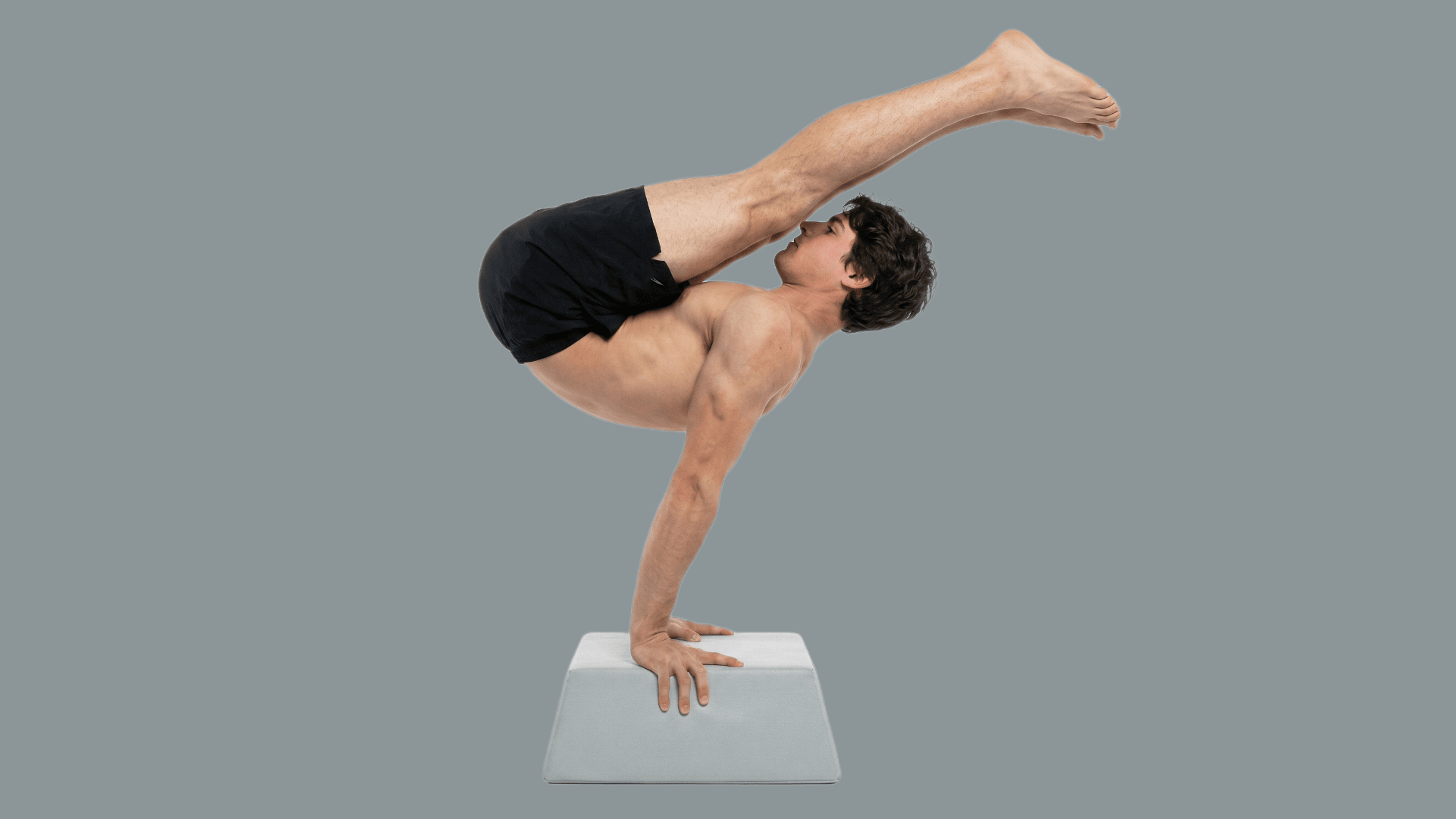
The manna consists of holding your body in balance on your hands, legs extended horizontally above the shoulders, in a pike position. Your palms are on the floor, fingers pointing backward. The hips pass in front of the line of the hands while the legs stay compressed against the torso.
In gymnastics, this skill is ranked C-level in the Code of Points. That is the same difficulty level as a full planche on rings. Very few athletes can hold it cleanly.
The primary muscles worked are the rear deltoids, the scapular retractors (rhomboids, mid traps) and the external rotators of the shoulders. These muscles carry almost all of the extension load. The triceps lock the arms straight. The hip flexors (iliopsoas, rectus femoris) and the core hold the legs compressed against the torso. The wrists also take serious stress in hyperextension.
The manna is unique because it combines two qualities rarely found together: extreme strength in shoulder extension and maximum hip compression. It is this dual demand that makes it one of the most selective bodyweight skills.
Strength prerequisites for the manna
You must hold the L-sit on the floor for 30 seconds minimum, arms straight and legs perfectly parallel to the floor. If you are not there yet, focus on that base first before aiming for the manna.
The V-sit is the second mandatory milestone. You must hold it for 15 seconds with legs clearly above the hip line. That is the direct starting position toward the manna.
You need 20 clean dips to guarantee triceps strength and your ability to support yourself with straight arms.
On the mobility side, your shoulder extension must be sufficient to bring the arms behind the body plane without lumbar compensation. The german hang is a good indicator: if you hold it comfortably for 20 seconds, you are in the right zone.
Wrist strengthening is an often neglected prerequisite. They must support 90-degree extension under load without pain. The hand position in the manna places maximum stress on this joint.
How to do the manna: step-by-step technique
1 - Sit on the floor, legs extended in front of you. Place your hands next to your hips, fingers pointing backward or slightly to the side. Choose the position that lets you push hard without wrist pain.
2 - Push into the floor with your palms to lift your hips. Squeeze your hip flexors to the max to keep the legs tight against the torso. At this point you are in an L-sit with hands turned backward.
3 - The key to the manna is not to lift the legs higher. You must push the hips forward, beyond the line of the hands. The shoulders go into extension while the hips advance. The legs rise naturally when the hips pass the hands. If you try to force the legs up without moving the hips forward, you plateau immediately.
4 - The arms are locked in full extension. All the support force comes from the rear deltoids and the triceps. Avoid shrugging the shoulders: they stay low and drawn back.
In the final position, your legs are horizontal at shoulder level or above. The hips are clearly in front of the hands. Your whole body forms a compact pike. Hold maximum compression between the legs and the torso to avoid losing the position.
Progression program toward the manna
The manna is built over several months and years of consistent work. This three-phase program guides you from a solid L-sit to the full position.
Phase 1: foundations (4-6 weeks)
- L-sit on the floor: 4 × 20-30 seconds.
- Pike compression on the floor (seated, legs extended, lift feet off floor): 4 × 8-10 reps.
- Shoulder extension at the wall (back to wall, hands on floor behind you, walk back progressively): 3 × 30 seconds.
- Wrist warm-up and strengthening: 5 minutes per session.
- Frequency: 3 to 4 sessions per week.
Phase 2: V-sit and extension (6-8 weeks)
- V-sit on the floor: 4 × 10-15 seconds.
- Hanging pike compression on the bar (lift feet to hands, legs extended): 4 × 6-8 reps.
- Back support on the floor (hands behind hips, fingers backward, lift hips as high as possible): 4 × 15-20 seconds.
- German hang on rings or bar: 3 × 20 seconds.
- Frequency: 3 to 4 sessions per week.
Phase 3: manna-specific work (8-12+ weeks)
- High V-sit (legs as high as possible, actively pushing hips forward): 5 × 5-10 seconds.
- Manna attempts from the V-sit: 5-8 tries per session, focusing only on moving the hips forward.
- Elevated back support (hips higher than hands, reaching for a pike above the shoulders): 4 × 10-15 seconds.
- Compression with assistance band: 3 × 8 reps.
- Frequency: 4 sessions per week.
Progression toward the manna is a long process. In artistic gymnastics, athletes work this skill for years before mastering it. Consistency beats intensity: 4 regular sessions per week beat overtraining that burns out shoulders and wrists.
Mistakes to avoid
The most common mistake is trying to lift the legs by forcing only on the hip flexors. It is the forward movement of the hips past the hands that creates leg elevation. Without this shift, you stay stuck in a high V-sit without ever reaching the manna position.
Neglecting compression work also kills progression. Without solid pike compression, you will not keep the legs close to the torso in the top position. Legs drift apart, the pike is lost, and the position becomes impossible to hold.
Forcing through the wrists without enough prep causes chronic pain that can stop your progression for weeks. Wrist extension in the manna is extreme. Warm up systematically before every session and never skip the parallel strengthening work.
What comes after the manna?
You can work the manna press to handstand: from the manna position, you unfold the body by going through an inverted planche to press up into a handstand.
The manna opens the door to advanced combinations on parallettes: L-sit to V-sit to manna transitions, or manna to inverted planche. These sequences demand total control and perfect mastery of every intermediate position.