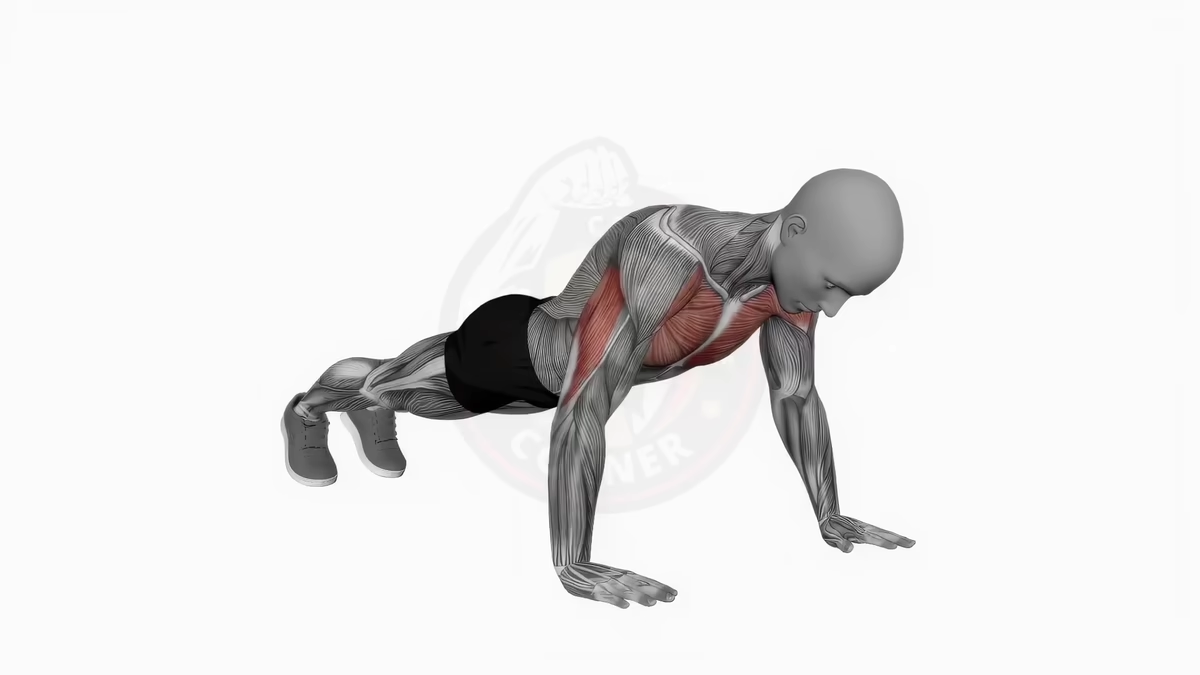
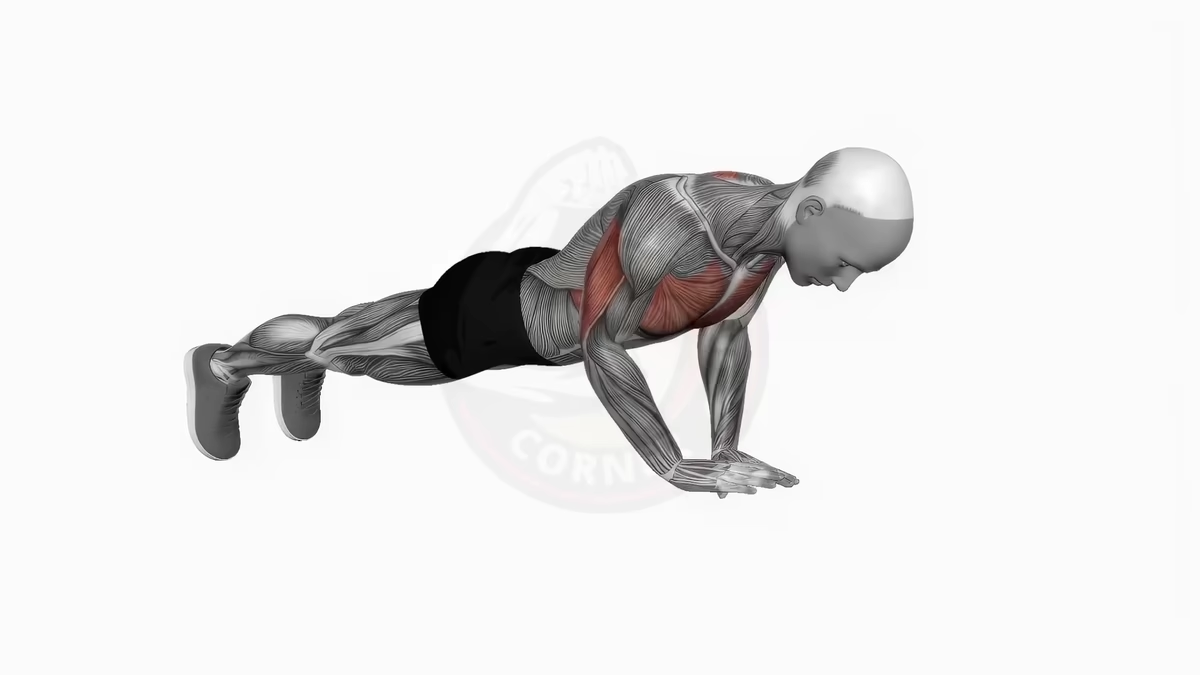
The diamond push-up is a push-up variation where your hands are placed close together under your chest, thumbs and index fingers touching to form a diamond (or triangle) shape. This small change in hand placement shifts the load dramatically: instead of your chest doing most of the work, your triceps take over as the primary mover.
Also called narrow push-ups, diamond push-ups are one of the best bodyweight exercises for building bigger arms. Since the triceps make up roughly two-thirds of your upper arm volume, training them hard is the fastest route to visibly larger arms. More demanding than classic push-ups, they require a solid base of pressing strength before you can perform them with good form.
Muscles worked
Diamond push-ups target the upper body with a strong emphasis on the arms.
Primary muscles:
| Muscle | Role |
|---|---|
| Triceps brachii | The main target. The narrow hand position forces the triceps to work significantly harder than in standard push-ups. |
| Pectoralis major (inner fibers) | Still engaged, but less than with a wide grip. The inner portion of the chest works more in this position. |
Secondary muscles:
| Muscle | Role |
|---|---|
| Anterior deltoids | Stabilize the movement and assist the pressing phase. |
| Core (abs, lower back) | Keeps the body aligned throughout the exercise. Active bracing, not passive support. |
How to do diamond push-ups
Here is the technique broken down into 3 steps for perfect execution.
Step 1: Setup
Place your hands on the floor under your chest. Touch your thumbs and index fingers together to form a diamond shape. Arms straight, body in a straight line from heels to head. Engage your abs and glutes to lock in the plank position.
Common mistake: Hands placed too far forward, near your face. This overloads your shoulders and reduces triceps engagement. Your hands should be under your chest, not under your chin.
Step 2: Controlled descent
Bend your elbows while keeping them tight to your body. Lower yourself until your chest nearly touches your hands. Control the descent for at least 2 seconds.
Common mistake: Elbows flaring out to the sides. This transfers tension to the shoulders and increases injury risk. Keep your elbows tucked, they should almost brush your ribcage.
Another mistake: Back arching or hips sagging toward the floor. If your pelvis drops, you lose core tension and risk lower back pain. Think of your body as a rigid plank from head to toe.
Step 3: Explosive push
Push hard into the floor to return to the starting position. Squeeze your triceps at the top of the movement. Don’t hyperextend your elbows at lockout: keep a slight bend to protect your joints.
Common mistake: Partial range of motion. If you only go halfway down, you only get half the results. Your chest should nearly touch your hands on every single rep.
Variations and progressions
Diamond push-ups are already an intermediate exercise. Here is how to progress from easiest to hardest.
1. Kneeling diamond push-ups
The beginner version. Same hand position, but knees on the floor. This reduces the load by roughly 50%. Target: 3 sets of 10-12 clean reps before moving on.
2. Incline diamond push-ups
Hands on an elevated surface (bench, step, low table). The higher the surface, the easier it gets. Gradually lower the height until you reach the floor.
3. Standard diamond push-ups
The version described above. This is your baseline goal. Aim for 3 sets of 8-12 reps with flawless technique.
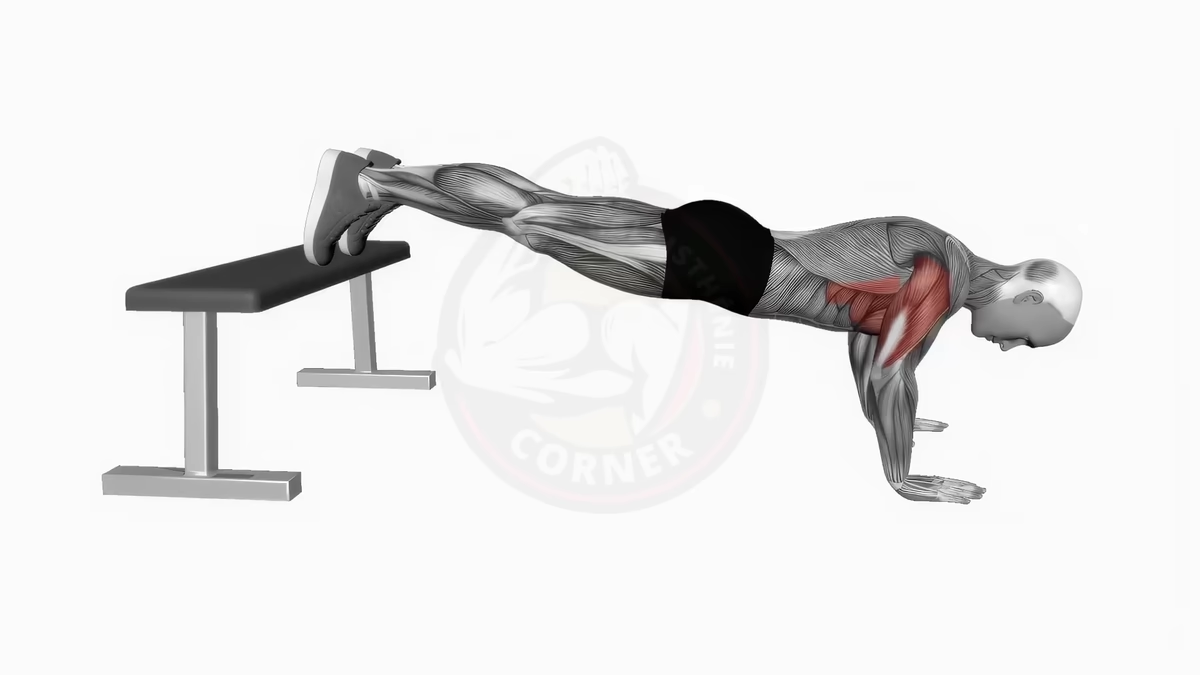
4. Feet-elevated diamond push-ups
Feet on a bench or chair. This increases the load on the upper body and intensifies the work on both triceps and shoulders.
5. Slow tempo diamond push-ups
3 seconds down, 1 second pause at the bottom, 3 seconds up. The slow tempo eliminates momentum and maximizes muscular tension. Brutal but effective.
6. Weighted diamond push-ups
With a weighted vest or loaded backpack. Reserved for advanced athletes who can already perform 15+ clean reps at bodyweight.
For a complete overview of every push-up type, check out our push-up variations guide.
What comes next?
You own diamond push-ups? Here are the next steps to keep progressing.
Dips: The other king of triceps exercises. Dips let you load heavier and work the triceps from a different angle. Combine them with diamond push-ups for complete arm development. For a complete arm training plan, see our tricep exercises without equipment guide.
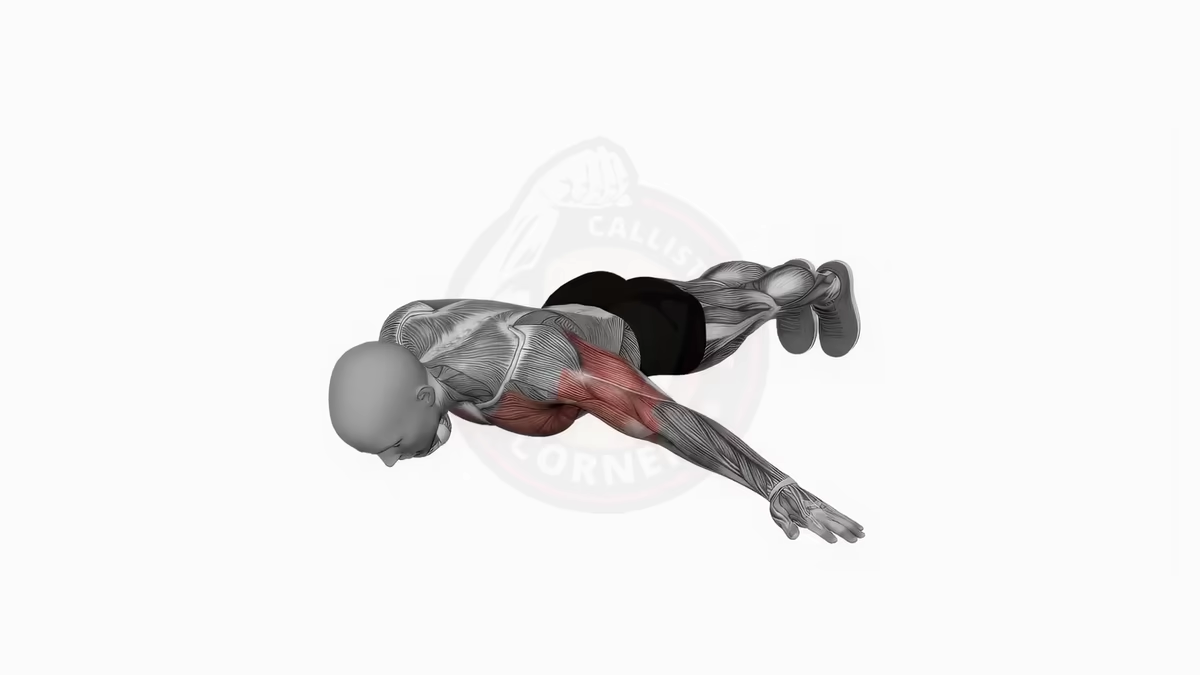
Archer push-ups: One hand stays close to the body while the other extends to the side. This is the bridge toward one-arm push-ups and an excellent way to keep progressing once diamond push-ups become too easy.
One-arm push-ups: The ultimate push-up goal. If you can chain weighted diamond push-ups with slow tempo, you are on the right track. The journey from diamond push-ups to one-arm push-ups passes through archer push-ups and requires patience, but the strength you build along the way makes every step worth it.
Frequently Asked Questions
Are diamond push-ups harder than regular push-ups?
Yes. Diamond push-ups are significantly harder than regular push-ups because the narrow hand position reduces the mechanical advantage of the chest and shifts the load onto the smaller triceps muscles. Most people can do fewer diamond push-ups than standard push-ups. If you can perform 15 to 20 regular push-ups with good form, expect to manage around 8 to 12 diamond push-ups.
What muscles do diamond push-ups target?
The primary target is the triceps brachii, which does the bulk of the pressing work due to the narrow hand position. The inner fibers of the pectoralis major (chest) are also engaged, though less than with a wider grip. The anterior deltoids and core muscles work as stabilizers throughout the movement.
How many diamond push-ups should I do?
For triceps strength and size, aim for 3 to 4 sets of 8 to 12 reps with strict form. Beginners should start with the kneeling or incline variation and build up to the standard version. Once you can complete 3 sets of 15 clean reps, progress to a harder variation like feet-elevated or slow tempo diamond push-ups.
Are diamond push-ups good for chest?
Diamond push-ups do engage the chest, particularly the inner fibers of the pectoralis major. However, they are primarily a triceps exercise. If your goal is chest development, standard push-ups or wide push-ups are more effective. Diamond push-ups work best as a complement to wider-grip pressing movements for complete upper-body development.