
Building a powerful, aesthetic chest without equipment is entirely possible. Calisthenics offers a wide range of chest exercises without equipment that intensely recruit the muscle fibers of the torso. Whether you are a beginner or an advanced athlete, you will find movements suited to your level to sculpt your upper body effectively.
Anatomy of the chest: understanding the pushing muscles
Before diving into chest exercises without equipment, understanding the anatomy of this muscle group will drastically improve your workouts. The chest is made up of several muscles that work together during every pushing motion.
The pectoralis major is the main muscle of the chest. This large muscle extends from the sternum to the humerus and is divided into three distinct heads. The clavicular head sits in the upper portion, attaches to the collarbone, and activates most during upward pushing movements. The sterno-costal head is the middle and largest portion. The abdominal head forms the lower section and fires during downward pushing patterns.
The pectoralis minor sits underneath the pectoralis major. This deep muscle stabilizes the scapula by pulling it forward and down. Though invisible, it plays a crucial role in shoulder health and injury prevention. Strengthening it improves posture and scapular mobility.
Understanding this anatomy lets you consciously adjust your exercises. Changing the push angle, hand width, or body incline shifts the emphasis across different heads of the chest. This knowledge turns your training into precise science rather than mechanical repetition.
Why train chest without equipment?
Chest exercises without equipment offer several advantages over gym training. First, they develop functional strength by simultaneously engaging multiple stabilizer muscle groups. Unlike guided machines, your body has to constantly maintain balance and coordination.
Second, bodyweight training limits injury risk. The movements respect your joints’ natural range of motion and progress gradually according to your level. You will never load more weight than your body can currently handle.
Third, total training freedom. No expensive membership, no schedule constraints. Your living room, garden, or a park becomes your gym. This flexibility promotes consistency, the essential key to muscular progress.
Best chest exercises without equipment for beginners
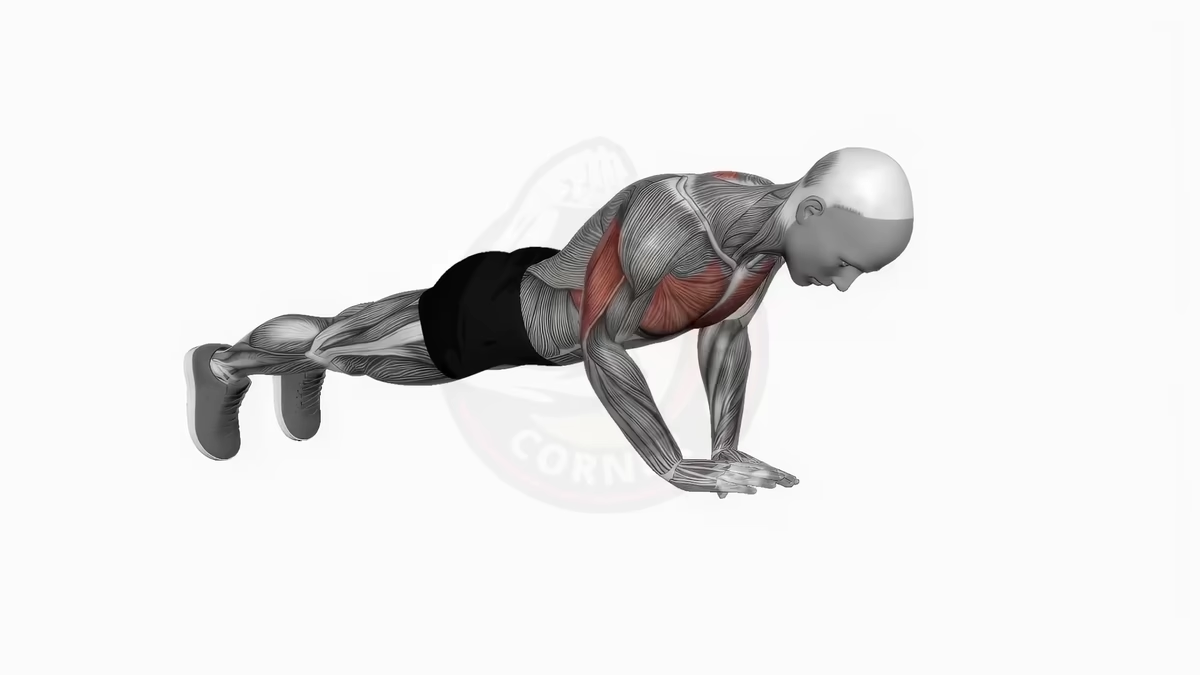
Classic push-ups
Push-ups are the foundational chest exercise without equipment. They primarily target the pectoralis major, anterior deltoids, and triceps. Position your hands slightly wider than shoulder-width, body perfectly aligned from heels to head.
Lower yourself in a controlled manner until your chest nearly touches the floor. Your elbows form a 45-degree angle with your torso. Push back up firmly, consciously contracting your chest. Exhale on the way up, inhale on the way down.
To progress, aim for 3 sets of 10-15 reps. When that becomes easy, move on to harder variations rather than endlessly adding reps. For a deep dive into all the ways you can modify this movement, read our push-up variations guide.
Dosage: 3 sets of 10-15 reps.
Incline push-ups (hands elevated)
Incline push-ups are the first step for beginners. Placing your hands on an elevated surface like a bench or table reduces the load on your chest by roughly 40%. This regression lets you progressively build the necessary strength.
Choose a height that allows 8-12 clean reps. Over the weeks, gradually lower the elevation until you reach the floor. This methodical progression guarantees flawless technique and prevents muscular compensation.
Always keep your body rigid like a plank. Core engagement protects your back and maximizes force transfer to your chest.
Dosage: 3 sets of 8-12 reps.
Chair dips
Dips on a chair intensely recruit the lower portion of the chest. Place two stable chairs parallel or use the edge of a couch. Grip the edge with your hands, slide your hips forward, then lower yourself by bending your elbows.
Your shoulders drop below elbow level. Push back up powerfully without fully locking your elbows at the top. Keep your torso slightly tilted forward to accentuate chest engagement.
Start with feet on the floor, knees bent. To intensify, gradually straighten your legs until fully extended.
Dosage: 3 sets of 8-10 reps.
Intermediate chest exercises without equipment
Diamond push-ups
Diamond push-ups concentrate effort on the inner chest and triceps. Place your hands close together under your chest, index fingers and thumbs forming a diamond shape. This position reduces range of motion but dramatically increases muscular tension.
Lower slowly, keeping your elbows close to your body. Your sternum should nearly touch your hands at the bottom. The push back up demands explosive force from both chest and triceps.
Dosage: 3 sets of 8-12 reps.
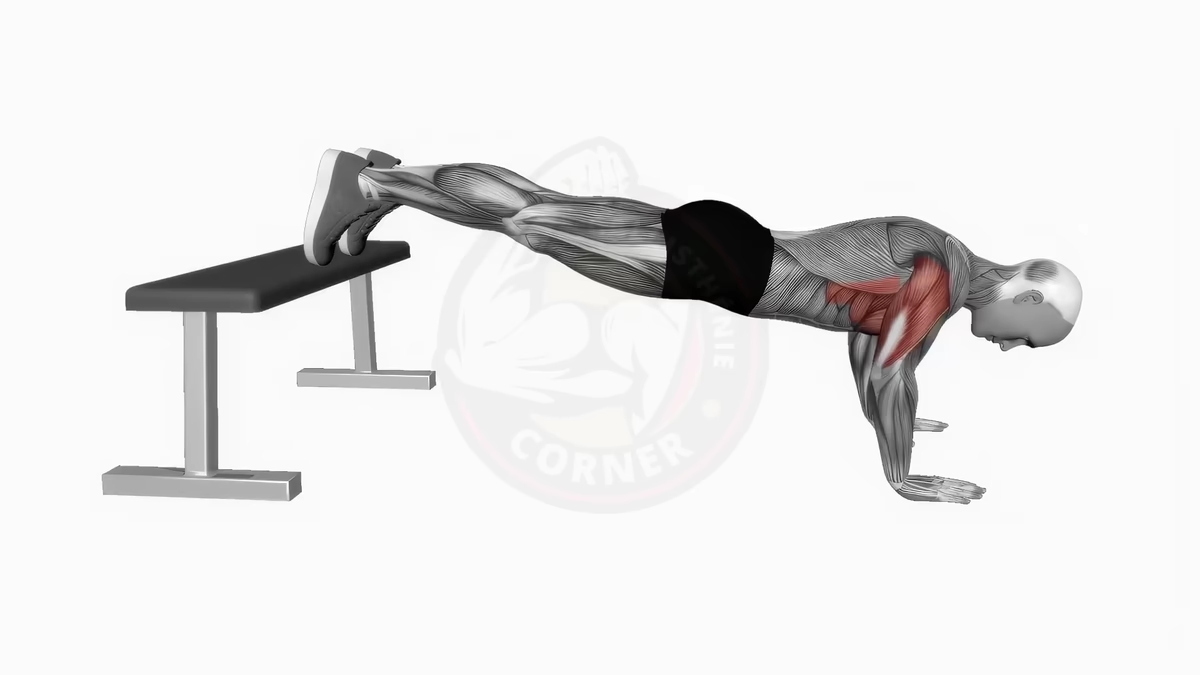
Decline push-ups (feet elevated)
Decline push-ups reverse the working angle by placing your feet on an elevated surface. This position increases the load on your chest by 30-40% and targets the upper portion more. Use a chair, bench, or couch.
The higher the elevation, the greater the difficulty. However, beyond 60 cm, the exercise gradually transforms into a shoulder movement similar to handstand push-ups. Find the optimal height that intensely engages your upper chest.
Maintain a controlled 2-3 second descent. The eccentric phase generates the most micro-tears, essential for hypertrophy.
Dosage: 3 sets of 6-10 reps.
Pike push-ups
Pike push-ups shift the emphasis to the upper chest and shoulders. With hips high and legs and arms straight forming an inverted V, perform vertical push-ups. This exercise targets the clavicular head and prepares for handstand push-ups.
Dosage: 3 sets of 8-12 reps.
Advanced chest exercises without equipment
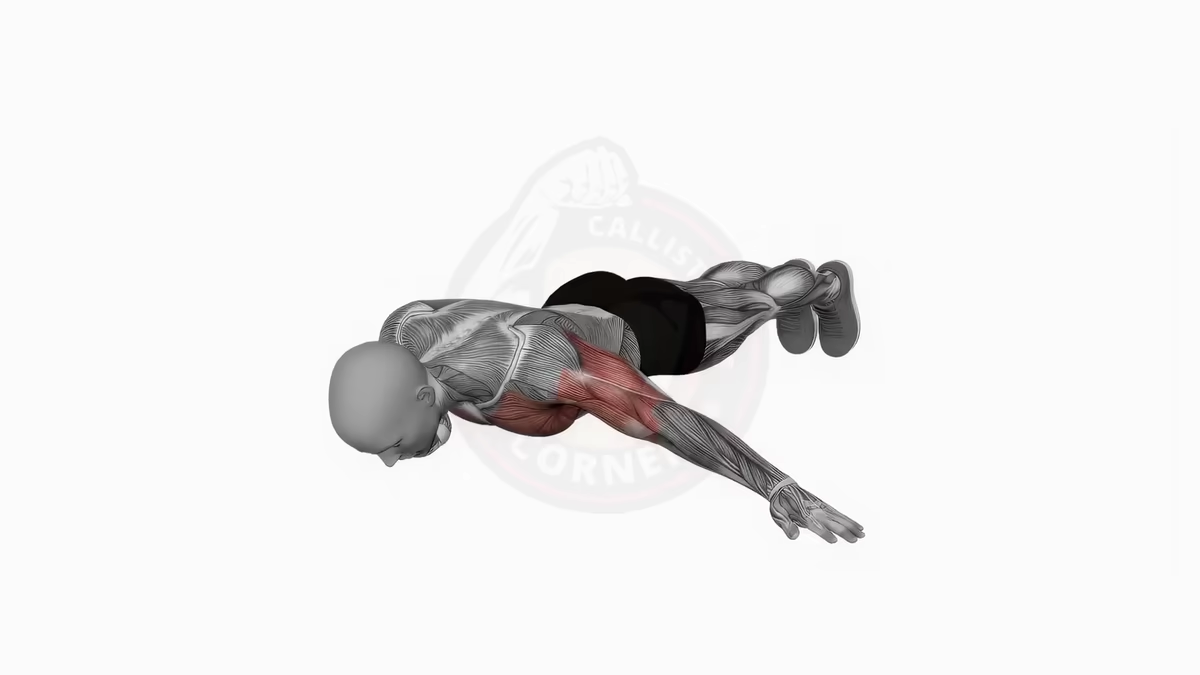
Archer push-ups
Archer push-ups prepare for unilateral work by progressively shifting the load onto one arm. Position your hands very wide, arms extended. During the descent, bend one elbow while keeping the other arm almost straight. Your torso shifts laterally toward the working side.
The straight arm acts as a stabilizer, supporting roughly 20-30% of the weight. The more you straighten it, the harder the working arm has to push. Alternate sides each rep or complete all reps on one side before switching.
Dosage: 3 sets of 5-8 reps per side.
One-arm push-ups
One-arm push-ups represent the ultimate pressing strength achievement. Feet wider than shoulder-width, one hand on the floor, lower your chest until it nearly touches, then push back up. This movement demands exceptional strength through the entire pushing chain.
Prerequisites: Master 8 clean archer push-ups per side before attempting.
Dosage: 3 sets of 3-5 reps per side.
Full dips
Full dips between two supports dramatically increase difficulty. You support your entire body weight through a maximal range of motion. Use two sturdy chairs, parallel bars, or gymnastic rings.
Grip the supports firmly, arms straight, body suspended. Lean your torso slightly forward (about 30 degrees) to target the chest rather than the triceps. Lower yourself until your shoulders reach elbow level or slightly below.
Push back up powerfully, deliberately contracting your chest. Avoid fully locking elbows at the top to maintain constant muscular tension.
Dosage: 3-4 sets of 6-12 reps.
Explosive push-ups
Explosive push-ups transform a strength movement into a plyometric exercise. After a controlled descent, explode upward violently until your hands leave the floor. This maximal acceleration recruits fast-twitch muscle fibers responsible for power.
Land softly on your hands, immediately absorb the impact, and chain into the next rep. Quality trumps quantity: when your speed drops, end the set.
Dosage: 4-6 sets of 3-6 explosive reps.
Stability exercises for chest and core
Shoulder taps
Shoulder taps in a high plank position reinforce the chest isometrically while developing trunk stability. Alternately touch your opposite shoulder with your hand while keeping your body perfectly stable.
The rotation and imbalance force your chest to work hard as a stabilizer. Avoid hip swaying by contracting your abs and glutes. The slower you go, the harder it gets.
Dosage: 3 sets of 20-30 total taps (10-15 per side).
Chest training programs without equipment
Beginner program (3 sessions/week)
Session A:
- Incline push-ups: 3 sets of 10-12 reps
- Chair dips (bent knees): 3 sets of 8-10 reps
- High plank: 3 sets of 30-45 seconds
Session B:
- Push-ups: 3 sets of 8-12 reps
- Chair dips (bent knees): 3 sets of 10-12 reps
- Shoulder taps: 3 sets of 10 taps
Alternate between these two sessions. When you easily reach the top of the rep range, progress to intermediate exercises. This transition should happen after 4-8 weeks of consistent training.
Intermediate program (3-4 sessions/week)
Session A:
- Decline push-ups: 4 sets of 8-12 reps
- Diamond push-ups: 3 sets of 8-10 reps
- Dips on chair (legs straight): 3 sets of 10-15 reps
- T-plank rotations: 3 sets of 8 per side
Session B:
- Push-ups (slow tempo 3-1-3): 4 sets of 6-10 reps
- Arching push-ups: 3 sets of 6-8 reps
- Shoulder taps: 3 sets of 15 taps
Spread these sessions over 3-4 days per week with at least 48 hours between two chest workouts. You can add back or leg sessions on the in-between days.
Advanced program (4-5 sessions/week)
Session A, Strength:
- Archer push-ups: 5 sets of 5-8 reps per side
- Full dips: 4 sets of 6-10 reps
- Explosive push-ups: 4 sets of 4-6 reps
Session B, Hypertrophy:
- Decline push-ups (tempo 3-0-1): 4 sets of 10-15 reps
- Diamond push-ups: 4 sets of 12-15 reps
- Full dips (tempo 3-1-1): 3 sets of 10-12 reps
Session C, Muscular endurance:
- Push-ups: 100 total reps (as few sets as possible)
- Chair dips: 3 sets of 20-25 reps
- Shoulder taps: 3 sets of 30 taps
Alternate these three session types to develop all muscular qualities. This undulating periodization optimizes gains while preventing plateaus. Advanced athletes can progress toward gymnastics movements like the muscle-up that combines chest power and coordination.
Common mistakes to avoid
Mistake 1, Partial range of motion: Push-ups where the chest only goes halfway down drastically limit muscle gains. Always bring your chest to within an inch of the floor. Prioritize quality over quantity.
Mistake 2, Excessive lower back arch: When your chest fatigues, your body naturally tries to cheat by arching the back. This position loads your lumbar spine and reduces exercise effectiveness. Contract your abs and glutes to maintain a neutral alignment.
Mistake 3, Chest-only training: Training exclusively chest creates muscular imbalances. Your shoulders roll forward, posture degrades, and injury risk increases. Always include equal volume of back exercises to maintain muscular balance. New to bodyweight training? Our complete beginner’s guide covers how to build a balanced program.
Mistake 4, Flared elbows: Pushing with elbows flared wide at 90 degrees places excessive stress on the shoulder joint. Keep elbows at a 45-degree angle for safe, effective pressing.
Mistake 5, Skipping progression steps: Jumping from regular push-ups to one-arm push-ups too quickly invites injury. Tendons and ligaments adapt more slowly than muscles. Spend 4-8 weeks at each progression level.