The burpee is the exercise people love to hate. It combines a squat, a plank, a push-up, and an explosive jump into one seamless movement that taxes every major muscle group while sending your heart rate through the roof. If you could only pick one exercise for full-body conditioning, this would be a strong contender.
A brief history
The burpee was invented in 1939 by Royal H. Burpee, an American physiologist who designed it as a four-count fitness test to assess agility and coordination. The U.S. military adopted it during World War II to evaluate recruits. The modern version, with the push-up and vertical jump added, evolved over the following decades into the full-body powerhouse we know today.
Muscles worked
The beauty of the burpee is that no muscle gets to rest. Every phase of the movement recruits a different set of muscles, and the transitions between phases demand coordination and stability from your entire body.
| Phase | Primary muscles | Role |
|---|---|---|
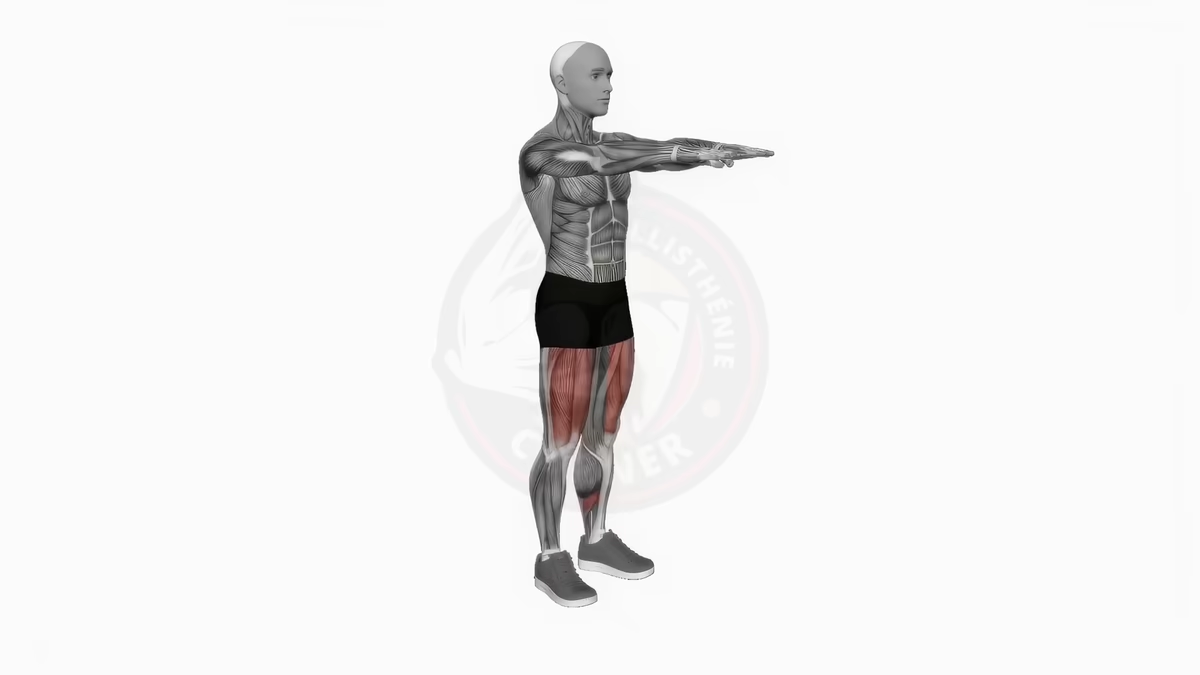
| Squat down | Quadriceps, hamstrings, glutes | Lower the body to the floor |
| Jump feet back to plank | Abs, hip flexors, lower back | Stabilize the trunk during transition |
| Push-up | Chest, anterior deltoids, triceps | Press the body off the floor |
| Jump feet forward | Hip flexors, abs, calves | Bring the feet under the hips |
| Explosive vertical jump | Quads, glutes, calves, hamstrings | Propel the body upward |
The core never stops working. From the moment you drop into the squat to the moment you land from the jump, your rectus abdominis, obliques, and lower back muscles stabilize your spine through every transition. This makes burpees one of the most effective functional core exercises you can do, alongside movements like mountain climbers and jump squats.
Benefits of burpees
Cardiovascular conditioning
Burpees are one of the most efficient ways to improve your VO2 max without any equipment. The combination of strength work and explosive jumping drives your heart rate up fast and keeps it elevated.
Calorie burn
At moderate to high intensity, burpees burn approximately 10 calories per minute. The compound, full-body nature of the movement is what makes the difference: you are moving your entire body mass through a large range of motion repeatedly. This intense calorie burn continues even after your workout thanks to the afterburn effect.
Time efficiency
No equipment, no setup, no travel to the gym. A 10-minute burpee session delivers a serious training stimulus. You can get meaningful conditioning work done in your living room in less time than it takes to warm up on a treadmill.
Explosive power and coordination
The squat-to-jump sequence builds lower body explosiveness. The transitions between positions demand coordination and body awareness that make you a better, more athletic mover over time.
Technique: step by step
Burpees look simple, but sloppy form turns a great exercise into a recipe for injury and wasted effort. Here is how to execute each phase correctly.
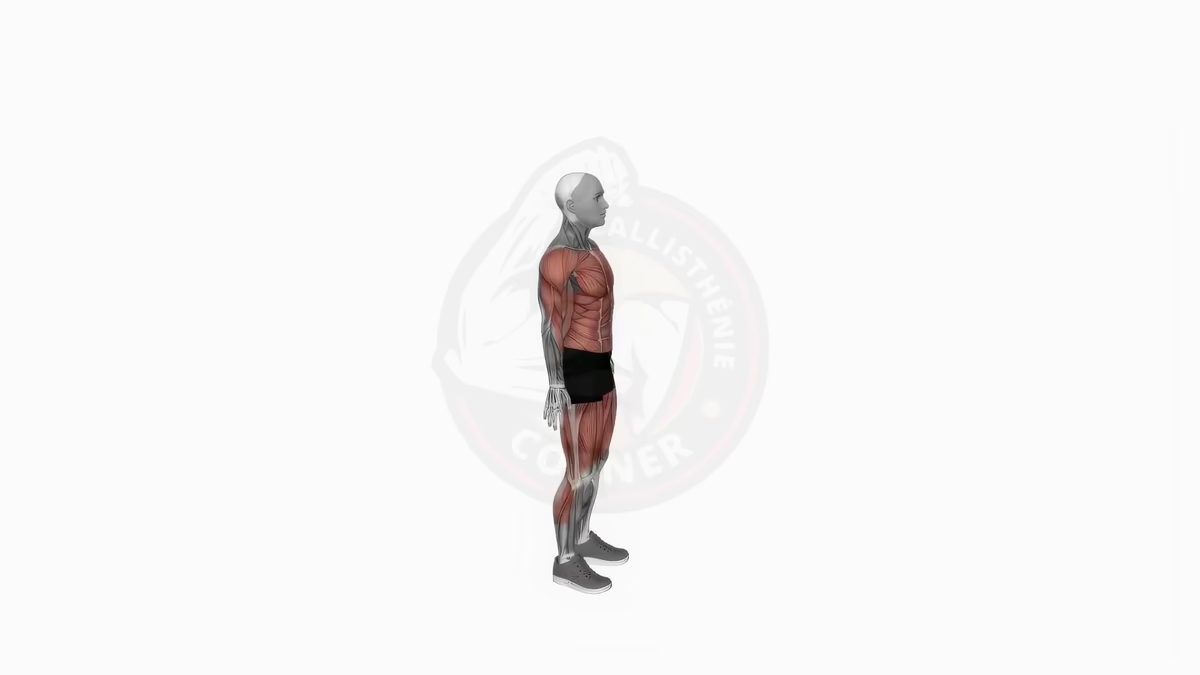
- Stand tall. Feet shoulder-width apart, weight evenly distributed, arms at your sides.
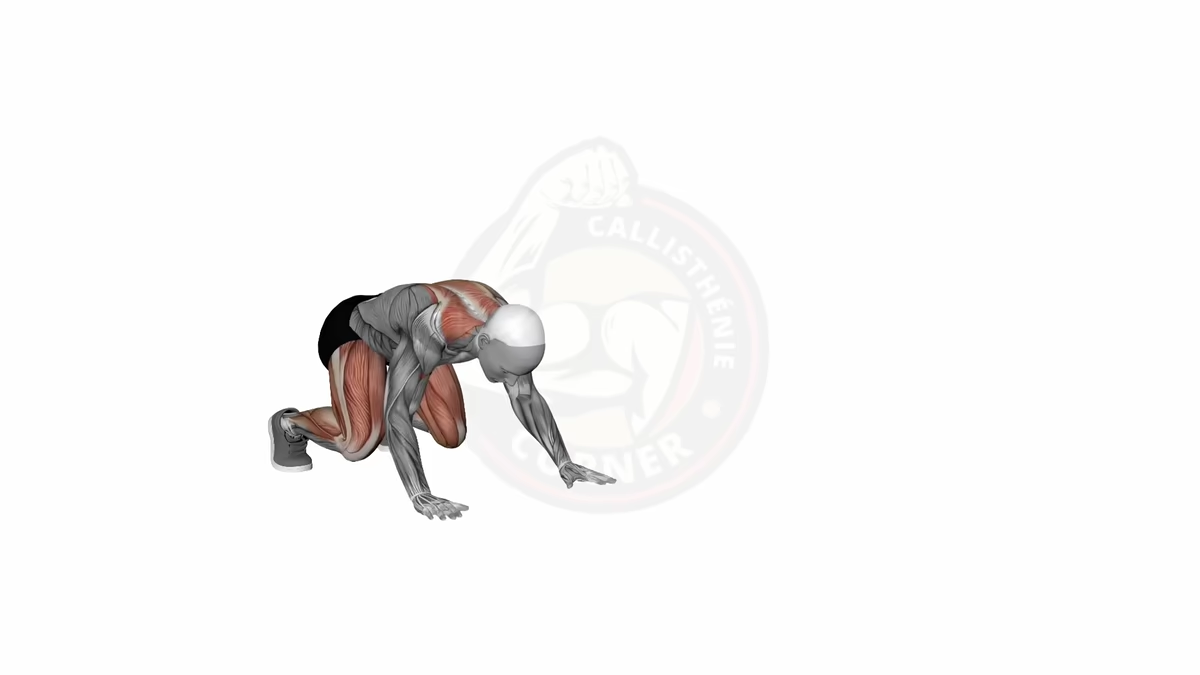
- Squat down. Push your hips back and bend your knees. Place your hands flat on the floor just in front of your feet, roughly shoulder-width apart.
- Jump feet back. In one quick motion, jump both feet back so you land in a solid plank position. Your body should form a straight line from head to heels. Do not let your hips sag or pike up.
- Perform a push-up. Lower your chest to the floor with control, then press back up. Full range of motion: chest touches or nearly touches the ground. If you struggle with push-ups, see the simplified variation below.
- Jump feet forward. Explosively jump your feet back toward your hands, landing in the bottom of a squat position.
- Explosive vertical jump. From the squat, drive through your heels, fully extend your body, and jump as high as you can. Reach your arms overhead at the top of the jump.
- Land softly. Absorb the landing through your ankles, knees, and hips. Immediately flow into the next rep.
Key cues:
- Keep your core braced throughout every phase. Think of maintaining plank tension even during the squat and jump.
- Breathe: exhale as you jump up, inhale on the way down into the squat. Do not hold your breath.
- Land softly from the jump. Quiet feet protect your joints.
Common mistakes to avoid
Rushing and sacrificing form. Speed is not the goal if your push-ups are half-reps and your plank collapses. Master each phase slowly before adding speed.
Partial push-ups. If you cannot perform a full push-up, use the simplified variation or work on your push-up strength separately.
Holding your breath. Common during high-rep sets. Oxygen debt kills your performance. Establish a breathing rhythm and stick with it.
Skipping the jump. The vertical jump is where much of the explosive benefit comes from. Standing up without jumping leaves power development on the table.
Rounded lower back. Keep your chest up and spine neutral during the squat phase. If your air squat form breaks down during burpees, your squat needs more work.
4 variations from beginner to advanced
1. Simplified burpee (beginner)
Remove the push-up and the jump. Squat down, step (not jump) your feet back to plank, step them forward, and stand up. This is the ideal starting point if you are new to training or returning after a break. Focus on smooth transitions and core stability.
2. Standard burpee with push-up (intermediate)
The full movement described in the technique section above. This is the version most people should train. Once you can perform 10 clean standard burpees without form breakdown, you are ready for higher-volume programming.
3. Box jump burpee (advanced)
Replace the vertical jump with a box jump. Perform the standard burpee, and instead of jumping straight up, jump onto a box or elevated surface. Step back down and flow into the next rep. This version increases power demand significantly and builds explosive strength that transfers to athletic performance.
4. Pull-up burpee (advanced)
Perform the standard burpee under a pull-up bar. After the push-up and feet-forward jump, leap up, grab the bar, and perform a full pull-up before dropping back down. This is the king of full-body conditioning: every major muscle group works at near-maximum effort. Athletes chasing a muscle-up will find this variation builds the explosive pull strength needed for that skill.
Training programs
Beginner: building the foundation
| Parameter | Prescription |
|---|---|
| Sets x Reps | 3 x 5 |
| Rest between sets | 60 seconds |
| Frequency | 2-3 times per week |
| Variation | Simplified burpee (no push-up, no jump) |
Focus on clean form every rep. Increase to 3 x 8, then 3 x 10 before moving to the standard burpee.
HIIT: Tabata burpees
The Tabata protocol is brutally effective with burpees:
- Work: 20 seconds all-out burpees
- Rest: 10 seconds
- Rounds: 8
- Total time: 4 minutes
This protocol improves both aerobic and anaerobic capacity. Mix it with mountain climbers or jump squats across different rounds for variety.
30-day burpee challenge
A progressive overload approach for intermediate athletes:
| Week | Daily volume | Structure |
|---|---|---|
| Week 1 | 20 burpees | 4 sets x 5, rest as needed |
| Week 2 | 30 burpees | 5 sets x 6 |
| Week 3 | 40 burpees | 5 sets x 8 |
| Week 4 | 50 burpees | 5 sets x 10 |
Take one rest day per week. The goal is completing the daily volume with clean form, not racing the clock. If form breaks down, add more sets with fewer reps rather than grinding through sloppy repetitions.
Integrating burpees into your routine
Burpees work anywhere in your training session depending on your goal:
- Warm-up: 2 sets of 5 simplified burpees to elevate heart rate and activate every muscle group.
- Conditioning finisher: 3-4 sets of 10-15 burpees at the end of your strength session.
- Standalone HIIT session: Tabata burpees paired with mountain climbers and push-ups for a 20-minute full-body blast.
- Superset with strength work: Alternate 5 burpees with pull-ups or dips to maintain an elevated heart rate during your strength training.
If you are new to calisthenics and want a structured path from zero, our start calisthenics guide maps out the complete journey.
Frequently Asked Questions
How many burpees should I do per day?
Beginners should start with 3 sets of 5 simplified burpees and build up gradually. Intermediate athletes can aim for 20 to 50 total reps spread across multiple sets. Daily burpees are possible since the movement is self-limiting (you will stop before overtraining), but 3 to 4 sessions per week with proper recovery produces better long-term results.
Are burpees good for weight loss?
Burpees are one of the most effective bodyweight exercises for calorie burn, averaging roughly 10 calories per minute at moderate to high intensity. The full-body nature of the movement drives your heart rate up quickly and keeps it elevated, maximizing both immediate and post-workout calorie expenditure. Combined with a caloric deficit, burpees accelerate fat loss significantly.
What muscles do burpees work?
Burpees work nearly every major muscle group. The squat phase targets the quads, glutes, and hamstrings. The plank and push-up phases engage the chest, shoulders, triceps, and core. The explosive jump recruits the calves and hip extensors. The transitions between phases demand continuous core stabilization, making burpees one of the most complete full-body exercises you can do.