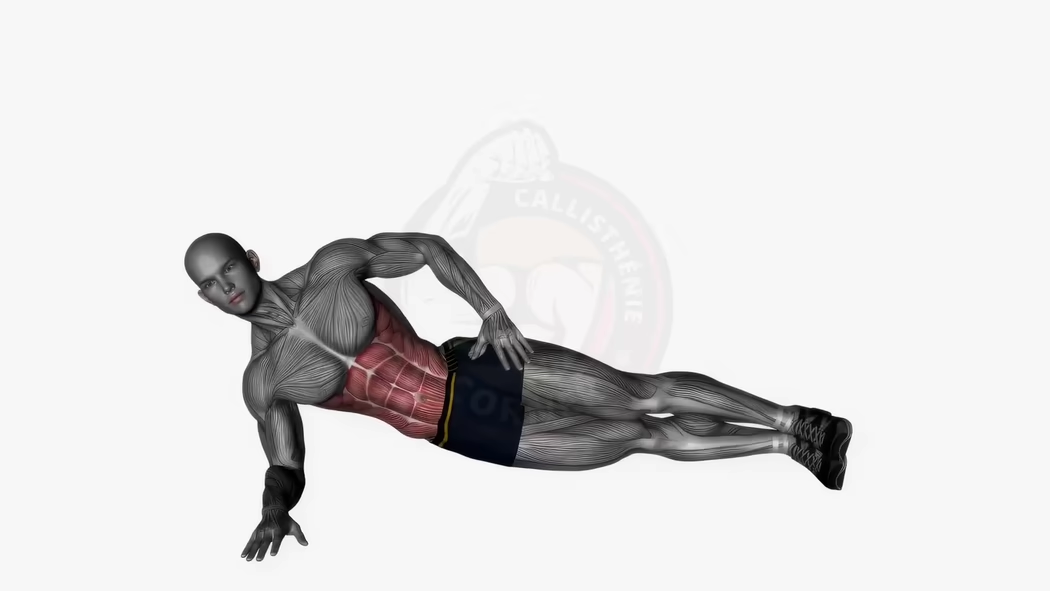
The side plank is the go-to exercise for targeting the obliques in a way the standard plank simply cannot. While the regular plank builds overall core endurance, it works primarily through the anterior chain. The side plank shifts the load laterally, engaging the muscles that stabilize your trunk from side to side. If you want to prevent back pain, sculpt visible abs, strengthen your lateral stabilizers, improve balance and protect your spine, the side plank deserves a permanent spot in your training.
Technique: how to perform the side plank
Starting position
Lie on your side with your forearm flat on the floor. Position your elbow directly under your shoulder to create a stable base. Stack your legs on top of each other with both feet together, or stagger them (top foot in front) for a wider base if you need extra stability at first.
Execution
- Lift your hips off the floor by contracting your abs and glutes simultaneously. Push your elbow firmly into the ground.
- Align your body into a straight line from your ankles to the top of your head. No sagging, no piking.
- Hold the position for 20 to 45 seconds per side, breathing steadily throughout.
Key tension points
- Contract your abs and glutes firmly. These two muscle groups do the heavy lifting. If either one relaxes, your form breaks down immediately.
- Push your elbow into the floor. This activates the shoulder and creates a solid foundation.
- Keep your body perpendicular to the floor. Your chest should face directly forward, not rotate toward the ground or the ceiling.
Common mistakes to avoid
Hips sagging toward the floor: The most frequent error. When your hips drop, the obliques disengage and your lower back absorbs the load. Fix this by actively squeezing your glutes and driving your hips upward. Think about pushing your hip toward the ceiling.
Body tilting forward or backward: Your torso should stay in a perfectly vertical plane. If you lean forward, your chest rotates toward the floor and you lose the lateral loading. If you lean backward, the exercise becomes unstable. Stack your shoulder directly above your elbow and keep your chest open.
Elbow misaligned with shoulder: Placing your elbow too far forward or behind your shoulder joint creates unnecessary strain on the shoulder and reduces your ability to push off the ground effectively. Check your alignment before you lift.
Chest rotating toward the floor: This is a subtle compensation that shifts the work away from the obliques and toward the anterior core. Focus on keeping your top shoulder stacked directly above the bottom one.
Progression: from beginner to advanced
The side plank scales well with simple duration increases:
| Level | Duration per side | Frequency | Sets |
|---|---|---|---|
| Beginner | 10-30 seconds | 2-3x per week | 3 |
| Intermediate | 30-45 seconds | 2-3x per week | 3 |
| Advanced | 60+ seconds | 2-3x per week | 3 |
Quality always beats quantity. A 20-second hold with perfect alignment and full muscular tension is worth more than a shaky 60-second hold with sagging hips. Only increase duration when you can maintain flawless form for the full set.
Beginner adaptations
If the full side plank is too demanding, two modifications make it accessible for anyone starting calisthenics.
On the knees: Instead of stacking your feet, bend your knees to 90 degrees and use the side of your knee as the lower contact point. This shortens the lever arm significantly, reducing the load on the obliques while still training the correct movement pattern. Build up to 30 seconds per side before attempting the full version.
Elevated forearm on a bench or chair: Place your forearm on an elevated surface. The higher the surface, the easier the exercise becomes. This is an excellent option if you have wrist or shoulder limitations, since the elevated angle reduces the demand on both joints.
Integrating the side plank into your program
The side plank works well as a warm-up drill to activate the obliques and lateral stabilizers before a training session, or as a finisher at the end of your core block.
Sample protocols
Beginner: 3 sets x 20-30 seconds per side, 45-60 seconds rest between sets
Intermediate: 3 sets x 30-45 seconds per side, 30-45 seconds rest
Advanced: 3 sets x 45-60+ seconds per side, 30 seconds rest
Combine with other core exercises
The side plank pairs naturally with exercises that target the anterior and posterior core:
- Plank: 3 x 30-45 seconds for overall core endurance
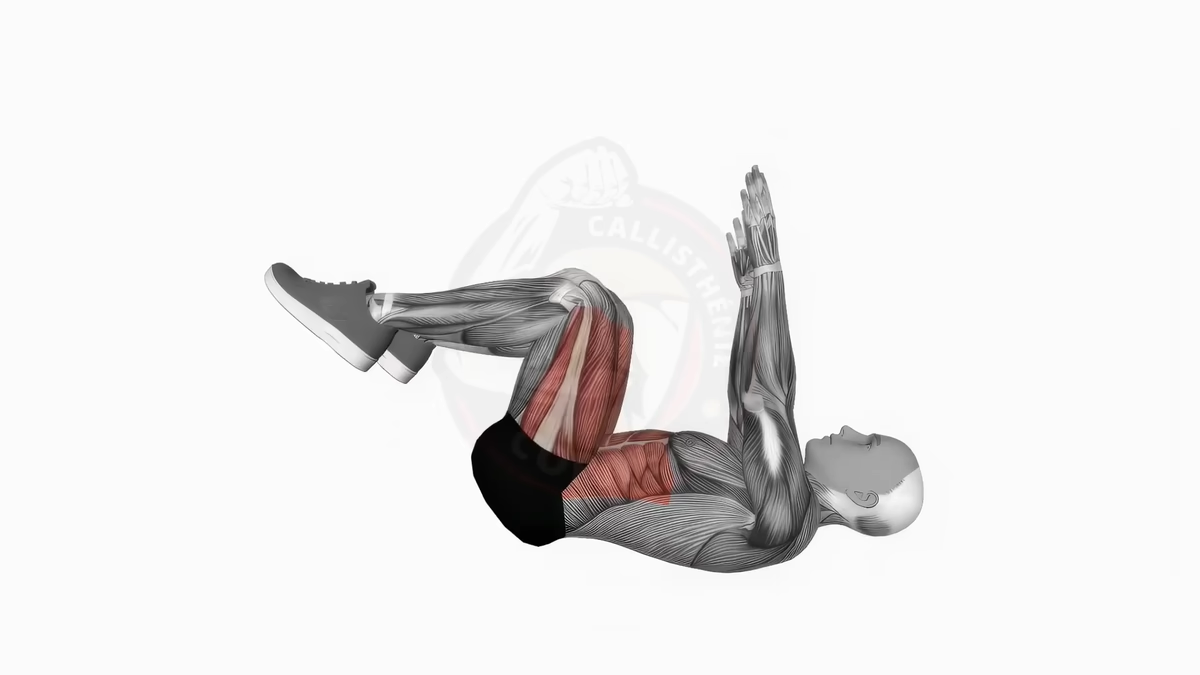
- Hollow hold: 3 x 20-30 seconds for deep anterior chain activation
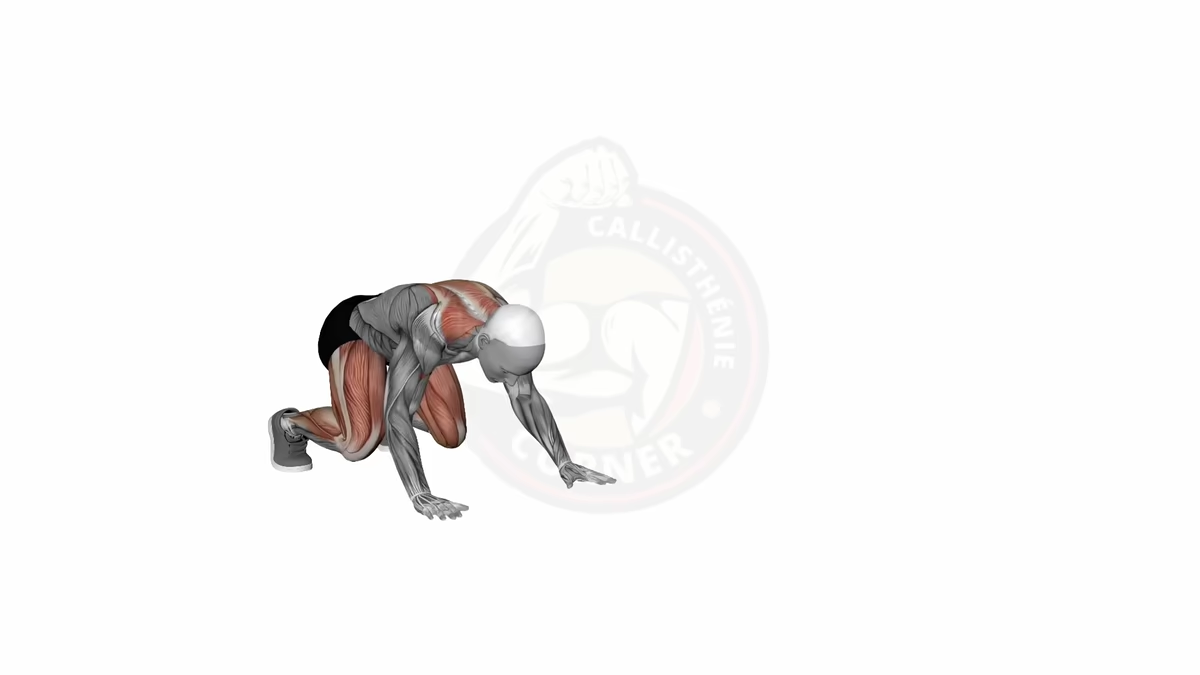
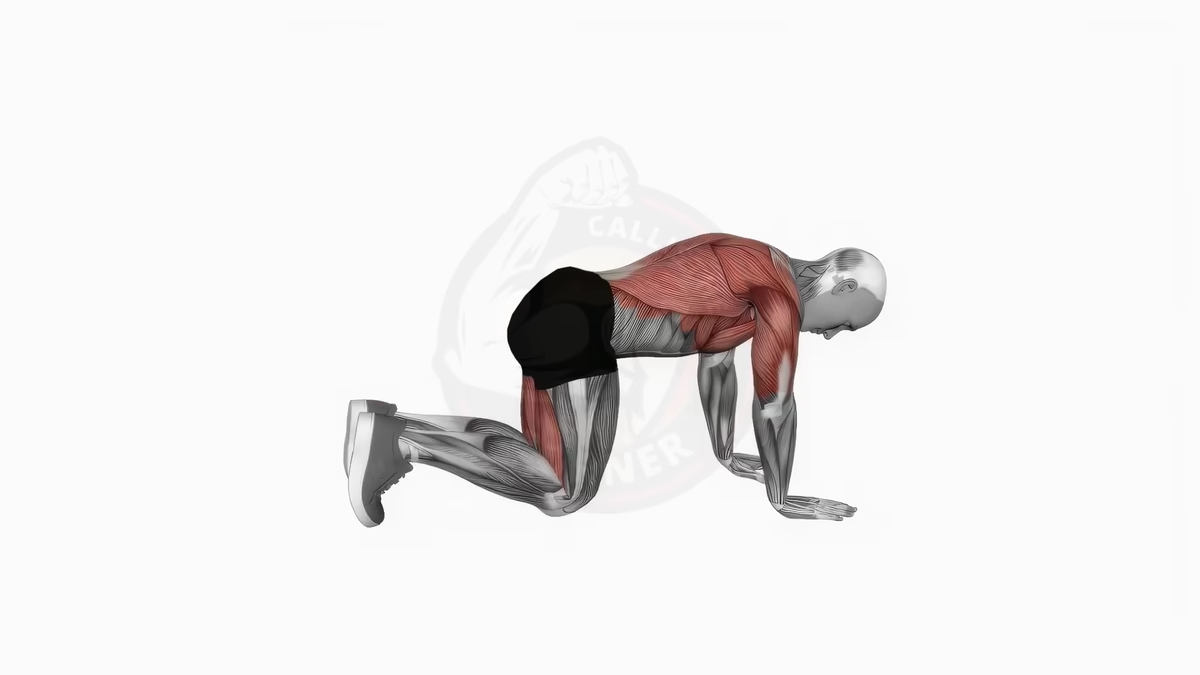
- Mountain climbers: 3 x 10-15 reps per side for dynamic core work
This combination covers all planes of motion and builds a balanced, injury-resistant core.
Precautions
Warm up before holding. A few minutes of light movement, arm circles and gentle torso rotations prepare your shoulders, wrists and core for the sustained tension of the side plank.
Listen to your body. A deep burn in the obliques and a trembling sensation are normal signs of muscular fatigue. Sharp or shooting pain in the shoulder, wrist or lower back is not. Stop immediately if you experience pain, check your form, and reduce the difficulty.
Watch your shoulder. The supporting shoulder bears a significant load. If you have a history of shoulder issues, start with the elevated forearm variation and progress gradually.
Back pain sufferers can benefit, but should proceed with caution. The side plank is frequently recommended by physiotherapists for lower back rehabilitation because it strengthens the lateral stabilizers without spinal flexion or compression. However, if you have an active back injury, consult a professional before adding it to your routine.
Why the side plank matters for your training
The side plank is not just another core exercise. It is the most direct way to build the oblique strength and lateral stability that every other movement in your training relies on. Strong obliques improve your posture, protect your spine during loaded movements, and create the visible definition along the sides of your torso that makes your core look complete.
Incorporate the side plank 2 to 3 times per week with proper form and progressive overload. Pair it with the standard plank and hollow hold for comprehensive core development. Your back, your balance and your performance in every other exercise will improve as a result.
Frequently Asked Questions
How long should you hold a side plank?
Beginners should aim for 10 to 30 seconds per side with perfect form. Intermediate trainees can target 30 to 45 seconds, and advanced athletes 60 seconds or more. A shorter hold with full muscular tension and correct alignment is always more beneficial than a longer hold with sagging hips or shaky form.
Are side planks better than regular planks?
Side planks and regular planks target different muscle groups. The regular plank works the anterior core (rectus abdominis, transverse abdominis), while the side plank focuses on the obliques and lateral stabilizers. Neither is better than the other. For complete core development, you should include both in your training.
What muscles does the side plank work?
The primary muscles are the internal and external obliques, which are responsible for lateral trunk stability. The gluteus medius, quadratus lumborum, and transverse abdominis also contribute significantly. The supporting shoulder (deltoid and rotator cuff) works to maintain the base, and the adductors help keep the legs stacked.
How often should I do side planks?
Two to three times per week is ideal for most people. This frequency provides enough stimulus for the obliques to adapt and grow stronger while allowing adequate recovery. You can include side planks as a warm-up drill to activate the lateral core or as a finisher at the end of your ab session.