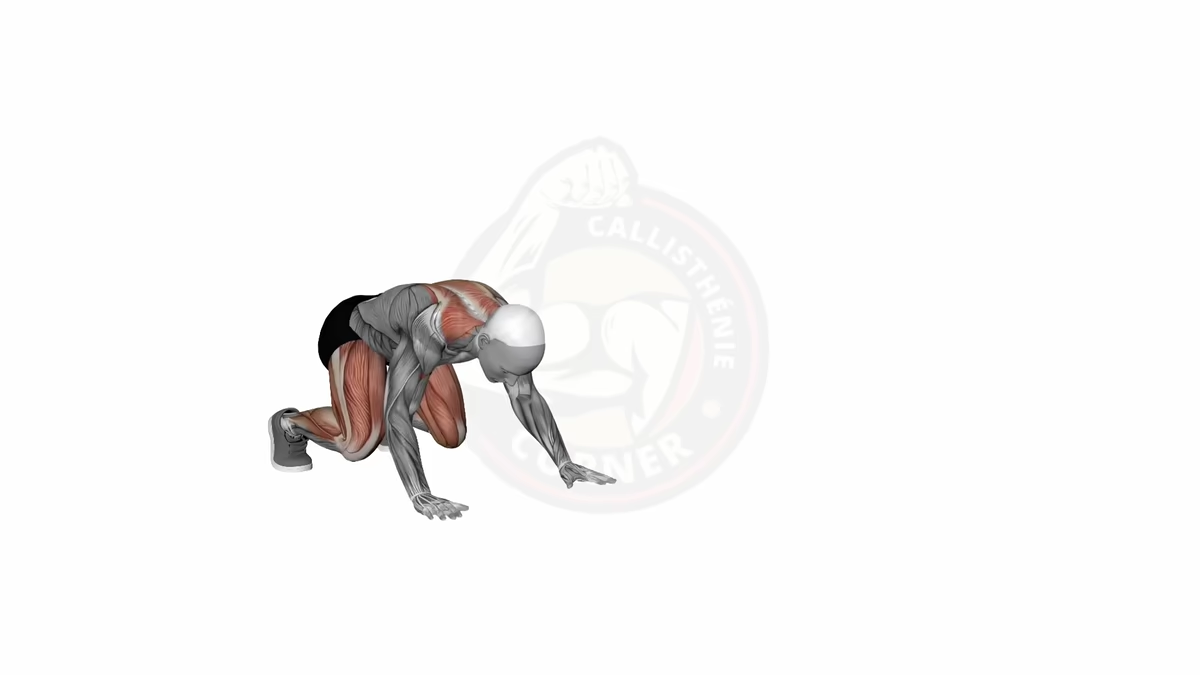
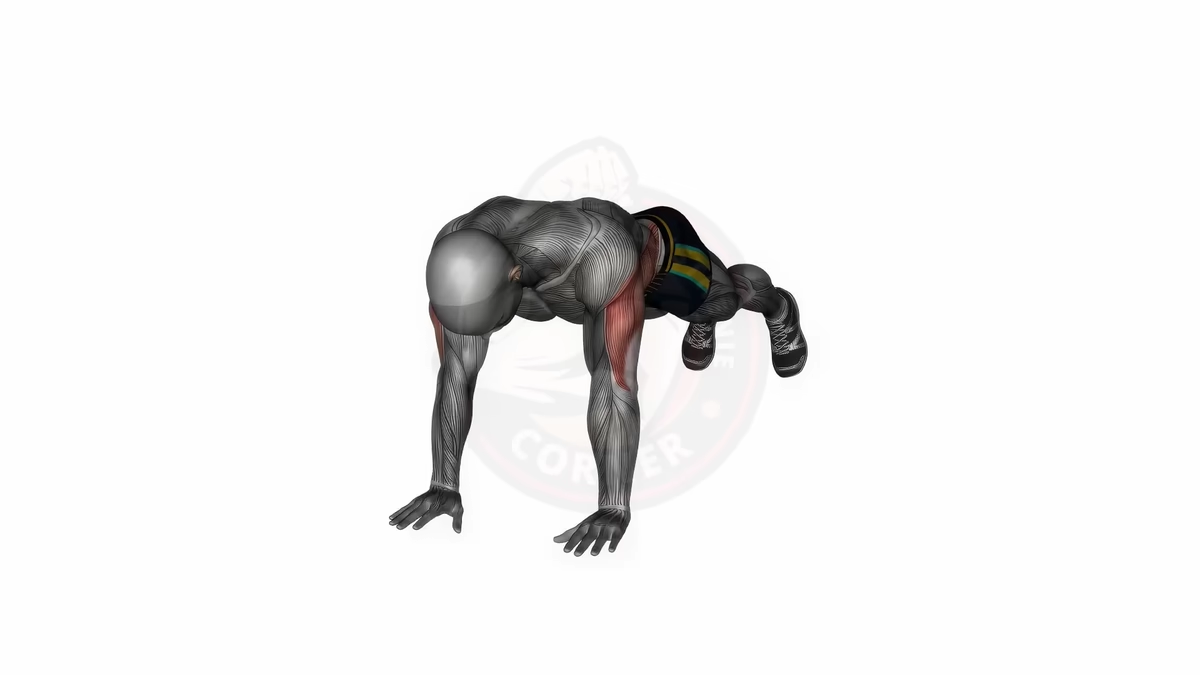
Shoulder taps are a dynamic bracing exercise that will challenge your core stability like nothing else. In a high plank position, you alternate tapping each shoulder with the opposite hand while keeping your body perfectly still. This movement, simple in appearance, forces your abs to fight against rotation, building functional strength that carries over to every calisthenics skill.
How to perform shoulder taps correctly
Get into a high plank position: hands directly under your shoulders, arms straight, body aligned from head to heels. Spread your feet to shoulder-width or slightly wider for better stability. Brace your abs and glutes, then lift one hand to tap the opposite shoulder quickly and with control.
The goal: your hips do not move a single millimeter. Alternate sides in a fluid rhythm for 30 to 60 seconds, or complete 10 to 20 taps per side.
Muscles worked
The real work happens in your core, which must resist rotation every time you lift a hand. This exercise intensely engages:
- Rectus abdominis: resists trunk flexion, maintains the plank position
- Obliques: the primary anti-rotation muscles, working overtime with each tap
- Transverse abdominis: deep core stabilizer, keeps everything locked in place
- Deltoids and triceps: maintain support on the grounded arm
- Glutes and quadriceps: stabilize the lower body, prevent hip shifting
This is a true full-body movement that builds endurance, coordination, and stability all at once.
Variants for all levels
Beginner: on the knees
Start in a kneeling plank to master the movement without compromising your form. This reduces the lever arm and makes it much easier to keep your hips still. Once comfortable, progress to the full version with feet spread wide for added stability.
Intermediate: adjusting foot width
With the standard high plank position, gradually bring your feet closer together. Going from wide feet to feet side by side dramatically increases the anti-rotation challenge. The narrower the base, the harder your core must work to stay level.
Advanced: elevated and combo variations
The most experienced athletes can try elevated shoulder taps (hands on a raised surface for a steeper angle) or add push-ups between each tap for an explosive combination that hits the chest, triceps, and core simultaneously.
Mistakes that sabotage the exercise
Hip rotation: the number one error. If your hips pivot or rock side to side, you are canceling the entire benefit of the exercise. Imagine two headlights mounted on your hips that must stay pointed at the ground at all times. Every degree of rotation means your core is not doing its job.
Butt rising up. Lifting your hips into a pike position shifts the load off your core and onto your shoulders. Your body must form a perfectly straight line from head to heels throughout the exercise. If you find your hips hiking up, actively squeeze your glutes and think about pushing the ground away.
Hips sagging down. The opposite problem. Letting your lower back dip puts excessive stress on your spine and means your abs have checked out. Fix: brace your abs hard (as if bracing for a punch) and tuck your pelvis slightly.
Going too fast without control. Speed without stability is pointless. If you are racing through reps and your body is rocking, slow down. Each tap should be deliberate: lift, tap, return, stabilize, then tap the other side.
If your hips move too much with any of these errors, widen your stance by spreading your feet further apart. If that is still not enough, drop to your knees temporarily to rebuild proper technique.
Programming shoulder taps
Standard programming
Start with 3 sets of 20 taps (10 per side) and progress toward holding 60 seconds of continuous alternating taps with zero hip movement.
Progressions
| Level | Programming | Target |
|---|---|---|
| Beginner | 3x10 taps per side (on knees) | Master stable hips |
| Intermediate | 3x15 taps per side (wide feet) | Build endurance |
| Intermediate+ | 3x15 taps per side (narrow feet) | Increase anti-rotation demand |
| Advanced | 4x20 taps per side or 60s continuous | Peak core stability |
| Advanced+ | Push-up + 2 taps combo, 3x10 rounds | Strength and stability combined |
Integrating into an ab circuit
Shoulder taps fit perfectly into a bodyweight core circuit. Here is an example pairing:
- Shoulder taps 3x20 (10/side), 30s rest
- Hollow hold 3x30s, 30s rest
- Mountain climbers 3x30s, 30s rest
- Plank 3x45s, 60s rest
Run through this circuit 2-3 times per week at the end of your training session for a complete core workout that covers anti-rotation, isometric bracing, and dynamic movements.
Why shoulder taps matter in calisthenics
Anti-rotation strength is one of the most underrated abilities in calisthenics. Every time you perform a single-arm movement, balance on one side, or hold an asymmetric position, your core must resist rotation. Shoulder taps train this ability directly.
Strong anti-rotation control transfers to:
- Better push-up form (less hip sway)
- Improved plank endurance and stability
- Cleaner single-arm and single-leg exercises
- A stronger foundation for advanced skills
If you are just starting calisthenics, shoulder taps are one of the best exercises to build that foundation. They require zero equipment, take only a few minutes, and deliver real functional results.
Get into plank position and start working that stability. Your core will thank you.