
Building visible abs without equipment is completely achievable. Your bodyweight alone is enough to intensely work the rectus abdominis, the obliques, and the deep stabilizers. This guide covers 12 ab exercises at home without equipment to build a powerful, aesthetic core.
Anatomy of the abs: understanding the core
The rectus abdominis forms the famous six-pack visible on the surface. It flexes the trunk by bringing the sternum closer to the pelvis. Contrary to popular belief, it is a single continuous muscle, not 6 or 8 separate muscles.
The external obliques run along the sides of the trunk. They perform rotation and lateral flexion. The internal obliques sit underneath and work in synergy. Together these muscles create the sought-after V-shape.
The transverse abdominis is the deepest muscle layer. It acts as a natural belt, compressing the abdomen and stabilizing the spine. Strengthening it improves posture and prevents lower back pain.
The spinal erectors (lower back) balance out the work of the abdominals. A 1:1 ratio between ab work and lower back work prevents postural imbalances.
Key point: The “core” includes abs + lower back + deep stabilizers. Train the whole system for functional strength.
Best ab exercises without equipment for beginners
The classic crunch
The crunch is the foundational ab exercise. Lying on your back with knees bent, lift your shoulders off the floor by 15-20 cm. Deliberately contract your abs at the top of the movement.
Common mistake: Pulling on the neck with your hands. Place your hands on your temples without pressing.
Dosage: 3 sets of 15-20 reps.
The plank (front hold)
The plank builds isometric endurance in the core. Propped on forearms and toes, hold your body in a straight line. Contract your abs and glutes simultaneously.
Technical tip: Slight posterior pelvic tilt (belly drawn in), no lumbar arch.
Dosage: 3 sets of 30-60 seconds.
The bicycle crunch
The bicycle crunch simultaneously targets the rectus abdominis and obliques. Lying down, bring your right elbow toward your left knee with rotation, then alternate sides.
Tip: Slow the movement down. Excessive speed means wasted effort.
Dosage: 3 sets of 20 reps (10 per side).
The dead bug
The dead bug teaches core stability through contralateral movement. Lying on your back, arms extended toward the ceiling, lower the opposite arm and leg toward the floor while keeping your lower back pressed flat. This exercise is excellent for learning proper bracing.
Dosage: 3 sets of 10-12 reps per side.
Knee raises
Lying on your back, lift your knees toward your chest while peeling your lower back off the floor. Contract the lower portion of your abs. Check out leg raises for the full progression from this movement.
Progression: Gradually straighten your legs to increase difficulty.
Dosage: 3 sets of 12-15 reps.
Intermediate ab exercises without equipment
The hollow hold
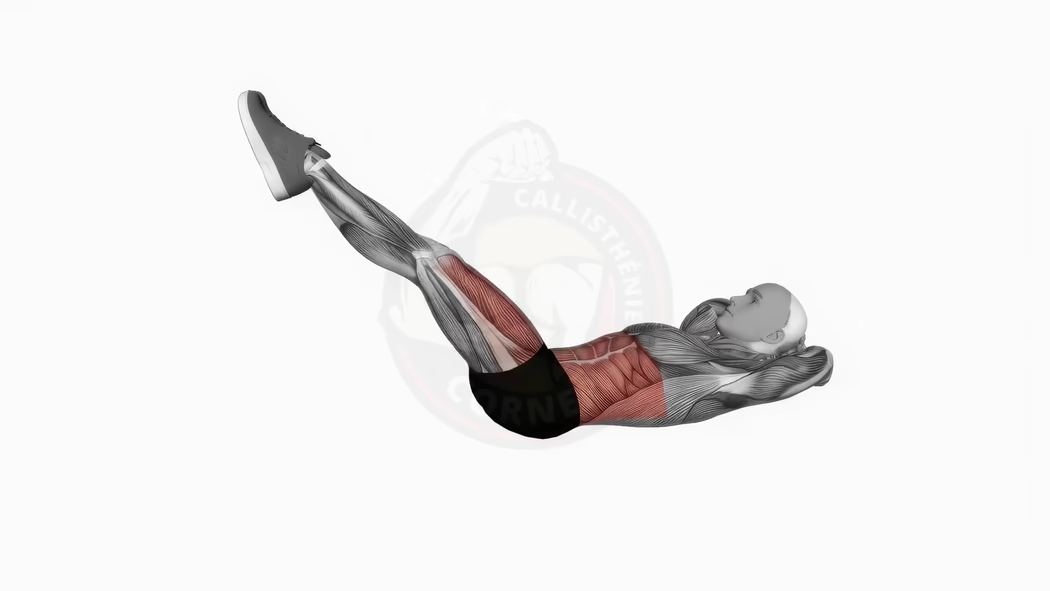
The hollow hold develops extreme isometric strength. Lying down, simultaneously lift your shoulders and extended legs off the ground. Your body forms a banana shape, with only your lower back touching the floor.
Cue: If your back arches, bend your knees slightly or lower your arms.
Dosage: 3 sets of 20-40 seconds.
The side plank
The side plank isolates the obliques. Propped on one forearm with your body aligned laterally, keep your hips elevated without sagging.
Dosage: 3 sets of 30-45 seconds per side.
The butterfly crunch
The butterfly crunch increases range of motion. Lying down with soles of feet together and knees splayed open, perform crunches from this position. The hip-open position eliminates hip flexor cheating.
Dosage: 3 sets of 15-20 reps.
Mountain climbers
Mountain climbers are a dynamic movement combining core and cardio. In a high plank position, alternately drive your knees toward your chest.
Tempo: Control the speed. Fast version targets cardio, slow version targets strength.
Dosage: 3 sets of 30 seconds.
Russian twists
Russian twists target the obliques in rotation. Seated with feet off the floor, rotate your torso from side to side, touching the ground alternately.
Dosage: 3 sets of 30 rotations (15 per side).
Reverse crunch
The reverse crunch shifts the emphasis to the lower portion of the rectus abdominis. Lying on your back, curl your pelvis off the floor by driving your knees toward your chest. The key is to lift your hips, not just bring your knees forward.
Dosage: 3 sets of 12-15 reps.
Scissor kicks
Scissor kicks keep constant tension on the lower abs. Lying on your back, legs slightly elevated, alternate small up-and-down kicks while keeping your lower back pressed into the floor.
Dosage: 3 sets of 20-30 seconds.
Bear plank
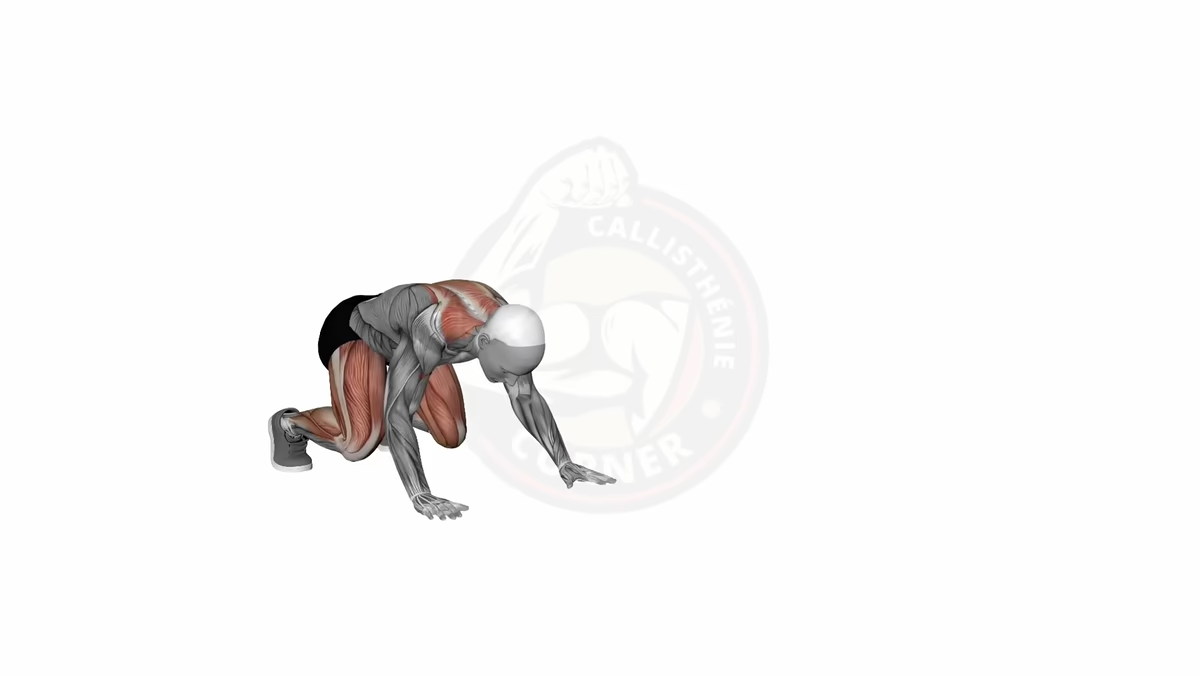
The bear plank is a quadruped hold with knees hovering just inches off the ground. This position forces the deep stabilizers (transverse abdominis) to work overtime. It looks easy but builds serious anti-extension strength.
Dosage: 3 sets of 30-45 seconds.
Shoulder taps
Shoulder taps combine plank stability with anti-rotation. In a high plank, alternately touch your opposite shoulder with your hand while keeping your hips perfectly still. The rotation and imbalance force your core to stabilize hard.
Dosage: 3 sets of 20-30 total taps (10-15 per side).
Advanced ab exercises without equipment
The L-sit
The L-sit is a demanding gymnastics skill. Seated with hands on the floor, lift your hips and hold your legs extended horizontally in front of you.
Prerequisites: Master 45 seconds of hollow hold before attempting.
Progression: Start with knees bent (tuck sit) and gradually straighten the legs.
Dosage: 4 sets of 10-20 seconds.
The V-sit
The V-sit combines strength and balance. From a seated position, lift your legs and torso simultaneously to form a V shape. Only your glutes touch the floor.
Dosage: 3 sets of 15-30 seconds.
The dragon flag
The dragon flag is the ultimate ab exercise. Lying on a bench, grip the edge behind your head. Lift your entire rigid body so that only your upper back and shoulders remain in contact with the bench.
Warning: Very advanced exercise. Requires 6-12 months of preparation.
Dosage: 3 sets of 5-8 reps.
Hanging leg raises
Hanging leg raises are the go-to vertical ab movement. Hanging from a bar, lift your straight legs to horizontal. The hardest variation brings your feet all the way up to the bar.
Progression: Start with bent knees, then gradually straighten your legs over time.
Dosage: 3 sets of 8-12 reps.
Reverse plank
The reverse plank strengthens the spinal erectors and the posterior chain. Seated with hands behind you, lift your hips to form a straight line from shoulders to feet.
Benefit: Balances out ab work and prevents postural imbalances.
Dosage: 3 sets of 30-45 seconds.
Ab training programs without equipment
Beginner program (3 sessions/week)
Monday / Wednesday / Friday:
- Crunch: 3x15-20
- Plank: 3x30-45s
- Knee raises: 3x12-15
- Side plank: 3x20-30s per side
- Reverse plank: 3x20-30s
Rest: 45-60 seconds between sets.
Intermediate program (4 sessions/week)
Monday, Flexion:
- Bicycle crunch: 4x20
- Hollow hold: 3x30-40s
- Butterfly crunch: 3x15-20
- Leg raises: 3x15
Tuesday, Holds:
- Plank: 4x45-60s
- Side plank: 3x40-50s per side
- Mountain climbers: 3x40s
- Reverse plank: 3x40s
Thursday, Rotation:
- Russian twists: 4x30
- Bicycle crunch: 4x24
- Dynamic side plank: 3x12 per side
- Mountain climbers: 3x40s
Saturday, Volume:
- Crunch: 5x20
- Hollow hold: 4x30s
- Plank: 4x60s
- Leg raises: 4x15
Advanced program (4-5 sessions/week)
Monday, Max strength:
- Dragon flag: 5x5-8
- L-sit: 4x15-20s
- Hanging leg raises: 4x10-12
- V-sit: 3x20-30s
Tuesday, Intense holds:
- Hollow hold: 5x45-60s
- Plank (feet elevated): 4x60s
- Side plank: 4x60s per side
- Reverse plank: 4x60s
Thursday, Hypertrophy:
- Crunch (tempo 3-1-3): 5x20
- Bicycle crunch: 4x30
- Russian twists: 4x40
- Leg raises: 4x15
Friday, Rotation and obliques:
- Dynamic side plank: 4x15 per side
- Russian twists: 5x40
- Cross-body mountain climbers: 4x40s
- Bicycle crunch: 4x30
Saturday (optional), Endurance:
- Circuit with no rest: Plank 60s, Hollow hold 40s, Side plank 30s per side, Crunch 20 reps
- Repeat 4-5 times with 90s rest between circuits
Common mistakes to avoid
Mistake 1, Pulling on the neck: Your hands support the weight of your head, they never pull. Otherwise, cervical pain is guaranteed.
Mistake 2, Excessive arching: Keep your lower back pressed into the floor during lying exercises. Arching transfers the stress to your lumbar spine.
Mistake 3, Using momentum: The abs work through contraction, not swinging. Slow down every rep.
Mistake 4, Neglecting the obliques: Working only the rectus abdominis creates imbalances. Ideal ratio: 60% rectus, 40% obliques and lower back.
Mistake 5, Excessive volume: 15-20 minutes of ab work is enough. More means unnecessary nervous system fatigue without additional gains.
Mistake 6, Ignoring nutrition: Abs are revealed in the kitchen, not in the gym. Visibility requires a body fat percentage under 12-15% (men) or 18-22% (women).
Tips to maximize ab development
Tip 1, Quality over quantity: 10 strict reps are worth more than 30 sloppy ones. Every contraction should be deliberate and controlled.
Tip 2, Correct breathing: Exhale during the effort (concentric phase). This exhalation forces the transverse abdominis to engage.
Tip 3, Methodical progression: Add 2 reps per week or increase hold time by 5 seconds. Progress toward advanced exercises over 6-12 months.
Tip 4, Mandatory variation: Alternate flexion (crunch), holds (plank), and rotation (russian twists) to stimulate all fiber types.
Tip 5, Optimal frequency: 3-4 sessions per week is enough. Abs recover quickly (24-36 hours) but overtraining is still possible.
Tip 6, Controlled caloric deficit: To reveal your abs, aim for a daily deficit of 300-500 calories. Maintain 1.8-2g of protein per kg to preserve muscle.
Tip 7, Complementary training: Compound exercises like squats and pull-ups intensely engage the core. Do not neglect these movements.
Tip 8, Complete your routine: Round out your training with our guides on leg exercises without equipment and glute exercises without equipment for a balanced lower body. New to calisthenics? Start with our beginner’s guide.