Why train your quadriceps with bodyweight
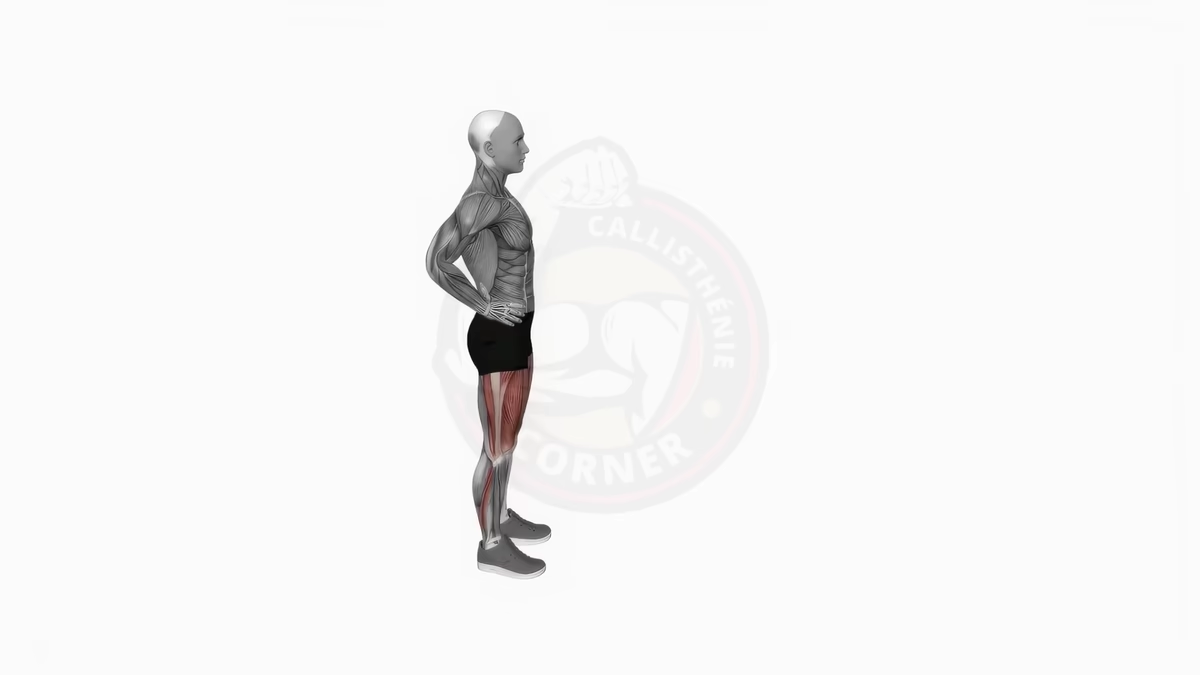
The quadriceps are the largest muscle group in your body. Four muscles make up this group: the vastus lateralis, the vastus medialis, the vastus intermedius, and the rectus femoris. Together, they extend the knee, stabilize the kneecap, and absorb impact with every stride.
Strong quadriceps protect your knees, improve your posture, and boost performance in every lower-body movement. Climbing stairs, sprinting, jumping, braking downhill: it all goes through them. Conversely, weak quads expose your knee joint and limit your progression on advanced movements like the pistol squat or Bulgarian split squats.
Bodyweight alone is more than enough to develop strength and size in your thighs. Unilateral exercises multiply the load on each leg, isometric holds burn deep into the muscle fibers, and plyometric movements add explosivity. That is enough to keep progressing for months without ever touching a dumbbell.
7 quad exercises without equipment
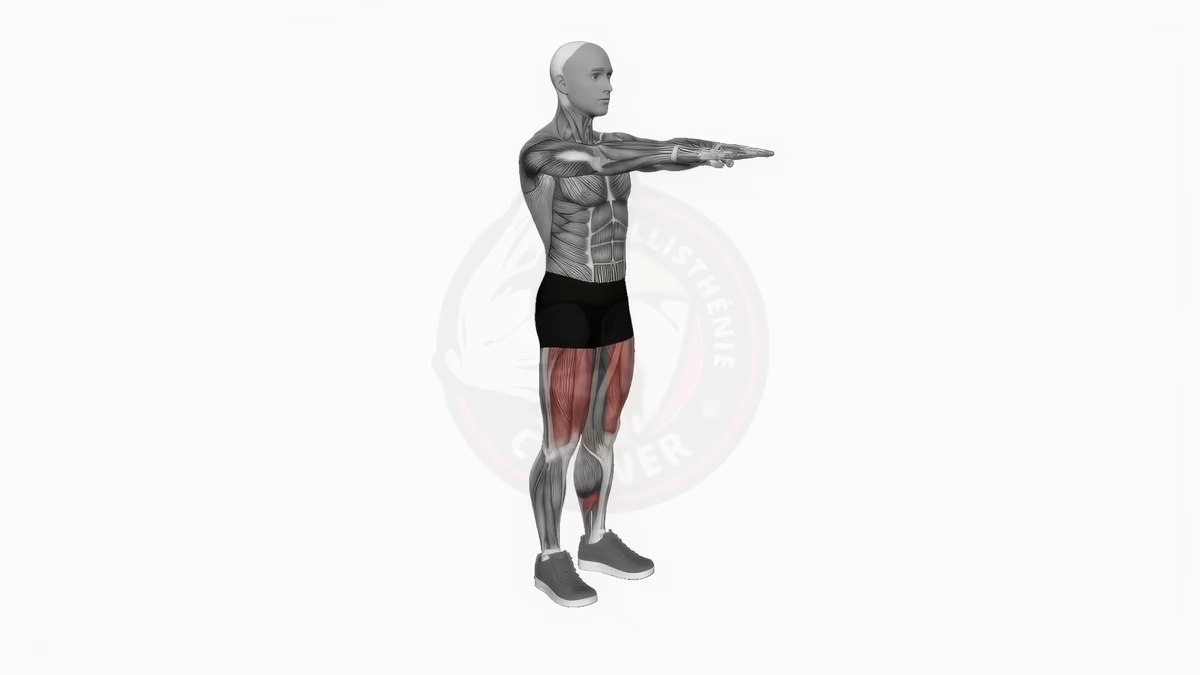
1. Air squat
The foundation of all leg work. Feet shoulder-width apart, lower down until your thighs go below parallel. Push hard through your heels to stand back up, squeezing the quadriceps at the top. Keep your back straight, chest open, and core braced from start to finish.
3 sets of 15-20 reps. Master the air squat technique before moving on to more demanding variations.
2. Forward lunges
Take a big step forward and bend both knees to 90 degrees. The back knee brushes the floor without touching it, and the front shin stays vertical. Push back off the front foot to return to the starting position. This exercise works each leg separately and quickly reveals strength imbalances between left and right. Check out our complete lunge guide for full technique details.
3 sets of 10-12 reps per leg.
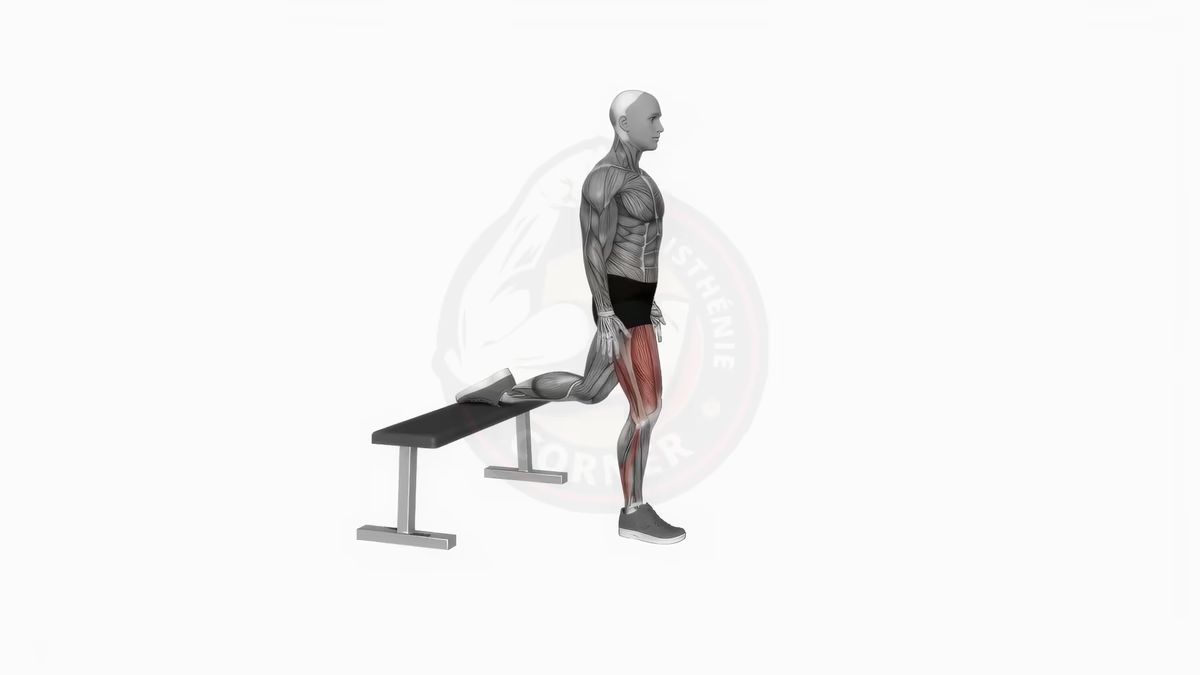
3. Bulgarian split squats
Place your rear foot on an elevated surface. Lower down by controlling the bend of the front knee to 90 degrees. The range of motion is much greater than a standard lunge, which targets the vastus medialis and rectus femoris in depth. The Bulgarian split squat is one of the most formidable unilateral exercises for the quadriceps.
3 sets of 8-12 reps per leg.
4. Wall sit
Back flat against the wall, slide down until your thighs are parallel to the floor. Knees at 90 degrees, shins vertical, arms at your sides or crossed in front. Hold the position without moving. This isometric work burns the quadriceps fiber by fiber and strengthens knee joint stability without any impact.
Start with 30-60 seconds. When it gets easy, try the wall sit on one leg or add weight to double the intensity.
5. Jump squat
Lower into a squat, then explode upward, lifting your feet off the ground. Land softly with slightly bent knees and chain immediately into the next rep. This plyometric movement develops explosive quadriceps power and improves your vertical jump. The jump squat is ideal at the start of a session when your legs are still fresh.
3 sets of 8-12 reps.
6. Sissy squat
Standing on the balls of your feet, bend your knees and push them far forward while your torso leans backward. Hips, trunk, and knees form a single inclined straight line. This is one of the rare bodyweight movements that almost exclusively isolates the quadriceps, without major glute involvement. The sissy squat requires good ankle mobility, so hold onto a support if needed at first.
3 sets of 6-10 reps.
7. Pistol squat
The king of bodyweight quad exercises. Standing on one leg, lower into a full squat while the other leg stays extended in front of you. Strength, balance, and mobility are all tested simultaneously. Minimum prerequisites: 15 deep air squats and 10 Bulgarian split squats per leg. Our pistol squat guide details every step of the progression.
3 sets of 3-5 reps per side.
Mistakes that sabotage your progress
-
Knees caving inward: This is the most common and most dangerous fault. On every squat or lunge, your knees must stay aligned with your toes. The main cause is glutes that are too weak relative to the adductors. Strengthen them in parallel with glute bridges and slow-tempo squats.
-
Half range of motion: Going down halfway serves no purpose. The quadriceps work most intensely in the bottom portion of the movement, where the fibers are fully stretched. If you don’t descend at least to thighs parallel, you lose half the benefits and limit your mobility long-term.
-
Weight on the toes: Anchor your feet into the floor, weight distributed between the heel and midfoot. If ankle mobility limits you, work on it daily with calf stretches in a low lunge position, 30 seconds per side.
-
Neglecting unilateral work: Only doing classic squats hides imbalances between left and right legs. These asymmetries increase injury risk over time. Include at least one unilateral exercise per session: lunges, Bulgarian split squats, or pistol squats to force each leg to carry its share.
A quad routine without equipment
The quadriceps, as the largest muscle group in the body, tolerate a high training volume well. Two sessions per week, spaced 48-72 hours apart, are enough for consistent progress.
Session A: Strength and volume
- Bulgarian split squats: 4x10 per leg
- Sissy squats: 3x8
- Wall sit: 3x45 seconds
Session B: Explosivity and endurance
- Jump squats: 4x10
- Forward lunges: 3x12 per leg
- Air squats: 2x20
- Single-leg wall sit: 2x20 seconds per leg
Rest 60-90 seconds between sets. When you complete all sets without difficulty, increase reps by 2 or hold time by 10 seconds. The day air squats and standard lunges no longer challenge you, move to the pistol squat: it is the best indicator of bodyweight leg strength.
If you are new to bodyweight training, our guide to getting started with calisthenics will help you build a solid foundation before tackling these exercises.