
Building massive legs without equipment is perfectly possible. Your bodyweight alone is enough to intensely work the quadriceps, hamstrings, and glutes. This guide covers 12 progressive leg exercises without equipment to build lower-body strength and muscle volume.
Anatomy of the legs: understanding the muscles
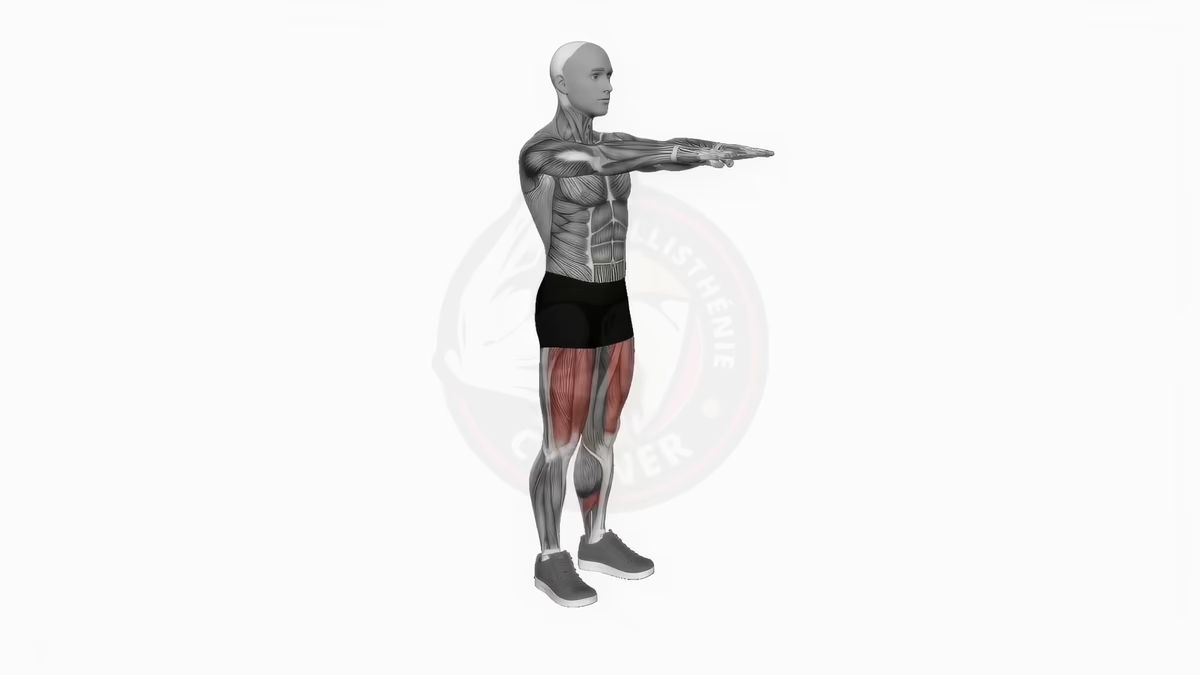
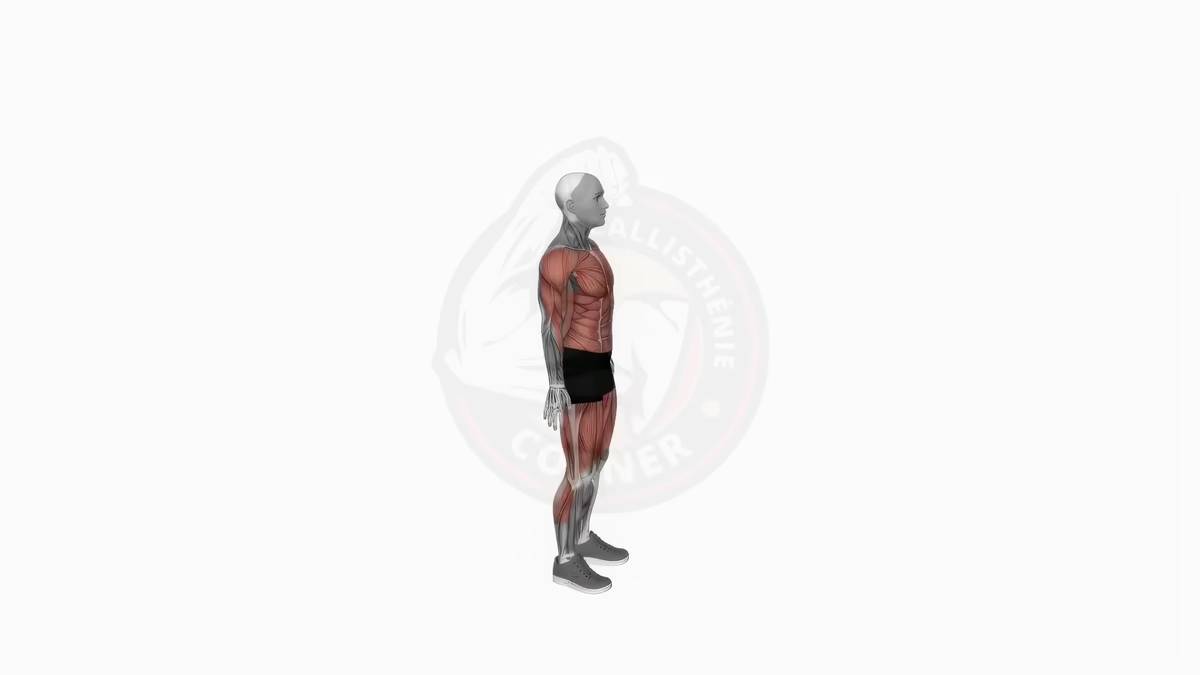
The quadriceps consist of 4 muscles on the front of the thigh (rectus femoris, vastus lateralis, vastus medialis, vastus intermedius). They extend the knee and stabilize the kneecap during all pushing movements.
The hamstrings include 3 muscles on the back of the thigh (biceps femoris, semitendinosus, semimembranosus). They flex the knee and extend the hip, and are essential for running and jumping.
The glutes (gluteus maximus, medius, minimus) generate the power for hip extension. The gluteus maximus is the largest muscle in the human body. The calves (gastrocnemius and soleus) allow plantar flexion and absorb impact.
Key point: Vary your exercises to target all these muscle groups equitably.
Best leg exercises without equipment for beginners
Air squats
The air squat is the foundational leg exercise. Feet shoulder-width apart, lower yourself by pushing your hips back. Your thighs reach parallel to the floor. Drive back up through your heels.
Technical tip: Your knees follow the direction of your toes without excessively passing beyond them. Keep the weight on your heels, not on the balls of your feet.
Dosage: 4 sets of 15-20 reps, 3 times per week.
Lunges
Lunges develop balance and correct left-right imbalances. Step forward, lower until your back knee nearly touches the floor. The front knee stays behind the toes.
Common mistake: A stride too short, which projects the knee beyond the toes. Lengthen your step.
Dosage: 3 sets of 10-12 reps per leg.
Calf raises
Calf raises target the gastrocnemius and soleus. Standing with feet hip-width apart, rise onto the balls of your feet. Contract your calves in the top position for 1 second. Lower slowly.
Progression: Perform the exercise on one leg to double the intensity.
Dosage: 4 sets of 20-25 reps.
Glute bridge
The glute bridge targets the glutes and hamstrings. Lying on your back with knees bent and feet flat, lift your hips until shoulders, hips, and knees form a straight line. Contract your glutes at the top.
Tip: Place your feet further away to accentuate hamstring work, closer for glute emphasis. For more glute-focused work, see our dedicated glute exercises guide.
Dosage: 3 sets of 15-20 reps.
Intermediate leg exercises without equipment
Bulgarian split squats
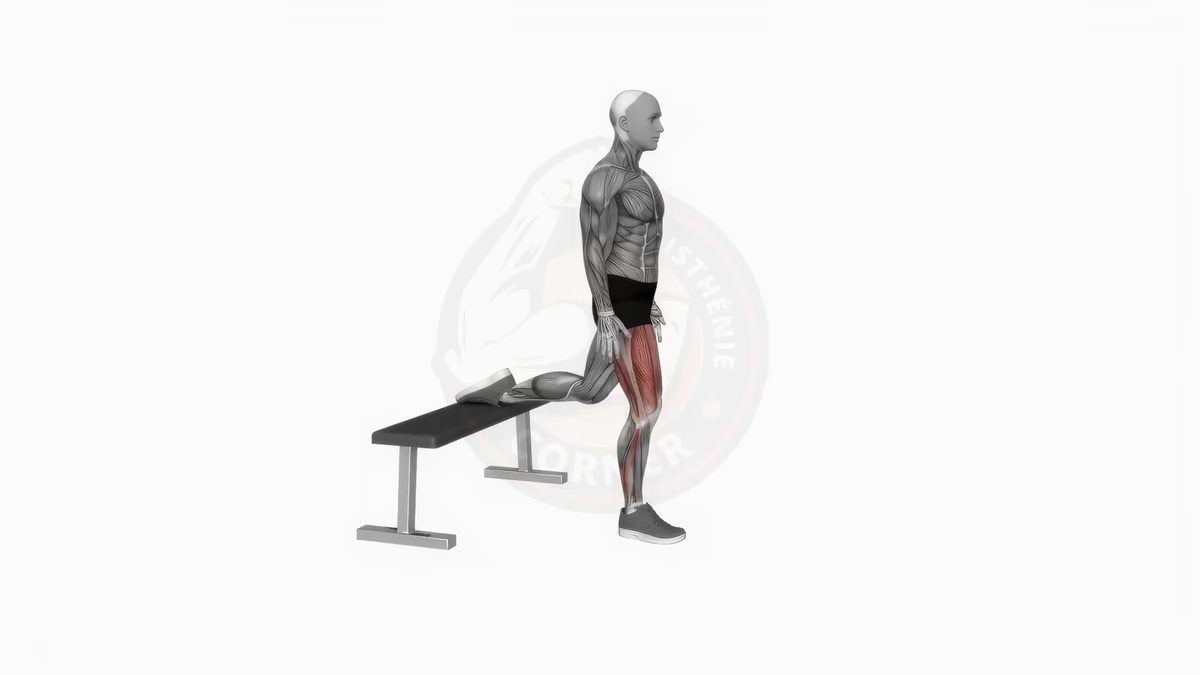
The bulgarian split squat is a unilateral powerhouse. With your rear foot elevated on a chair, lower by bending the front knee. The back knee hovers just above the floor. This variation exposes and corrects strength imbalances between legs.
Optimal position: Step the front foot far enough forward so the knee stays behind the toes at the bottom.
Dosage: 3 sets of 10-15 reps per leg.
Wall sit
The wall sit is an isometric quad burner. Back flat against a wall, slide down until your thighs are parallel to the floor, knees at 90 degrees. Hold. This exercise builds mental toughness along with muscular endurance, and is an excellent addition on active recovery days.
Dosage: 3 sets of 30-60 seconds.
Jump squats
Jump squats develop explosive power. Perform a squat, then jump to full extension. Land softly by immediately bending the knees to absorb impact.
Warning: This exercise generates 4-6x your bodyweight on your knees at landing. Flawless technique is mandatory. Stop if fatigued.
Dosage: 3 sets of 8-12 reps, 2 times per week maximum.
Single-leg glute bridge
The single-leg glute bridge doubles the intensity. One leg extended in the air, lift your hips with the other leg only. Your glutes and hamstrings work twice as hard.
Dosage: 3 sets of 12-15 reps per leg.
Goblet squat (using a household object)
The goblet squat can be performed holding any heavy household item (backpack, water jug) close to your chest. This front-loaded position forces an upright torso and deeper squat, heavily targeting quads and glutes. It is also an excellent way to add resistance when bodyweight squats become too easy.
Dosage: 3 sets of 12-15 reps.
Advanced leg exercises without equipment
Pistol squat
The pistol squat is the ultimate bodyweight leg exercise. One leg extended in front of you, lower on the other until your glutes touch your calf. Stand back up without assistance.
Prerequisites: Master 20 bulgarian split squats per leg before attempting.
Progression: Use a box (box pistol squat) to limit range of motion at first. Gradually lower the height over time.
Dosage: 4 sets of 5-8 reps per leg.
Sissy squat
The sissy squat is a quad isolation exercise. Feet close together, rise onto the balls of your feet. Lean your torso backward while bending the knees forward. Your quadriceps will burn intensely.
Warning: This exercise places high stress on the knees. Progress slowly.
Dosage: 3 sets of 8-12 reps.
Nordic hamstring curl
The nordic curl is the gold standard for hamstring development. Kneeling with feet anchored under a piece of furniture, lean your body forward while keeping hips and torso aligned. Resist the fall with your hamstrings. Push back up with your hands.
Tip: Start with hands on an elevated surface to reduce the range of motion.
Dosage: 3 sets of 5-8 reps.
Shrimp squat
The shrimp squat is an alternative to the pistol squat. Bend one leg behind you, lower on the other. Your back knee descends toward the floor. Stand back up.
Dosage: 3 sets of 6-10 reps per leg.
All of these exercises require a well-developed core. Check out our ab exercises guide for comprehensive core training.
Leg training programs without equipment
Beginner program (2 sessions/week)
Monday:
- Air squat: 4x15-20
- Lunges: 3x10-12 per leg
- Glute bridge: 3x15-20
- Calf raises: 4x20-25
Thursday:
- Sumo squats: 4x15-20
- Bulgarian split squat: 3x8-10 per leg
- Single-leg glute bridge: 3x12-15 per leg
- Calf raises: 4x20-25
Rest: 60-90 seconds between sets.
Intermediate program (3 sessions/week)
Monday, Quad focus:
- Bulgarian split squat: 4x12-15 per leg
- Jump squat: 3x10-12
- Sissy squat: 3x8-12
- Calf raises: 4x25
Wednesday, Hamstrings and glutes:
- Single-leg glute bridge: 4x15 per leg
- Sumo squats: 4x20
- Nordic curl (assisted): 3x5-8
- Reverse lunges: 3x12 per leg
Friday, Strength:
- Box pistol squat: 4x8-10 per leg
- Air squat: 5x20
- Glute bridge: 3x20
- Calf raises: 4x30
Advanced program (3-4 sessions/week)
Monday, Max strength:
- Pistol squat: 5x5-8 per leg
- Shrimp squats: 4x6-10 per leg
- Nordic curl: 4x6-10
- Single-leg calf raises: 4x15 per leg
Wednesday, Volume:
- Bulgarian split squat: 5x15-20 per leg
- Jump squat: 4x12-15
- Single-leg glute bridge: 4x20 per leg
- Sumo squats: 4x25
Friday, Hypertrophy:
- Air squat (tempo 4-0-1): 5x12-15
- Walking lunges: 4x20 (10 per leg)
- Sissy squat: 3x12-15
- Glute bridge: 4x25
Saturday (optional), Plyometrics:
- Jump squat: 5x8-10
- Jumping lunges: 4x16 (8 per leg)
- Box jumps (chair): 4x10
- Explosive calf raises: 4x15
Common mistakes to avoid
Mistake 1, Knees caving inward: Actively push your knees outward throughout the full range of motion. This inward collapse causes 60% of knee injuries during squatting movements.
Mistake 2, Weight on the toes: Keep the weight on your heels. If your heels lift off, you transfer stress to your knees instead of your quadriceps.
Mistake 3, Partial range of motion: Descend to at least parallel (thighs horizontal). Half squats develop 40% less muscle than full-depth squats.
Mistake 4, Rounded back: Keep your chest high and back neutral. A rounded back transfers the load to your lumbar spine.
Mistake 5, Progressing too fast: Wait until you master 20 bulgarian split squats per leg before attempting pistol squats. Skipping steps leads to injury.
Tips to maximize leg development
Tip 1, High volume is mandatory: Legs require 15-25 reps per set for hypertrophy. Unlike the upper body, they respond better to volume than to pure intensity.
Tip 2, Optimal frequency: Train legs 2-3 times per week with a minimum 48 hours of rest. They recover more slowly than smaller muscle groups.
Tip 3, Exercise variation: Alternate bilateral exercises (air squat) and unilateral exercises (lunges, pistol squat) for complete development. Ideal ratio: 60% bilateral, 40% unilateral.
Tip 4, Ankle mobility: 5 minutes of calf stretching before every session. Rigid ankles limit squat depth by 50% and create dangerous compensations.
Tip 5, Methodical progression: Add 2 reps per week or reduce rest time by 10 seconds. Progress toward unilateral exercises over a minimum of 6-12 months. New to calisthenics? Our beginner’s guide maps out the full journey.