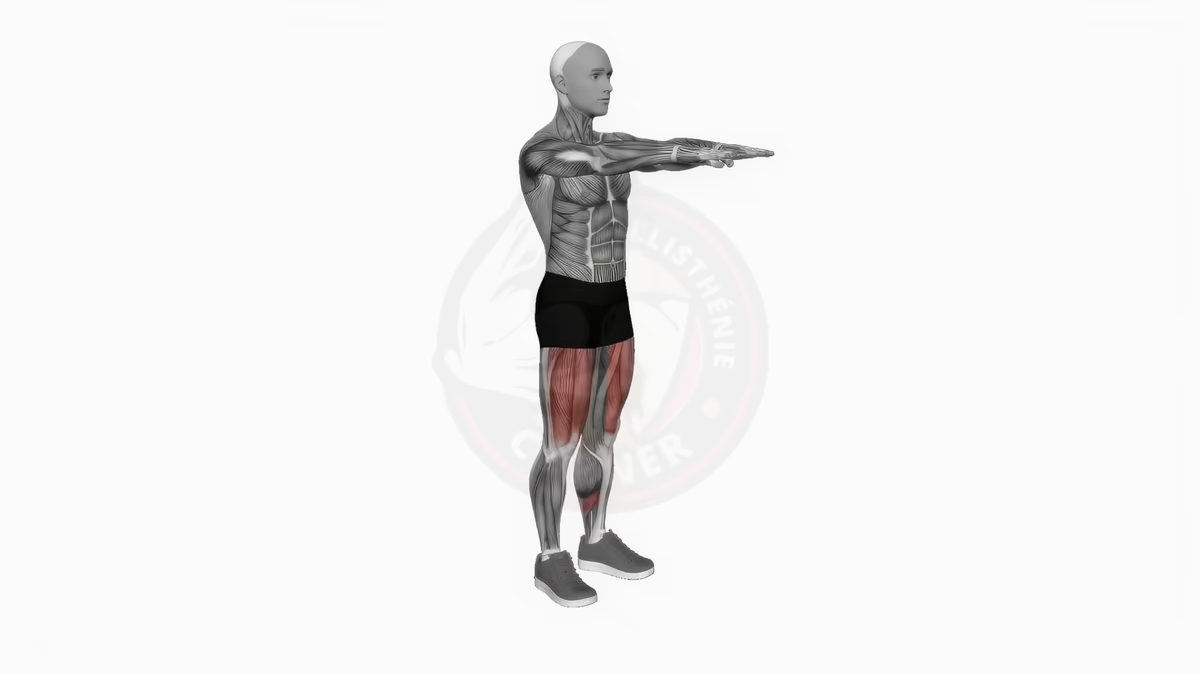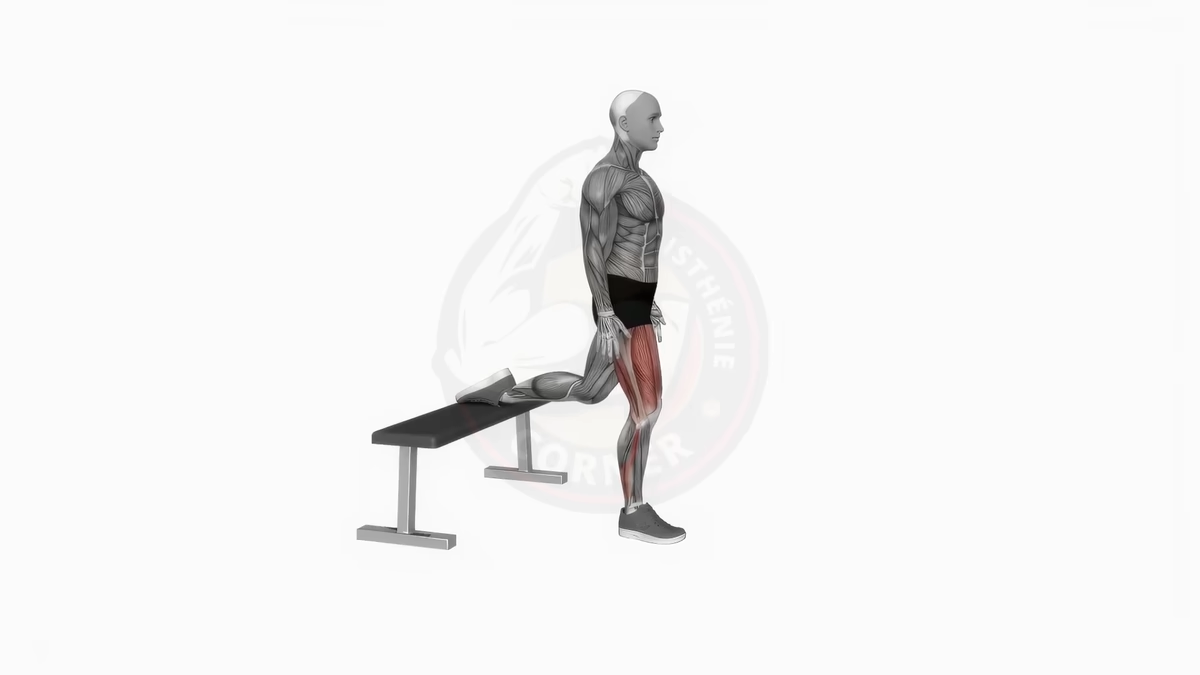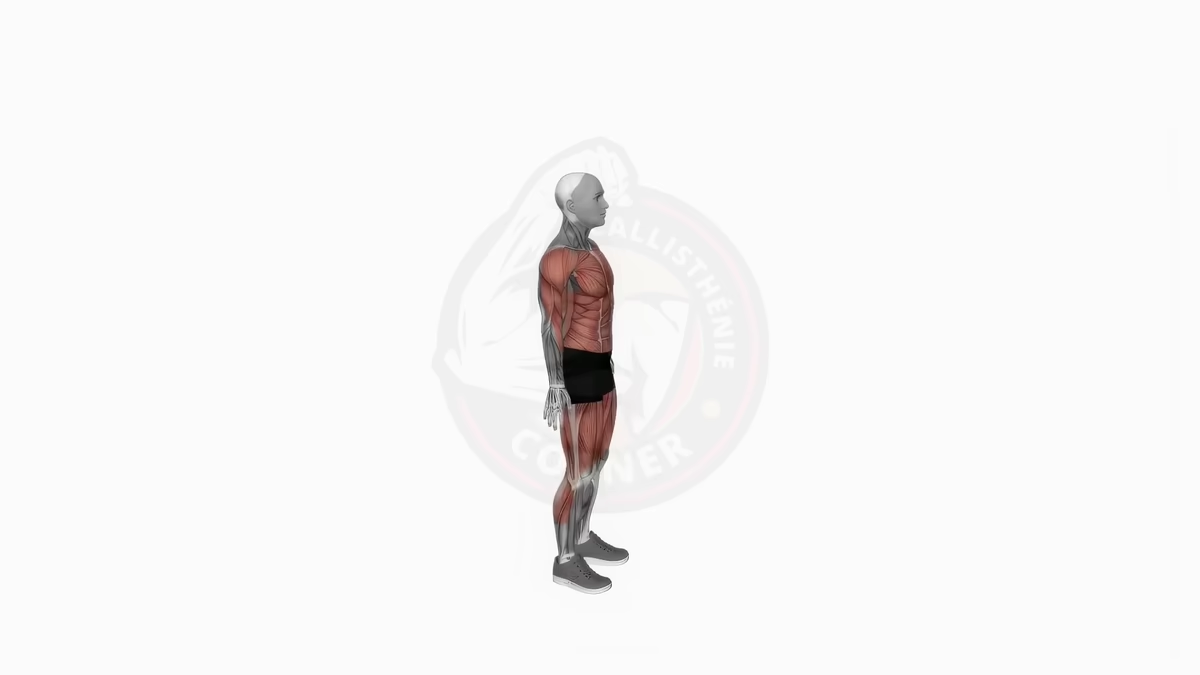
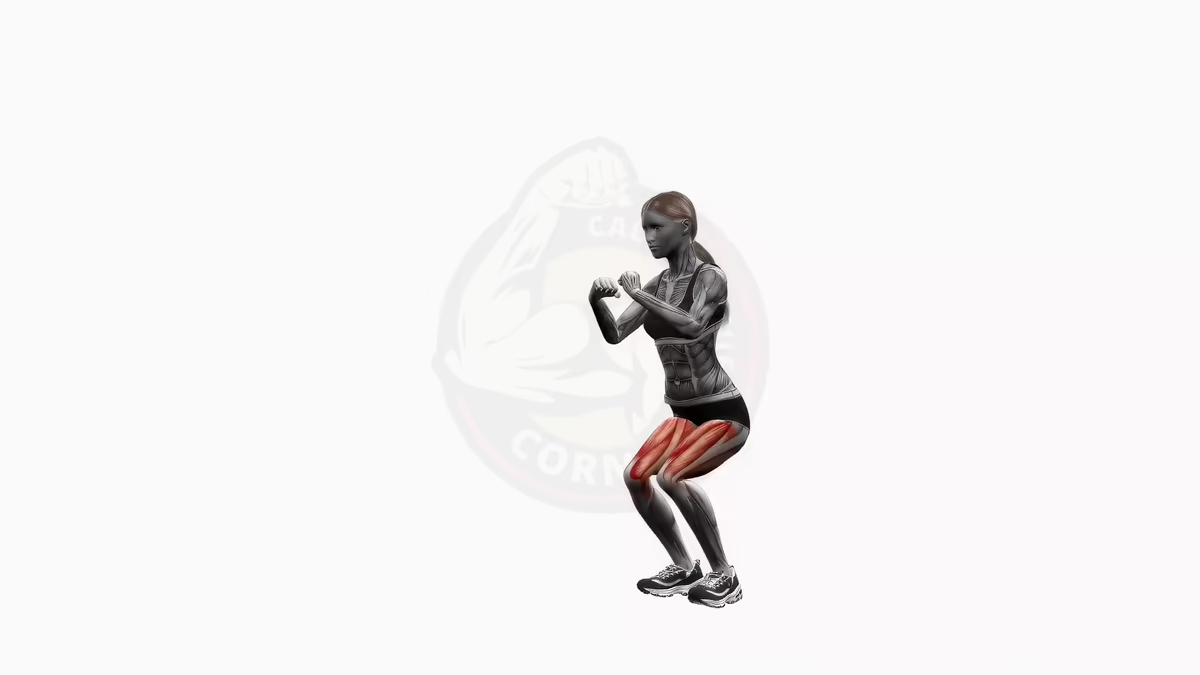
Starting position and initial movement
Start with your feet shoulder-width apart. Back straight, chest up, initiate the movement: push your hips back, bend your knees into a squat until your thighs are parallel to the floor, weight on your heels. Inhale on the way down.
The jump phase and controlled landing
From the bottom of a classic air squat, explosively propel yourself upward by pushing through your heels, legs fully extended, arms swinging for momentum. Exhale forcefully. Land softly: toes first, then heels, with knees and hips bent to absorb the impact and flow into the next rep.
Breathing and rhythm during jump squats
Your breathing is essential: inhale deeply as you descend into the squat. Exhale with power during the jumping impulse. Synchronize your breath with the movement for an efficient rhythm and proper exercise mastery.
Muscles worked by the jump squat
Primary lower body muscles
The jump squat is a powerful exercise that intensely targets the key muscles of your legs. Your quadriceps are the engine behind the jump’s power, while your glutes activate for explosive hip extension.
Your hamstrings and calves handle stabilization, propulsion and shock absorption, providing a complete lower body workout. To strengthen these muscles in parallel, try a similar exercise like the goblet squat.
Stabilizer muscles and core engagement
For a jump squat performed with perfect technique and in complete safety, engaging your core is non-negotiable. Your abs and lower back form a natural corset, maintaining a straight back and constant balance. This bracing is the key to preventing injuries and maximizing the fluidity of every rep.
Benefits of the jump squat for health and performance
The jump squat is an incredibly efficient exercise for your body. Here are its major benefits for building power, boosting cardio and sharpening agility.
Explosive strength and power
Multiply your explosive force and power. Through its plyometric action, the jump squat intensely strengthens your leg muscles and glutes, improving vertical jump and sprint speed. This exercise is a major asset for dramatically better athletic performance.
Cardiovascular impact and calorie burn
Boost your cardio and burn maximum calories. This exercise drives your heart rate up, increasing endurance and lung capacity. Thanks to its high intensity, it maximizes fat burning, making it ideal for leaning out.
Coordination, agility and stability
Sharpen your coordination, agility and stability. The jump squat challenges balance and body awareness, strengthening your core and motor reflexes. Gain more control, improve your posture and prevent falls in daily life with this complete exercise.
Jump squat variants to diversify your training
Tired of the routine? Your jump squats need more variety? Time to switch things up with challenging variants. Explore these modifications to load your muscles differently and maintain explosive progression.
Jump squat with dumbbells or kettlebell
Your classic jump squat progress has plateaued? It is time to add resistance. Grab a dumbbell, a kettlebell, put on a weighted vest or place a barbell on your shoulders to intensify the exercise.
Jump squats with dumbbells are a powerful tool for building explosive strength and rock-solid stability. This exercise targets your quads, glutes, calves and braces the trunk, pushing you toward new performance heights.
The intensity varies from moderate to high, directly linked to the weight you use. Even a small amount of added weight considerably increases the difficulty. This variant remains accessible to beginners using light loads for perfect execution.
Tips and precautions for safe, effective jump squats
Turn every jump squat into a win, not an injury. Safety and efficiency demand flawless preparation and technique for this powerful exercise.
Essential warm-up and muscle preparation
Warming up is NON-NEGOTIABLE before jump squats to protect your joints (knees, ankles, hips). This exercise demands excellent overall fitness. Skip it if you have joint issues, back problems or excess bodyweight. A few explosive jump squats in your warm-up prepare your muscles and nervous system for the impact.
Common mistakes to avoid and form adjustments
Master the classic air squat BEFORE attempting the jump. On landing, be soft: bend your knees to absorb impact, keeping them aligned with your feet, never collapsing inward. Keep your back straight and chest up. Reduce the range of motion if it feels too difficult. Land on the balls of your feet, head up, and limit reps to 10-15 per set to maintain perfect form. Use a soft surface and skip additional weight until your form is solid.
When and how to integrate jump squats into your routine
Integrate the jump squat into your strength or fitness routines, 1 to 2 times per week. If you are a beginner, master the classic squat first, then add small jumps with 1-3 seconds of recovery, focusing on execution. To progress, increase the reps, the explosiveness of the jump, or integrate the exercise into a circuit training or HIIT session. Aim for 4 sets of 15 reps once you have mastered the movement.
The jump squat is one of the most effective plyometric exercises you can add to your lower body training. Combined with lunges and air squats, it builds a complete foundation of strength, power and cardiovascular fitness.