The hip thrust is the reference exercise for building powerful, well-defined glutes. The movement consists of lifting your pelvis from a lying position, with your upper back supported on a bench. It primarily targets the gluteus maximus, the largest and most powerful muscle in the body, while also engaging several supporting muscle groups.
Whether you’re a calisthenics beginner or an experienced athlete, the hip thrust adapts to every level and delivers results fast.
How to perform the hip thrust correctly
Proper form is everything with the hip thrust. Here’s how to set up and execute the movement safely.
Starting position
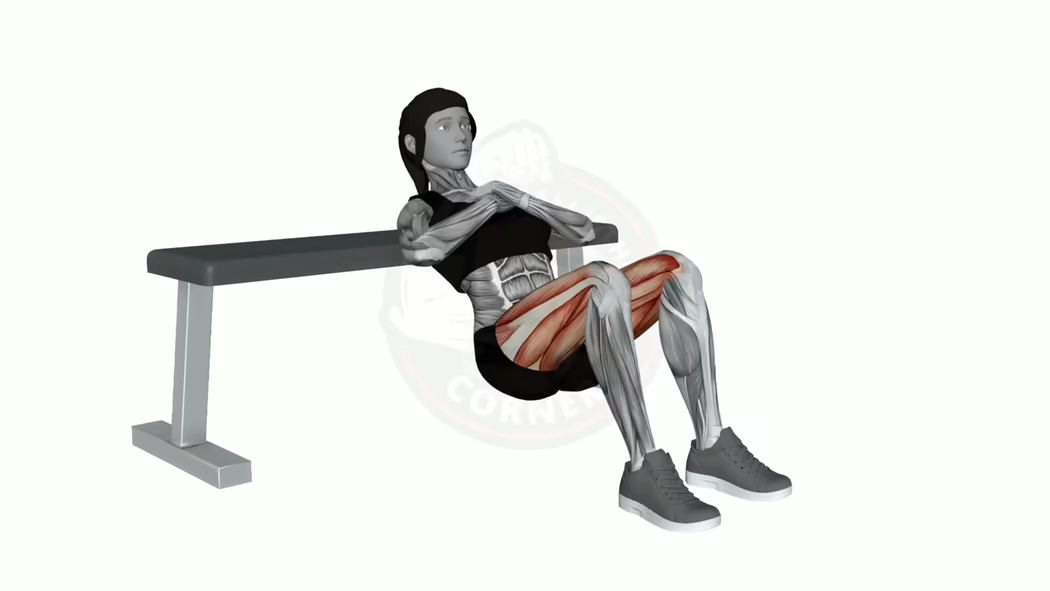
- Sit on the floor with your back against a stable bench (it must not slide).
- Position your shoulder blades on the edge of the bench. This is your pivot point.
- Bend your knees at roughly 90 degrees, feet flat on the floor, hip-width apart.
- Keep your chin slightly tucked to maintain a neutral spine.
Execution
- Engage your abs before initiating the movement.
- Push through your heels, contracting your glutes hard to lift your hips upward.
- Your body should form a straight line from your knees to your shoulders at the top.
- Hold for 1 second at the top position, actively squeezing your glutes.
- Lower your hips slowly and under control. No dropping.
The three key phases
| Phase | Focus | Vigilance points |
|---|---|---|
| Start | Back on bench, feet grounded | Shoulder blades on the edge, knees at 90° |
| Ascent | Push through heels, contract glutes | Don’t arch the lower back, drive with the hips |
| Top position | Straight line knees to shoulders | Squeeze glutes hard, hold 1 second |
Key reminder: focus on a strong glute contraction, not on lifting as high as possible. Going too high leads to lower back arching, which shifts the load away from the glutes and puts pressure on the lumbar spine.
Muscles worked during the hip thrust
Primary muscles
- Gluteus maximus: the star of this movement. The hip thrust produces one of the highest levels of glute activation among all lower body exercises, surpassing squats and lunges in EMG studies.
- Hamstrings: assist with hip extension and work hard through the entire range of motion.
Secondary muscles
- Quadriceps: stabilize the knee joint during the movement.
- Lower back muscles (erector spinae): help maintain proper posture and spinal alignment.
- Abdominals: provide trunk stability and prevent excessive arching.
- Adductors: contribute to hip stability throughout the lift.
- Calves: keep your feet firmly grounded and stable.
This combination of primary and secondary engagement makes the hip thrust a genuinely complete lower body exercise, not just a glute isolation move.
Hip thrust variations
The hip thrust fits into a natural progression that lets you scale difficulty up or down.
Glute bridge (floor version)
The glute bridge is the simplest starting point. Your back stays on the floor, which reduces the range of motion and the overall difficulty. Perfect for beginners learning the hip hinge pattern.
Barbell hip thrust
Once the bodyweight version feels easy for 15+ reps, add external load with a barbell across your hips. Use a pad or towel for comfort. This is where serious glute strength gets built.
Unilateral (single-leg) hip thrust
Perform the movement with one leg at a time. This variation corrects strength imbalances between sides and significantly increases the intensity without adding weight.
| Variation | Level | Best for |
|---|---|---|
| Glute bridge (floor) | Beginner | Learning the pattern, activation |
| Bodyweight hip thrust | Intermediate | Building endurance, perfecting form |
| Barbell hip thrust | Intermediate to Advanced | Maximum strength and hypertrophy |
| Single-leg hip thrust | Advanced | Fixing imbalances, unilateral power |
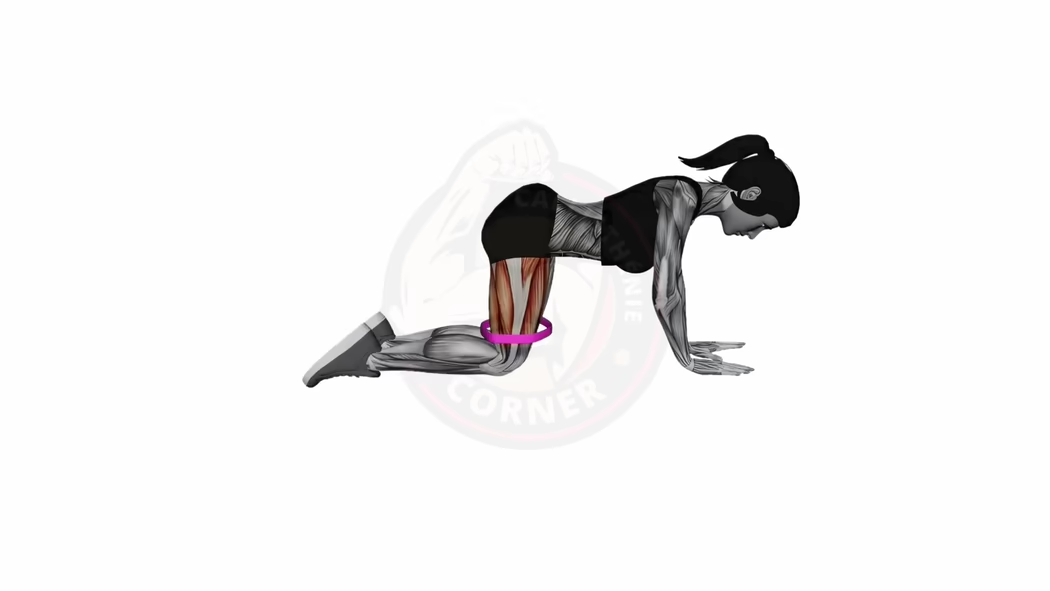
You can also add resistance bands around your knees during any variation to increase glute medius activation and reinforce proper knee tracking.
How to integrate the hip thrust into your program
Frequency and volume
- Frequency: 2 to 3 sessions per week, allowing at least 48 hours of recovery between sessions.
- Volume: 3 to 4 sets of 8 to 12 reps for strength and hypertrophy.
4-week progression plan
| Week | Sets x Reps | Load |
|---|---|---|
| Week 1 | 3 x 10 | Light (bodyweight or minimal) |
| Week 2 | 3 x 12 | Slight increase |
| Week 3 | 4 x 10 | Moderate |
| Week 4 | 4 x 12 | Heavier |
Combine with complementary exercises
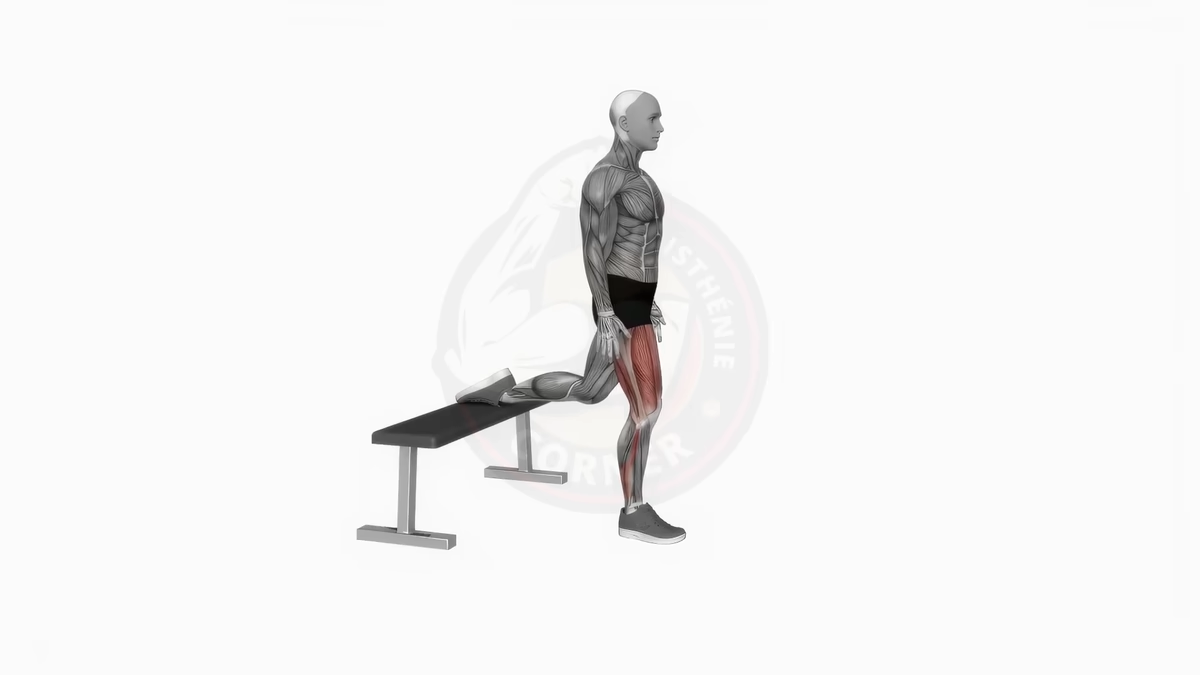
The hip thrust pairs well with other lower body movements for a complete leg session:
- Squats: quad-dominant compound movement.
- Lunges: unilateral lower body work.
- Romanian deadlifts: posterior chain focus.
- Wall sits: isometric quad and glute endurance.
Sample training week
| Day | Exercises |
|---|---|
| Monday | Hip thrust + squats |
| Wednesday | Lunges + Romanian deadlifts |
| Friday | Single-leg hip thrust + step-ups |
This split ensures each muscle group gets trained with enough volume while allowing proper recovery.
Benefits for athletic performance
The hip thrust is not just for aesthetics. It translates directly to sports performance.
Power and explosiveness
Strong glutes are the engine behind sprinting, jumping, and rapid direction changes. The hip thrust builds the specific hip extension power that drives these movements.
Injury prevention and muscular balance
Weak glutes are linked to a long list of injuries: knee pain, IT band syndrome, lower back issues, hamstring strains. Strengthening them with hip thrusts creates better muscular balance and protects the entire kinetic chain.
| Benefit | Sports applications |
|---|---|
| Explosive hip power | Track and field, football, basketball |
| Pelvic stability | Gymnastics, martial arts, dance |
| Injury prevention | All sports, everyday functional movement |
Frequently Asked Questions
Are hip thrusts better than squats for glutes?
Hip thrusts produce higher glute activation at the top of the movement compared to squats, according to EMG studies. However, squats train the entire lower body and involve a greater range of motion. For maximum glute development, use both: hip thrusts isolate the glutes more effectively, while squats build overall lower body strength and coordination.
How many hip thrusts should I do?
For strength and hypertrophy, aim for 3 to 4 sets of 8 to 12 reps, 2 to 3 times per week. For muscular endurance, use lighter loads with 2 to 3 sets of 15 to 20 reps. Allow at least 48 hours of recovery between sessions that target the glutes heavily.
Can you do hip thrusts without a bench?
Yes. The glute bridge is the floor-based version of the hip thrust and requires no equipment at all. You can also elevate your back on a sturdy couch, a low wall, or a stacked set of weight plates. The bench simply provides a consistent, stable surface and increases the range of motion.
What is the difference between hip thrust and glute bridge?
The key difference is back elevation. In a glute bridge, your back stays on the floor, which limits range of motion and overall difficulty. In the hip thrust, your upper back rests on a bench, allowing your hips to drop lower at the bottom and travel through a greater range. This increased range produces stronger glute activation and makes the hip thrust the more advanced variation.