Why train your hamstrings with bodyweight
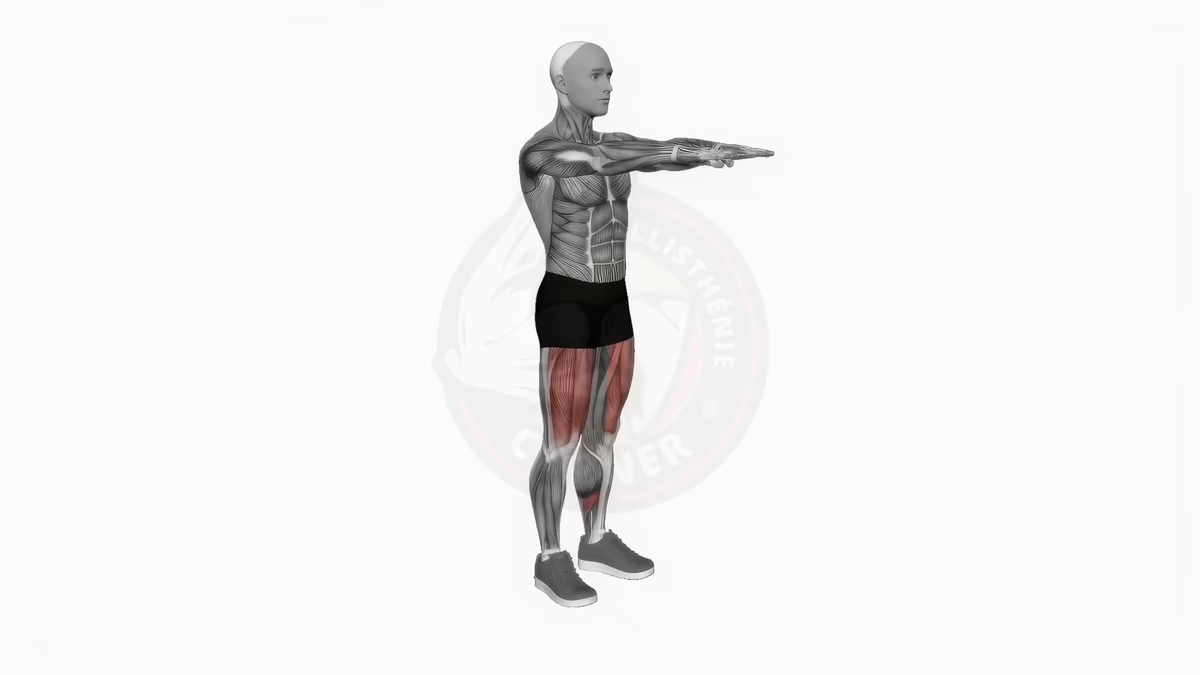
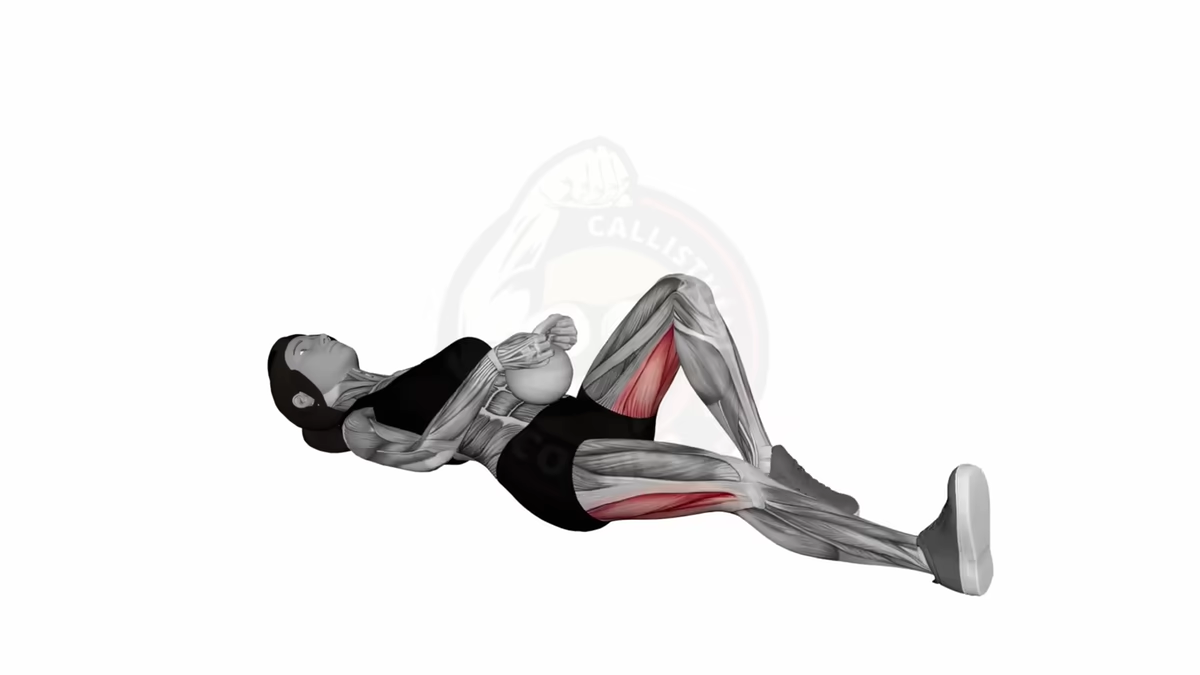
The hamstrings are a group of three muscles located at the back of the thigh: the biceps femoris, the semitendinosus, and the semimembranosus. Together, they flex the knee and extend the hip. Every running stride, every jump, every sprint depends on them.
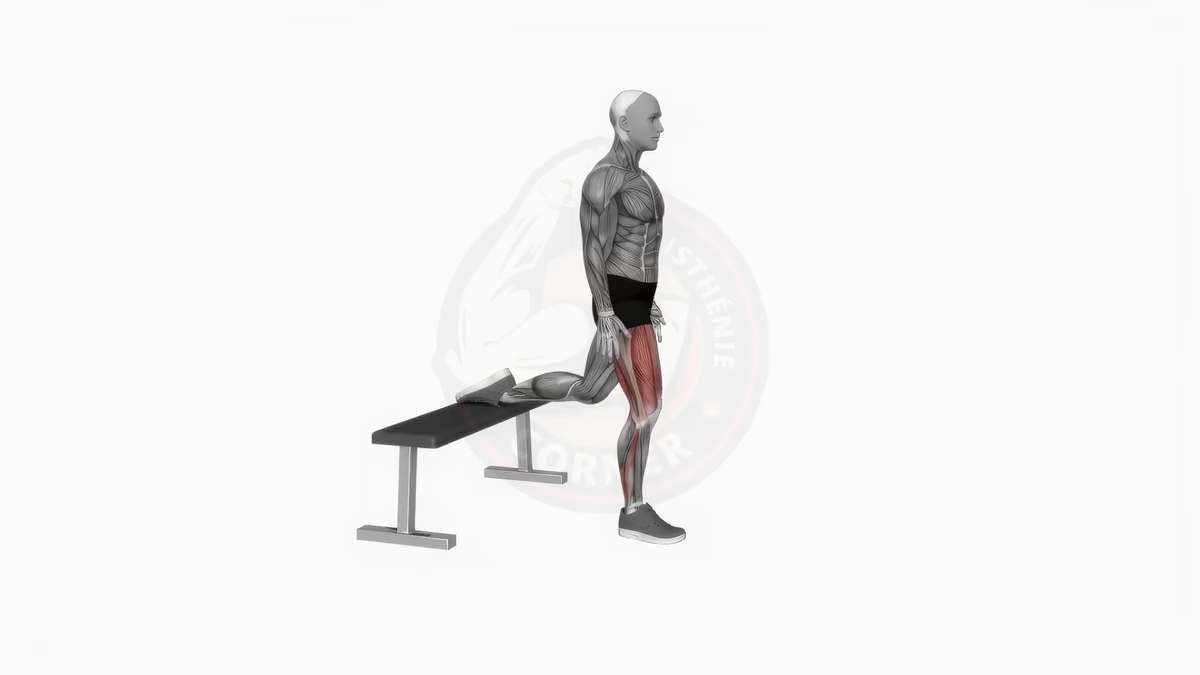
The problem: most calisthenics practitioners neglect them. Squats, lunges, and pistol squats hammer the quadriceps, but leave the hamstrings underdeveloped. This imbalance between the front and back of the thigh is one of the leading causes of knee injury and muscle strain.
A balanced strength ratio between quadriceps and hamstrings protects your joints, improves your posture, and boosts overall performance. Bodyweight can absolutely develop strong hamstrings, provided you choose the right exercises.
6 hamstring exercises without equipment
1. Glute bridge
Lying on your back, feet flat on the floor, knees bent at 90 degrees. Push through your heels to lift your hips until you form a straight line from shoulders to hips to knees. Squeeze the hamstrings and glutes hard at the top for 2 seconds before lowering slowly. Keep your arms on the floor at your sides to stabilize the movement.
The glute bridge is the ideal starting point to activate the entire posterior chain.
2. Single-leg glute bridge
Same position as the standard bridge, but one leg stays extended in the air. All the weight goes through a single foot. The load on the hamstrings doubles instantly. Keep your pelvis perfectly level, without tilting to one side. Control every centimeter of the descent.
Find the complete technique in our single-leg glute bridge guide.
3. Bodyweight good morning
Standing, feet shoulder-width apart, hands behind your head. Push your hips back while leaning your torso forward, knees very slightly bent. Lower until you feel a pronounced stretch at the back of the thighs, then rise by contracting the hamstrings and glutes. Your back stays flat and braced throughout.
3 sets of 15 reps.
4. Single-leg Romanian deadlift (bodyweight)
Standing on one leg, arms at your sides. Tilt your torso forward while your free leg goes backward, forming a T with your body. The hips push back, the support knee stays slightly bent. Lower until your torso is parallel to the floor. This movement targets the biceps femoris at full stretch while building balance and proprioception.
If balance limits you at first, rest your fingertips against a wall for stability.
3 sets of 10-12 reps per side.
5. Towel leg curl on the floor
Lying on your back, hips lifted in bridge position. Place your heels on a towel on a tile or hardwood floor. Slide your feet away from you by extending your legs, then pull them back toward your glutes by contracting the hamstrings. Your hips stay elevated throughout. This is the home equivalent of the leg curl machine, with complete concentric and eccentric work.
3 sets of 8-12 reps.
6. Nordic hamstring curl
The most formidable movement for the back of the thigh. Kneeling, feet locked under a heavy piece of furniture or held by a partner. Lower your torso toward the floor slowly, resisting only with the strength of your hamstrings. Your body stays straight from knees to shoulders. Resist the descent as long as possible, then catch yourself with your hands and push back up.
The nordic curl is the most effective eccentric exercise for preventing hamstring injuries.
4 sets of 5 reps (slow 4-second descent).
Mistakes that slow your progress
-
Pushing with the toes instead of the heels: On the glute bridge, good morning, and Romanian deadlift, the point of contact must be the heel. As soon as you shift weight toward the front of the foot, the quadriceps and calves take over. The hamstrings lose their role as the primary mover. Anchor your heels into the floor on every rep.
-
Going too fast: The hamstrings respond especially well to slow, controlled work. The eccentric phase (the lowering) is the one that builds the most strength and injury resistance. Count 3 seconds on the descent for every exercise to maximize your gains.
-
Ignoring the imbalance with the quadriceps: An unbalanced strength ratio between the front and back of the thigh multiplies the risk of strains and knee pain. For every quadriceps session, program at least one exercise targeting the back of the legs.
Hamstring routine without equipment
The hamstrings recover well between sessions thanks to their mixed fiber composition. Two targeted workouts per week, spaced at least 48 hours apart, are enough for steady gains.
Session A: Control and volume
- Single-leg glute bridge: 4x12 per leg
- Bodyweight good morning: 3x15
- Towel leg curl: 3x10
Session B: Eccentric strength
- Nordic hamstring curl: 4x5 (slow 4-second descent)
- Single-leg Romanian deadlift: 3x12 per side
- Glute bridge: 3x20 (3-second squeeze at the top)
Rest 60-90 seconds between sets. When you complete all sets comfortably, increase reps by 2 or slow down the lowering tempo. The hip thrust is an excellent complement if you have access to an elevated surface like a couch or bench. It increases the range of motion on the hamstrings and glutes compared to the standard glute bridge.
For a complete lower-body approach, combine this routine with quad work and you will cover both sides of the thigh. If you are just getting started with calisthenics, the glute bridge and bodyweight good morning are the perfect entry points before progressing to nordic curls.