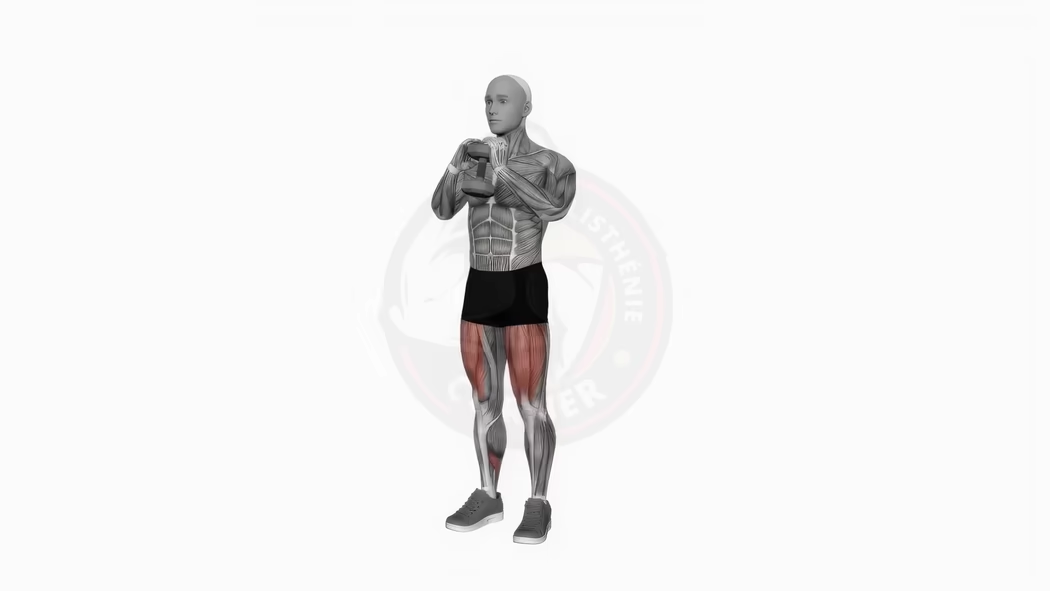
The goblet squat is an essential exercise for strengthening the lower body and the core. This variation of the traditional squat offers numerous advantages, including better stability and greater movement control. Whether you are a beginner or a seasoned athlete, the goblet squat can significantly improve your training routine.
Prerequisites for the goblet squat
Before adding load, make sure you have these basics covered:
- Ankle mobility: Knees able to travel 5-10 cm past your toes
- Bodyweight air squat: 20 clean reps, thighs parallel
- Core brace: 45-second plank minimum
Quick test: Squat down without weight, heels on the floor, and hold for 30 seconds. If you can do it, you are ready for the goblet squat.
How to perform a goblet squat correctly
Proper technique is essential for maximizing results and minimizing injury risk.
Starting position:
Hold a dumbbell or kettlebell against your chest. Your feet should be slightly wider than hip-width, with toes pointing slightly outward. Engage your abs and keep your back straight.
Movement execution:
- Initiate the movement by pushing your hips back, as if sitting on an invisible chair
- Bend your knees simultaneously, making sure they track over your toes
- Descend until your thighs are parallel to the floor, or slightly below if your mobility allows
- To come back up, push through your heels and contract your glutes
- Maintain a neutral spine throughout the entire movement
Tips for perfect execution
- Keep the weight close to your body for better balance
- Keep your elbows pointing downward to engage the upper body muscles
- Breathe in a controlled manner: inhale on the descent, exhale on the way up
- Do not let your knees cave inward
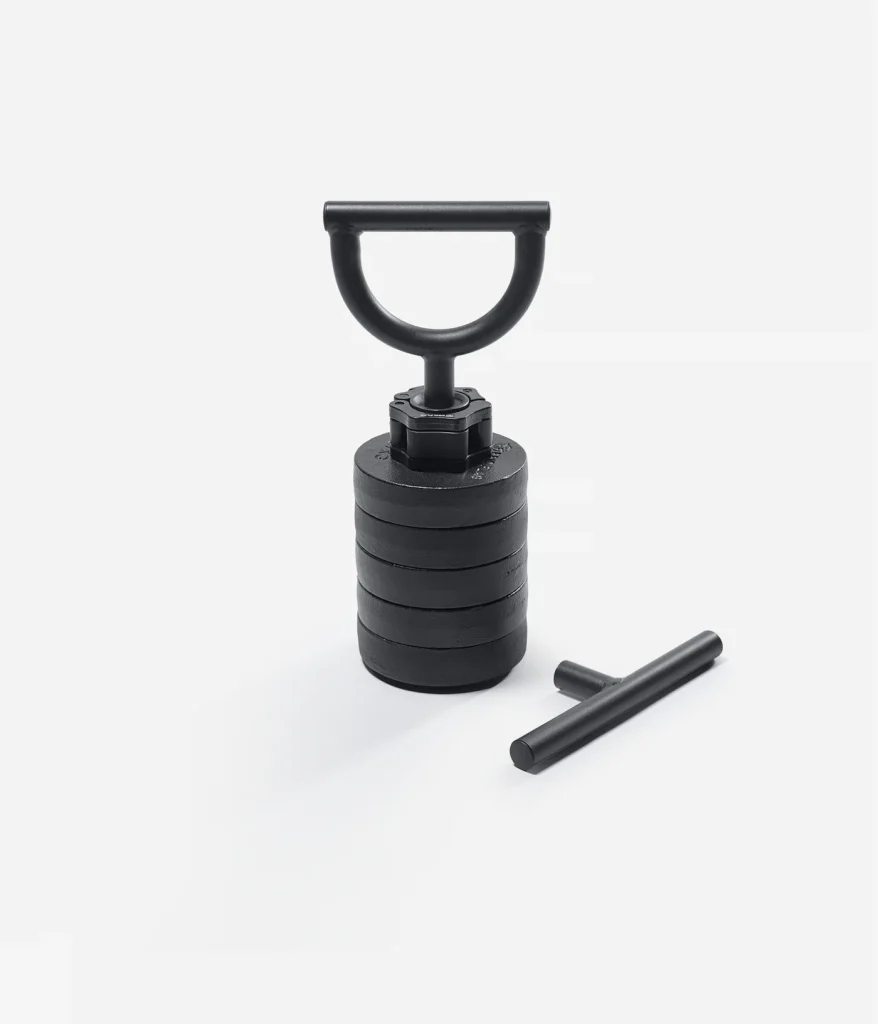
Muscles targeted by the goblet squat
The goblet squat is a compound exercise that engages several muscle groups simultaneously.
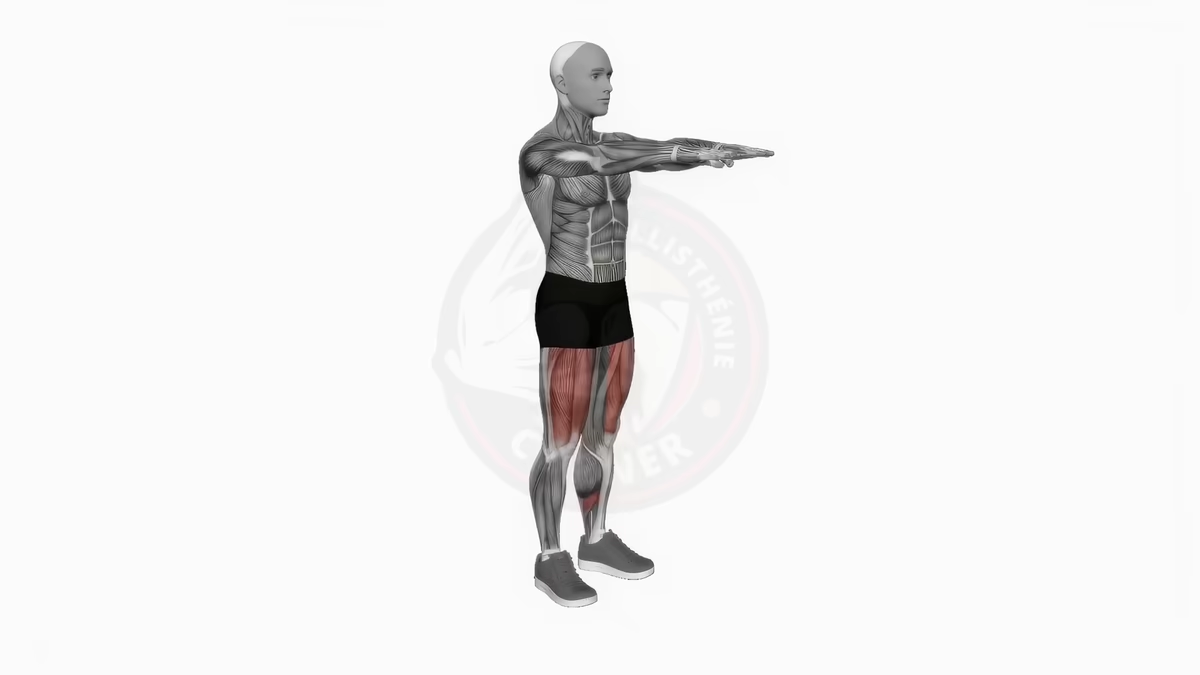
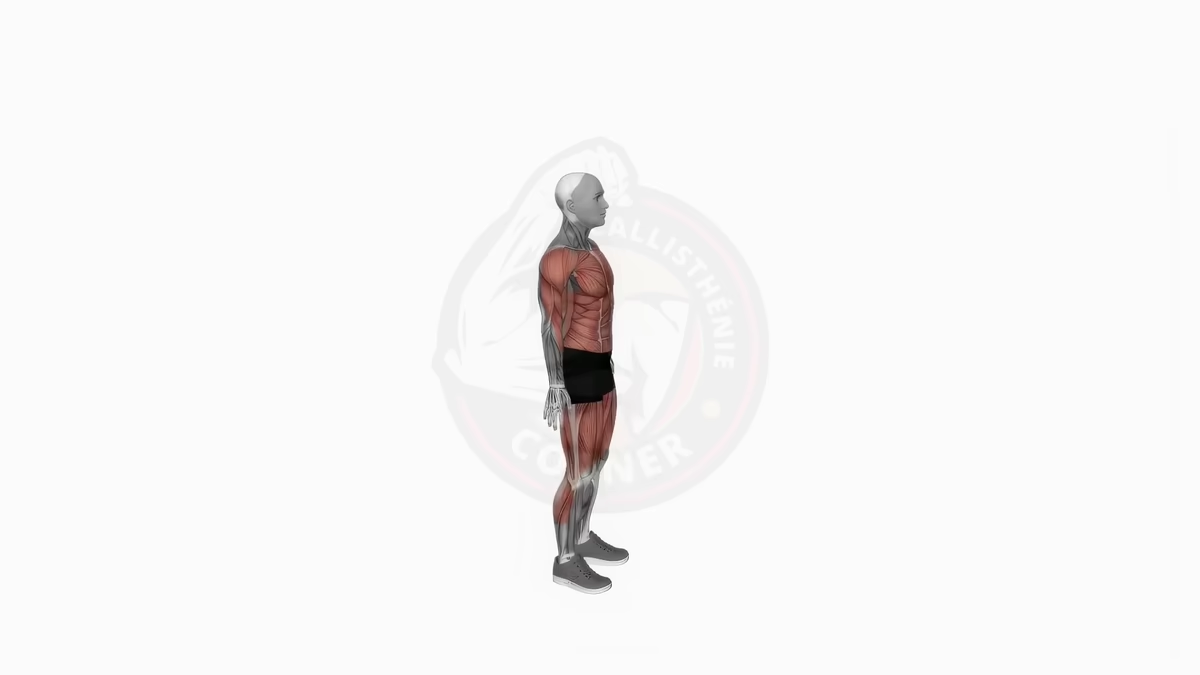
Primary muscles: Quadriceps, glutes and hamstrings. These muscle groups are responsible for hip and knee extension.
Secondary muscles: The core (abs and lower back) works to maintain trunk stability. The calves and adductors ensure balance.
Goblet squat vs. classic squat
| Aspect | Goblet Squat | Classic Squat |
|---|---|---|
| Load position | In front of the chest | On the shoulders or upper back |
| Core engagement | Higher | Moderate |
| Stability | Improved | Variable depending on technique |
| Maximum load | Limited by grip | Potentially heavier |
| Beginner accessibility | High | Moderate |
Benefits of the goblet squat
Muscle development advantages:
The goblet squat promotes significant quad and glute hypertrophy. The front-loaded position forces you to maintain a more upright posture, intensifying the work on trunk stabilizer muscles.
Functional and postural benefits:
- Improved hip and ankle mobility
- Stronger core stability and balance
- Correction of muscular imbalances between legs
- Development of better body awareness
Goblet squat training program
| Level | Load | Sets x Reps | Frequency |
|---|---|---|---|
| Beginner (Weeks 1-2) | Light (4-8 kg) | 3 x 10-12 | 2-3 times/week |
| Intermediate (Weeks 3-4) | Moderate (8-16 kg) | 4 x 8-10 | 3-4 times/week |
| Advanced (Weeks 5-6) | Heavy (16-24 kg) | 5 x 6-8 | 3-4 times/week |
Sample leg session with goblet squat:
| Exercise | Sets x Reps |
|---|---|
| Goblet squat | 4 x 10 |
| Forward lunges | 3 x 12 (each leg) |
| Glute bridge | 3 x 15 |
| Calf raises | 4 x 20 |
Variants and progressions
For beginners: The goblet squat can be simplified by using a support (chair) to limit the range of motion. This version lets you work on technique safely.
For advanced athletes:
- Single-leg goblet squat: A challenge for balance and explosive power
- Goblet squat with jump: Develops explosiveness
- Pulsed goblet squat: Small bounces at the bottom before coming back up. Increases time under tension.
- Tempo goblet squat: 4 seconds descent, 2 seconds pause, 2 seconds ascent
What comes after the goblet squat?
Once you have mastered 5 sets of 8 reps with 20 kg, progress toward:
- Front squat: Load on the shoulders, maximum range of motion. The goblet squat has prepared you for this front-loaded position.
- Pistol squat: The single-leg version, demanding intense balance work. The ultimate bodyweight leg exercise.
- Sissy squat: Quad isolation with extreme range of motion.
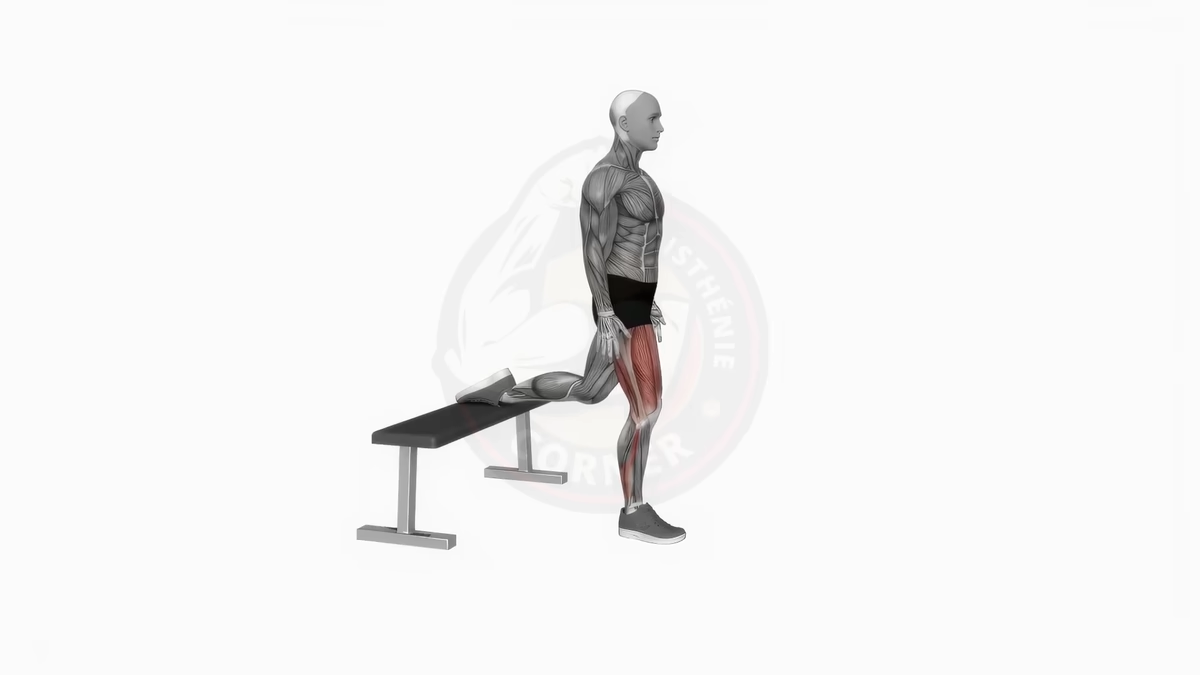
- Bulgarian split squat: Unilateral work with load, an excellent complement.
The goblet squat is the gateway to all advanced squat exercises.
Frequently Asked Questions
What weight should I use for goblet squats?
Start with 4 to 8 kg if you are a beginner and focus on nailing the form first. Once you can complete 3 sets of 12 reps with good depth and no form breakdown, increase the load by 2 to 4 kg. Most intermediate trainees work in the 12 to 20 kg range.
Are goblet squats as effective as back squats?
Goblet squats are excellent for building quad and glute strength, improving mobility, and learning proper squat mechanics. However, the load is limited by how much weight you can hold at your chest. For maximum strength development with heavy loads, the back squat allows greater loading potential.
What muscles do goblet squats work?
The primary muscles are the quadriceps, glutes, and hamstrings. The core (abs and lower back) works hard as a stabilizer because of the front-loaded position. The calves, adductors, and upper back also contribute to balance and posture throughout the movement.
How deep should I go on goblet squats?
Aim for at least thighs parallel to the floor. If your ankle and hip mobility allow it, going slightly below parallel increases glute activation and overall muscle recruitment. Never sacrifice form for depth: if your lower back rounds or your heels lift off the floor, you are going too deep for your current mobility.