
Building powerful glutes without equipment is perfectly achievable. Your bodyweight alone is enough to intensely activate the gluteus maximus, medius, and minimus. This guide covers 10 progressive glute exercises without equipment to sculpt strong, aesthetic glutes.
Anatomy of the glutes: understanding the muscles
The gluteus maximus is the largest muscle in the human body. It generates power during hip extension (standing up, jumping, running). Developing it creates the rounded, powerful shape that improves both aesthetics and athletic performance.
The gluteus medius sits on the upper side of the hip. It stabilizes the pelvis during walking and performs hip abduction (moving the leg away from the body). Weakness here creates pelvic drop and lower back pain.
The gluteus minimus lies underneath the medius. It assists abduction and internal rotation. All three muscles work in synergy during every lower-body movement.
Key point: The glutes activate maximally during full hip extension, not during the flexion phase. Squeeze hard at the top of every rep.
Best glute exercises without equipment for beginners
Glute bridge
The glute bridge is the foundational activation exercise. Lying on your back with knees bent, lift your hips until shoulders, hips, and knees form a straight line. Contract your glutes at the top for 2 seconds.
Technical tip: Push through your heels, not the balls of your feet. Keep your abs contracted to avoid lumbar arching.
Dosage: 4 sets of 15-20 reps, tempo 2-2-1.
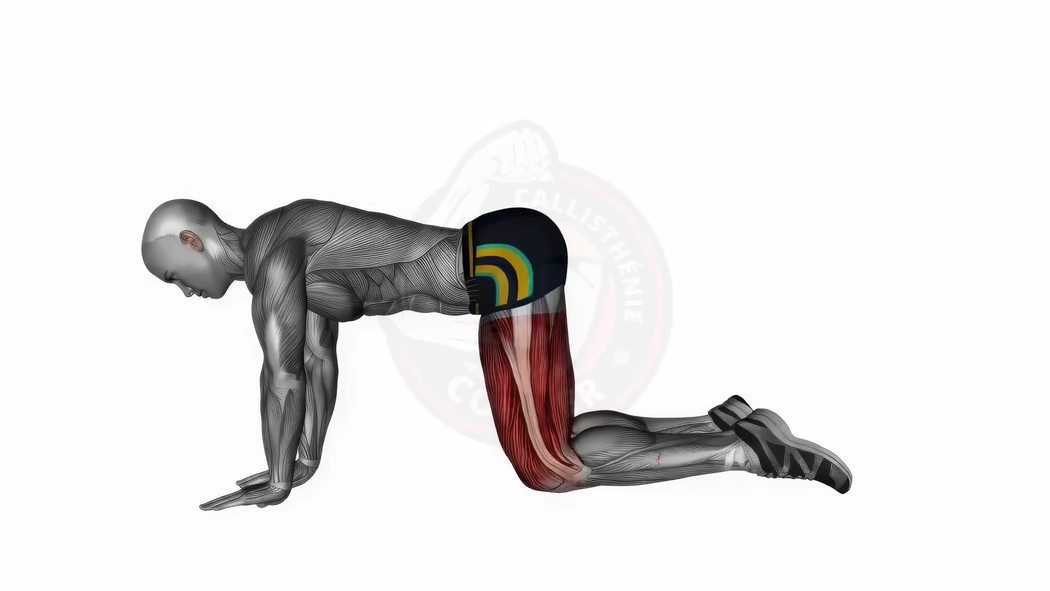
Donkey kick
The donkey kick isolates the gluteus maximus. On all fours, push one heel toward the ceiling while keeping the knee bent at 90 degrees. Contract the glute at the top.
Common mistake: Excessively arching the back. Keep a neutral spine; the movement comes from the hip only.
Dosage: 3 sets of 15-20 reps per leg.
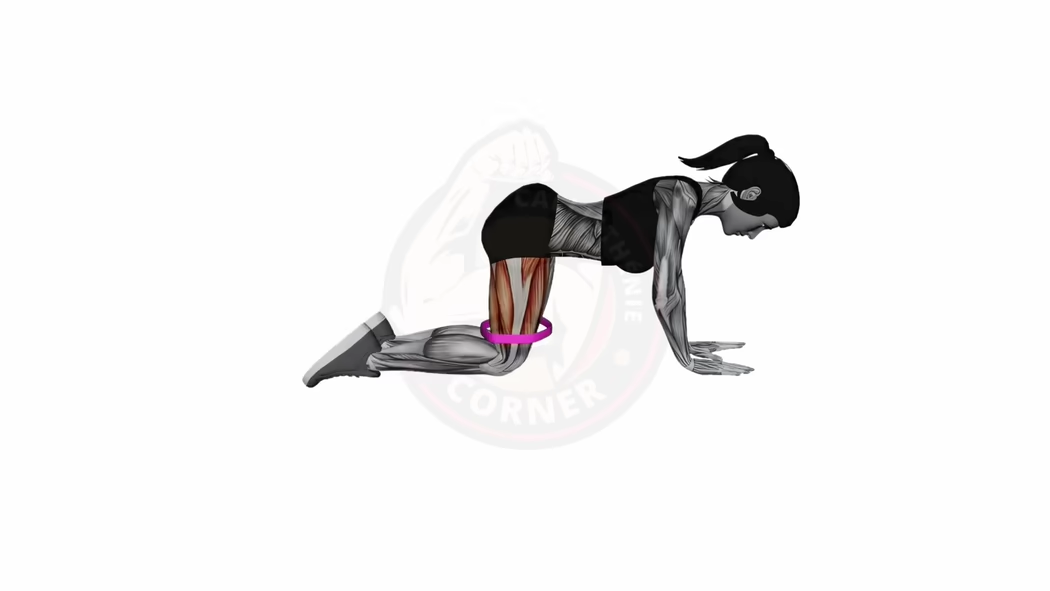
Fire hydrant
The fire hydrant targets the gluteus medius. On all fours, lift your knee laterally while maintaining the 90-degree angle. Think of a dog lifting its leg at a fire hydrant.
Tip: Lift until you feel the contraction on the outer hip, not higher.
Dosage: 3 sets of 15-20 reps per leg.
Air squats
Air squats engage the entire lower body with emphasis on the glutes when executed correctly. Descend to at least parallel, then drive back up through your heels.
Glute focus: Lean your torso slightly forward (about 30 degrees) to accentuate glute activation. Push your hips back, as if sitting in a chair.
Dosage: 4 sets of 15-20 reps.
Intermediate glute exercises without equipment
Single-leg glute bridge
The single-leg glute bridge doubles the intensity. One leg extended in the air, lift your hips with the other leg only. Your glutes work twice as hard on each side.
Progression: Start with the free leg bent if the full version is too difficult.
Dosage: 3 sets of 12-15 reps per leg.
Hip thrust
The hip thrust amplifies the glute bridge. Shoulders propped on a couch or bench, feet on the floor, lift your hips until fully aligned. Greater range of motion means greater glute activation.
Optimal position: Feet shoulder-width apart, shins vertical at the top position.
Dosage: 4 sets of 12-15 reps.
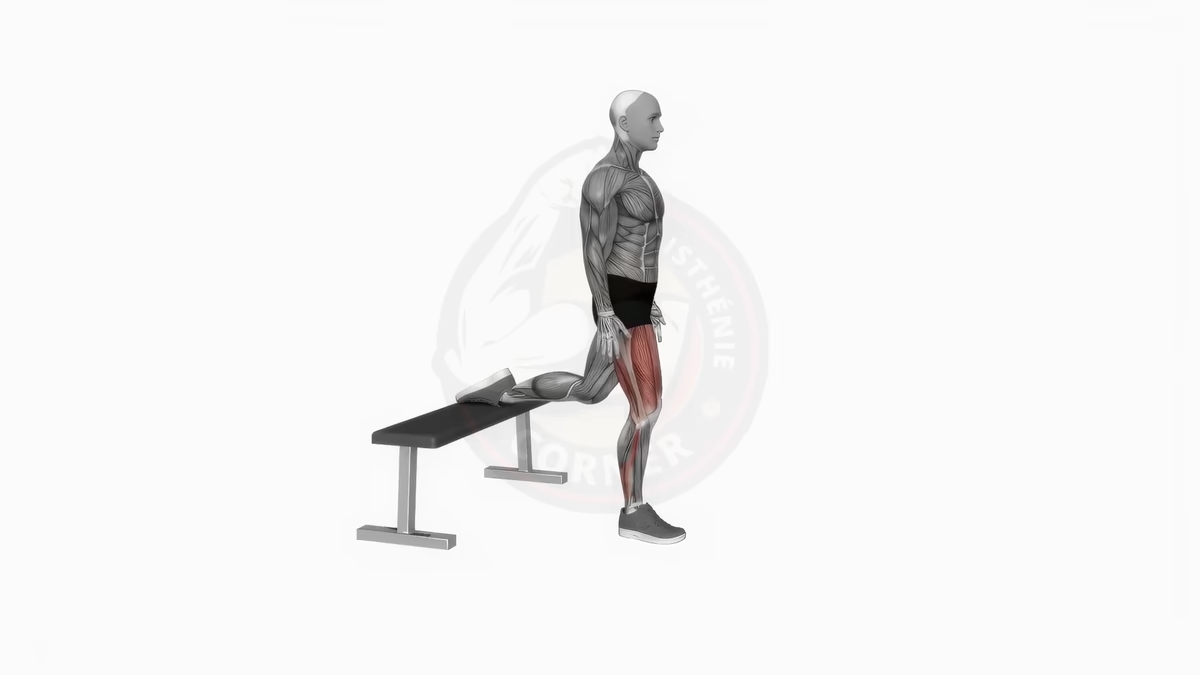
Bulgarian split squats
Bulgarian split squats create extreme range of motion. With your rear foot elevated, lower until your back knee hovers just above the floor. The glutes of the front leg stretch deeply then contract powerfully on the way up.
Dosage: 3 sets of 10-15 reps per leg.
Lunges
Lunges are a versatile movement that engages the glutes through a long range of motion. Forward lunges, reverse lunges, walking lunges, each variation shifts the emphasis slightly. For glute development, the reverse lunge tends to produce the best activation because it keeps the torso more upright and the front shin more vertical.
Dosage: 3 sets of 10-12 reps per leg.
Advanced glute exercises without equipment
Pistol squat
The pistol squat is the ultimate single-leg exercise. Lower on one leg until your glutes touch your calf, the other leg extended in front. Extreme strength and balance required.
Prerequisites: Master 15 bulgarian split squats per leg before attempting.
Progression: Use a box to limit range of motion at first.
Dosage: 4 sets of 5-10 reps per leg.
Single-leg hip thrust
The single-leg hip thrust is the most intense glute isolation exercise. Shoulders on a support, one foot on the ground, the other leg extended. Lift your hips using a single leg.
Dosage: 3 sets of 8-12 reps per leg.
Jump squats
Jump squats develop explosive power in the glutes. Perform a deep squat then jump to maximum height. Land softly by immediately bending the knees.
Warning: Flawless landing technique is mandatory to protect the knees.
Dosage: 4 sets of 10-15 reps.
Glute training programs without equipment
Beginner program (3 sessions/week)
Monday / Wednesday / Friday:
- Glute bridge: 4x15-20
- Air squat: 4x15-20
- Donkey kick: 3x15-20 per leg
- Fire hydrant: 3x15-20 per leg
Tip: Always start with activation (glute bridge) before compound exercises.
Intermediate program (3-4 sessions/week)
Monday, Volume:
- Hip thrust: 5x15-20
- Sumo squats: 4x20
- Bulgarian split squat: 3x12-15 per leg
- Single-leg glute bridge: 3x15 per leg
Wednesday, Strength:
- Single-leg hip thrust: 4x10-12 per leg
- Bulgarian split squat: 4x10-15 per leg
- Air squat: 5x15
- Donkey kick: 3x20 per leg
Friday, Plyometrics:
- Jump squat: 4x12-15
- Jumping lunges: 3x16 (8 per leg)
- Glute bridge: 4x20
- Fire hydrant: 3x20 per leg
Saturday (optional), Isolation:
- Glute bridge: 5x20
- Donkey kick: 4x20 per leg
- Fire hydrant: 4x20 per leg
- Single-leg glute bridge: 4x15 per leg
Advanced program (4 sessions/week)
Monday, Max strength:
- Pistol squat: 5x6-10 per leg
- Single-leg hip thrust: 4x10-12 per leg
- Jump squat: 4x15
- Bulgarian split squat: 3x12 per leg
Tuesday, Volume:
- Hip thrust (tempo 3-1-1): 5x20
- Sumo squats: 5x25
- Glute bridge: 5x25
- Donkey kick: 4x25 per leg
Thursday, Hypertrophy:
- Bulgarian split squat (tempo 3-0-1): 4x15 per leg
- Single-leg glute bridge: 5x15 per leg
- Air squat: 5x20
- Fire hydrant: 4x20 per leg
Saturday, Power:
- Jump squat: 5x12-15
- Pistol squat: 4x8 per leg
- Jumping lunges: 4x20 (10 per leg)
- Explosive hip thrust: 4x15
Common mistakes to avoid
Mistake 1, Skipping activation: Always start with 2 light sets of glute bridge. The glutes are “asleep” in 80% of people due to prolonged sitting. This activation ensures they actually fire during the harder exercises.
Mistake 2, Quad dominance: If your thighs burn more than your glutes, you are compensating. Move your feet back 10 cm and lean your torso slightly forward to shift the load.
Mistake 3, Excessive arching: Keep your abs contracted. Lumbar arching transfers the work to the lower back instead of the glutes.
Mistake 4, Partial range of motion: Rise to full hip extension on every rep. Half reps develop 50% less muscle.
Mistake 5, Insufficient volume: The glutes require 15-25 reps per set. They respond better to high volume than to pure intensity.
Tips to maximize glute development
Tip 1, Mind-muscle connection: Touch your glutes during activation sets. This tactile feedback improves contraction quality by 20-30%.
Tip 2, Controlled tempo: Explosive 1-second rise, deliberate 2-second squeeze at the top, controlled 2-second descent. This tempo maximizes muscular tension.
Tip 3, High frequency: Train your glutes 3-4 times per week. They recover quickly (36-48 hours) and respond excellently to high training frequency.
Tip 4, Angle variation: Alternate extension exercises (glute bridge), abduction exercises (fire hydrant), and compound movements (air squat) to stimulate all fiber types.
Tip 5, Methodical progression: Add 2 reps per week or increase time under tension. Progress toward unilateral exercises over 3-6 months.
Tip 6, Post-workout stretching: 5 minutes of hip flexor stretching after every session. Tight hip flexors limit extension and reduce glute activation by up to 40%.
Going further with lower-body training
This guide covers all the glute exercises without equipment you need, but you can complement your training with our other resources:
- Complete legs: Check out our guide on leg exercises without equipment for a full approach to quads, hamstrings, and calves
- Core strength: Strengthen your midsection with our ab exercises without equipment for a balanced physique
- Getting started: New to bodyweight training? Our beginner’s guide to calisthenics will set you up with the right foundations