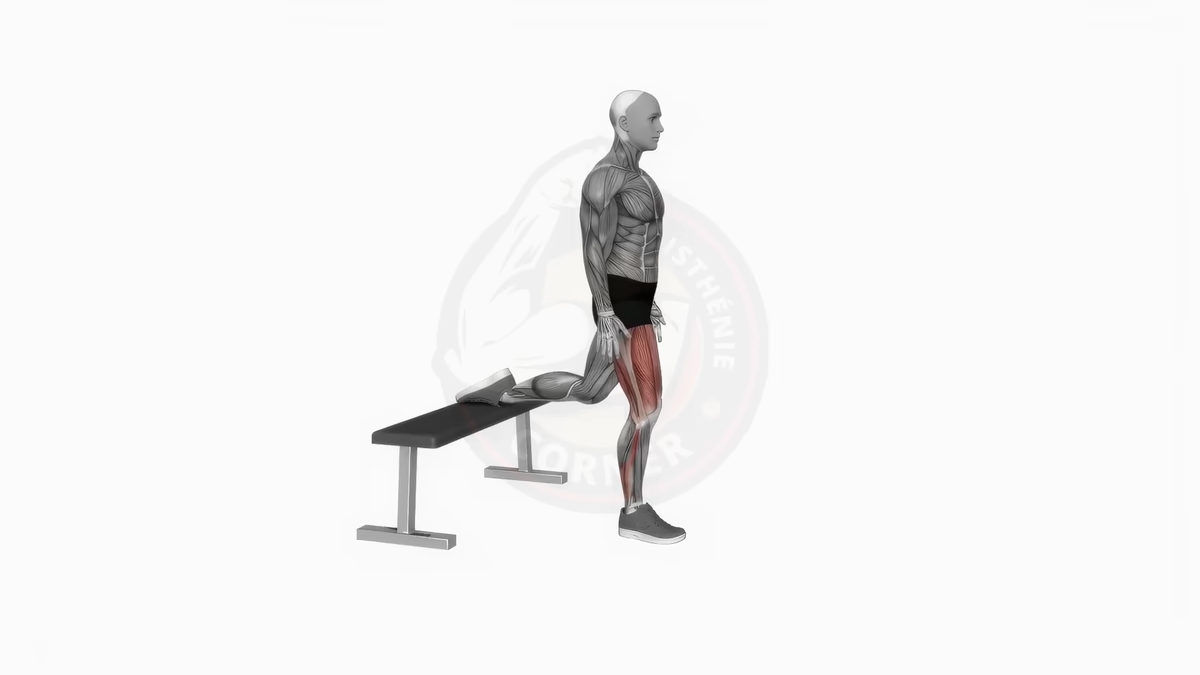
What is the fire hydrant?
The fire hydrant is a bodyweight strengthening exercise that primarily targets the glutes and hips. Its evocative name comes from the posture adopted during the exercise, resembling a dog lifting its leg at a fire hydrant.
Why do this exercise?
This exercise is specifically designed to sculpt and strengthen the lower body, with particular emphasis on glute development. Its popularity in fitness programs comes from its remarkable effectiveness and its simplicity of execution.
The fire hydrant focuses on a movement pattern that most exercises overlook: lateral hip abduction. While squats and lunges train the glutes through sagittal-plane movements (front to back), the fire hydrant works them through the frontal plane (side to side). This makes it an excellent complement to any lower-body routine.
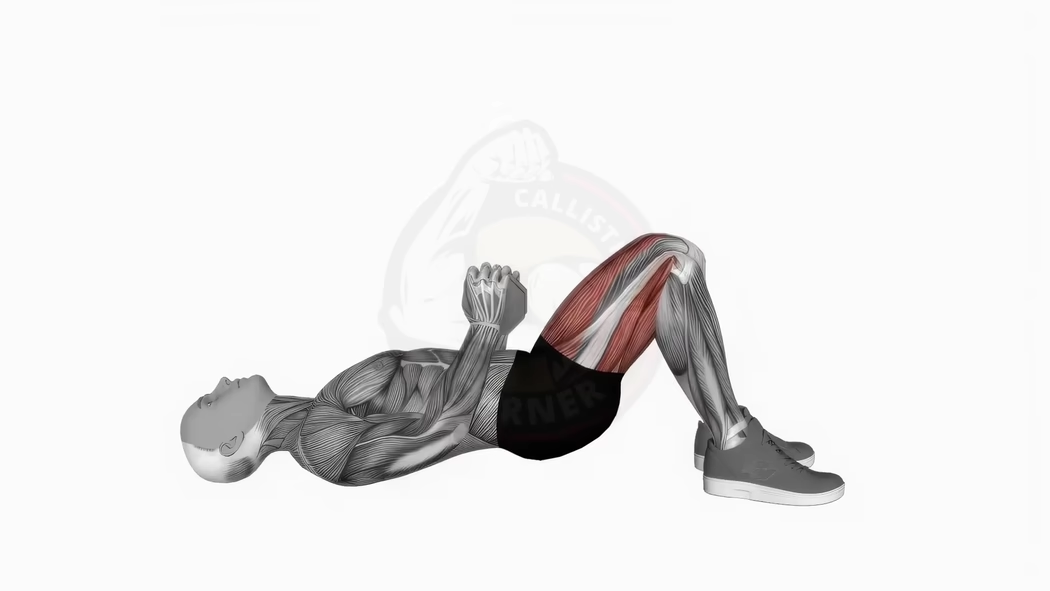
A similar and complementary exercise you may want to explore: the glute bridge.
Starting position
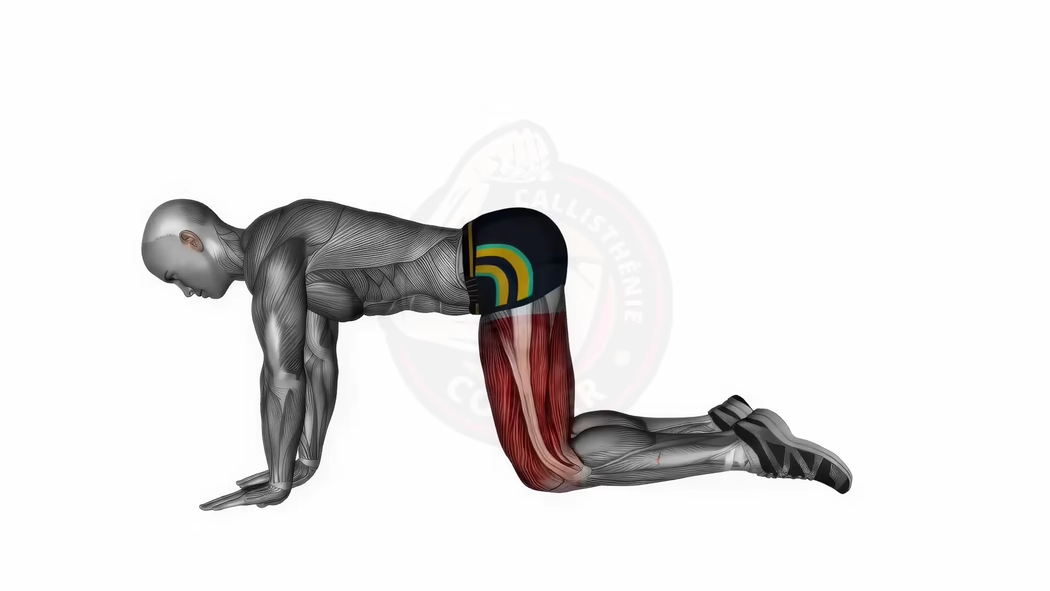
- Place yourself on all fours on an exercise mat
- Position your hands directly under your shoulders, fingers spread for better stability
- Align your knees under your hips, hip-width apart
- Maintain a straight, neutral back (neither arched nor rounded)
- Direct your gaze toward the floor to keep your neck aligned with your spine
Movement execution
- Engage your abdominals to stabilize your trunk
- Keeping the knee bent at 90 degrees, lift one leg laterally up to hip height
- Be careful not to arch your back during the movement
- Control both the lift and the descent, without using momentum
- Return gently to the starting position, then repeat
- After completing your reps on one side, switch to the other leg
Key technique points
- Keep the pelvis stable and parallel to the floor (avoid shifting your weight to the opposite side)
- Make sure the movement is initiated by the glute muscles, not by momentum
- Focus on the muscular contraction rather than on how high you can lift
Breathing
- Exhale during the effort (when you lift the leg)
- Inhale on the return to the starting position (as you lower the leg)
A common tendency is to hold your breath during the lift. Resist this. Consistent breathing keeps the core engaged and allows you to sustain quality reps over longer sets.
Muscles worked
Primary muscles
Gluteus medius: Located on the side of the hip, this is the primary target. It is responsible for the lateral lifting motion and is the muscle you should feel working most during the exercise. A strong gluteus medius is essential for pelvic stability during walking, running, and single-leg activities.
Gluteus maximus: The largest of the glute muscles. While the gluteus medius handles the abduction, the gluteus maximus assists and controls the rotation component of the movement.
Hip abductors: Responsible for the lateral movement of the leg. These muscles work together with the glutes to produce and control the motion.
Stabilizer muscles
Core (abdominals): Working isometrically to maintain trunk stability. Your abs prevent your torso from rotating or collapsing as the leg moves to the side.
Lower back muscles: Contribute to spinal stabilization throughout the exercise.
Hip rotators: Ensure smooth control of the movement and prevent the knee from drifting too far forward or backward.
Benefits
- Glute toning: Effectively strengthens the entire glute complex, including the deep musculature often neglected by classic exercises like squats
- Hip mobility: Improves joint mobility and develops lateral pelvic stability, especially valuable if you sit for long periods
- Pain prevention: Helps reduce lower back pain by strengthening the pelvic stabilizers and preventing muscular imbalances
- Accessibility: Requires no equipment, adapts to all fitness levels from beginners to advanced, and can be practiced anywhere on a simple mat
Training program by level
| Level | Reps per leg | Sets | Frequency | Specific tips |
|---|---|---|---|---|
| Beginner | 8-10 | 2-3 | 2x/week | Focus on technique, 60s rest between sets |
| Intermediate | 12-15 | 3-4 | 3x/week | Controlled movements, 45s rest between sets |
| Advanced | 15-20 | 4-5 | 4x/week | Add resistance band, 30s rest between sets |
How to integrate the fire hydrant
- Incorporate it into your leg and glute sessions as a targeted isolation exercise
- Use it as a warm-up or activation drill before heavier movements like squats or glute bridges
- For optimal results, train it consistently following the progression in the table above
- Pair it with single-leg glute bridges for a complete glute circuit that hits both the sagittal and frontal planes
Variations to intensify the fire hydrant
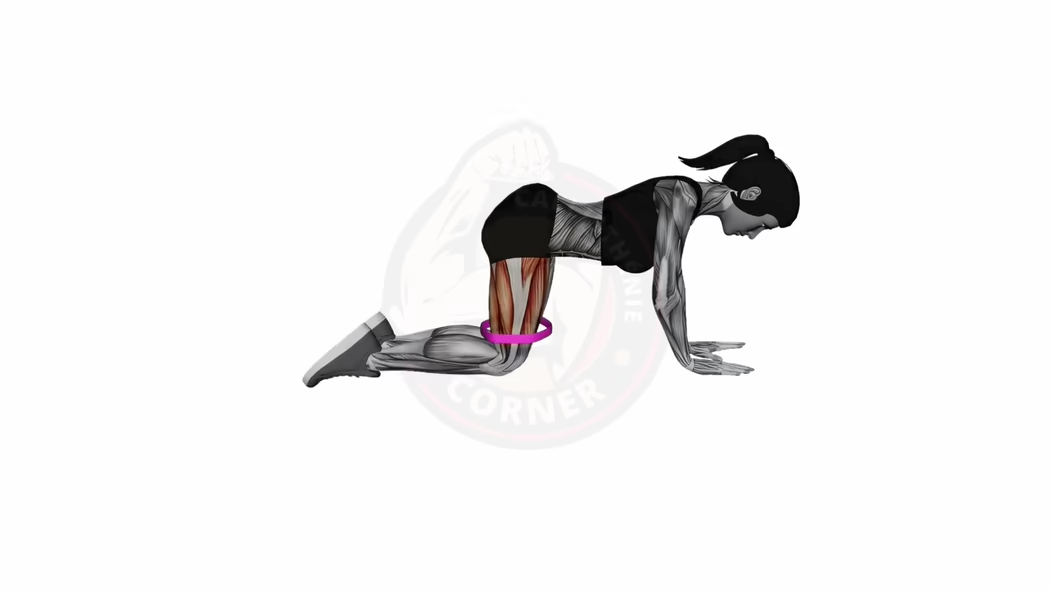
With resistance band: Place a band just above your knees. The added lateral resistance forces the gluteus medius to work harder throughout the full range. Start light and progress. This is the simplest way to make the fire hydrant harder.
Fire hydrant circles: In the top position, perform small circles with your knee. Circle forward, then reverse. This adds a rotational challenge that engages the hip rotators.
Fire hydrant with extension: From the top position, extend your leg straight out, then bend back to 90 degrees before lowering. Greater range of motion, more gluteus maximus involvement.
Pulsed fire hydrant: In the elevated position, perform small rapid pulses (2 to 3 cm). Constant tension creates an intense burn. Aim for 15 to 20 pulses per set.
Common mistakes to avoid
Arching your back: Keep a neutral spine by engaging your abs throughout. Do not let your lower back sag toward the floor.
Hip misalignment: Your pelvis should stay parallel to the floor at all times. If one hip drops or rotates, reduce the range of motion.
Lifting too high: Stop when your thigh is parallel to the floor. Lifting higher causes the pelvis to tilt. Contraction quality matters more than leg height.
Releasing the abs: Your core stays engaged from the first rep to the last. Think of the fire hydrant as a plank for your lower body: the core never takes a break.
Building a complete lower-body routine
The fire hydrant works best when combined with complementary exercises. Here is a sample glute-focused circuit:
- Glute bridge (15 reps)
- Fire hydrant (12 reps per leg)
- Single-leg glute bridge (10 reps per leg)
- Fire hydrant with extension (10 reps per leg)
Rest 60 seconds between rounds, complete 3 to 4 rounds. This circuit covers the glutes from multiple angles and movement patterns, ensuring balanced development. Add it to your routine 2 to 3 times per week for consistent progress.