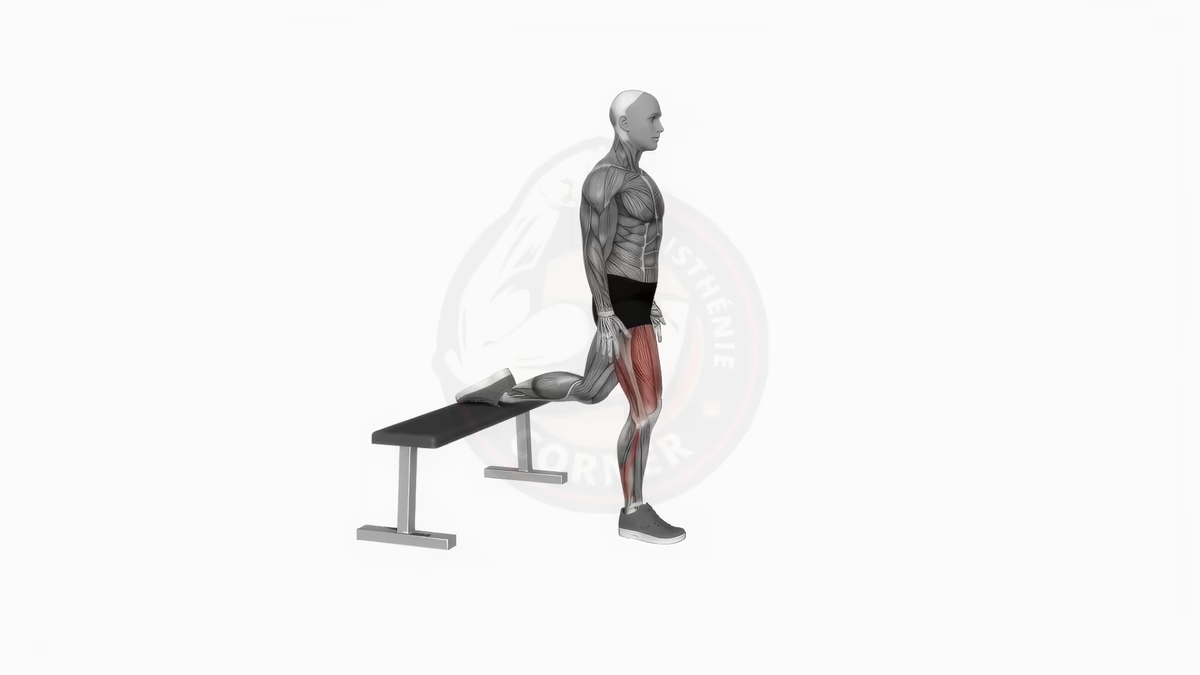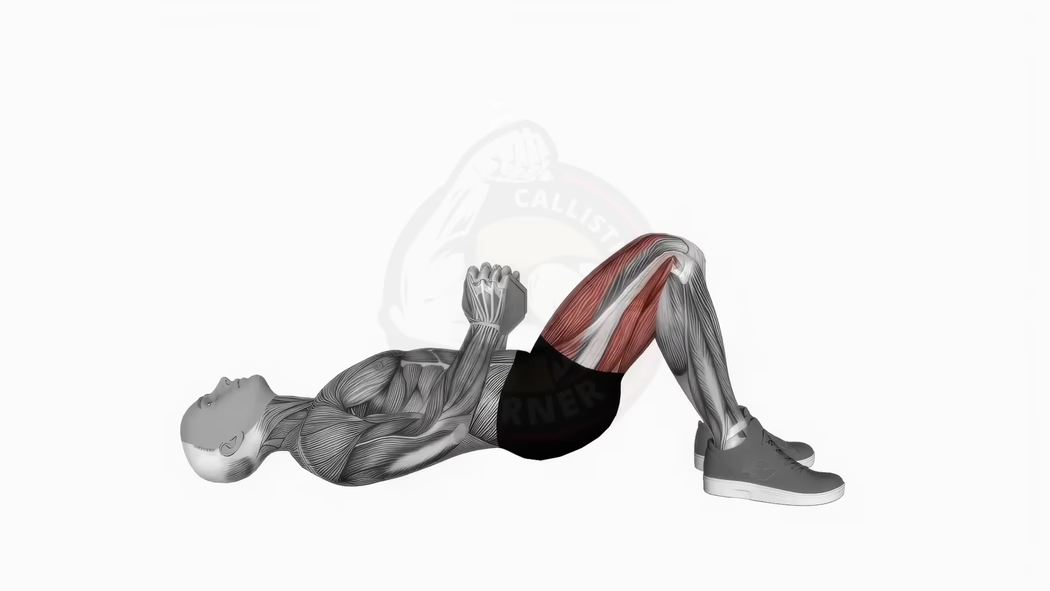
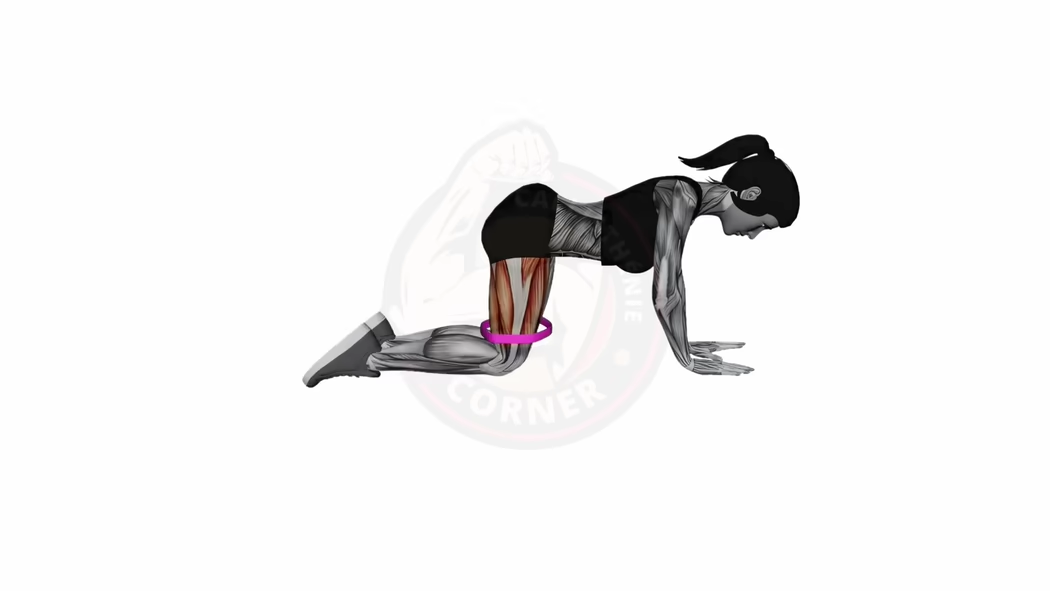
The donkey kick is one of the most effective exercises for sculpting your glutes without any equipment. Let’s break down how to perform it correctly and get the most out of every rep.
What is the donkey kick?
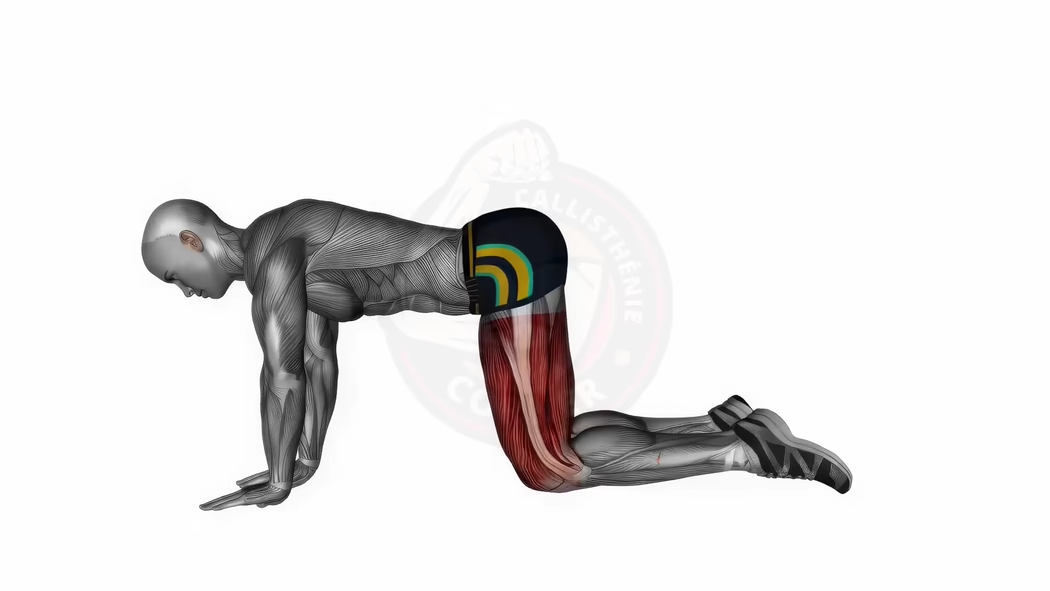
The donkey kick involves raising one leg toward the ceiling while on all fours, with your knee bent at 90 degrees. This movement isolates the glute muscles specifically while engaging your core for stability.
Why should you add it to your routine? It works for all levels, from complete beginners to advanced athletes. You can do it anywhere, no equipment needed, and it delivers results fast when performed consistently.
Muscles worked during the donkey kick
Primary muscles:
- Gluteus maximus: the main driver, responsible for shape and power in the glutes
- Gluteus medius and minimus: pelvic stabilizers that keep your hips aligned
Secondary muscles:
- Hamstrings: back of the thighs, assisting hip extension
- Lower back muscles: lumbar region support
- Abdominals: core bracing to protect the spine
Benefits of the donkey kick
- Aesthetic: firmer, rounder glutes with consistent training
- Functional: improved pelvic stability and better posture throughout the day
- Preventive: reduced lower back and knee pain by strengthening the posterior chain
- Performance: more power for running, jumping, and everyday movements
The donkey kick is particularly valuable because it targets the glutes directly without placing heavy stress on the joints. This makes it an excellent complement to compound movements like the glute bridge or hip thrust.
Perfect technique in 4 steps
Step 1: Starting position
- Get on all fours, hands directly under your shoulders, knees under your hips
- Keep a neutral spine with your gaze toward the floor
- Engage your abdominals before you start moving
Step 2: The lift
- Raise one leg with the knee bent at 90 degrees, foot flexed
- Push toward the ceiling until your thigh is parallel to the floor
- The movement comes from the hip, not the lower back
Step 3: Maximum contraction
- At the top of the movement, squeeze your glute hard for 1 to 2 seconds
- Keep your pelvis stable and parallel to the floor
- You should feel intense activation in the working glute
Step 4: Controlled descent
- Lower the leg slowly without touching the floor
- Maintain tension in the glute throughout the entire range
- Go straight into the next rep
Common mistakes to avoid
- Arching your back: this shifts the load to the lumbar spine and neutralizes glute engagement. Keep your core tight and your back flat.
- Hip misalignment: if one hip rotates open, the movement becomes less effective and creates muscular imbalances. Both hip bones should point straight down.
- Lifting too high: going past parallel forces the lower back to take over. Stop when your thigh reaches parallel.
- Releasing your abs: without core bracing, the spine loses its neutral position and results suffer. Think about pulling your navel toward your spine throughout.
Progressive training program
Beginner
- 3 sets of 10 repetitions per leg
- 30 seconds rest between sets
- 2 to 3 times per week
Focus on technique first. Every rep should be slow and controlled. If you can’t feel your glutes working, you’re probably going too fast or arching your back.
Intermediate
- 4 sets of 15 repetitions per leg
- Add pulsations at the top of the movement (small pulses for 5 extra reps)
- 3 to 4 times per week
At this stage, the mind-muscle connection should be well established. Pair donkey kicks with single-leg glute bridges for a complete glute session.
Advanced
- 4 sets of 20 repetitions per leg
- Add resistance bands or ankle weights
- Alternate with other glute-focused exercises in superset fashion
Effective variations to keep progressing
Bodyweight variations
- Straight-leg donkey kick: extending the leg fully increases the lever arm and makes the exercise significantly harder. This places extra demand on the glutes and hamstrings.
- Pulsed donkey kick: instead of full reps, perform small pulses at the top of the range for 15 to 20 reps. This builds muscular endurance and creates intense burn in the glutes.
Resistance variations
- Mini-band donkey kick: place a resistance band just above your knees. The band adds constant tension throughout the range of motion, forcing the glutes to work harder at every point.
- Ankle weight donkey kick: strap on ankle weights for progressive overload. Start light (1 to 2 kg) and increase gradually as your strength improves.
Practical tips for better results
- Breathe correctly: exhale as you lift the leg, inhale as you lower it. Proper breathing patterns help maintain core stability.
- Quality over quantity: ten perfect reps beat twenty sloppy ones. If your form breaks down, reduce the rep count and refocus.
- Warm up first: spend 5 minutes on hip mobility exercises before you start. Leg swings, hip circles, and bodyweight squats prepare the joints and reduce injury risk.
- Stay patient: visible results typically appear after 4 to 6 weeks of consistent training. The glutes are a large muscle group that responds well to regular stimulus.
The donkey kick is a simple but powerful exercise that deserves a spot in your fitness routine. Combine it with hip thrusts and glute bridges 2 to 3 times per week for sculpted glutes and better overall stability.