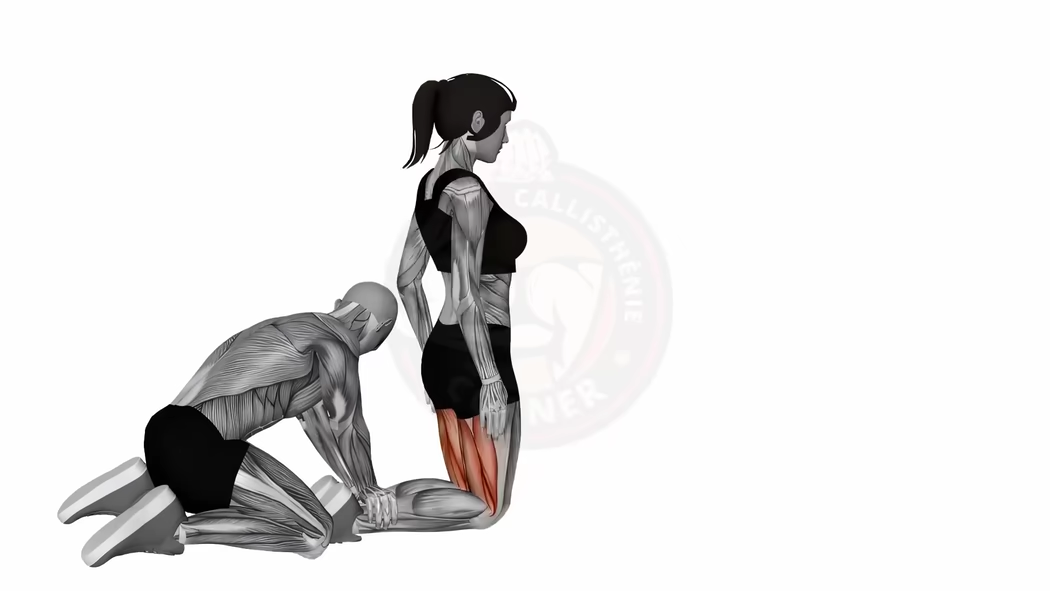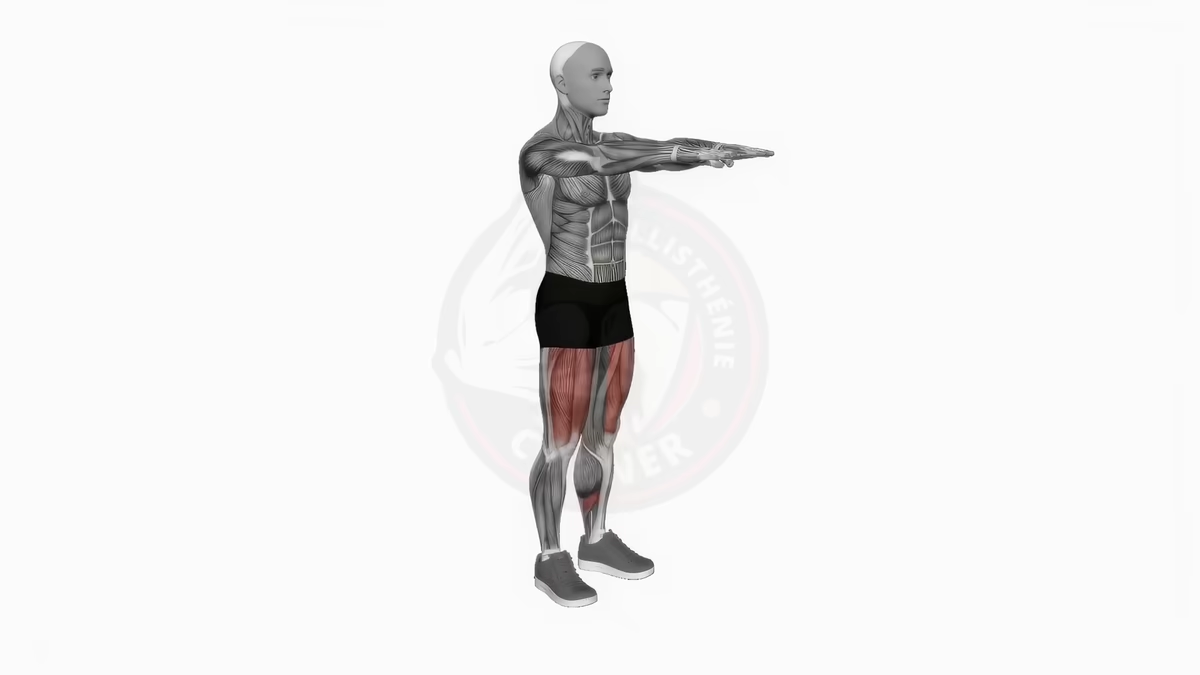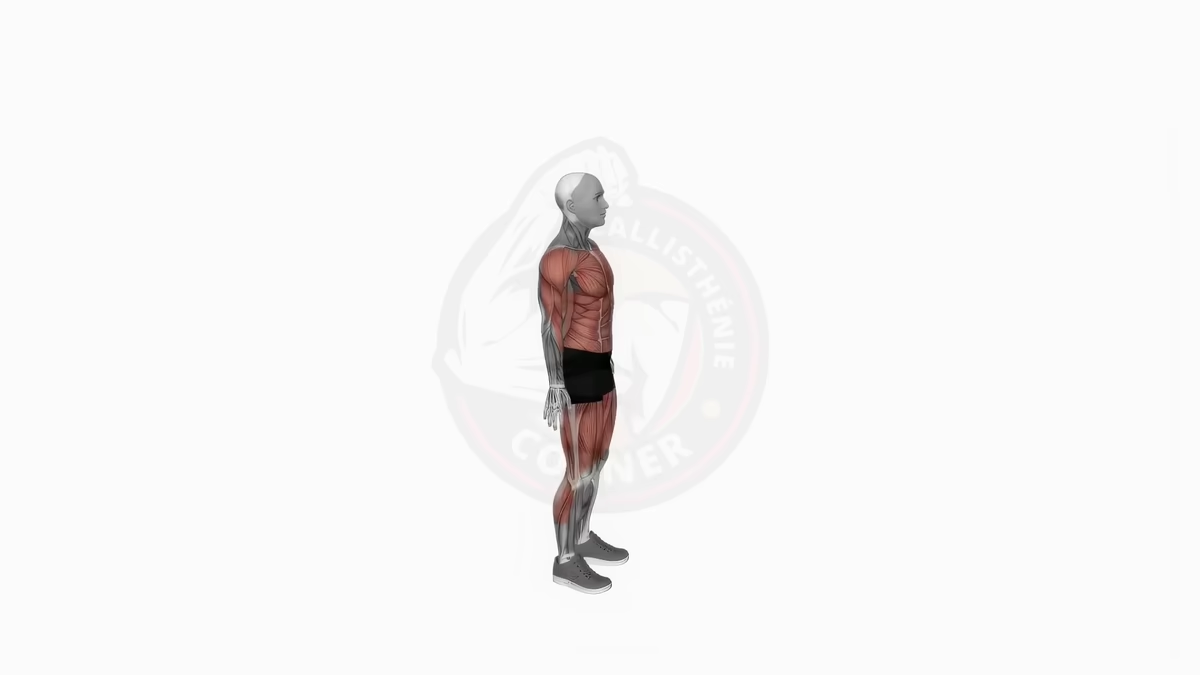
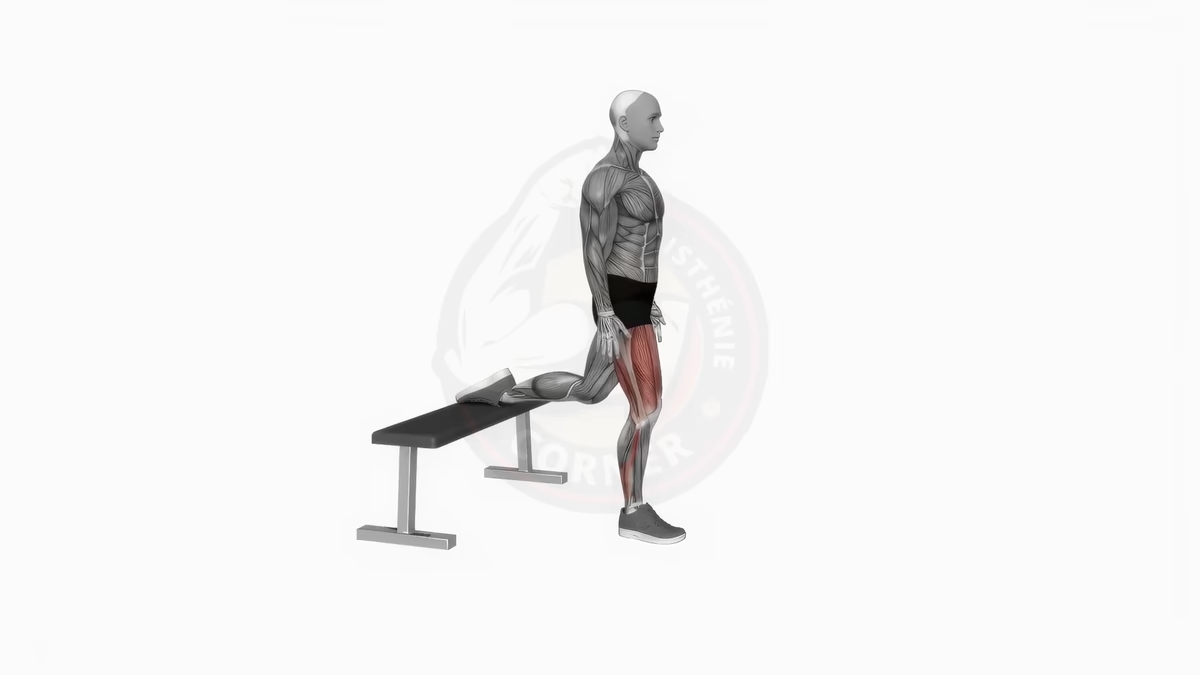
The bulgarian split squat (also called the rear-foot-elevated split squat) is a calisthenics and strength exercise that lets you target each leg independently. Unlike the classic squat, you work unilaterally: one leg pushes while the other rests on a bench behind you.
This movement corrects muscular imbalances between your left and right legs. You work harder, isolate better, and progress faster. It also hammers your quads and glutes while reducing spinal stress compared to a barbell back squat. If you deal with lower back pain or want to limit compression on your spine, this exercise is an excellent choice.
Bonus: you build better balance, stability, and core strength. Your stabilizer muscles (abs, adductors, abductors) are firing constantly to keep you upright.
Muscles worked during the bulgarian split squat
The bulgarian split squat is a compound movement that recruits the entire lower body:
- Quadriceps: the primary driver of the movement. They contract powerfully during the ascent to extend the knee. The more upright you keep your torso, the more you target them.
- Gluteus maximus: heavily activated at the top of the concentric phase (ascent). Leaning your torso slightly forward (without rounding your back) increases glute recruitment.
- Hamstrings: they stabilize the knee joint and assist the glutes during hip extension.
- Calves: they work to maintain your balance on the front leg.
- Abs and lower back: your core is constantly engaged to keep your trunk stable and your back straight.
Placement tip: upright torso = more quad emphasis. Slight forward lean = more glute emphasis. Adjust based on your goal.
Strength prerequisites
Before attacking the bulgarian split squat, you need a solid base of strength and balance. Test yourself on these benchmarks:
15 to 20 lunges per leg: without shaking, with clean form. If you struggle, work on lunges first.
20 clean air squats: thighs at least parallel to the floor, knees tracking over toes, back straight. This is the foundation.
30 seconds single-leg balance: without touching the ground with your other foot. If you wobble, prioritize balance work first.
Core: 45-second plank: without shaking, without arching. Your trunk must be solid to maintain a straight back throughout the movement.
If you don’t meet these prerequisites, don’t skip steps. Strengthen your base with fundamental leg exercises before moving to the bulgarian split squat. If you’re just starting calisthenics, nail these basics first.
How to do the bulgarian split squat: step-by-step technique
Starting position
Stand facing away from a bench, box, or step (roughly knee height). Step back and place the top of your rear foot on the bench, laces down. Your back leg is bent at about 90 degrees.
Your front foot is flat on the ground, roughly two steps in front of the bench. To find the right distance: sit on the bench, extend your leg straight out in front of you. That’s where your foot should be.
Torso upright, eyes forward, abs braced. Your hips face straight ahead with no rotation.
Descent (flexion)
Inhale and lower yourself by bending the knee of your front leg. The movement is vertical: you descend straight down toward the floor, not forward. Your knee should never travel past your toes.
Lower until your front thigh is parallel to the ground (or until your back knee nearly grazes the floor if you have the range). Keep your back straight and shoulders pulled back.
About 90% of your weight should be on the front leg. The rear foot is only there for balance, not for pushing.
Ascent (push)
Exhale and drive hard through the heel of your front leg to rise back up. Contract your quads and glutes to return to the starting position.
The ascent comes entirely from the power of your front leg. Do not push off with your rear foot.
Stay controlled: rise explosively but with full control. No jerking.
Breathing and tempo
- Inhale during the descent (2-3 seconds, controlled).
- Exhale during the ascent (1 second, more explosive).
- Recommended tempo: 3-1-1 (3 sec down, 1 sec pause at the bottom, 1 sec up).
Critical technique points
- Knee tracks over your toes (not collapsing inward).
- Back stays perfectly straight (no arching, no rounding).
- Movement is strictly vertical (you’re not stepping forward).
- Weight stays on the front heel (not on your toes).
Common mistakes to avoid
Knee collapsing inward. This signals weak stabilizers (abductors, gluteus medius). Result: your quads and glutes don’t work properly and you risk a knee injury. Actively push your knee outward during the entire descent.
Front foot too close to the bench. If your foot is too close, your knee shoots past your toes and you put enormous stress on the joint. Move your foot half a step further away. Your shin should remain nearly vertical.
Forward-back motion instead of vertical. Many people accidentally turn the bulgarian split squat into a dynamic lunge. Wrong execution. You must descend and rise on a strictly vertical axis. Imagine an invisible bar in front of you that you’re sliding along.
Excessive forward lean. A slight forward lean is fine for targeting the glutes. But folding in half costs you muscle tension and risks back pain. Keep your abs tight, torso braced, eyes forward.
Loading before mastering technique. The classic mistake. If you can’t hold your balance with bodyweight, don’t grab dumbbells. Master 3 sets of 12 clean bodyweight reps before adding any load.
6-week training program
Here’s a 6-week program to take you from bodyweight to significant loading on the bulgarian split squat.
Weeks 1-2: Technique mastery (bodyweight)
- 3 sessions/week
- 3 sets x 8-10 reps per leg
- 90 seconds rest between sets
- Goal: 3 sets of 12 reps per leg with perfect form, zero imbalance
Weeks 3-4: Adding load (light dumbbells)
- 3 sessions/week
- 4 sets x 8-12 reps per leg
- Start with 2x5 kg or 2x8 kg depending on your level
- 2 minutes rest between sets
- Goal: 4 sets of 12 reps with 2x10 kg without losing balance
Weeks 5-6: Progressive overload
- 3 sessions/week
- 4 sets x 8-10 reps per leg
- Add 2 kg per dumbbell every 2 sessions if you hit the previous goal
- 2-3 minutes rest between sets
- Goal: 4 sets of 10 reps with 2x12-15 kg depending on bodyweight
Always start with your weaker leg. If one leg struggles more than the other, add an extra set on that side to rebalance.
Bulgarian split squat variations
With dumbbells (standard): the classic variant. Hold a dumbbell in each hand, arms by your sides. This allows symmetric loading and good balance. Start light (2x5 kg) and increase gradually.
With barbell: for advanced athletes. Place a barbell on your traps like a back squat. This demands maximum stability and allows heavier loading. Master the bodyweight version first.
Goblet style (kettlebell or dumbbell): hold a kettlebell or dumbbell in front of your chest, elbows pointing down. This helps keep your torso upright and shifts even more emphasis onto the quads.
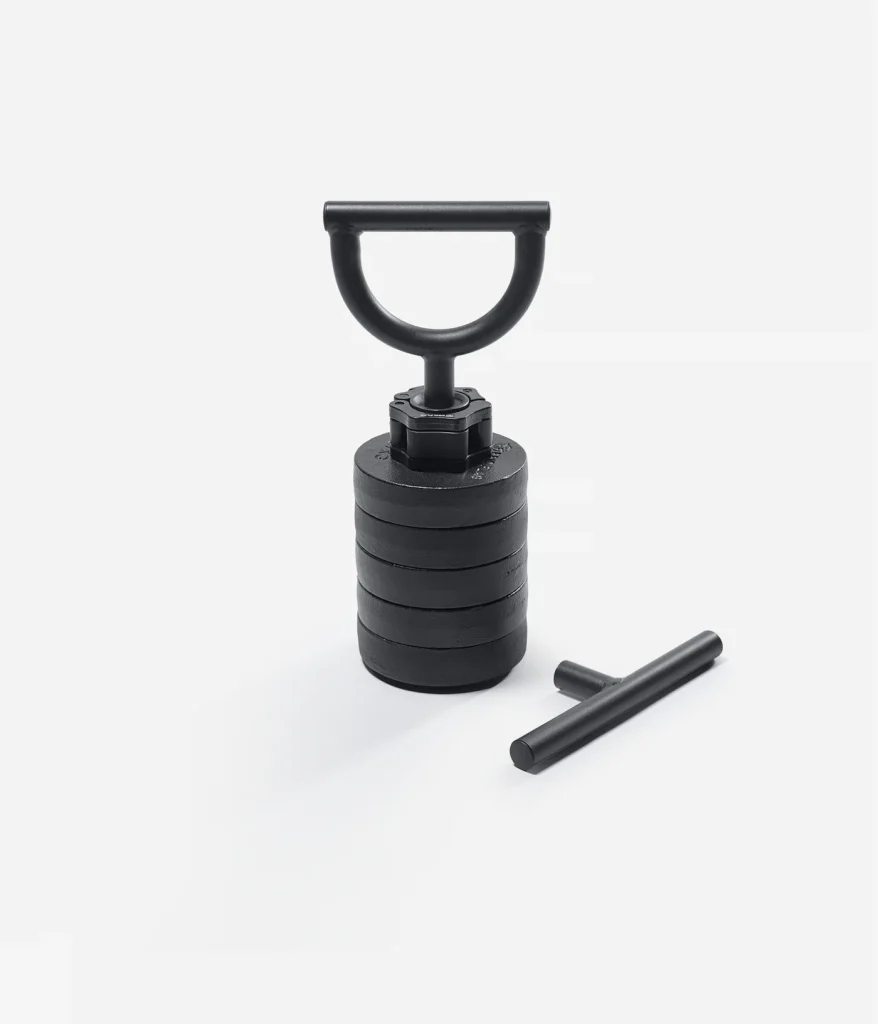
Plyometric (jump): for developing explosiveness. At the top of the movement, jump and switch legs mid-air. Reserved for advanced athletes. Great for sports requiring power (basketball, football, sprinting).
Slow tempo (modified descent): descend in 4-5 seconds, pause 2 seconds at the bottom, rise in 1 second. This ramps up time under tension and torches your quads and glutes. Ideal for hypertrophy.
What comes after the bulgarian split squat?
Once you’ve mastered the bulgarian split squat with load, several progressions open up.
The pistol squat is the logical next step: a full squat on one leg with no rear support. It’s the next level of unilateral leg work. The bulgarian split squat prepares you perfectly by strengthening each leg independently.
The plyometric bulgarian split squat builds explosiveness: if you’re chasing athletic performance (sprints, jumps, team sports), integrate this variant to develop raw power.
For a complete lower-body program, pair it with air squats, lunges, glute bridges, or nordic curls. The bulgarian split squat isn’t a finisher. It’s a main-lift movement that deserves a spot early in your session when you still have energy.