The bear plank (also called the “bear hold”) is a static core exercise that puts your entire abdominal wall to the test. Unlike the traditional plank, this variation places you on all fours with your knees hovering just centimeters off the ground, creating constant tension throughout the core. It is one of the best movements for building a solid, functional midsection with zero equipment.
How to perform the bear plank correctly
Setting up the position
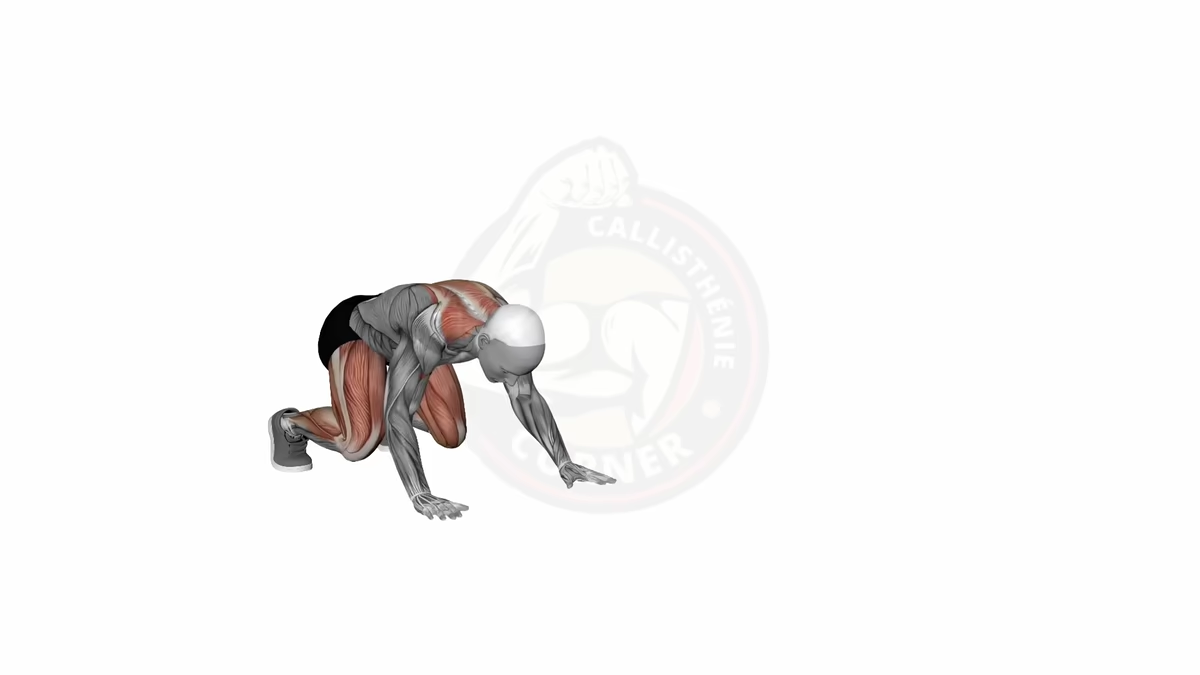
Get on all fours with your hands directly under your shoulders and your knees directly under your hips. Your shins should be roughly parallel to the floor. Before lifting, engage your core by drawing your navel toward your spine.
Lifting into the hold
Raise your knees 5 to 10 centimeters off the floor while keeping your back perfectly flat and parallel to the ground. This is the critical detail: the knees barely leave the surface. Your back should look like a tabletop, not a tent.
Maintaining proper alignment
- Direct your gaze at the floor, keeping your neck aligned with your spine
- Press firmly through your palms, spreading your fingers for stability
- Squeeze your abs as if bracing for impact
- Breathe normally throughout the hold. This is harder than it sounds when your core is under maximum tension
- Target hold time: 20 to 60 seconds depending on your level
The key is keeping everything tight and controlled. If your back starts to round or your hips begin to rise, end the set. A shorter hold with perfect form beats a longer hold with poor positioning every time.
Muscles worked during the bear plank
The bear plank is deceptively comprehensive. Here is what fires during the hold:
- Rectus abdominis: the “six-pack” muscles work continuously to prevent your spine from extending
- Obliques: internal and external obliques stabilize against rotational forces
- Transverse abdominis: the deepest core muscle wraps around your midsection like a corset, providing the foundational stability for the entire position
- Shoulders and arms: the deltoids, triceps, and serratus anterior work to stabilize the upper body and transfer force through the arms
- Quadriceps: the front of the thighs fire constantly to hold the knees in their hovering position
What makes the bear plank special compared to the standard plank is the quadruped position. Having four points of contact close to the ground creates shorter levers, which forces the deep stabilizers to work harder. You feel it less in the shoulders and more in the core, exactly where you want it.
Why the bear plank deserves a spot in your routine
Deep core activation
The bear plank activates the transverse abdominis more effectively than many traditional core exercises. This deep muscle is responsible for spinal stability and contributes to a flatter, more controlled midsection. If you have ever felt that planks work your shoulders more than your abs, the bear plank fixes that problem.
Improved stability and balance
Holding this position with only hands and toes in contact with the ground develops the proprioception and balance that carry over to every other calisthenics movement. Whether you are working toward mountain climbers, shoulder taps, or more advanced skills, the bear plank builds the foundation.
Low joint stress
Because the knees stay close to the ground and the load is distributed across four points, the bear plank places minimal stress on the wrists, shoulders, and lower back compared to extended plank holds. This makes it accessible to beginners while remaining challenging for advanced athletes.
Common mistakes that ruin the exercise
Raising the hips too high. Your back must stay horizontal, not in an inverted-V position. If your hips are up near the ceiling, you have turned the exercise into a downward dog, which is a completely different movement.
Arching the lower back. This completely cancels the abdominal work and can cause lower back pain. If you feel your back sagging, re-engage your core by thinking about pressing your navel to your spine.
Knees too far off the ground. If your knees are more than 10 centimeters up, the exercise loses its unique advantage and becomes a standard high plank. Keep them hovering just above the surface.
Holding your breath. This is the most common mistake. Blocking your breathing increases intra-abdominal pressure unnecessarily and reduces your performance. Practice breathing calmly while maintaining the brace. Inhale through the nose, exhale through the mouth.
Programming the bear plank
Beginner protocol
- 3 sets of 20 seconds
- 30 to 45 seconds rest between sets
- 2 to 3 times per week
At this stage, focus entirely on form. If 20 seconds is too long, start with 10 seconds and add 5 seconds each week. The goal is maintaining a perfectly flat back and steady breathing throughout.
Intermediate progression
- 3 to 4 sets of 30 to 45 seconds
- Reduce rest to 20 to 30 seconds
- Integrate into ab circuits with plank and hollow hold
Advanced targets
- 3 sets of 60 seconds
- Combine with dynamic variations (see below)
- Use as part of a comprehensive core superset
Variations to keep progressing
Dynamic bear plank
From the bear plank position, slowly crawl forward and backward (2 to 3 steps each direction) while keeping your knees at the same height off the floor. This adds a locomotion challenge and demands even more coordination and core stability.
Shoulder taps from bear position
From the bear hold, lift one hand and tap the opposite shoulder, then switch sides. This introduces a rotational stability challenge because your body must resist twisting while supported on only three points. For a dedicated shoulder tap workout, check out our shoulder taps guide.
Bear crawl
The bear crawl takes the static bear plank and turns it into a full-body locomotion exercise. Move forward, backward, or laterally while maintaining the hovering knee position. The bear crawl develops coordination, cardiovascular endurance, and functional core strength all at once.
Integrating the bear plank into your training
The bear plank fits naturally into ab circuits for complete core training. A simple but effective circuit:
- Plank: 30 to 45 seconds
- Bear plank: 30 to 45 seconds
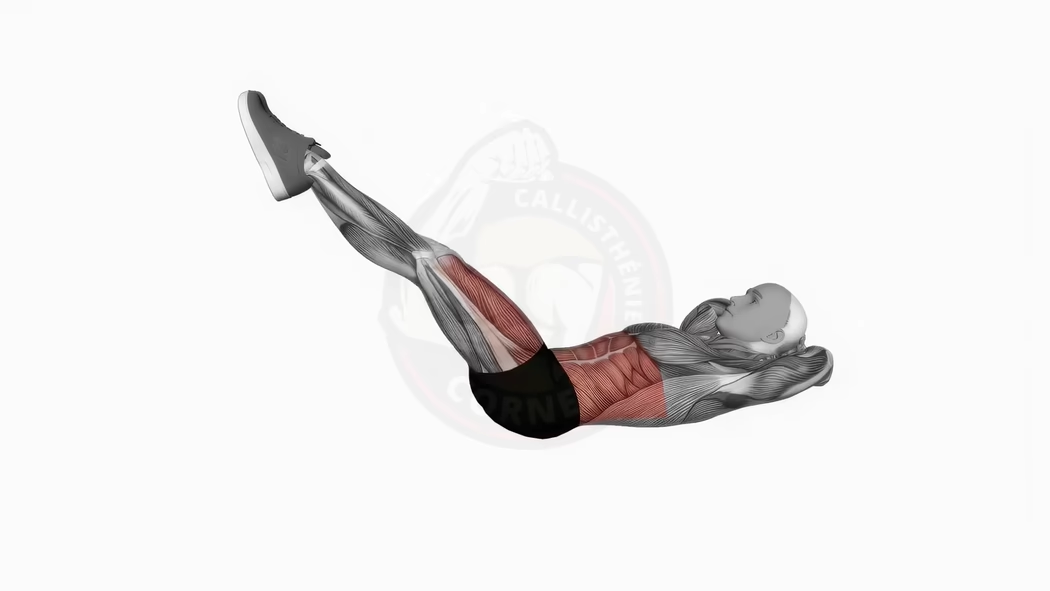
- Hollow hold: 20 to 30 seconds
- Rest 60 seconds, repeat 3 rounds
Start with 3 sets of 20 seconds and work your way up to holding for a full minute. The bear plank may look simple, but once you get into position with proper form, your core will tell you otherwise.