
Skills
Complete guide to the Front Lever
The front lever is an iconic calisthenics and street workout skill. It is a static position where the body is held horizontally in suspension, arms straight. This move requires serious back, shoulder and core strength. Whether you are a beginner or an advanced practitioner, this guide will help you progress step by step.
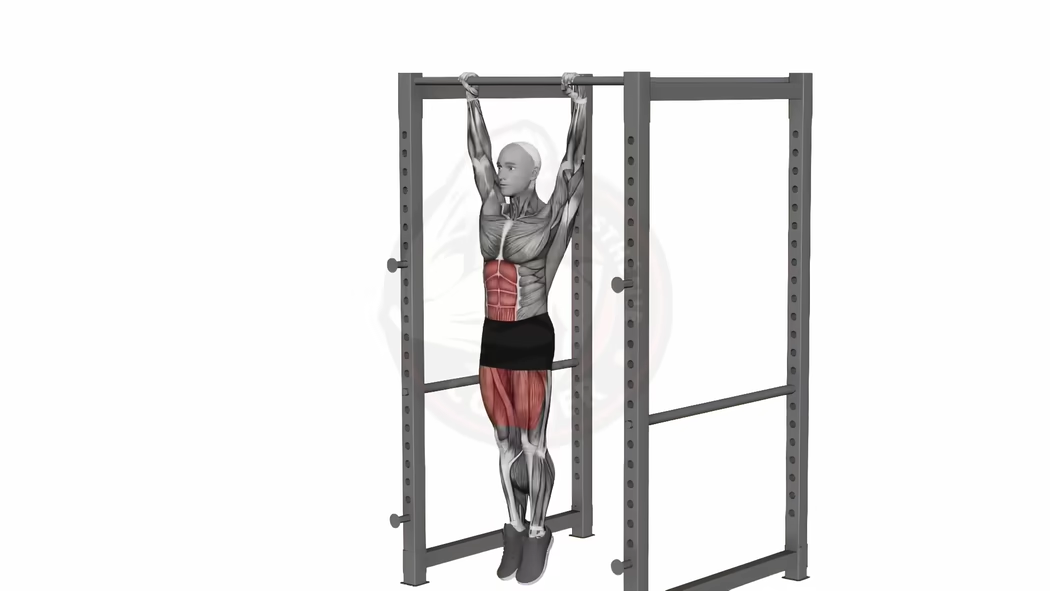
Benefits of the Front Lever
- Posterior chain strengthening: The front lever primarily targets the back muscles, especially the lats, trapezius and rhomboids. By training these muscles, you will improve your strength for other calisthenics exercises and sports in general.
- Core strength improvement: Holding the front lever position requires intense engagement of the abs and obliques, building a solid and functional core. This is a perfect foundation for skills like the full planche.
- Functional strength development: This exercise demands perfect coordination and integrated full-body strength, which will help you in other athletic movements.
Prerequisites for the Front Lever
Before diving into front lever practice, make sure you have a solid base of strength and stability. Here are the recommended preparatory exercises:
- Pull-ups: To strengthen the lats and biceps. You should be able to perform at least 8-10 strict pull-ups.
- Hollow body hold: To develop core strength. Aim for 30 seconds minimum.
- Skin the cat (on rings): To improve shoulder mobility and strengthen the back.
Calisthenics skills like the front lever demand a solid and controlled core. These exercises will strengthen the different muscle groups involved, particularly the core muscles surrounding your abdominal area, the back muscles and the shoulders.
Progressions to achieve the Front Lever
Tuck Front Lever
Start with the tuck version where your knees are tucked towards your chest. This variation builds the foundational strength required for the front lever. Hold your body in suspension with arms straight, focusing on keeping your back parallel to the ground.
One Leg Front Lever
Next, practise the one leg front lever where one leg is extended while the other remains bent. This allows you to progressively strengthen the muscles required while increasing the lever arm gradually.
Straddle Front Lever
Move on to the straddle front lever, where your legs are spread apart. This makes the exercise slightly more accessible before reaching the full version, by reducing the lever length.
Full Front Lever
Finally, progress to the full version where your body is held straight and parallel to the ground. This step demands maximum strength and perfect technical mastery. Keep your legs together, core braced, and shoulders retracted.
Weekly training program for the Front Lever
For efficient progression, follow this weekly training program. You can do it as a quick standalone session or add it to your regular training.
| Day | Exercise | Sets | Reps / Duration |
|---|---|---|---|
| Monday | Tuck Front Lever | 5 | 10-15 sec |
| Tuesday | Core strengthening circuit | 4 | 10 reps |
| Wednesday | Rest | - | - |
| Thursday | Advanced Tuck Front Lever | 5 | 10-15 sec |
| Friday | Pull-ups and Hollow Holds | 4 | 8-12 reps |
| Saturday | Straddle Front Lever | 5 | 5-10 sec |
| Sunday | Rest | - | - |
Progression tip: You can gradually increase hold duration as you get stronger. When you can comfortably hold 15 seconds at a given level, it is time to move to the next progression.
Tips and techniques for the Front Lever
- Use resistance bands: Resistance bands can lighten your bodyweight and help you progress towards the full front lever. They are especially useful during the initial learning phases.
- Maintain correct posture: Keep your shoulders retracted and your abs engaged to avoid arching your back and to prevent injuries.
- Practise controlled breathing: Controlled breathing increases endurance and stability while holding the position. Inhale before engaging, exhale steadily during the hold.
Common mistakes to avoid
- Skipping the warm-up: Warm up for at least 10 minutes to prepare your muscles for the effort. Focus on shoulder mobility and wrist preparation.
- Progressing too fast: Take it step by step to avoid injuries and allow your body to adapt. Do not jump straight to advanced progressions.
- Forgetting about recovery: Give yourself enough time for muscle recovery to optimise your performance. Rest days are just as important as training days.
Equipment and variations for the Front Lever
Although the front lever is primarily a bodyweight exercise, some equipment can facilitate your progression and improve safety:
- Resistance bands: Ideal for reducing your bodyweight during holds. They help you work on the position by lowering the difficulty. Particularly useful during the initial learning phases.
- Pull-up bar: Essential for practising front lever variations. Choose a sturdy, well-secured bar to ensure safe practice.
- Gymnastics rings: Allow a more ergonomic grip and encourage the strengthening of stabiliser muscles. They offer a different approach to the exercise, more adaptable and ergonomic for some but more challenging for others. Test them to see what works best for your body.
- Gloves or grip pads: Recommended for improving your grip and preventing calluses during long training sessions.
Nutrition and recovery for Front Lever progression
Nutrition
To reach your front lever goal, an adapted diet is crucial. Consume enough protein to support muscle growth and recovery. Amino acids, particularly leucine, are essential for stimulating protein synthesis.
Complex carbohydrates will provide the energy needed for your intense sessions, while healthy fats like omega-3s will help reduce inflammation and improve joint health.
Recovery
Remember that recovery is just as important as training. Sleep at least 7 to 8 hours per night to allow your muscles to repair and strengthen. Include stretching or yoga sessions to improve flexibility and reduce the risk of injury. Consider foam rolling or massage to reduce muscle tension and improve blood circulation.
The front lever is a demanding but rewarding exercise that can be mastered with patience, discipline and targeted training. Follow this guide to progress safely and effectively, and always listen to your body at every step of your journey.