
Whether you’re a beginner or an experienced athlete, there’s a push-up variation suited to your level for developing the upper body effectively. This guide presents the different push-up types, from simplest to most complex, so you can progress continuously.
Classic push-ups: the essential foundation
Position and proper technique
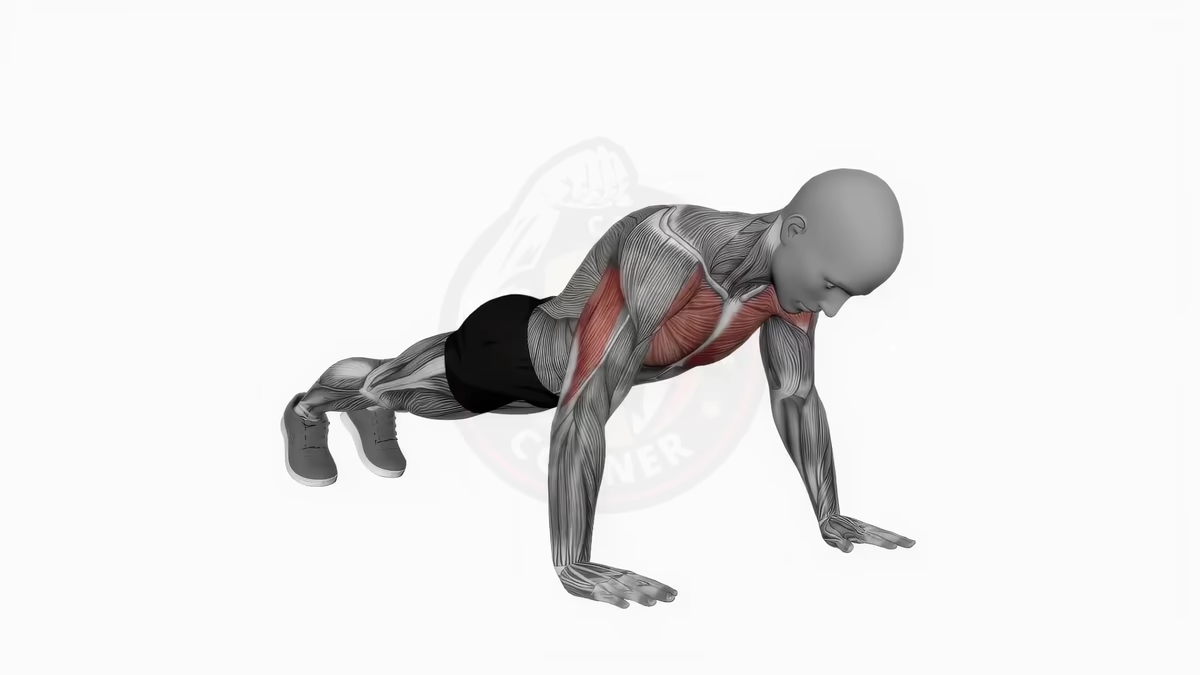
The standard push-up is the base. Place your hands flat on the floor, slightly wider than shoulder-width. Fingers point forward or slightly outward. Your body forms a perfect straight line from head to heels. Feet together or slightly apart for more stability.
During the descent, bend your elbows keeping them at about 45 degrees from your body. Lower until your chest nearly grazes the floor. Push back up through your hands to full arm extension, without completely locking the elbows.
Breathing: inhale going down, exhale pushing up.
Muscles worked
Classic push-ups primarily engage three muscle groups:
- Pectorals: the primary muscle, responsible for horizontal adduction of the arms
- Triceps brachii: heavily involved in elbow extension
- Anterior deltoids: stabilize and assist the pushing movement
The abdominals maintain trunk stability, preventing hip sag.
Beginner level: starting variations
Knee push-ups
Knee push-ups reduce the workload. Position yourself on all fours, then move your hands forward to create an angle with your body. Knees stay on the ground, ideally on a mat. Your trunk forms a straight line from knees to head.
This variation builds the base strength needed. Aim for 3 sets of 10 to 15 reps before progressing.
Incline push-ups (elevated hands)
Incline push-ups use an elevated surface like a bench or stair step. The higher the surface, the easier the exercise. This progression allows fine difficulty adjustment.
Start with hands on a hip-height surface, then gradually lower the height over the weeks.
Wall push-ups
Wall push-ups are the most accessible entry point. Standing facing a wall, place your hands flat at shoulder height. Step your feet back to create an angle. The further you step back, the harder it gets.
This variation suits absolute beginners, people in rehabilitation or seniors. Perform 3 to 4 sets of 15 to 20 reps.
Intermediate level: increasing difficulty
Diamond push-ups for triceps
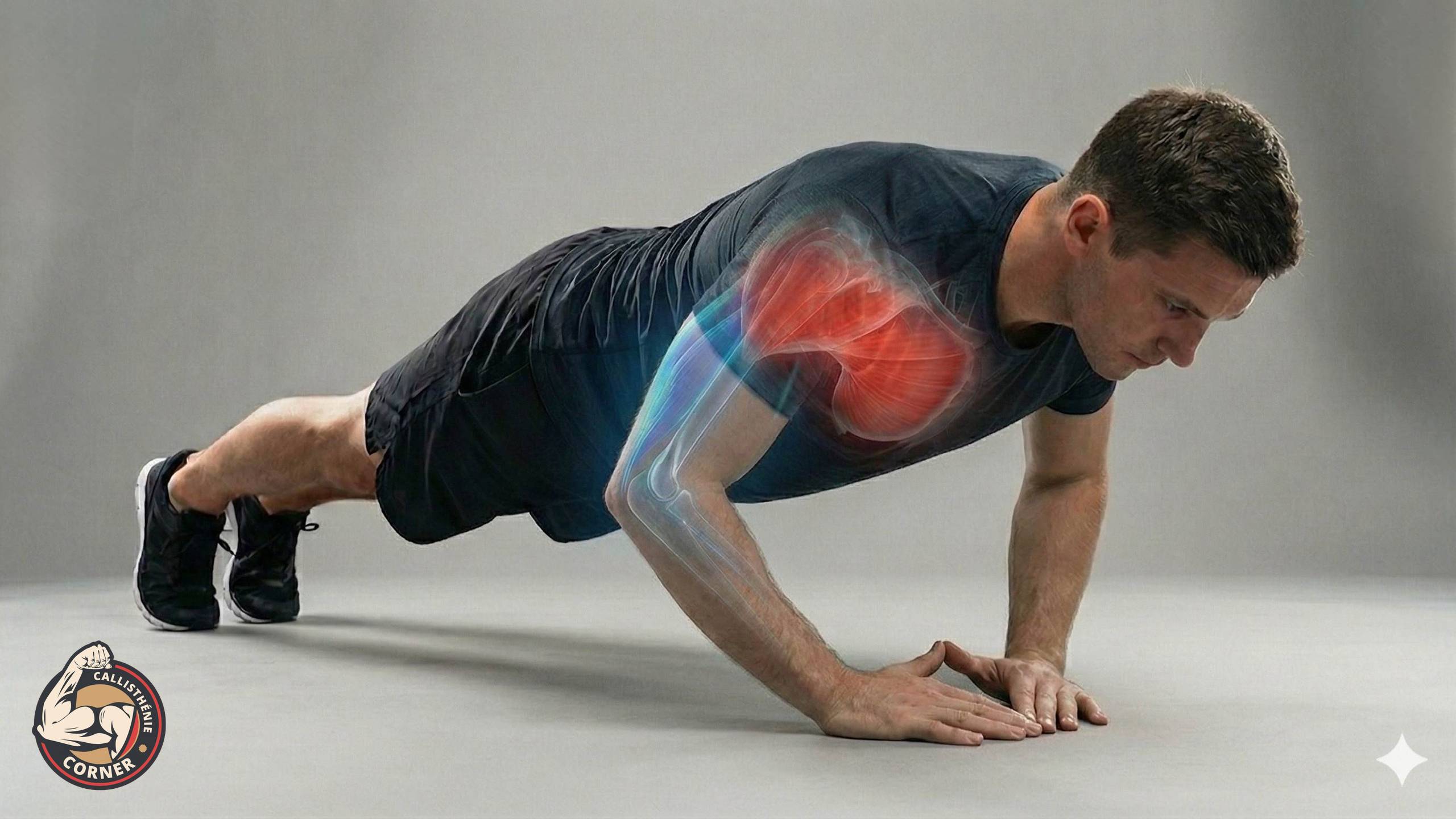
Diamond push-ups intensify triceps work. Form a diamond shape with your hands by joining thumbs and index fingers. This position completely changes the movement’s biomechanics.
Start with 3 sets of 5 to 8 reps. The triceps become the primary working muscle.
Wide push-ups for outer chest
Wide push-ups target the outer pectoral fibers. Place your hands wider than shoulder-width, about 1.5 times that distance. Fingers can point slightly outward.
This variation increases pectoral stretch at the bottom position. Include 3 to 4 sets of 8 to 12 reps.
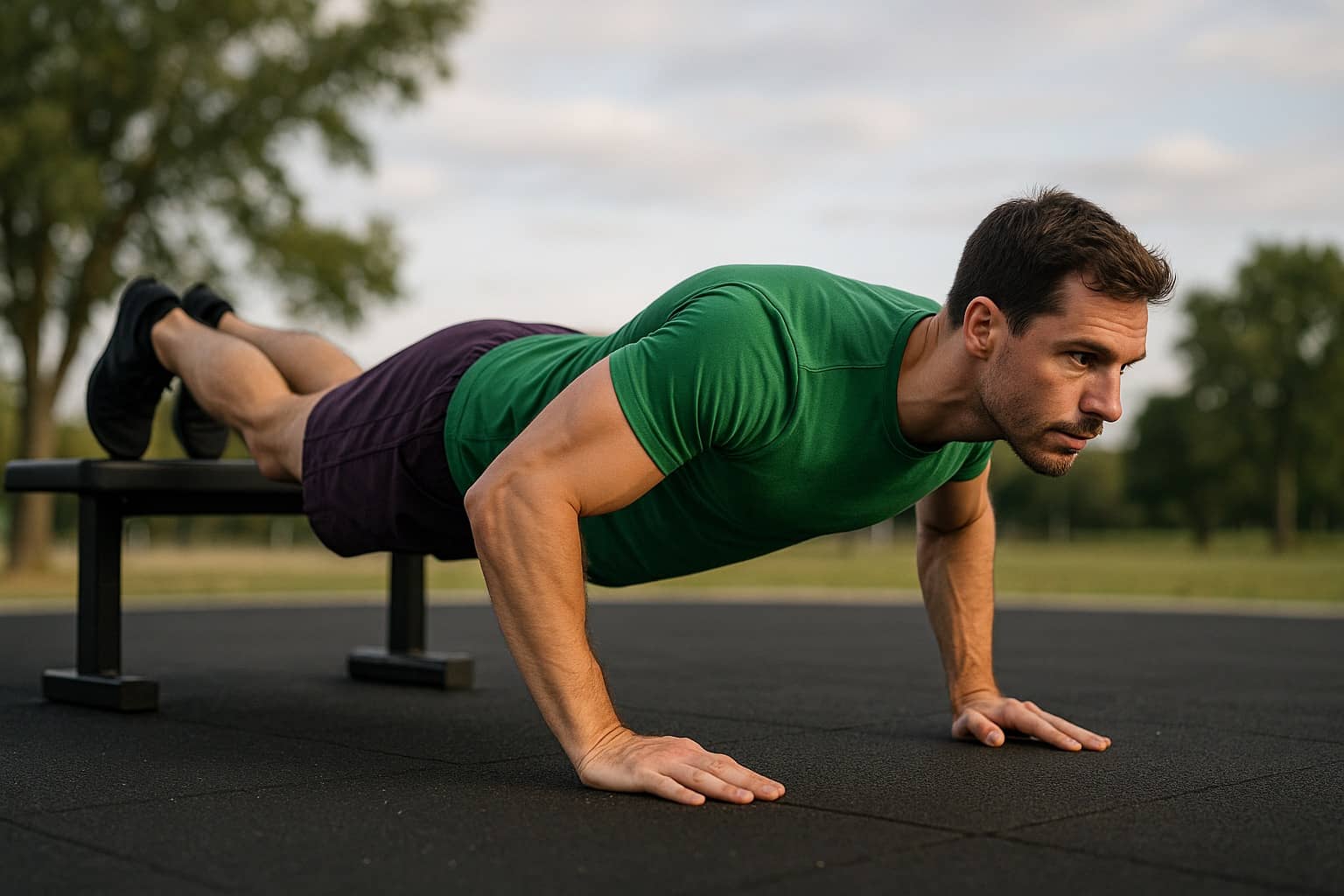
Decline push-ups (elevated feet)
Decline push-ups increase the load by elevating your feet on a stable surface. The higher the elevation, the greater the difficulty.
The anterior deltoids and clavicular portion of the pectorals face increased demand. Progress gradually from 30 cm to 60 cm of elevation.
Hindu push-ups and dive bombers
Hindu push-ups combine dynamic movement and mobility. Start in a downward dog position (inverted V). Dive your head between your hands, skimming the floor, then rise into cobra position.
Dive bomber push-ups follow a similar pattern but without the reverse. These variations develop functional strength and shoulder mobility.
Pike push-ups
Pike push-ups will maximize shoulder development. Create a bridge with your hips: the more you bring your legs in, the harder the exercise. Want even more difficulty? Do elevated pike push-ups with feet on a bench.
Advanced level: explosive and technical push-ups
Clap push-ups and superman push-ups
Clap push-ups introduce explosiveness. From the bottom position, push with maximum force to lift your hands off the floor. Quickly clap your hands together before returning to position.
Superman push-ups push explosiveness to the extreme. The propulsion must lift both hands and feet off the floor simultaneously, arms extended forward.
Archer push-ups and one-arm push-ups
Archer push-ups prepare for unilateral pushing. One hand stays far from the body, arm extended to the side. The other arm does most of the work.
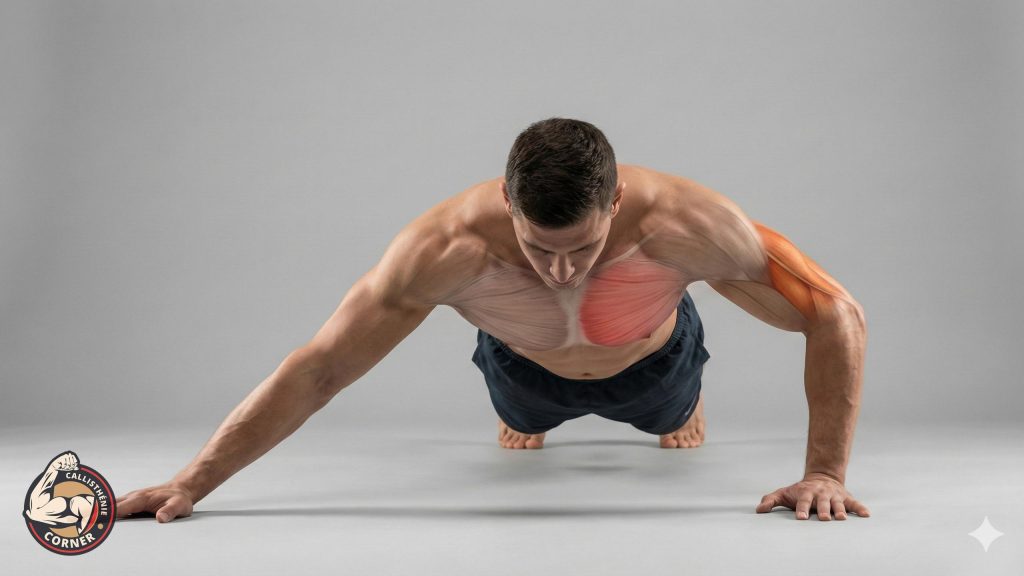
One-arm push-ups represent the ultimate achievement in relative strength. A single arm supports and propels your entire bodyweight.
Handstand push-ups
Handstand push-ups completely invert traditional mechanics. Balanced on your hands, perform vertical push-pull movements. The shoulders become the primary muscle group.
Start against a wall for stability, then progress toward freestanding balance. This variation develops phenomenal shoulder and tricep strength.
Pseudo-planche push-ups
Pseudo-planche push-ups simulate the planche position in calisthenics. Hands are positioned at hip level, shoulders advanced well past the wrists. The body leans heavily forward.
This variation directly prepares for the full planche. Progress millimeter by millimeter in the forward lean to avoid injury.
How to progress effectively with push-ups
Creating a progressive routine
Structured progression guarantees consistent results. Master one variation perfectly before evolving to the next. First increase reps, then sets, before changing variations.
Integrate different push-ups into a coherent weekly program. Variety maintains motivation and optimizes muscular adaptations.
Sets and reps by level
Beginners: 3 sets of 8 to 12 reps. Progress toward 15-20 reps. Weekly volume: 100-150 reps across 2-3 sessions.
Intermediates: 4 to 5 sets of 10 to 15 reps of the main variation, supplemented by 2-3 sets of an easier variation. Weekly volume: 200-300 reps.
Advanced: 5 to 6 sets of difficult variations. Weekly volume: 300-500 reps.
Common mistakes to avoid
- Excessive arching: constantly maintain core engagement to preserve alignment
- Incomplete range: lower until your chest grazes the floor, push up to near-full extension
- Excessive speed: adopt a controlled tempo: 2 seconds down, 1 second up
What comes after mastering all push-up levels?
Once you’ve mastered the advanced variations, progress toward:
- Handstand push-ups: Vertical push-ups in balance. Maximum shoulder strength.
- Full planche: Push-ups in horizontal position. The ultimate pushing challenge.
- 90-degree push-ups: L-sit push-ups, transitioning toward handstand.
- Muscle-up: Combines a pull-up and dip in one explosive movement.
Push-ups are the foundation of all pushing exercises in calisthenics. Master each variation perfectly before moving to the next.