
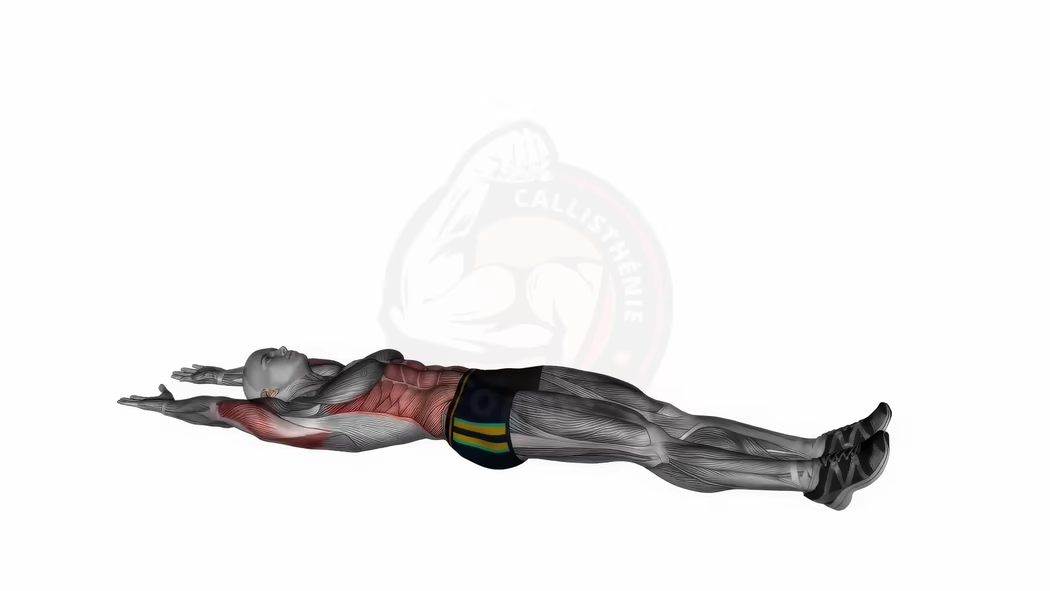
The hollow hold, also known as the banana hold, is an abdominal strengthening exercise that makes a real difference for athletes and fitness enthusiasts. Whether you’re a calisthenics beginner or an advanced practitioner, this guide covers everything you need to integrate the hollow hold into your training routine.
The fundamentals of the hollow hold
The hollow hold is an isometric exercise that engages the entire anterior muscle chain. It gets its name from the characteristic shape the body takes during execution, resembling a hollowed arc. This position demands an intense, sustained contraction of the abdominal muscles, making it particularly effective for core strengthening.
Muscles worked during the hollow hold:
- Rectus abdominis
- Transverse abdominis
- Internal and external obliques
- Hip flexors
- Quadriceps
Unlike other ab exercises such as crunches, the hollow hold engages the entire core statically, which promotes the development of functional strength and improves trunk stability.
Why is the hollow hold so effective?
The hollow hold stands out for its ability to simultaneously engage multiple muscle groups while minimizing stress on the spine.
| Criteria | Hollow hold | Classic plank |
|---|---|---|
| Core engagement | Complete (anterior and posterior) | Primarily anterior |
| Posture improvement | High | Moderate |
| Lower back pain prevention | Very effective | Effective |
| Transfer to other activities | Excellent | Good |
The hollow hold significantly improves trunk stability, which translates to better posture and reduced injury risk, especially in the lower back. This exercise effectively prepares the body for more complex calisthenics movements, like the L-sit.
Perfect hollow hold technique in 5 steps
To get the most out of the hollow hold, mastering proper execution is essential:
- Starting position: Lie on your back on a mat, arms extended overhead and legs straight.
- Core engagement: Contract your abs by pressing your lower back into the floor. This is fundamental for protecting your spine.
- Limb elevation: Simultaneously lift your arms, shoulders, head and legs off the floor. Your arms should stay aligned with your ears.
- Hold the position: Maintain this position, forming an arc with your body resembling a banana. Only your lower back should remain in contact with the floor.
- Breathing: Breathe in a controlled, steady rhythm throughout the exercise. Avoid holding your breath.
Hold this position for 20 to 30 seconds to start, then gradually increase the duration as your strength and endurance improve.
Common mistakes to avoid
To maximize the benefits and prevent injury, avoid these frequent errors:
Arching the lower back: Always keep your lower back pressed into the floor. If you can’t maintain this contact, reduce the range of motion by keeping your legs lower or bending your knees.
Lifting the head too high: Your chin should stay slightly tucked, with roughly an apple-sized gap between your chin and chest. This prevents unnecessary neck tension.
Neglecting breathing: Smooth, regular breathing is crucial for maintaining engagement of the deep abdominal muscles. Avoid holding your breath.
Incorrect arm position: Your arms should stay extended and aligned with your ears. Lowering or bending them reduces the exercise’s effectiveness.
Hollow hold vs. plank: which to choose?
| Criteria | Hollow hold | Plank |
|---|---|---|
| Target muscles | Complete anterior chain | Primarily abs and shoulders |
| Difficulty | High | Moderate |
| Progression | Many possible variations | Limited progression |
| Transfer to other activities | Excellent (gymnastics, swimming) | Good (general stability) |
The hollow hold offers more complete muscular engagement and better long-term progression. It’s particularly beneficial for athletes looking to improve performance in gymnastics or swimming. The plank remains an excellent base exercise for developing core stability and is perfectly suited for beginners.
Variations and progressions
Beginner level:
- Bent-knee hollow hold: Keep your knees bent at 90 degrees while slightly lifting shoulders and feet off the floor. Hold for 10 to 15 seconds.
- Alternating hollow hold: Alternate between lifting legs and lifting upper body, always keeping your lower back pressed to the floor.
Intermediate level:
- Full hollow hold: Perform the exercise with legs and arms fully extended. Aim for sets of 20 to 30 seconds.
- Hollow hold with arm movements: Hold the position while performing small forward and backward arm movements.
Advanced level:
- Hollow rocks: From the hollow hold position, perform a rocking motion forward and backward while maintaining abdominal tension.
- Weighted hollow hold: Add a light weight in your hands or on your ankles to increase intensity.
Whatever your level, the key is to progress gradually.
How to overcome hollow hold difficulties
If you experience excessive fatigue, break up your sets: instead of aiming for one long hold, opt for several shorter sets with rest. For example, 3 sets of 10 seconds with 10 seconds of rest.
To improve endurance, gradually increase hold duration. Aim for a 5-second increase each week. Focus on deep, regular breathing to optimize muscle oxygenation.
If you have a history of lower back pain, consult a physiotherapist before starting. Begin with less intense variations like the bent-knee hollow hold and progress slowly.
The hollow hold’s role in calisthenics
The hollow hold plays a central role in calisthenics. It develops the core strength necessary to execute more complex movements:
- Performing static holds like the planche or the human flag
- Executing dynamic movements such as muscle-ups or hanging leg raises
- Maintaining correct body position during pull-ups and push-ups
Regular practice of the hollow hold refines your proprioception, your awareness of body position in space. This skill allows you to master transitions between movements and optimize technique in exercises like pull-ups or dips.
The strength and stability gained from the hollow hold transfer directly to the handstand: the core control developed by this exercise is crucial for maintaining balance on your hands.
What comes after the hollow hold?
Once you’ve mastered the hollow hold (45 seconds in full position + controlled hollow rocks), you’re ready for more advanced exercises:
- Dragon flag: The logical evolution. You move from a static floor position to a dynamic movement on a bench.
- Hanging leg raises: Apply the abdominal strength developed to the pull-up bar.
- Front lever: The hollow hold is the base position for the front lever. Master one and you have the foundation for the other.
Integrate the hollow hold into your warm-ups and use it as a regular test of your core strength.