
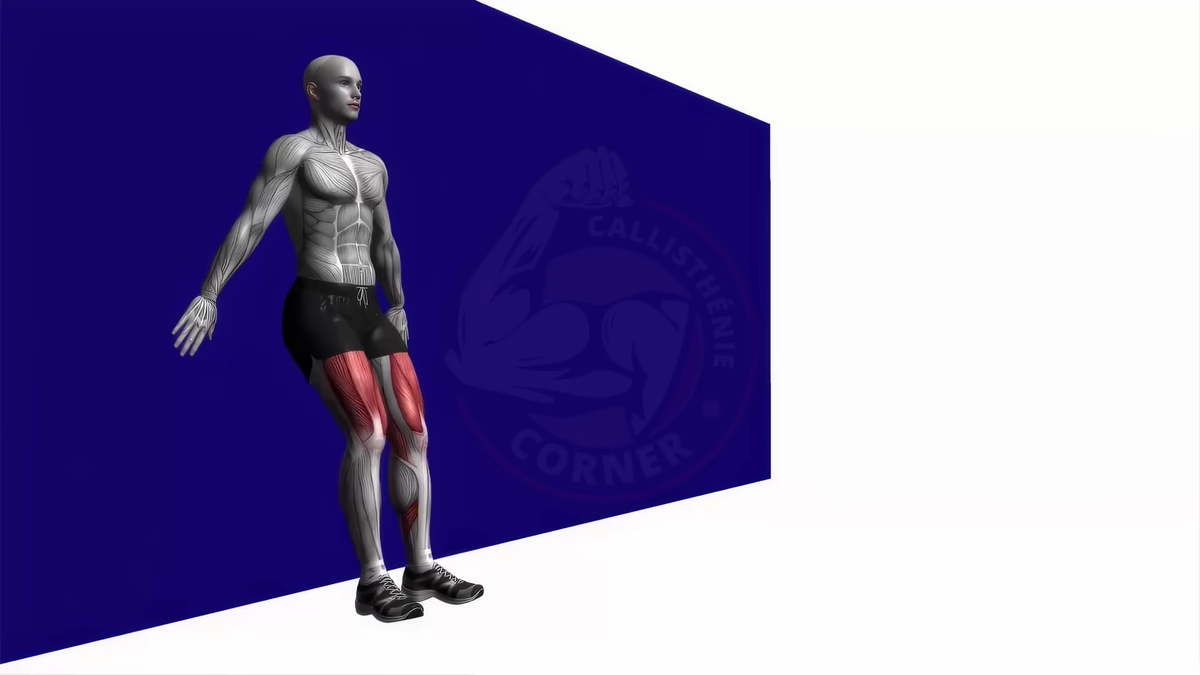
The wall sit is an isometric exercise that requires zero equipment and delivers serious results. Back against the wall, thighs parallel to the floor, you hold the position and let gravity do the rest. Simple in concept, brutal in execution.
Key takeaways
- The wall sit is an isometric exercise that intensely strengthens quads, glutes and core.
- Master proper technique, posture adjustments and breathing for safe, effective practice at any level.
- Explore various progressions to keep your training challenging and avoid stagnation.
- Integrate the wall sit into a complete home routine combining other bodyweight exercises for full-body strengthening.
Muscles worked during the wall sit
This exercise primarily targets leg muscles. Your quadriceps, at the front of the thighs, bear the brunt of the static effort. But they’re not alone: the hamstrings (back of the thighs) and glutes are also heavily engaged. Your calves contribute to the effort as well. To maintain a stable posture, your abdominals kick in, reinforcing your core and helping keep your back straight.
Is the wall sit really effective?
Absolutely. The wall sit is remarkably effective for strength building and core stability. Its isometric nature develops endurance and static strength in your quads and glutes, with minimal injury risk. It’s a major asset for improving overall fitness, especially if you practice endurance sports. Performed regularly, it tones your muscles without adding bulk and forges mental toughness. Adjust the duration or depth for any level, at the beginning or end of a session.
Proper wall sit technique
Wall version
Position yourself with your back against a wall. Place your feet hip-width apart, toes pointing forward. Bend your knees until your thighs are parallel to the floor, forming a 90-degree angle. Hold this static position, look at a fixed point and brace your core to align your back and neck. Push through your heels, not your toes, and make sure your knees stay stable without caving inward or outward.
Freestanding version
Place your feet shoulder-width apart, bend your knees and push your hips back, as if sitting on an imaginary chair. Keep your back straight and abs engaged. Your knees should never go past your toes. Breathe calmly and steadily throughout the effort.
Core activation cue: Focus on pulling your navel toward your spine. This braces your trunk and ensures your entire torso stays stable during the hold.
Common mistakes and posture corrections
The most common errors include rounding the back, letting the knees drift past the toes, and insufficient core engagement. For proper posture, keep your back straight and well aligned against the wall (or in the freestanding position). Your shoulders should be level and your stomach drawn in. Make sure your knees don’t drift outward or inward: your feet should be flat on the floor, weight distributed over the heels. Avoid holding your breath: prioritize regular inhales and exhales. Consistent posture adjustments and constant core tension are critical for protecting your spine and effectively targeting the muscles.
Contraindications and adaptations for beginners
Before starting any exercise program, a medical consultation is recommended. For beginners, adaptation is key: listen to your body and respect your limits. Start with shallow angles, then gradually increase intensity and duration only if you feel comfortable and pain-free. If you experience discomfort or fatigue, adjust your posture or reduce the effort. Stay near a support and avoid any movement that causes pain.
Variations and progressions
To intensify your wall sit training, several variations are available:
- Weighted wall sit: Hold a dumbbell or weight plate on your thighs. Increases resistance and demands more from your quads and glutes.
- Single leg wall sit: Lift one foot off the ground while maintaining the position. Doubles the load on the working leg and challenges your balance.
- Dynamic wall sit: Alternate between high and low positions, turning the exercise into a semi-dynamic movement.
- Tiptoe wall sit: Rise onto the balls of your feet for targeted calf work.
- Trunk rotations: Add arm movements or trunk twists while holding the position to engage deep back muscles and core.
Progression guidelines
Progression should be gradual. For beginners, start against a wall and descend progressively until your thighs are parallel to the floor (never exceed 90 degrees). Once comfortable with the classic wall sit, move to freestanding variations. For experienced practitioners, intensity can be increased by adding load (dumbbell, plate on thighs) or extending hold duration.
Benchmark progression:
- Week 1-2: Wall sit, 3 sets of 20-30 seconds
- Week 3-4: Wall sit, 3 sets of 45-60 seconds
- Week 5-6: Freestanding chair hold, 3 sets of 20-30 seconds
- Week 7+: Single leg or weighted variations
Sample training integration
Structure your sessions: 3 to 4 sets of 30 seconds to 1 minute holds, with 1 to 1.5 minutes of rest. A complete program includes warm-up, main training (wall sit, dynamic squats, plank) and cool-down. The keys are consistency, gradual intensity increases and tracking progress.
Does the wall sit help lose belly fat?
The wall sit, while excellent for strengthening quads, glutes and back muscles, does not directly target abdominal fat loss. Its effectiveness for “losing belly fat” depends on integrating it into a comprehensive program combining cardio and strength training, alongside a balanced diet. The wall sit contributes to core and deep back muscle strengthening, but fat reduction is a systemic process that cannot be targeted to a single area by a specific exercise.
The wall sit is a deceptively simple exercise that builds real, functional leg strength. Start with the basics, progress through the variations, and you’ll see results within weeks.