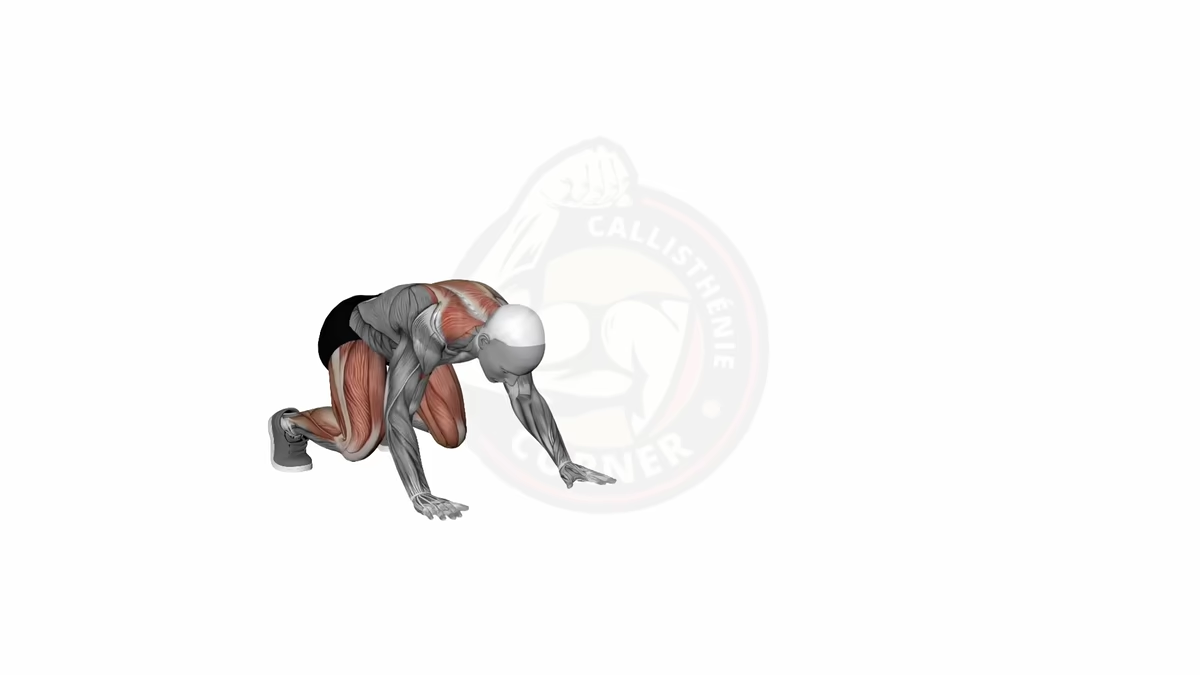
This single exercise can develop your core strength, coordination and overall fitness. The bear crawl is a movement that mimics how a bear walks.
This beginner-friendly exercise engages your entire musculature in a functional movement of remarkable effectiveness.
What is the bear crawl?
The bear crawl consists of moving on all fours, knees hovering a few centimeters off the ground, coordinating cross-pattern movements: right hand with left foot, then left hand with right foot.
This locomotion technique activates what biomechanics calls a “closed chain”: your hands and feet remain in permanent contact with the ground, creating maximum stability while challenging your coordination and core.
This exercise combines in a single movement all the elements of a complete workout: muscular strengthening, cardiovascular work, coordination improvement and cognitive stimulation.
A dynamic complement to static core work
The bear crawl offers a unique activation pattern that engages all stabilizer muscles in a functional context, effectively complementing traditional static exercises like the dead bug or the hollow hold.
Shoulder protection and strengthening
The exercise powerfully activates the serratus anterior, critical for scapular stability and shoulder injury prevention. This closed-chain activation contributes to better joint health.
How to master the bear crawl
Optimal starting position
Hand placement: Directly under the shoulders, fingers spread for a stable base. Knee position: Hovering 2 to 5 centimeters off the ground, no more! Back alignment: Neutral, neither arched nor rounded. Gaze: Directed toward the floor, about 1 meter ahead.
The movement in 4 simple steps
Coordination is the key to success:
- Simultaneously advance your right hand and left foot
- Alternate with your left hand and right foot
- Keep your hips low and stable
- Breathe in a controlled manner, exhaling on each step
5 mistakes to avoid
- Hips rising up: The most common trap that reduces effectiveness
- Locked elbows: Keep a slight bend to protect your joints
- Loud steps: A good bear crawl is silent and controlled
- Holding your breath: Never hold your breath
- Knees touching the floor: They must remain hovering at all times
Progression levels
Level 1: Building the foundation (0-2 weeks)
Static bear hold:
- Hold the position without moving
- 3 sets of 15-20 seconds
- Focus on perfect alignment
First counted steps:
- 3-5 steps forward, then backward
- 3-4 sets with full recovery
Level 2: Building endurance (2-6 weeks)
Short distances:
- 4-6 sets of 20-40 meters
- Alternate forward/backward/lateral
- 60-90 seconds rest
Progressive duration:
- Sets of 30-45 seconds
- Recovery equal to work time
Level 3: Advanced challenges (6+ weeks)
Metabolic circuit:
- 30 seconds bear crawl
- 15 seconds rest
- 30 seconds kick-throughs
- Repeat 5 rounds for an intense cardio challenge
Technical variations:
- Lateral bear crawl: Engages your stabilizers differently
- Reverse bear crawl: Backward movement for coordination
- Bear crawl with pauses: 1-2 second stops for added instability
Benefits of the bear crawl
The bear crawl simultaneously develops:
- Functional strength across the entire body
- Stability of the shoulders and pelvis
- Muscular endurance of the trunk
- Inter-hemispheric coordination
Unique cognitive stimulation
The cross-pattern hand-foot movement stimulates communication between your two brain hemispheres, improving concentration, memory and learning capacity.
Natural posture correction
Unlike isolation exercises, the bear crawl reawakens your natural motor patterns, correcting imbalances caused by modern sedentary lifestyles.
Adaptations and precautions
For sensitive wrists
- Use push-up handles or dumbbells
- Start on an incline (hands on a bench)
- Work on wrist mobility and strengthening
Contraindications
- Recent injuries to wrists, shoulders or knees
- Acute disc herniation
- Pregnancy (after the first trimester)
The verdict: minimal investment, maximum results
The bear crawl represents the essence of functional training: a natural, accessible movement that requires zero equipment and produces remarkable results.
By integrating this exercise into your routine 2-3 times per week, you develop authentic strength, refined coordination and general fitness that transfers to all your daily activities.
Start today: even 30 seconds of perfectly executed bear crawl is worth more than 5 minutes of sloppy form. Quality trumps quantity, and your body will thank you for restoring these natural movements it should never have forgotten.